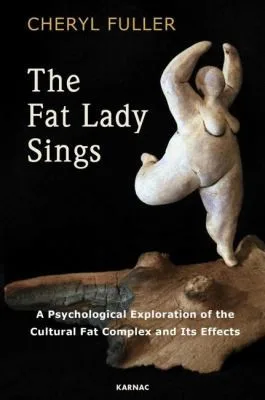
Fat Lady Sings
 71
71

Fat Lady Sings
Cheryl Fuller's "Fat Lady Sings" presents a densely packed examination of esoteric principles, eschewing accessible prose for a more rigorous, academic tone. The author's strength lies in her meticulous articulation of interconnected concepts, particularly her detailed analysis of symbolic correspondences. For instance, her exploration of the "Great Work" as a metaphor for personal transformation is particularly illuminating. However, the book's primary limitation is its high barrier to entry; the abstract nature of the subject matter, coupled with an unyielding academic style, may alienate readers not already steeped in esoteric lore. A more grounded approach to illustrating certain concepts, perhaps through brief historical anecdotes or simpler analogies, could have enhanced its reach. Despite this, the work offers a valuable perspective for dedicated students of the occult.
📝 Description
71
Cheryl Fuller's 2017 book, "Fat Lady Sings," examines mystical traditions through a unique lens.
Published in 2017, "Fat Lady Sings" is not a narrative but a structured examination of core concepts and symbols found in various mystical traditions. Fuller aims to illuminate hidden connections and esoteric principles, challenging conventional understandings. The book acts as a guide for readers interested in expanding their awareness beyond the material world. It encourages a deeper engagement with subtle energies and the symbolic language that Fuller suggests governs existence.
This text is for readers with a developed interest in esoteric studies, comparative religion, and philosophical inquiry. It will appeal to those familiar with concepts from alchemy, Gnosticism, or Hermeticism who seek a text that synthesizes or reinterprets these ideas. Individuals who appreciate dense, intellectually stimulating material and are comfortable with abstract or unconventional spiritual approaches will find "Fat Lady Sings" particularly rewarding. It is suited for the dedicated seeker.
Emerging in 2017 amid a renewed interest in esoteric philosophy, "Fat Lady Sings" contributes to a lineage of thinkers like Helena Blavatsky and Manly P. Hall. These figures sought to codify and explain complex esoteric systems for a Western audience. Fuller's work bridges ancient wisdom with modern understanding in an era where online communities fostered discussions on occult and metaphysical topics. The book engages with the ongoing effort to interpret and present these systems to contemporary seekers.
💡 Why Read This Book?
• Gain a structured understanding of symbolic language as a conduit for esoteric truths, as explored in Fuller's detailed analysis of motifs like the "Great Work." • Grasp the concept of cyclical time and interconnectedness, moving beyond linear interpretations of events and consciousness as presented in the book's framework. • Explore personal transformation through an alchemical lens, learning how to initiate and guide internal shifts inspired by the book's focus on consciousness development.
⭐ Reader Reviews
Honest opinions from readers who have explored this book.
❓ Frequently Asked Questions
What is the primary focus of Cheryl Fuller's "Fat Lady Sings"?
The book primarily focuses on the exploration of symbolic language, cyclical time, and the transformation of consciousness within esoteric traditions. It aims to illuminate hidden connections and esoteric principles for dedicated seekers.
When was "Fat Lady Sings" first published?
"Fat Lady Sings" was first published in 2017, a period marked by a resurgence of interest in esoteric philosophy and metaphysical studies.
Is "Fat Lady Sings" suitable for beginners in esoteric studies?
The book is generally considered more suitable for readers with some existing knowledge of esoteric concepts. Its dense, academic style and abstract nature can present a challenge for absolute beginners.
What kind of symbolism does "Fat Lady Sings" explore?
The work delves into various symbolic correspondences, examining how symbols function as conduits for spiritual and psychological truths, often referencing alchemical and Hermetic motifs.
Does the book offer practical exercises for spiritual development?
While the book focuses on theoretical exploration and conceptual understanding, its insights into consciousness transformation and symbolic language can serve as a foundation for personal spiritual practice.
What intellectual traditions does "Fat Lady Sings" draw upon?
The book draws upon and reinterprets concepts from traditions such as alchemy, Gnosticism, and Hermeticism, contributing to the ongoing discourse within esoteric philosophy.
🔮 Key Themes & Symbolism
Symbolic Language as Key
Fuller posits that symbols are not mere decorative elements but fundamental tools for understanding the universe's underlying order. The book meticulously dissects how various symbols, often drawn from alchemical and Hermetic traditions, act as Rosetta Stones for hidden knowledge. It argues that by learning to 'read' this symbolic lexicon, individuals can access deeper layers of reality and meaning that are otherwise obscured by mundane perception. This theme emphasizes the active role of interpretation in spiritual and philosophical discovery.
Cyclical Time and Interconnectedness
Challenging the Western linear perception of time, "Fat Lady Sings" explores the concept of cyclical temporality. Fuller suggests that events, consciousness, and cosmic processes unfold in repeating patterns, creating a sense of profound interconnectedness. This perspective implies that understanding these cycles allows for a more accurate apprehension of reality and one's place within it. The work posits that all phenomena are interwoven, forming a single, unified existential fabric rather than isolated occurrences.
Consciousness as Alchemical Process
A central tenet of the book is the view of consciousness transformation as an internal, alchemical "Great Work." Fuller describes this process not as an external intervention but as a deliberate, internal refinement of one's being. It involves the transmutation of lower states of awareness into higher ones, mirroring the alchemical pursuit of turning base metals into gold. This theme underscores the potential for radical personal evolution through focused inner work and self-awareness.
The Esoteric Tradition
The work situates itself within the broader spectrum of esoteric thought, engaging with concepts and terminology common to traditions like Hermeticism, Gnosticism, and alchemy. It aims to provide a coherent framework for understanding these often-disparate systems, highlighting their shared underlying principles. Fuller's contribution lies in her synthesis and reinterpretation of these ancient ideas for a contemporary audience seeking non-materialistic explanations for existence and consciousness.
💬 Memorable Quotes
Direct passages from the work, attributed to the author.
“Symbols are the grammar of the hidden world.”
— This statement captures Fuller's core argument that symbolic language is not arbitrary but possesses a structured logic that governs esoteric understanding. It suggests that mastering this 'grammar' unlocks access to a deeper, non-obvious reality.
“Linear progression is an illusion of the unawakened mind.”
— This concept challenges conventional perceptions of time. It suggests that a non-linear, cyclical understanding of events and existence is characteristic of a more developed or awakened state of consciousness.
“To sing the song of the Fat Lady is to embrace the fullness of completion.”
— This interpretation links the book's title to a concept of ultimate fulfillment or realization. The 'Fat Lady' likely symbolizes wholeness and the successful conclusion of a significant process, such as spiritual or alchemical transformation.
💡 Key Ideas
Editorial paraphrase of the work's core concepts — not direct quotes.
The Great Work begins within the crucible of the self.
This paraphrase highlights the book's emphasis on internal transformation. It likens personal spiritual development to the alchemical "Great Work," stressing that the process of refinement and change originates from within the individual's consciousness.
All phenomena echo one another across the void.
This paraphrase points to the theme of interconnectedness. It implies that seemingly disparate elements of reality are fundamentally linked, sharing underlying patterns and resonances that transcend physical separation.
🌙 Esoteric Significance
Tradition
This work sits firmly within the Western Esoteric Tradition, drawing heavily from Hermeticism, Alchemy, and Gnosticism. It functions as a modern attempt to codify and interpret these ancient streams of thought, presenting them not as historical curiosities but as living systems relevant to contemporary consciousness. Fuller's approach is synthetic, seeking to reveal underlying unity across diverse esoteric expressions rather than strictly adhering to a single lineage's dogma.
Symbolism
Key symbols explored include the "Great Work," representing the alchemical and spiritual process of transformation and perfection. The concept of "cyclical time" also serves as a potent symbol, challenging linear progression and emphasizing recurring patterns in cosmic and personal development. The "Fat Lady" herself, while not explicitly defined, likely symbolizes completion, abundance, and the ultimate realization of the esoteric quest.
Modern Relevance
Contemporary practitioners of Hermeticism, comparative religion scholars, and those interested in depth psychology (particularly Jungian archetypes) find resonance in Fuller's work. Its emphasis on symbolic language and internal transformation aligns with modern therapeutic approaches that utilize metaphor and archetypal imagery. Thinkers exploring consciousness studies and the intersection of spirituality and science also engage with its conceptual frameworks.
👥 Who Should Read This Book
• Students of Hermeticism and Alchemy: Those seeking a deeper, synthesized understanding of these traditions and their symbolic language will find Fuller's analysis particularly valuable. • Comparative Religion Scholars: Individuals researching the common threads and symbolic archetypes across various spiritual and mystical systems can benefit from this work's cross-disciplinary approach. • Seekers of Consciousness Transformation: Readers interested in exploring personal growth and spiritual evolution through an esoteric lens, focusing on internal alchemy and symbolic interpretation, will find "Fat Lady Sings" a stimulating resource.
📜 Historical Context
Cheryl Fuller's "Fat Lady Sings" (2017) entered the discourse at a time when esoteric literature was experiencing a notable resurgence, amplified by online platforms and a growing counter-cultural interest in alternative spiritualities. The early 21st century saw a proliferation of texts attempting to synthesize or reinterpret classical esoteric traditions, a trend influenced by earlier 20th-century figures like Manly P. Hall, whose encyclopedic works sought to clarify occult subjects. Fuller's work can be seen as contributing to this lineage, aiming to provide a structured understanding of complex symbolic systems. While not explicitly engaging in polemics, the book implicitly positions itself against purely materialistic or reductionist scientific paradigms, offering a symbolic and metaphysical framework as a more comprehensive explanation of reality. The reception of such works in this era often highlights a division between academic skepticism and a burgeoning popular interest in esoteric thought.
📔 Journal Prompts
The grammar of the hidden world: How do symbols in your life communicate deeper meanings?
Reflect on the concept of cyclical time as presented in the book. Where do you see patterns repeating in your own life or history?
Consider the "Great Work" as an internal alchemical process. What aspects of yourself require transmutation?
Analyze the potential symbolism of the "Fat Lady" in relation to completion and fulfillment.
Explore the idea of interconnectedness: How might seemingly disparate events or concepts be linked?
🗂️ Glossary
Great Work
In alchemy and esoteric traditions, this refers to the process of spiritual transformation, purification, and perfection, often symbolized by the creation of the Philosopher's Stone or the transmutation of base metals into gold.
Cyclical Time
A concept of time that views it as recurring or cyclical, rather than strictly linear. It suggests that patterns and events repeat, forming cycles of creation, destruction, and rebirth.
Symbolic Language
A system of communication that uses symbols (images, signs, metaphors) to represent abstract ideas, spiritual truths, or hidden meanings, common in esoteric and mystical traditions.
Consciousness Transformation
The process of fundamentally altering one's state of awareness, perception, and understanding, often associated with spiritual awakening, enlightenment, or profound psychological change.
Hermeticism
A philosophical and religious tradition based primarily upon writings attributed to Hermes Trismegistus. It emphasizes principles like 'As Above, So Below' and the interconnectedness of all things.
Alchemy
An ancient practice and philosophical tradition concerned with the transformation of matter, often involving the search for the Philosopher's Stone, but also understood as a metaphor for spiritual purification and enlightenment.
Gnosticism
A diverse set of religious and philosophical movements characterized by a belief in a transcendent God and the presence of a divine spark within humans, which can be liberated through knowledge (gnosis).
🔮 Readers Also Liked
Browse all →









More by Cheryl Fuller
All books →
More Free Occult Philosophy Books
View all →