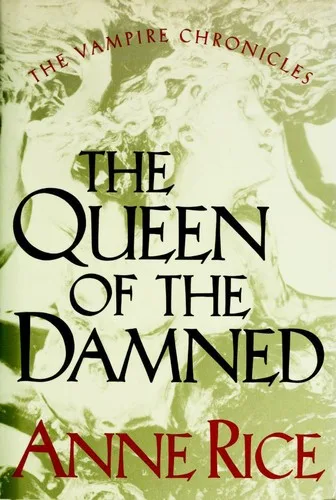
The Queen of the Damned
 76
76

The Queen of the Damned
Anne Rice’s The Queen of the Damned often feels like a meticulously crafted historical document of a fictional species, a departure from the personal dramas that anchored earlier entries. The introduction of Akasha as the primal mother figure offers a compelling, if sometimes overwhelming, expansion of the Vampire Chronicles' mythology. Rice excels at painting vast historical canvases, and here she attempts to explain the very genesis of vampirism, drawing on ancient Near Eastern motifs and a concept of a primordial, wrathful goddess. While Lestat remains a central figure, he functions more as an observer and narrator of Akasha's story. The limitation lies in the sheer density of exposition; the narrative occasionally bogs down under the weight of its own invented lore, prioritizing encyclopedic detail over character intimacy. A particular strength is the concept of the "Blood Death," a chillingly effective narrative device that raises the stakes for the entire vampire world. It’s a grand, ambitious myth-making exercise, less a character study and more an origin story for an entire supernatural race.
📝 Description
76
Published in 1988, The Queen of the Damned reveals the ancient origins of vampirism.
Anne Rice's 1988 novel, The Queen of the Damned, shifts the Vampire Chronicles' focus from Lestat to Akasha, the first vampire. The story unfolds as a historical and mythological account, tracing the creation of vampires and their existence over millennia. This narrative is framed by Lestat's modern-day struggles, creating a dual timeline that explores the deep past and the present.
The book appeals to readers interested in mythology and the reinterpretation of ancient stories. It is for those who enjoy fictional lore and want to understand the 'why' behind supernatural beings. Fans of Anne Rice's earlier works, especially those keen on the broader cosmology of her vampire world, will find this installment significant. The novel also touches on themes of power, immortality, and the divine feminine within a gothic setting.
The Queen of the Damned taps into a tradition of re-examining ancient myths and figures, particularly concerning primordial goddesses and creation stories. It places a powerful, ancient female entity at the center of vampiric existence, echoing themes found in studies of ancient matriarchal societies and goddess worship. The novel's exploration of a 'Great Awakening' and 'Blood Death' suggests a cyclical or apocalyptic worldview, common in various esoteric and religious traditions that posit periods of cosmic renewal or destruction.
💡 Why Read This Book?
• Understand the origins of vampirism as presented by Anne Rice, learning about Akasha, the first vampire, and her role in creating the species, as detailed in the narrative's extensive mythological recounting. • Explore the concept of the "Blood Death" and its implications for the vampire species, grasping the apocalyptic stakes introduced in this installment of the Vampire Chronicles. • Gain insight into the ancient history of vampires, including figures like Marius and Pandora, and their millennia-long existence shaping human civilization from obscurity, as revealed through Akasha's account.
⭐ Reader Reviews
Honest opinions from readers who have explored this book.
❓ Frequently Asked Questions
When was The Queen of the Damned originally published?
The Queen of the Damned, the third novel in Anne Rice's Vampire Chronicles, was first published in 1988, following Interview with the Vampire and The Vampire Lestat.
Who is Akasha in The Queen of the Damned?
Akasha is presented as the very first vampire, the "Mother of All Vampires," who existed at the dawn of human civilization and whose actions initiated the creation of the vampire species.
What is the significance of the 'Blood Death' in the novel?
The 'Blood Death' is a catastrophic event described in the book that threatens the extinction of all vampires, stemming from a disruption of the natural order of their existence.
Does Lestat play a central role in The Queen of the Damned?
While Lestat is present and narrates much of the story, the primary focus shifts to Akasha and the ancient history of vampires. Lestat acts more as a conduit for the ancient narrative.
What are some of the ancient civilizations mentioned in the book?
The novel alludes to ancient Mesopotamian civilizations, particularly Sumer, as the setting for Akasha's origins and the genesis of vampirism.
How does The Queen of the Damned expand on previous Vampire Chronicles books?
It moves beyond individual vampire biographies to establish a comprehensive cosmology for the vampire species, detailing their creation, ancient history, and inherent dangers.
🔮 Key Themes & Symbolism
Primal Goddess Archetype
The figure of Akasha embodies the archetype of the primordial goddess, a destructive and creative force central to ancient mythologies. Her rage and desire for order, millennia before 1988, are presented as the catalyst for the vampire race. This theme explores the dark feminine aspect within the vampire lore, positioning the first vampire not as a product of human sin or scientific accident, but as a divine, albeit terrifying, origin.
Ancient Vampire Lineage
This theme traces the lineage of vampires back to their absolute origin with Akasha. It details the subsequent millennia of their existence, their self-imposed secrecy, and their subtle influence on human history. The novel introduces the concept of ancient, powerful vampires who have lived through centuries, creating a hidden history that predates Lestat's more modern existence and provides a cosmic scale to their kind.
The Great Awakening and Blood Death
The narrative posits a cyclical destiny for vampires, culminating in 'The Great Awakening,' a prophesied era of vampire dominion, and the potential consequence of 'Blood Death,' a self-inflicted apocalypse. This concept introduces a sense of inevitable cosmic doom and the dangers inherent in the vampires' immortal existence and their struggle for power and survival.
Order vs. Chaos
Akasha's motivation for creating vampires stems from a desire to impose order on a chaotic world. However, her actions unleash a new form of chaos and imbalance. The novel explores the inherent tension between the desire for absolute control and the unpredictable nature of existence, both for individual vampires and for the species as a whole across their long history.
💬 Memorable Quotes
Direct passages from the work, attributed to the author.
“She was the first. The mother. And she was hungry.”
— This concise statement expresses Akasha's primal nature. It establishes her as the ultimate progenitor of all vampires and highlights her fundamental, insatiable need, which directly links to the creation of the bloodline and the inherent predatory nature of her offspring.
“The world was a mess. It needed to be straightened out. And she would do it.”
— This reflects Akasha's self-perceived divine mandate. It speaks to an ancient, almost god-like impulse to impose absolute order upon perceived chaos, a motivation that drives her creation of the vampire species and her subsequent actions throughout history.
“They were children of the night, but they were also children of the sun, for they carried the fire within them.”
— This paradoxical statement refers to the vampires' dual nature: their nocturnal existence and their potent, inner life force or 'fire' derived from their creation. It suggests a complex existence that transcends simple categorization, hinting at their power and their internal conflict.
“Millennia passed. We were shadows. We were legends. We were the darkness that fed the light.”
— This interpretation highlights the long, hidden history of the vampire race. It emphasizes their existence as unseen forces, shaping the world from the periphery, and their role as both consumers of life and, paradoxically, entities that fueled certain aspects of human existence or myth.
💡 Key Ideas
Editorial paraphrase of the work's core concepts — not direct quotes.
He wanted to know where we came from. He wanted to know the beginning. And so I told him.
Spoken by Akasha, this line frames the entire narrative of the book. It signifies Lestat's quest for origins and Akasha's role as the ultimate source of that knowledge, positioning her as the keeper of the deepest secrets of vampirism.
🌙 Esoteric Significance
Tradition
While not strictly adhering to a single esoteric lineage, The Queen of the Damned draws heavily on Gnostic and ancient Near Eastern mythologies, particularly Sumerian creation myths. It presents a cosmology where a primordial divine entity (Akasha) initiates a lineage with both creative and destructive potential, echoing Gnostic ideas of emanation and the flawed creation of the material world. The concept of ancient, hidden knowledge and a hidden order of beings also aligns with hermetic principles of hidden wisdom.
Symbolism
Akasha herself serves as a potent symbol of the primordial feminine, the archetypal Great Mother, embodying both life-giving and annihilating powers. The "Blood Death" represents a form of cosmic or spiritual entropy, a dire consequence of disrupting ancient natural laws. The ancient, hidden vampire covens symbolize secret societies and the hidden currents of power that influence human history, a common motif in esoteric thought.
Modern Relevance
Contemporary occult and pagan circles, particularly those exploring goddess archetypes and shadow work, find resonance in Akasha's complex portrayal. Modern vampire fiction often continues to explore themes of ancient origins and cosmic significance, building upon the mythological framework Rice established. Thinkers interested in comparative mythology and the reinterpretation of ancient deities within secular or fictional contexts also engage with the novel's ambitious myth-making.
👥 Who Should Read This Book
• Aspiring mythographers and world-builders seeking examples of extensive fictional cosmology and origin stories. • Readers interested in feminist interpretations of ancient mythology and the exploration of primal feminine power within a dark fantasy context. • Fans of Anne Rice's Vampire Chronicles looking to understand the foundational mythology and the genesis of the vampire species established in the series.
📜 Historical Context
The Queen of the Damned arrived in 1988, a period when Anne Rice had already cemented her status as a premier voice in gothic and supernatural fiction. Her earlier works, such as Interview with the Vampire (1976) and The Vampire Lestat (1985), had cultivated a dedicated following eager for further exploration of her intricate vampire universe. The late 1980s saw a resurgence of interest in vampire lore within popular culture, partly fueled by the success of films and literature that re-examined classic horror tropes. Rice’s approach, however, was distinct; rather than focusing on individual vampire psychodramas, this novel aimed to construct a grand mythology, a genesis story for the entire species. It tapped into an emerging interest in matriarchal myths and the concept of primordial goddesses, echoing academic discussions in comparative mythology and feminist theology. While not facing direct censorship, Rice’s work, like other popular occult-themed literature of the era, contributed to a broader cultural dialogue about darkness, immortality, and the supernatural, standing apart from the more traditional horror narratives of authors like Stephen King.
📔 Journal Prompts
Akasha's initial desire to impose order on the world: what does this reveal about the nature of power?
The concept of the 'Blood Death': how does this foretold end reflect on the vampires' existence?
Reflecting on the ancient vampires as 'shadows' of human history: what is their true influence?
Lestat's role as the listener to ancient tales: what does his curiosity signify?
The symbolism of Akasha as the 'Mother of All Vampires': explore her duality.
🗂️ Glossary
Akasha
The first vampire and the "Mother of All Vampires," depicted as a primordial entity from ancient Sumer who initiated the vampire bloodline through her actions.
Blood Death
A catastrophic, potentially apocalyptic event that threatens the extinction of all vampires, linked to the disruption of ancient laws and the consequences of their existence.
Great Awakening
A prophesied period when vampires are intended to emerge from hiding and openly rule the world, a concept tied to the ultimate destiny of the species.
Night Long
An ancient order or group of vampires who have existed for millennia, often living in secrecy and possessing deep knowledge of their kind's history.
Marius
A very ancient vampire, one of the first created after Akasha and her consort Enkil, who plays a significant role in preserving vampire history and lore.
Pandora
Another ancient vampire, created by Marius, who represents a different facet of vampiric existence and has lived through many human eras.
Sumer
An ancient civilization in Mesopotamia, presented in the novel as the origin point for Akasha and the genesis of vampirism.
🔮 Readers Also Liked
Browse all →








More by Anne Rice
All books →





More Free Occult Philosophy Books
View all →