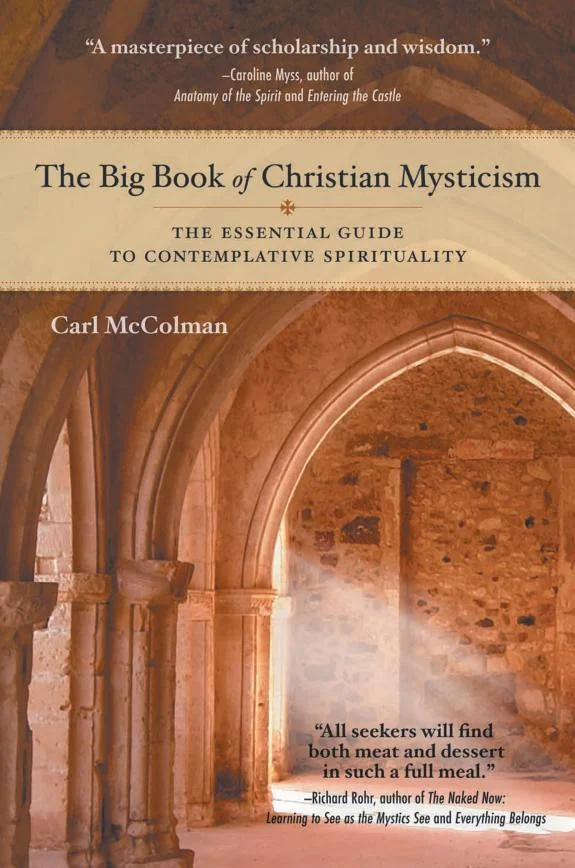
The Big Book of Christian Mysticism
 73
73

The Big Book of Christian Mysticism
Carl McColman's "The Big Book of Christian Mysticism" arrives as a necessary corrective to the popular narrative that frames mysticism as exclusively non-Western. The book effectively demonstrates that the contemplative impulse is deeply woven into the fabric of Christianity. McColman’s strength lies in his clear exposition of complex ideas, making the experiences of figures like the 14th-century mystic Julian of Norwich accessible to a contemporary audience. A particularly illuminating section discusses the concept of 'theosis,' or divinization, explaining how early Christian thought viewed human union with the divine not as mere imitation, but as participation. However, the sheer breadth of the subject matter occasionally leads to a somewhat encyclopedic tone, at times sacrificing the lived, visceral experience of the mystics for a comprehensive overview. Despite this, the book is an essential resource for anyone looking to understand the profound inner life of the Christian tradition. It succeeds admirably in its aim to illuminate this often-overlooked dimension of faith.
📝 Description
73
Carl McColman’s 2024 book argues Christian mysticism is not a fringe movement but an ancient, vital path.
This volume introduces the Christian mystical tradition, correcting the notion that mysticism is exclusive to Eastern or New Age thought. It demonstrates how practices such as meditation, contemplation, worship, and philosophical study are fundamental to experiencing the Divine within Christianity. The book argues that Christian mysticism is not an obscure sideline but a significant, long-standing way to achieve spiritual enlightenment and a direct connection with the sacred.
The book is intended for readers seeking a deeper, experiential grasp of Christian spirituality beyond mere dogma and ritual. It will appeal to those interested in the contemplative life, students of comparative religion, and anyone curious about the historical development of Christian prayer and inner life. Readers familiar with figures like Meister Eckhart, Julian of Norwich, or Teresa of Ávila will find this a useful resource for understanding their spiritual paths.
Christian mysticism forms a distinct thread within the broader esoteric traditions of Western spirituality. While often overshadowed by more widely known Eastern practices, it represents a continuous lineage of seeking direct, unmediated experience of the Divine. This tradition emphasizes inner transformation, often through contemplative prayer, meditation, and mystical theology, aiming for a union of the soul with God. Its historical development is intertwined with mainstream Christian theology but also represents a more interior and experiential approach, often expressed in the writings of figures who sought a deeper reality beyond external forms.
💡 Why Read This Book?
• Understand the historical breadth of Christian contemplative practice, from early Desert Fathers to figures like Julian of Norwich, gaining insights distinct from modern New Age interpretations. • Learn about specific contemplative techniques such as 'Lectio Divina' and the apophatic approach associated with "The Cloud of Unknowing," equipping you with actionable spiritual tools. • Grasp the concept of 'theosis' (divinization) as presented in Eastern Christianity, offering a unique theological perspective on human potential for union with the Divine.
⭐ Reader Reviews
Honest opinions from readers who have explored this book.
❓ Frequently Asked Questions
What distinguishes Christian mysticism from other spiritual traditions?
Christian mysticism emphasizes an experience of the Divine within the Trinitarian framework, often through prayer, contemplation, and sacraments, differentiating it from Eastern or New Age paths which may focus on different ultimate realities or methods.
Who were some key figures discussed in the book?
The book covers influential Christian mystics such as Meister Eckhart, Teresa of Ávila, John of the Cross, Hildegard of Bingen, and Julian of Norwich, detailing their unique paths and teachings.
Is Christian mysticism compatible with traditional Christian theology?
Yes, the book demonstrates that Christian mysticism is a deep exploration of Christian faith, rooted in scripture and tradition, often complementing or providing an experiential dimension to theological doctrines.
What is the role of contemplation in Christian mysticism?
Contemplation is central, representing a direct, loving awareness of God's presence, often cultivated through practices like silent prayer, meditation, and 'Lectio Divina' to foster intimacy with the Divine.
When was 'The Big Book of Christian Mysticism' first published?
The book was first published on November 16, 2021, making it a contemporary exploration of an ancient spiritual path.
Does the book discuss the concept of 'theosis'?
Yes, 'The Big Book of Christian Mysticism' explores 'theosis,' particularly within the Eastern Orthodox tradition, as the process of becoming united with God's divine nature through grace.
🔮 Key Themes & Symbolism
The Divine Encounter
This theme explores the core aim of Christian mysticism: the direct, personal experience of God's presence. It moves beyond intellectual assent to faith, focusing on the lived reality of communion with the Divine. The book examines how mystics across centuries, from early ascetics to figures like Teresa of Ávila, sought and described these encounters through prayer, meditation, and often, intense spiritual struggle. It highlights that this is not about achieving supernatural powers, but about a profound, transformative relationship.
Apophatic and Kataphatic Ways
The work distinguishes between two primary approaches to experiencing God. The apophatic way, exemplified by 'The Cloud of Unknowing,' emphasizes negation – approaching God by acknowledging what God is not, leading to a silent, unknowing union. Conversely, the kataphatic way uses imagery, scripture, and meditation on Christ's humanity, as practiced by Ignatius of Loyola. Understanding both paths offers a balanced perspective on the diverse methods Christians have employed to draw nearer to the Divine.
Mysticism and Tradition
A central theme is demonstrating that Christian mysticism is not a departure from, but an integral part of, Christian tradition. The book traces its lineage from the Desert Fathers and early Church theologians through the medieval period and into modern times. It argues that these contemplative practices are deeply rooted in scripture, sacraments, and the lived experience of the Church, providing a vital, often overlooked, dimension to Christian belief and practice.
Theosis and Union
This theme focuses on the concept of 'theosis,' particularly prominent in Eastern Orthodoxy, which describes the process by which Christians, through grace, participate in the divine life. It explores the idea of divinization not as a loss of self, but as a transformation and fulfillment of human nature in union with God. The book examines how this ultimate goal of mystical union has been understood and pursued throughout Christian history.
💬 Memorable Quotes
Direct passages from the work, attributed to the author.
“Christian mysticism is an ancient practice that incorporates meditation, contemplation, worship, philosophy, the quest for personal enlightenment, and the experience of Divine presence.”
— This statement frames Christian mysticism as a holistic spiritual discipline, emphasizing its active engagement with core religious practices and its goal of direct divine experience, countering the notion that it is purely passive or esoteric.
“The Cloud of Unknowing emphasizes a direct, loving gaze upon God, beyond words or concepts.”
— This highlights the apophatic (via negativa) approach central to much Christian mysticism, suggesting that true encounter with the Divine transcends intellectual understanding and language.
“Theosis is the goal of Christian life: becoming by grace what God is by nature.”
— This captures the profound concept of divinization, particularly from Eastern Christian thought, illustrating the transformative potential of grace in uniting the human person with the Divine essence.
“Lectio Divina involves a slow, contemplative reading of scripture.”
— This defines a key meditative practice within Christian mysticism, showing how sacred texts are used not just for information, but as a conduit for encountering the Divine presence.
“Julian of Norwich experienced profound mystical visions and offered comforting theological reflections.”
— This points to a specific, historically significant female mystic, illustrating the personal nature of mystical experience and its capacity for generating deep theological insight and spiritual guidance.
🌙 Esoteric Significance
Tradition
While rooted in Christianity, this work engages with themes common across esoteric traditions, particularly the pursuit of direct experience of the Divine ('gnosis' or 'union'). It bridges orthodox Christian language with universal mystical concepts of enlightenment and transcendence. Its lineage can be traced through Western Christian contemplative practice, including monasticism and the writings of figures often considered mystics rather than strict esoterics, but sharing the goal of interior transformation and direct divine contact.
Symbolism
Key symbols explored include the 'Cloud of Unknowing,' representing the ineffable mystery of God that transcends rational comprehension. The concept of 'theosis' itself functions symbolically, denoting the human potential for divine participation. The figure of Christ, particularly in depictions emphasizing his humanity (as in Ignatian contemplation), serves as a potent symbol of the bridge between the human and the Divine, making the transcendent accessible.
Modern Relevance
Contemporary interest in mindfulness, contemplative prayer, and ancient wisdom traditions finds a direct link in McColman's work. Thinkers and practitioners exploring the integration of faith and psychology, or seeking deeper spiritual grounding outside of conventional religious structures, often draw upon the rich resources of Christian mysticism. The book provides a historical and theological foundation for those seeking to understand the enduring power of contemplative practice within a Western religious framework.
👥 Who Should Read This Book
• Students of comparative religion and spirituality seeking to understand the Christian mystical tradition as a distinct path alongside Eastern or New Age practices. • Individuals interested in deepening their personal Christian faith through contemplative practices like meditation and silent prayer, looking for historical grounding and guidance. • Scholars and practitioners of Western esotericism interested in the historical antecedents and parallels within orthodox religious frameworks, particularly concerning direct experience of the Divine.
📜 Historical Context
Published in 2021, Carl McColman's work arrives at a time when interest in contemplative spirituality has seen a resurgence, yet often within a secularized or New Age context. This book anchors that interest firmly within the Christian tradition, tracing its roots back to figures like the Desert Fathers in the 4th century and the development of monasticism. It highlights key medieval figures such as Meister Eckhart and Julian of Norwich, whose works represent a flourishing of mystical theology. McColman implicitly engages with the long-standing tension between mystical experience and institutional theology, showing how contemplative paths have consistently offered a vital, experiential dimension to Christian faith, sometimes running parallel to, and occasionally challenging, dominant scholastic or dogmatic approaches. The work also implicitly contrasts with the rise of modern biblical scholarship and historical criticism, offering a counter-narrative focused on the inner, spiritual life of believers across the ages.
📔 Journal Prompts
The concept of 'theosis' and its implications for personal transformation.
Reflecting on the apophatic approach described in 'The Cloud of Unknowing'.
Comparing the role of 'Lectio Divina' with other forms of scripture study.
Exploring the historical context of figures like Julian of Norwich within medieval England.
Considering the experience of Divine presence described by Christian mystics.
🗂️ Glossary
Apophatic Theology
A theological approach that describes God by negation, emphasizing what God is not, because God's nature is considered beyond human concepts and language. Also known as the 'via negativa'.
Kataphatic Theology
A theological approach that describes God using positive affirmations, imagery, and conceptual language, often focusing on God's manifestation in creation and in the person of Jesus Christ. Also known as the 'via positiva'.
Theosis
A central concept, especially in Eastern Orthodox Christianity, referring to the process of divinization or becoming united with God through grace; humanity's potential to share in the divine nature.
Lectio Divina
A traditional monastic practice of prayerful reading of scripture, typically involving steps like reading, meditation, prayer, and contemplation, aimed at encountering God's presence.
Meister Eckhart
A 13th-14th century German theologian and mystic known for his influential, often challenging, writings on detachment, the Godhead, and the birth of God in the soul.
Julian of Norwich
A 14th-century English anchoress and mystic, famous for her book 'Revelations of Divine Love,' which recounts her mystical visions and theological reflections during a time of plague.
The Cloud of Unknowing
An anonymous 14th-century work of Christian mysticism detailing the apophatic path to God, advocating for a direct, loving gaze beyond intellectual understanding.
This book appears in 1 collection
🔮 Readers Also Liked
Browse all →




From the “Christian Mysticism” Collection
View all →








More Free Mysticism & Contemplation Books
View all →