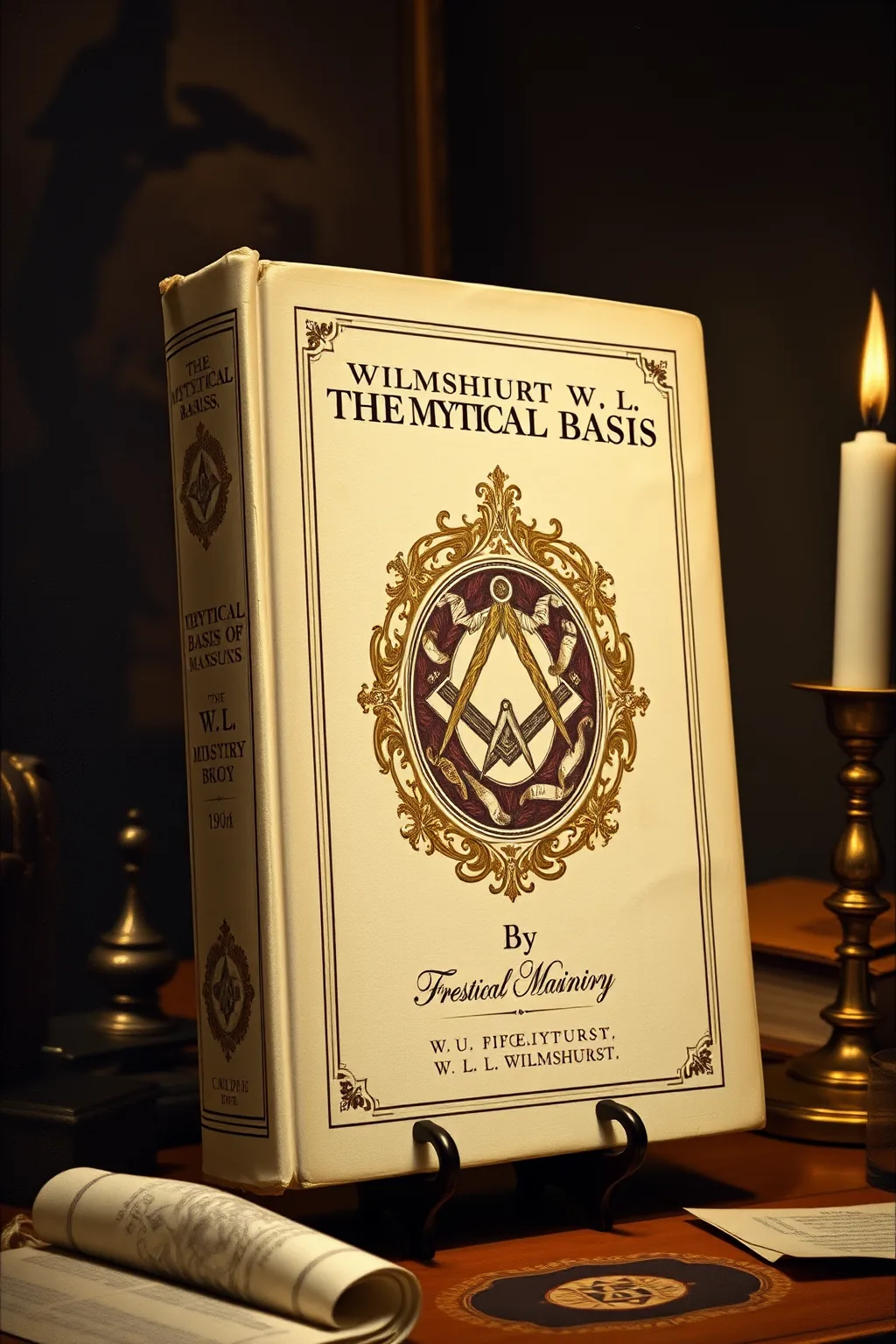
Wilmshurst W L The Mystical Basis Of Masonry
 75
75

Wilmshurst W L The Mystical Basis Of Masonry



Alaric Kestrel (Metaphysical Studies Reviewer) — 'The Mystical Basis of Masonry' by W. L. Wilmshurst is a cornerstone for any serious student of esoteric philosophy and Freemasonry. Wilmshurst transcends superficial interpretations, excavating the profound spiritual teachings embedded within Masonic symbolism. He meticulously unpacks the allegorical journeys of the degrees, revealing them as powerful metaphors for inner awakening and the pursuit of divine knowledge. This work is a beacon for those seeking to understand Masonry as a genuine spiritual discipline, offering profound insights into its ancient wisdom. Its strength lies in its lucid exposition of complex metaphysical concepts, making it accessible yet deeply resonant for practitioners and scholars alike.
📝 Description
75
W. L. Wilmshurst's 'The Mystical Basis of Masonry' examines the spiritual symbolism within Freemasonry.
This text approaches Freemasonry not merely as a fraternal organization, but as a system for personal spiritual growth. It proposes that the rituals and allegories of the Masonic degrees form a deliberate path towards self-awareness and connection with universal principles. The author interprets the symbolic language of Masonry as a guide for the individual seeking inner transformation.
The book aims to reveal the deeper philosophical and mystical dimensions often overlooked in a purely external view of the Craft. It suggests that by understanding these symbolic underpinnings, a Mason can engage in a process of spiritual evolution. The work uses allegory and ritual as tools for introspection, encouraging a recognition of the sacred within everyday life.
Wilmshurst's work is situated within the Western esoteric tradition, specifically focusing on the mystical interpretations of Freemasonry. It aligns with movements that view secret societies and ancient rituals as vehicles for spiritual knowledge and personal enlightenment, often drawing parallels with Hermeticism, Kabbalah, and other Gnostic traditions. The book reflects a 20th-century resurgence of interest in applying esoteric principles to established symbolic systems.
💡 Why Read This Book?
Embark on a transcendent exploration of Freemasonry's spiritual heart. This book is for the dedicated seeker, the Masonic practitioner yearning for deeper meaning, and the scholar of ancient wisdom traditions. Uncover the hidden allegories and philosophical underpinnings that reveal Masonry as a profound path to self-realization and spiritual enlightenment. Discover the universal truths woven into its rituals and symbols.
⭐ Reader Reviews
Honest opinions from readers who have explored this book.
❓ Frequently Asked Questions
Is this book suitable for non-Masons?
Absolutely. While it illuminates Masonic symbolism, the core teachings on spiritual growth, self-discovery, and universal truths resonate deeply with anyone on a mystical or philosophical quest.
What level of prior knowledge is assumed?
No prior knowledge of Freemasonry is strictly necessary. The author guides the reader through the symbolic language, making it accessible to earnest seekers of wisdom.
What is the primary focus of the book?
The book's primary focus is to reveal the underlying mystical and spiritual teachings of Freemasonry, interpreting its rituals and symbols as a path to inner transformation and divine connection.
Does the book offer practical applications?
Yes, it offers practical applications in the form of contemplative exercises and philosophical insights that can be integrated into one's personal spiritual practice, regardless of Masonic affiliation.
Who is W. L. Wilmshurst?
W. L. Wilmshurst was a prominent English mystic and author, known for his profound interpretations of esoteric traditions, particularly Freemasonry and Christian mysticism.
🔮 Key Themes & Symbolism
The Craft as a Spiritual Discipline
This theme explores Freemasonry not merely as a fraternal organization but as a sophisticated system designed for the spiritual development of its initiates. It posits that the rituals, symbols, and allegories serve as a 'school of the soul,' guiding individuals through stages of self-awareness, moral refinement, and ultimately, union with the Divine. The emphasis is on the inner work, the transformation of character, and the awakening of latent spiritual faculties through the structured process of Masonic degrees.
Symbolism as a Universal Language
Here, the book studies the body of Masonic symbolism, presenting it as a profound and ancient language that transcends literal interpretation. Each symbol, from the tools of operative stonemasons to abstract geometric figures, is revealed to be a key unlocking deeper spiritual and metaphysical truths. The text argues that understanding this symbolic lexicon is essential for grasping the true essence of the Craft and its connection to universal cosmic principles and ancient wisdom traditions.
The Journey of Initiation and Enlightenment
This central theme frames Masonic progression as an allegorical journey of initiation, mirroring the individual's quest for enlightenment. The degrees are presented as distinct stages of consciousness, each offering lessons and insights crucial for spiritual growth. The 'Mystical Basis' reveals this journey not as a mere ceremonial progression but as a transformative process that leads the aspirant from darkness to light, from ignorance to gnosis, and ultimately, to a more profound understanding of their own divine nature.
💬 Memorable Quotes
Direct passages from the work, attributed to the author.
“The Square teaches us to square our actions, the Compasses to circumscribe our desires.”
— This succinctly explains how fundamental Masonic tools are imbued with moral and ethical teachings, guiding the practitioner towards virtuous conduct and self-mastery.
“Each degree is a step upon the ladder of spiritual ascent.”
— This metaphor emphasizes the progressive nature of Masonic teachings, portraying the degrees as sequential stages in the aspirant's journey toward higher consciousness and spiritual understanding.
“The true Mason seeks the light within.”
— This points to the esoteric nature of Masonry, suggesting that its ultimate goal is not external recognition but the inner illumination and awakening of the divine spark within each individual.
💡 Key Ideas
Editorial paraphrase of the work's core concepts — not direct quotes.
Masonry is the outward expression of an inward reality.
This quote highlights the book's core argument: that the rituals and symbols of Freemasonry are not ends in themselves but serve as potent conduits to a deeper, spiritual truth accessible within the individual.
Silence is the vestibule of wisdom.
This quote underscores the importance of contemplation and introspection in the pursuit of knowledge, suggesting that a quiet mind is essential for receiving profound truths.
🌙 Esoteric Significance
Tradition
This work is deeply rooted in the Western Esoteric Tradition, drawing heavily from Hermeticism, Neoplatonism, and Christian Mysticism, all of which inform its interpretation of Freemasonry. Wilmshurst views Masonry as a direct descendant of ancient mystery schools, designed to transmit timeless spiritual knowledge through allegory and symbolism. It is seen as a practical vehicle for achieving gnosis and spiritual awakening, aligning with the universal quest for divine wisdom found across various esoteric lineages.
Symbolism
The book meticulously deciphers the rich symbolic language of Freemasonry. Key symbols like the Square, Compasses, Level, Plumb Rule, and the various architectural elements of the Temple are not treated as mere tools or decorations, but as profound allegorical representations of moral virtues, cosmic principles, and stages of spiritual development. Wilmshurst reveals how these symbols serve as keys to understanding the inner journey of the aspirant, guiding them towards self-mastery and divine union.
Modern Relevance
In an age often characterized by materialism and spiritual searching, 'The Mystical Basis of Masonry' offers a timeless antidote. Its emphasis on inner transformation, the power of symbolism, and the pursuit of hidden knowledge remains profoundly relevant. For both Masons seeking deeper meaning and non-Masons exploring esoteric philosophy, Wilmshurst provides a robust framework for understanding spiritual discipline, personal growth, and the enduring quest for truth in a complex world.
👥 Who Should Read This Book
This useful text is a treasure for a diverse audience. Masonic brethren seeking to deepen their understanding of the philosophical and spiritual dimensions of the Craft will find it indispensable. Scholars of comparative religion, mysticism, and secret societies will appreciate its rigorous analysis and historical context. Furthermore, any individual on a path of self-discovery and spiritual seeking, drawn to ancient wisdom, symbolism, and the transformative power of ritual, will find profound resonance and guidance within its pages, regardless of their formal affiliation.
📜 Historical Context
Written during a period of burgeoning interest in esoteric thought and spiritualism in the late 19th and early 20th centuries, W. L. Wilmshurst's 'The Mystical Basis of Masonry' emerged as a significant contribution to the literature of spiritual Freemasonry. This era saw a conscious effort by many thinkers to reinterpret traditional religious and fraternal systems through a metaphysical lens. Wilmshurst, a key figure in English mysticism, sought to bridge the gap between the exoteric practices of Masonry and its esoteric, Gnostic roots. His work resonated with those who felt the ritualistic aspects of Masonry held deeper, often unacknowledged, spiritual significance, aligning with a broader movement to revive ancient mysteries and explore consciousness.
📔 Journal Prompts
Reflect on a Masonic symbol (e.g., the Square, Compasses, or a geometric shape) and its potential spiritual meaning in your own life.
Consider the concept of 'initiation' as presented in the book. How might this apply to your personal journey of growth and learning?
Wilmshurst suggests Masonry is an 'outward expression of an inward reality.' What does this mean to you, and how can you cultivate your own inner reality?
Explore the idea of 'silence' as a path to wisdom. What are the benefits of mindful silence in your daily life?
How can the allegorical lessons of the Craft be translated into practical actions and ethical considerations in your everyday interactions?
🗂️ Glossary
Gnosis
A Greek term signifying intuitive spiritual knowledge or insight, often considered a direct apprehension of divine truth beyond intellectual understanding. It is a central concept in many esoteric traditions.
Allegory
A story, poem, or picture that can be interpreted to reveal a hidden meaning, typically a moral or political one. In this context, Masonic rituals and symbols function as allegories for spiritual truths.
Neoplatonism
A philosophical school that flourished in the Roman Empire, influenced by Plato's ideas but incorporating mystical and spiritual elements. It emphasizes the concept of the One or the Good as the ultimate source of all existence.
Hermeticism
A philosophical and religious tradition based primarily upon writings attributed to Hermes Trismegistus. It emphasizes mystical knowledge, alchemy, astrology, and the interconnectedness of the macrocosm and microcosm.
Vestibule
An antechamber, hall, or lobby, especially one next to the entrance of a building. In a spiritual sense, it represents an entryway or preparatory space for deeper understanding or experience.
This book appears in 1 collection
🔮 Readers Also Liked
Browse all →









From the “Christian Mysticism” Collection
View all →






More Free Mysticism & Contemplation Books
View all →