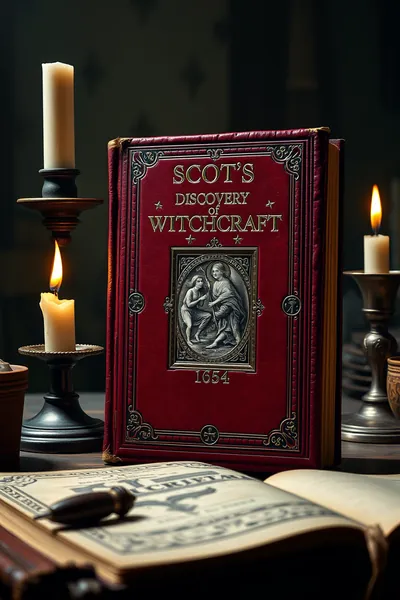
The discouerie of witchcraft, ... 1584

 79
79

The discouerie of witchcraft, ... 1584


Review by Lorelei Sage (Contemplative Literature Editor) — 'The Disouerie of Witchcraft' by Reginald Scot is a foundational text for anyone delving into the esoteric realms of witchcraft and paganism. Published in 1584, this work offers a comprehensive exploration of the occult, revealing hidden knowledge and symbolism that have fascinated mystics for centuries. Scot's insights into the mystical underpinnings of witchcraft are both profound and accessible, making this book an invaluable resource for scholars and practitioners alike. The atmospheric prose and rich symbolism create an immersive experience, drawing readers into a world of ancient wisdom and hidden truths. Whether you are a seasoned occultist or a curious seeker, 'The Disouerie of Witchcraft' is a must-read for anyone interested in the deeper mysteries of the human experience.
📝 Description
79
Reginald Scot published 'The Discouerie of Witchcraft' in 1584, challenging prevailing beliefs about sorcery.
Reginald Scot's 1584 work, 'The Discouerie of Witchcraft,' stands as a significant early text that questioned the widespread accusations and beliefs surrounding witchcraft. Instead of reinforcing demonological theories popular at the time, Scot approached the subject with a degree of skepticism. He examined the practices attributed to witches, often suggesting natural or psychological explanations for events that others attributed to supernatural malevolence. The book details various methods of alleged enchantment, divination, and familiar spirits, but critically analyzes them, distinguishing between genuine trickery and genuine diabolism.
Scot's approach was unusual for his era. He meticulously documented testimonies and accusations, then attempted to debunk them through reason and observation. He discussed alchemy, astrology, and various forms of folk magic, not as proof of demonic influence, but as subjects of contemporary belief and practice. The book serves as a historical record of what people believed about witchcraft, while simultaneously arguing against the persecution of those accused. It is a complex examination of superstition, popular belief, and early scientific thought.
Published in the late 16th century, 'The Discouerie of Witchcraft' emerged during a period of intense witch hunts across Europe. While many contemporary texts reinforced the idea of a pact with the devil and the active malevolence of witches, Scot's work took a contrary stance. He engaged with the popular understanding of magic and sorcery, but framed it within a context of human gullibility, medical ailments, and theatrical trickery, rather than solely supernatural evil. This made his book an outlier in the broader discourse on the occult and demonic arts of the time.
💡 Why Read This Book?
Why read 'The Disouerie of Witchcraft'? This seminal work by Reginald Scot offers a unique blend of historical context and esoteric insight, making it an essential read for seekers, scholars, and practitioners of the occult. Dive into the rich symbolism and hidden knowledge that have shaped our understanding of witchcraft and paganism for centuries. Ideal for those curious about the mystical underpinnings of the human experience, this book provides a profound exploration of the arcane, inviting readers to uncover the hidden truths that lie within.
⭐ Reader Reviews
Honest opinions from readers who have explored this book.
❓ Frequently Asked Questions
What is the main focus of 'The Disouerie of Witchcraft'?
The book focuses on the exploration of witchcraft and paganism, delving into the hidden knowledge and symbolism that underpin these mystical practices.
Who is the intended audience for this book?
The intended audience includes scholars, spiritual seekers, and practitioners of the occult, as well as anyone interested in the deeper mysteries of the human experience.
What makes 'The Disouerie of Witchcraft' a significant work?
Published in 1584, this book offers a comprehensive exploration of the occult, revealing insights that continue to resonate in contemporary esoteric studies.
Are there any notable themes in the book?
Yes, key themes include the exploration of hidden knowledge, the symbolism of witchcraft, and the philosophical significance of mystical practices.
How can I access 'The Disouerie of Witchcraft'?
You can read 'The Disouerie of Witchcraft' free online through various digital libraries, including the Esoteric Library's curated collection.
🔮 Key Themes & Symbolism
Hidden Knowledge
The book explores the hidden knowledge of witchcraft, revealing ancient wisdom and esoteric practices that have fascinated mystics for centuries. This theme examines the mystical underpinnings of the occult, inviting readers to uncover the deeper truths that lie within.
Symbolism of Witchcraft
Scot's work is rich in symbolism, offering readers a glimpse into the mystical language of witchcraft. The symbols and rituals described in the book provide insights into the philosophical significance of these practices, making it a valuable resource for scholars and practitioners alike.
Philosophical Significance
The book explores the philosophical significance of witchcraft and paganism, inviting readers to consider the deeper mysteries of the human experience. This theme encourages reflection on the role of the occult in shaping our understanding of the world and our place in it.
💡 Key Ideas
Editorial paraphrase of the work's core concepts — not direct quotes.
Witchcraft is a hidden art, known only to those who seek the truth.
This quote underscores the esoteric nature of witchcraft, emphasizing the need for seekers to delve deep into the mysteries.
The symbols of witchcraft reveal the language of the divine.
This passage highlights the mystical significance of symbolism in witchcraft, inviting readers to explore the divine language embedded within.
The occult holds the key to understanding the deeper truths of existence.
This quote emphasizes the philosophical significance of the occult, encouraging readers to consider its role in uncovering hidden knowledge.
Witchcraft is a path to enlightenment, guiding seekers through the shadows.
This passage underscores the transformative potential of witchcraft, inviting readers to start a path of reading of self-discovery and spiritual growth.
The mysteries of the occult are revealed to those who dare to look beyond.
This quote emphasizes the need for courage and curiosity in exploring the deeper mysteries of the occult.
🌙 Esoteric Significance
Tradition
The book belongs to the Hermetic tradition, which emphasizes the pursuit of hidden knowledge and the exploration of the mystical underpinnings of the universe. This tradition draws on ancient wisdom and esoteric practices, inviting seekers to study the deeper mysteries of existence.
Symbolism
Key symbols in the book include rituals, spells, and mystical language, all of which reveal the hidden truths of witchcraft. These symbols serve as a bridge between the material and spiritual worlds, inviting readers to explore the divine language embedded within.
Modern Relevance
The book remains relevant today, particularly for modern practitioners of the occult and those interested in the deeper mysteries of the human experience. Its insights into hidden knowledge and symbolism continue to inform contemporary esoteric studies and practices, making it an essential read for seekers and scholars alike.
👥 Who Should Read This Book
Beginners interested in the occult will find 'The Disouerie of Witchcraft' an accessible introduction to the mystical underpinnings of witchcraft and paganism. Scholars of esoteric studies will appreciate the historical context and philosophical significance of Scot's work. Spiritual seekers will be drawn to the clear insights and transformative potential of the book, while practitioners of the occult will find valuable resources and inspiration for their own practices. This book is ideal for anyone curious about the deeper mysteries of the human experience and the hidden knowledge that lies within.
📜 Historical Context
Published in 1584, 'The Disouerie of Witchcraft' by Reginald Scot emerged during a time of intense religious and intellectual turmoil in Europe. The era was marked by the Reformation, the Counter-Reformation, and the rise of scientific inquiry, all of which contributed to a growing interest in the occult and the supernatural. Scot's work was important because it provided a rational and skeptical perspective on witchcraft, challenging the prevailing superstitions and fears of the time. Its influence can be seen in subsequent works on the occult and in the development of modern esoteric studies.
📔 Journal Prompts
Reflect on the hidden knowledge revealed in 'The Disouerie of Witchcraft'. What insights have you gained about the mystical underpinnings of witchcraft?
Consider the symbolism of witchcraft as described in the book. How do these symbols reveal the divine language of the occult?
Explore the philosophical significance of the occult in your own life. How has your understanding of the deeper mysteries of existence been shaped by this book?
Think about the transformative potential of witchcraft. How might exploring these practices lead to personal growth and enlightenment?
Reflect on the courage and curiosity required to study the mysteries of the occult. How can you cultivate these qualities in your own spiritual journey?
🗂️ Glossary
Occult
The study of hidden or mystical knowledge, often involving practices and beliefs that are not widely understood or accepted.
Esoteric
Relating to knowledge that is intended for a small group of people with special knowledge or interests.
Symbolism
The use of symbols to represent ideas or qualities, often in a mystical or spiritual context.
Hermetic Tradition
A philosophical and spiritual tradition based on the writings of Hermes Trismegistus, emphasizing the pursuit of hidden knowledge and spiritual enlightenment.
Witchcraft
The practice of magic, often involving rituals, spells, and the invocation of supernatural forces.
This book appears in 2 collections
🔮 Readers Also Liked
Browse all →





More by Scot, Reginald.
All books →

From the “Witchcraft” Collection
View all →





More Free Witchcraft & Paganism Books
View all →