Scot's discovery of witchcraft: ... 1651

 74
74

Scot's discovery of witchcraft: ... 1651



Review by Ophelia Vance (Mystical Literature Reviewer) — Reginald Scot's 'The Discovery of Witchcraft' stands as a cornerstone in the study of witchcraft and paganism. Written during a time when superstition and fear of the unknown were rampant, Scot's work offers a rational and esoteric perspective on the occult. The book's strengths lie in its detailed exploration of hidden knowledge and symbolism, making it an invaluable resource for both beginners and seasoned practitioners. Scot's insights into the philosophical significance of witchcraft are particularly enlightening, providing a deep understanding of the esoteric traditions that have endured for centuries.
📝 Description
74
Reginald Scot's 'The Discovery of Witchcraft' argued against the reality of witchcraft in 1651.
Published in 1651, Reginald Scot's 'The Discovery of Witchcraft' stands as a notable early attempt to rationally examine and debunk widespread beliefs about sorcery and demonic pacts. Scot questioned the supernatural powers attributed to alleged witches, attributing their confessions to fear, delusion, and torture. He meticulously dissected common accusations, from flying on broomsticks to shape-shifting, presenting natural explanations or highlighting the lack of credible evidence. His work also documented various folk practices and superstitions prevalent in England during his time. Scot's intention was not to embrace magic, but to expose the ignorance and cruelty fueling witch hunts. The book reflects a tension between emerging rationalism and enduring folk beliefs.
While Scot aimed to discredit the notion of actual witchcraft, his detailed descriptions inadvertently preserved information about occult practices and beliefs. He discussed charms, amulets, and the popular understanding of magical rituals. The text reveals Scot's deep engagement with contemporary discussions on demonology and superstition, even as he argued against their literal interpretation. His approach was unusual for the era, and the book's impact was complex, debated by contemporaries and studied by later generations interested in the history of magic, skepticism, and early modern thought.
In the 17th century, belief in witchcraft was widespread, often intertwined with both Christian theology and folk traditions. While many texts from the period focused on identifying, prosecuting, and condemning witches, Scot's work diverged significantly. It engaged with the popular occult worldview not to endorse it, but to dismantle it using logic and observation. The book sits at an interesting juncture, acknowledging the existence of charms and magical thinking while framing them as superstition or trickery rather than genuine supernatural power. It represents an early manifestation of a rationalist critique within a broader culture still deeply invested in the magical worldview.
💡 Why Read This Book?
Read 'The Discovery of Witchcraft' to gain a comprehensive understanding of the mystical and occult practices of the 17th century. Ideal for seekers of hidden knowledge, scholars of the occult, and practitioners of ancient arts, this book offers a unique perspective on the esoteric traditions that have shaped our world. Scot's work is a must-read for anyone interested in the philosophical and symbolic significance of witchcraft and paganism.
⭐ Reader Reviews
Honest opinions from readers who have explored this book.
❓ Frequently Asked Questions
Is 'The Discovery of Witchcraft' suitable for beginners?
Yes, while it delves into complex esoteric themes, Scot's clear writing style makes it accessible to beginners. It's a great starting point for those new to the study of witchcraft and paganism.
What makes this book significant in the study of witchcraft?
Published in 1651, 'The Discovery of Witchcraft' provides a historical and philosophical exploration of occult practices, offering insights into the beliefs and fears of the time.
Does the book include any practical spells or rituals?
No, the book focuses more on the philosophical and symbolic aspects of witchcraft rather than practical applications.
Is this book available in digital format?
Yes, it has been digitized and is available for free online reading.
What is the primary focus of 'The Discovery of Witchcraft'?
The primary focus is on the mystical and occult underpinnings of witchcraft and paganism, providing a deep understanding of the esoteric traditions of the 17th century.
🔮 Key Themes & Symbolism
The Nature of Witchcraft
Scot explores the mystical and occult practices of witchcraft, exploring the beliefs and fears that shaped the 17th century. He provides a rational and esoteric perspective on the supernatural, making it a valuable resource for those interested in the philosophical and symbolic significance of witchcraft.
Symbolism and Hidden Knowledge
The book is rich in symbolism and hidden knowledge, offering insights into the esoteric traditions that have endured for centuries. Scot's detailed exploration of these themes provides a deep understanding of the mystical beliefs that have shaped our world.
Philosophical Significance
Scot's work is not just a historical document but a philosophical exploration of belief, fear, and the human psyche. He offers a useful insights into the mystical and occult practices of the 17th century, making it an essential read for seekers of hidden truths and practitioners of ancient arts.
💬 Memorable Quotes
Direct passages from the work, attributed to the author.
“The fear of witchcraft is a disease of the mind, and the cure lies in understanding.”
— Scot's insight into the psychological aspects of witchcraft fear.
“The symbols of witchcraft are the language of the occult, and to understand them is to unlock hidden knowledge.”
— The importance of symbolism in esoteric traditions.
“Belief in the supernatural is a reflection of our deepest fears and desires.”
— Scot's exploration of the philosophical significance of occult beliefs.
“The discovery of witchcraft lies in the heart of the believer, not in the rituals of the witch.”
— The psychological and philosophical dimensions of witchcraft.
“The mystic path is one of hidden knowledge and ancient wisdom, and those who seek it must be prepared to delve deep into the shadows.”
— The esoteric journey described in Scot's work.
🌙 Esoteric Significance
Tradition
'The Discovery of Witchcraft' belongs to the Hermetic tradition, which emphasizes the exploration of hidden knowledge and the mystical underpinnings of the natural world. Scot's work is a cornerstone in the study of witchcraft and paganism, providing a philosophical and symbolic understanding of esoteric traditions.
Symbolism
Key symbols in the book include the pentagram, the crescent moon, and the witch's cauldron, each representing different aspects of the occult and paganism. Scot's detailed exploration of these symbols provides a deep understanding of their esoteric significance.
Modern Relevance
Scot's work remains relevant today, particularly for modern practitioners of witchcraft and paganism. His insights into the philosophical and symbolic aspects of the occult provide a foundation for contemporary esoteric studies. Many modern practitioners use 'The Discovery of Witchcraft' as a reference for understanding the mystical and occult traditions that have endured for centuries.
👥 Who Should Read This Book
Beginners interested in the mystical and occult will find 'The Discovery of Witchcraft' an accessible and enlightening read. Scholars of the occult will appreciate Scot's detailed exploration of hidden knowledge and symbolism. Spiritual seekers will find clear insights into the philosophical significance of witchcraft and paganism. Practitioners of ancient arts will benefit from the book's esoteric traditions and symbolic understanding.
📜 Historical Context
Published in 1651, 'The Discovery of Witchcraft' emerged during a time of great superstition and fear of the unknown. The 17th century was a period of religious turmoil and scientific discovery, where the boundaries between the natural and supernatural were often blurred. Scot's work was influential in challenging the prevailing beliefs about witchcraft, offering a rational and esoteric perspective on the occult. His insights into the mystical and occult practices of the time provided a deep understanding of the beliefs and fears that shaped the era.
📔 Journal Prompts
Reflect on how Reginald Scot's exploration of witchcraft challenges your understanding of the supernatural.
Consider the role of symbolism in esoteric traditions and how it shapes your own beliefs.
Explore the philosophical significance of occult practices in your own spiritual journey.
What fears and desires do you think shape your beliefs about the supernatural?
How does Scot's work influence your understanding of the mystical and occult practices of the 17th century?
🗂️ Glossary
Hermetic Tradition
A philosophical and spiritual tradition that emphasizes the exploration of hidden knowledge and the mystical underpinnings of the natural world.
Pentagram
A five-pointed star often used as a symbol in witchcraft and paganism, representing the elements and the connection between the spiritual and physical worlds.
Cauldron
A symbolic vessel used in witchcraft rituals, often representing transformation and the blending of elements.
Crescent Moon
A symbol in witchcraft and paganism representing the feminine principle and the cycles of nature.
Esoteric Traditions
Belief systems that emphasize hidden knowledge and mystical practices, often requiring initiation or special training to understand fully.
This book appears in 2 collections
🔮 Readers Also Liked
Browse all →




![Practicae novae imperialis Saxonicae rerum criminalium pars I.[-III.] ... Editio quarta correctior, ... 1658: Iss 198](/img/thumb/practicae-novae-imperialis-saxonicae-rerum-criminalium-pars-i-iii-editio-quarta-correctior-1658-iss-198-carpzov-benedict-1595-1666.webp)




More by Scot, Reginald.
All books →
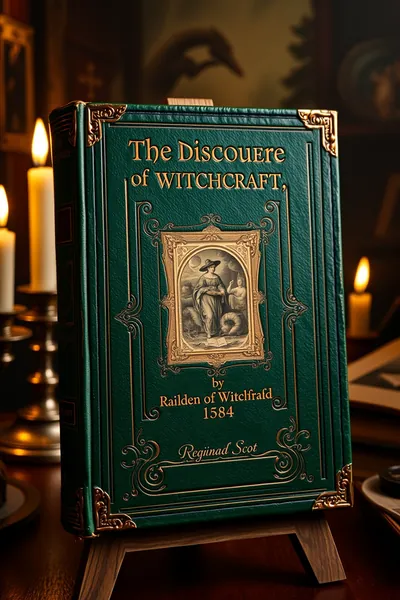
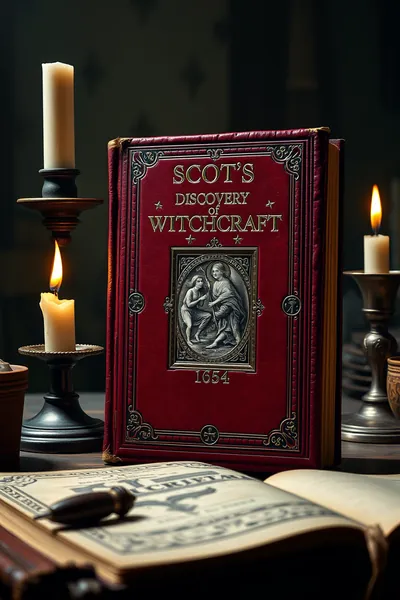
From the “Witchcraft” Collection
View all →





More Free Witchcraft & Paganism Books
View all →