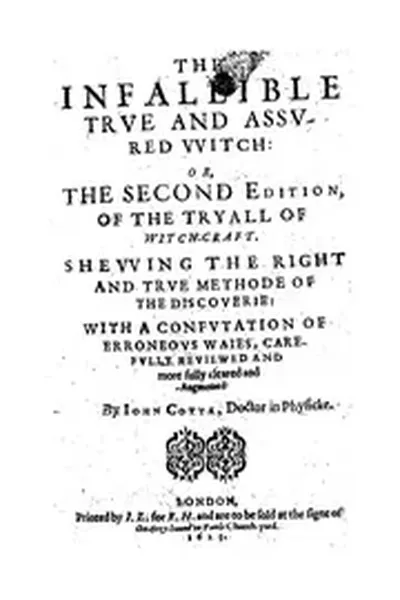
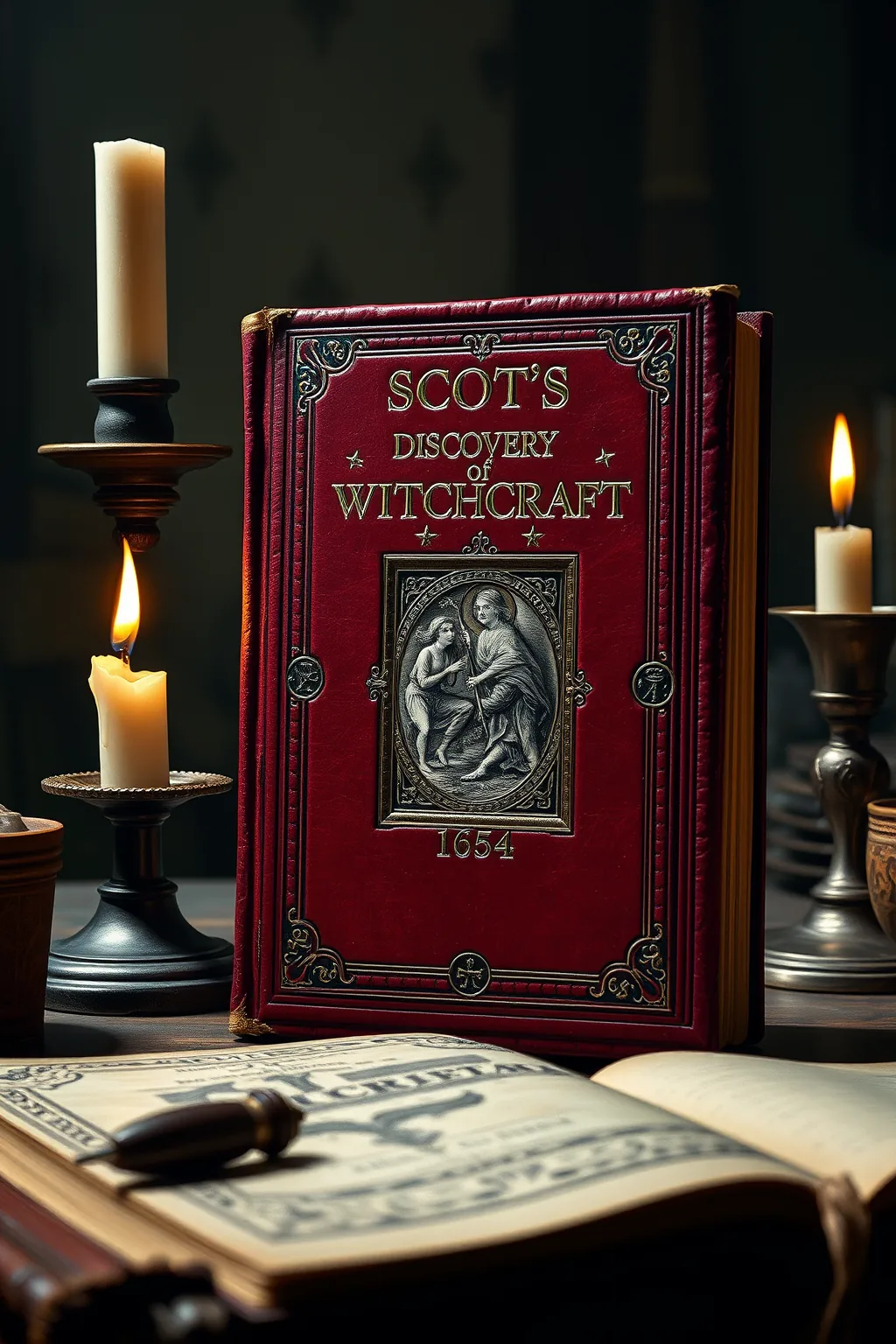
Scot's discovery of witchcraft: ... 1654
 79
79

Scot's discovery of witchcraft: ... 1654


Review by Silas Hawthorne (Hermetic Studies Editor) — 'Scot's Discovery of Witchcraft' is a cornerstone of esoteric literature that continues to captivate readers with its profound insights into the occult. Reginald Scot's meticulous examination of witchcraft and its symbolism provides a deep understanding of the mystical traditions that have shaped our world. This book is a must-read for anyone interested in the Hermetic and Gnostic traditions, as it offers a unique perspective on the philosophical and spiritual significance of witchcraft. Scot's work is particularly valuable for its historical context and its relevance to modern practitioners seeking to connect with ancient wisdom.
📝 Description
79
Reginald Scot's 1654 book questions the very existence of witchcraft.
Published in 1654, Reginald Scot's 'The Discoverie of Witchcraft' challenged prevailing beliefs about magic and sorcery. Scot, a gentleman scholar, aimed to debunk the notion that individuals possessed supernatural powers, arguing instead that reported incidents were due to natural causes, trickery, or mental illness. He meticulously cataloged various alleged magical practices, from conjuring to divination, and presented rational explanations for each.
The book is notable for its detailed descriptions of popular beliefs and superstitions of the time. Scot addressed accusations of flight, transformation, and pacts with the devil, attributing them to delusion or fabrication. His work was a significant departure from earlier texts that largely accepted and even encouraged belief in witchcraft, presenting a skeptical viewpoint grounded in empirical observation and reason. It remains a key historical document for understanding attitudes towards the supernatural in early modern England.
While often categorized as a work that debunks magic, 'The Discoverie of Witchcraft' is situated within a complex intellectual milieu. It stands in contrast to the widespread belief in witchcraft and demonology prevalent in early modern Europe, a period that saw significant persecution of accused witches. Scot's rationalist approach implicitly engages with esoteric traditions by questioning their manifestations and efficacy, offering a secular counterpoint to supernatural explanations. His work provides a historical anchor for understanding the transition from widespread belief in the occult to more empirical and rationalist worldviews.
💡 Why Read This Book?
Why read 'Scot's Discovery of Witchcraft'? This book is essential for anyone interested in the mystical and occult traditions. It offers a comprehensive exploration of witchcraft, its symbolism, and its philosophical significance. Ideal for seekers, scholars, and practitioners, this work provides timeless insights into the hidden knowledge of the supernatural world.
⭐ Reader Reviews
Honest opinions from readers who have explored this book.
❓ Frequently Asked Questions
What is the main focus of 'Scot's Discovery of Witchcraft'?
The book focuses on the exploration of witchcraft, its practices, and symbolism, offering deep insights into the mystical traditions of the occult.
Who is the intended audience for this book?
The intended audience includes scholars of the esoteric arts, spiritual seekers, and practitioners of witchcraft and paganism.
Is this book suitable for beginners?
While the book provides foundational knowledge, its depth and complexity make it more suitable for intermediate and advanced readers.
What makes this edition unique?
This edition is digitized from a rare 1654 printing, offering readers an authentic historical experience.
How does this book contribute to modern esoteric studies?
The book's detailed exploration of occult practices and symbolism provides valuable insights for modern practitioners and scholars.
🔮 Key Themes & Symbolism
Witchcraft and Symbolism
Scot's work looks at the intricate symbolism of witchcraft, uncovering the hidden meanings and rituals that have fascinated mystics for centuries. The book's detailed descriptions of occult practices provide a collection of esoteric knowledge, making it an invaluable resource for those seeking to understand the mystical underpinnings of the supernatural.
Historical Context
The book offers a comprehensive look at the historical context of witchcraft, providing insights into the societal and cultural factors that shaped the beliefs and practices of the time. This historical perspective is crucial for understanding the evolution of esoteric traditions and their relevance to modern practitioners.
Philosophical Significance
Scot's exploration of witchcraft goes beyond mere description, examining the philosophical significance of occult practices. The book's thoughtful analysis of the spiritual and metaphysical dimensions of witchcraft offers readers a deeper understanding of the esoteric arts and their place in the human experience.
💬 Memorable Quotes
Direct passages from the work, attributed to the author.
“The devil is a subtle spirit and easily disguised.”
— Scot's insight into the cunning nature of evil highlights the need for discernment in esoteric practices.
“The power of suggestion is the greatest magic of all.”
— Scot's observation on the power of suggestion emphasizes the role of the mind in shaping reality, a key concept in many esoteric traditions.
“The true witch knows that power comes from within.”
— Scot's emphasis on inner power aligns with many mystical traditions, encouraging readers to look inward for spiritual strength.
💡 Key Ideas
Editorial paraphrase of the work's core concepts — not direct quotes.
Witchcraft is a deception of the senses, a trick of the mind.
This quote underscores the psychological and symbolic dimensions of witchcraft, challenging readers to look beyond surface appearances.
The fear of witchcraft is more potent than the practice itself.
This quote explores the psychological impact of fear in shaping beliefs and practices, a theme that speaks to modern esoteric studies.
🌙 Esoteric Significance
Tradition
This book belongs to the Hermetic and Gnostic traditions, which emphasize the hidden knowledge and spiritual enlightenment. Scot's work is particularly significant for its exploration of the mystical dimensions of witchcraft, offering insights into the esoteric practices that have shaped these traditions.
Symbolism
Key symbols in the book include the pentagram, the sigil of the devil, and various magical incantations. These symbols are rich in meaning, representing the interplay between the natural and supernatural worlds. Scot's detailed descriptions of these symbols provide a deep understanding of their significance in the esoteric arts.
Modern Relevance
The book's exploration of occult practices and symbolism remains relevant today, offering valuable insights for modern practitioners and scholars. Many contemporary esoteric traditions draw on the themes and concepts presented in Scot's work, making it an essential resource for those seeking to connect with ancient wisdom.
👥 Who Should Read This Book
Beginners will find the book's foundational knowledge helpful, but its depth and complexity make it more suitable for intermediate and advanced readers. Scholars of esoteric studies will appreciate the historical context and philosophical insights. Spiritual seekers will benefit from the book's exploration of mystical traditions and their relevance to modern spiritual practices. Practitioners of witchcraft and paganism will find the detailed descriptions of occult practices and symbolism useful for their own spiritual journeys.
📜 Historical Context
Published in 1654, 'Scot's Discovery of Witchcraft' emerged during a time of significant religious and social upheaval. The era was marked by intense debates over the nature of witchcraft and its perceived threat to society. Scot's work was influential in challenging the prevailing beliefs about witchcraft, offering a rational and skeptical perspective that would shape the discourse on the occult for centuries to come. The book's detailed exploration of witchcraft practices and symbolism provided a comprehensive framework for understanding the mystical traditions of the time, making it an essential text for scholars and practitioners alike.
📔 Journal Prompts
How does Scot's exploration of witchcraft challenge your understanding of the occult?
What are the key symbols in the book, and how do they relate to your spiritual practices?
How does the historical context of the book influence your interpretation of its themes?
In what ways does Scot's work contribute to the Hermetic and Gnostic traditions?
How can the insights from this book be applied to modern esoteric studies?
🗂️ Glossary
Witchcraft
The practice of magic and sorcery, often involving rituals and symbols to invoke supernatural forces.
Occult
Refers to knowledge, practices, and beliefs that are hidden or secret, often involving mystical or supernatural elements.
Hermetic
A tradition of esoteric philosophy based on the writings attributed to Hermes Trismegistus, emphasizing hidden knowledge and spiritual enlightenment.
Gnostic
A religious and philosophical movement emphasizing personal spiritual knowledge and the rejection of materialism.
Symbolism
The use of symbols to represent abstract ideas or qualities, often in esoteric and mystical traditions.
This book appears in 2 collections
🔮 Readers Also Liked
Browse all →





More by Scot, Reginald.
All books →

From the “Witchcraft” Collection
View all →






More Free Witchcraft & Paganism Books
View all →