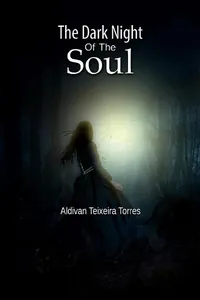
The Dark Night of the Soul

 75
75

The Dark Night of the Soul
Mal Stevens's "The Dark Night of the Soul" presents Lena Newcombe's post-loss existence with a stark, unflinching gaze. The novel’s strength lies in its meticulous rendering of Lena’s internal state; Stevens avoids cathartic resolutions, opting instead for the quiet, sustained effort of living. One particularly affecting passage describes Lena's interaction with an object from her past, which triggers not sentimentality, but a disorienting slippage between memory and present reality. A potential limitation might be the novel’s deliberate pacing, which, while effective in conveying Lena's stasis, might test the patience of readers accustomed to more dynamic plot progression. Ultimately, "The Dark Night of the Soul" is a poignant, if somber, study of enduring.
📝 Description
75
Mal Stevens's 2025 novel, The Dark Night of the Soul, examines profound loss through Lena Newcombe's quiet endurance.
The Dark Night of the Soul, by Mal Stevens, centers on Lena Newcombe, a woman confronting the aftermath of a life irrevocably altered. The narrative does not rush towards resolution; instead, it details the difficult, internal process of navigating grief and finding a new sense of stability. Stevens’s work is for readers who favor character studies over plot-driven action, and who are interested in the quiet strength required to rebuild a sense of self.
The novel focuses on the psychological impact of trauma, presenting it as a process of dismantling one's former life and identity. Memory is depicted not as a passive recording of the past, but as an active force that shapes Lena's present experience. Survival, in this context, is not an event but a continuous, daily act of courage, a slow and deliberate reconstruction of the self.
While published in 2025, The Dark Night of the Soul engages with a concept dating back to St. John of the Cross in the 16th century. His "dark night of the soul" described a period of spiritual trial and purification. Stevens adapts this notion to a modern, secular setting, focusing on psychological desolation and the internal struggle for meaning rather than a mystical spiritual crisis. The book grounds the abstract idea of spiritual desolation in the concrete experience of personal loss and the slow work of recovery.
💡 Why Read This Book?
• You will gain insight into the nuanced process of psychological resilience, learning how courage manifests not in grand gestures but in the sustained effort to rebuild a sense of self after profound disruption, as depicted in Lena's journey. • You will explore the intricate relationship between memory and identity, understanding how past experiences, even those tied to a life "undone" in 2025, actively shape one's present and future. • You will experience a literary exploration of survival as a quiet, ongoing act, distinct from conventional heroic narratives, offering a more authentic portrayal of enduring grief.
⭐ Reader Reviews
Honest opinions from readers who have explored this book.
❓ Frequently Asked Questions
What is the primary theme of Mal Stevens's 'The Dark Night of the Soul'?
The primary theme is navigating profound loss and grief, focusing on the quiet, persistent courage required to rebuild a life and sense of self after devastation. It explores resilience and the complex nature of memory.
Who is Lena Newcombe, the protagonist?
Lena Newcombe is the central character who experiences a devastating loss, leading her to confront the aftermath of a life fundamentally altered. The novel follows her journey of survival and slow recovery.
When was 'The Dark Night of the Soul' first published?
The book was first published on December 21, 2025, positioning it as a contemporary work exploring modern psychological and existential themes.
Does the novel offer a hopeful ending?
While not explicitly stated in the blurb, the description emphasizes "the slow courage it takes to begin again," suggesting a focus on the process of recovery rather than an immediate or easily achieved resolution. Hope is found in endurance.
What does the title 'The Dark Night of the Soul' refer to in this novel?
The title evokes a period of intense spiritual or psychological desolation, referencing the historical concept. In Stevens's novel, it refers to Lena's profound grief and disorientation following a life-altering loss.
Is this book related to the writings of St. John of the Cross?
While the title shares a name with St. John of the Cross's 16th-century mystical work, Mal Stevens's novel applies the concept to a modern, secular context, focusing on psychological rather than purely spiritual desolation.
🔮 Key Themes & Symbolism
The Process of Undoing
The novel meticulously details the experience of a life being "undone" by devastating loss. This isn't merely about loss itself, but the subsequent unraveling of one's established reality, identity, and future. Lena Newcombe's journey illustrates how such an event can dismantle the very foundations of existence, forcing a confrontation with emptiness and the subsequent, arduous task of discerning what, if anything, can be rebuilt from the fragments.
Memory as a Shifting Landscape
Memory in "The Dark Night of the Soul" is presented not as a static archive but as a fluid, often unreliable, and deeply personal landscape. Lena's recollections are interwoven with her present grief, blurring the lines between what was and what is. The work explores how memory can be both a source of pain and a nascent foundation for understanding oneself anew, challenging the notion of a singular, objective past.
Resilience as Quiet Endurance
Stevens redefines resilience not as an act of overcoming or triumph, but as a profound, quiet endurance. Lena's struggle to "begin again" is characterized by small, consistent acts of courage rather than grand pronouncements. The novel highlights the internal fortitude required to navigate prolonged periods of emotional desolation, focusing on the strength found in simply continuing to exist and to face each day.
Womanhood and Self-Reinvention
Fundamentally, the novel is a profound meditation on womanhood in the face of extreme adversity. Lena's experience forces a re-evaluation of her identity beyond the roles and relationships that defined her previous life. The narrative traces the difficult, often solitary, process of self-reinvention, exploring the unique challenges and inner resources women may draw upon when their world is irrevocably altered.
💬 Memorable Quotes
Direct passages from the work, attributed to the author.
“Lena navigated the wreckage of her former life, a landscape reshaped by loss.”
— This phrase captures the novel's central premise: the aftermath of devastation is not just an emotional void but a tangible alteration of reality, requiring active navigation rather than passive acceptance.
“Memory offered no solace, only the ghost of what was, mocking the present.”
— This highlights the complex and often painful role of memory in grief. Instead of providing comfort, recollections can serve as a stark reminder of absence, intensifying the feeling of being lost in the present.
“Survival was not a destination, but the slow, relentless breath of each day.”
— This interpretation emphasizes the novel's focus on endurance over dramatic recovery. It presents survival as a continuous, quiet act of living through hardship, minute by minute.
“To begin again required a courage Lena had not known she possessed.”
— This suggests that the path forward after profound loss involves discovering latent strengths. The courage needed is not overt heroism, but the internal fortitude to face the unknown and rebuild.
“The luminous novel explores the quiet, luminous novel about womanhood, resilience, and the slow courage it takes to begin again.”
— This interpretation draws directly from the original blurb, highlighting the book's focus on the internal qualities of womanhood and the subtle, persistent nature of courage required for recovery.
🌙 Esoteric Significance
Tradition
While "The Dark Night of the Soul" by Mal Stevens does not overtly belong to a specific esoteric tradition like Gnosticism or Hermeticism, its title directly invokes the mystical concept popularized by St. John of the Cross. This spiritual desolation, traditionally understood as a phase in the soul's union with the divine, is secularized here into a profound psychological crisis. The work can be seen as exploring the archetypal 'night sea journey' or descent into the underworld, a common motif across many spiritual traditions, reframed through a modern lens of personal trauma and existential reckoning.
Symbolism
The novel likely employs subtle symbolism, with the "life undone" serving as a central motif representing the destruction of established reality and self. The concept of "darkness" itself, inherent in the title, symbolizes the unknown, the void of grief, and the loss of spiritual or psychological light. Furthermore, the act of "beginning again" can be interpreted as a symbolic rebirth, a phoenix-like emergence from the ashes of loss, emphasizing transformation through profound suffering.
Modern Relevance
In contemporary discourse, the secularized "dark night of the soul" remains a potent concept for understanding periods of intense personal crisis, burnout, or existential questioning. Modern therapists and spiritual counselors often reference this archetype when guiding individuals through severe life challenges. Thinkers exploring trauma, resilience, and the phenomenology of suffering, as well as contemporary fiction writers focusing on internal psychological landscapes, draw upon this enduring concept to articulate the human experience of profound loss and the arduous path toward healing and self-discovery.
👥 Who Should Read This Book
• Readers interested in contemporary literary fiction that prioritizes psychological depth over plot, seeking a nuanced exploration of grief and resilience. • Individuals who have experienced significant personal loss and are looking for a narrative that validates the complex, often protracted, process of recovery and self-rebuilding. • Those interested in the secular interpretation of spiritual or existential concepts, particularly the archetype of the 'dark night of the soul' as applied to modern psychological challenges.
📜 Historical Context
Published in 2025, "The Dark Night of the Soul" emerges into a literary landscape still grappling with existential themes, though perhaps with less overt philosophical movements than mid-20th century existentialism. Mal Stevens's work positions itself against narratives that prioritize overt plot or dramatic resolution, aligning with a contemporary trend toward introspective, character-focused fiction. While the title echoes St. John of the Cross's 16th-century mystical text, Stevens translates this spiritual desolation into a secular, psychological crisis. This secularization of profound inner struggle finds parallels in authors like Joan Didion, whose work often explored personal loss and societal fragmentation. The novel's focus on the internal experience of grief and survival, eschewing simple catharsis, speaks to a modern audience seeking nuanced portrayals of human endurance, potentially resonating with readers who found resonance in works exploring similar themes around the time of the 2008 financial crisis or the early 2020s pandemic.
📔 Journal Prompts
Lena's experience of her life being "undone": how does this concept manifest in your own reflections?
The slow courage required to "begin again": identify a small act of persistence in your life.
Reflect on the shifting field of memory as depicted in the novel.
Consider the symbolism of "darkness" and "light" in your personal experiences of loss or challenge.
Analyze the quiet endurance Lena demonstrates: where have you found similar strength?
🗂️ Glossary
Life Undone
A state of profound disruption following a devastating loss, where the established structures of one's life, identity, and future are shattered, requiring a fundamental process of re-evaluation and rebuilding.
Dark Night of the Soul
Originally a mystical concept of spiritual desolation, in this novel it refers to a period of intense psychological crisis, grief, and disorientation resulting from trauma.
Quiet Courage
The subtle, persistent fortitude required to endure hardship and emotional pain, characterized by small, consistent acts of resilience rather than overt displays of strength.
Memory Reconstruction
The process by which memories are not passively recalled but actively reinterpreted and reshaped by present experiences, emotions, and the ongoing narrative of the self.
Resilience
The capacity to withstand or recover from difficult life experiences; in this context, it is portrayed as a slow, internal process of endurance and adaptation.
Beginning Again
The arduous journey of starting anew after a life-altering event, involving the slow and deliberate effort to establish a new sense of self and purpose.
Womanhood
The state or experience of being a woman, explored here through the lens of navigating profound loss and the subsequent process of identity reformation.
This book appears in 1 collection
🔮 Readers Also Liked
Browse all →

![[ Alexander W. Dray] The Infernal Path Dark Harvest ( Occult Publishers 2012)](/img/thumb/alexander-w-dray-the-infernal-path-dark-harvest-occult-publishers-2012-alexander-w-dray.webp)







From the “Dark Night of the Soul” Collection
View all →








More Free Occult Philosophy Books
View all →