Peter Pan
 76
76

Peter Pan
Barrie's Peter Pan presents a curious case for the Esoteric Library. While not overtly occult, its exploration of arrested development and the psychic geography of Neverland offers fertile ground for symbolic interpretation. The strength lies in its archetypal resonance; Peter's refusal to mature taps into a primal human fantasy. However, the narrative's adherence to a conventional children's story structure can sometimes obscure deeper allegorical readings for the uninitiated. The passage describing the "Lost Boys"—children who have fallen out of their prams and are taken by Peter—serves as a potent metaphor for those who have strayed from societal norms, or perhaps, from their own spiritual paths. Ultimately, Peter Pan functions less as a direct esoteric text and more as a mythic mirror reflecting enduring psychological and spiritual quandaries.
📝 Description
76
Peter Pan, published as a novel in 1911, follows the Darling children to Neverland with their ageless guide.
Sir J. M. Barrie's Peter Pan, first staged in 1904 and later novelized in 1911, tells the story of Wendy, John, and Michael Darling. These children leave behind their London home for Neverland, a place ruled by imagination and threatened by Captain Hook. Guided by Peter Pan, they experience adventures that contrast with the structured reality of Edwardian England.
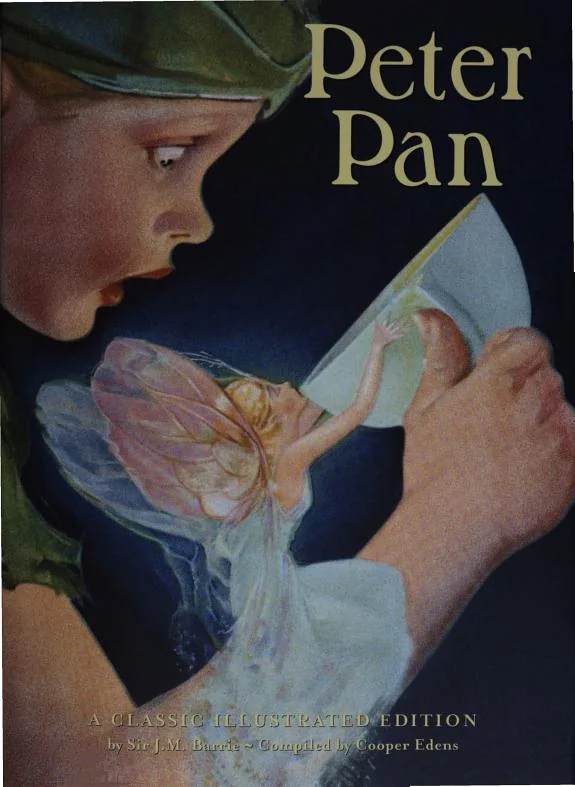
This edition includes illustrations from the late 19th and early 20th centuries, providing a visual complement to the narrative. The book touches on the desire to remain a child indefinitely, a concept that has since been named the 'Peter Pan' syndrome. Neverland acts as a symbolic setting, a mental space where fundamental wishes and anxieties take shape.
Barrie's work appeared in Britain during a time of social transformation, with the Edwardian era bridging established customs and emerging modern thought. The period saw interest in movements like Theosophy, which discussed reincarnation and spiritual growth. This cultural atmosphere provided a backdrop for stories that questioned fixed states of existence, reflecting a wider fascination with the spiritual and the unknown.
💡 Why Read This Book?
• Understand the psychological allure of eternal youth by examining Peter Pan's refusal to grow up, a concept that resonates in modern discussions of arrested development. • Explore the symbolic landscape of Neverland, which represents a psychic realm where archetypal figures like Captain Hook embody the fears and limitations of the adult world. • Appreciate the visual evolution of a classic narrative through illustrations from late 19th and early 20th-century editions, offering a glimpse into the era's aesthetic sensibilities.
⭐ Reader Reviews
Honest opinions from readers who have explored this book.
❓ Frequently Asked Questions
When was Peter Pan first published as a novel?
Peter Pan was first published as a novel in 1911, though its origins lie in a stage play that premiered in London in 1904.
What is the significance of Neverland in Peter Pan?
Neverland is a symbolic realm representing a child's imagination and a place where time and aging do not apply, serving as an escape from the realities of the adult world.
Who are the main antagonists in Peter Pan?
The primary antagonist is Captain James Hook, the vengeful pirate captain and leader of the pirates in Neverland, who harbors a deep hatred for Peter Pan.
What does Peter Pan symbolize?
Peter Pan symbolizes eternal youth, freedom from responsibility, and the untamed spirit of childhood, famously embodying the concept of someone who refuses to grow up.
Are the illustrations in this edition historically significant?
Yes, the illustrations are compiled from late nineteenth and early twentieth-century editions, providing historical context and showcasing the visual evolution of Peter Pan's imagery.
What is the origin of the Lost Boys in Peter Pan?
The Lost Boys are depicted as children who have fallen out of their prams and, not being claimed, are taken by Peter Pan to live with him in Neverland.
🔮 Key Themes & Symbolism
The Unwillingness to Mature
The central theme revolves around the refusal to transition from childhood to adulthood. Peter Pan himself is the ultimate embodiment of this, existing in a state of perpetual youth, actively resisting the natural progression of life. This concept, later termed the 'Peter Pan syndrome,' explores the psychological allure of remaining unburdened by adult responsibilities and the potential consequences of such a choice. The narrative contrasts this with the Darling children's eventual return to London and their acceptance of growing up, highlighting the inherent tension between these two states of being.
Neverland as a Psychic Landscape
Neverland is more than a mere fantasy island; it functions as a potent psychic space where the inner lives of children are externalized. It is a realm shaped by imagination, fear, and desire, populated by figures that represent various aspects of the psyche. Mermaids, pirates, and the Wild Indians are not just characters but manifestations of childhood archetypes and anxieties. The island's ever-changing nature reflects the fluid and often unpredictable range of the developing mind, a place where fantastical adventures and genuine peril coexist.
Memory and Identity
The work subtly explores how memory shapes identity, particularly in relation to childhood. Peter's inability to remember his past or his mother is a key characteristic, highlighting his detachment from conventional human development. Conversely, Wendy's role as a storyteller and keeper of memories for the Lost Boys underscores the importance of narrative in constructing personal history. The story suggests that while forgetting can offer freedom, memory is crucial for grounding oneself and understanding one's place in the world.
The Nature of Belief
Belief is a powerful force within Neverland, directly influencing the characters' experiences and abilities. The most prominent example is the belief in fairies, particularly Tinker Bell, whose existence and survival depend on the faith of children. This emphasizes the potent, almost magical, power of childhood conviction. The narrative posits that suspending disbelief allows for the extraordinary to become possible, a concept that aligns with many mystical traditions where faith is a catalyst for transformation.
💬 Memorable Quotes
Direct passages from the work, attributed to the author.
““All children, except one, grow up.””
— This iconic line immediately establishes the central premise of the story: the existence of Peter Pan as an anomaly in the natural order of human development. It sets the stage for exploring the contrasting paths of eternal childhood and inevitable adulthood.
““You always know after you’ve done something whether it was right or wrong—it’s your conscience tells you.””
— This statement, attributed to Wendy, touches upon the development of morality and conscience, a key aspect of growing up. It contrasts with Peter's apparent lack of such internal guidance, emphasizing his arrested developmental state.
““It is sad that even in the land of eternal childhood some things are forgotten.””
— This poignant observation speaks to the nature of memory and the inevitable passage of time, even in a place where growth is halted. It suggests that forgetting is a universal human experience, impacting even those who refuse to mature.
💡 Key Ideas
Editorial paraphrase of the work's core concepts — not direct quotes.
“Neverland has a gladsome air, and is the place where all the wicked dreams of every child come true.”
This quote highlights Neverland's dual nature as a place of both wish fulfillment and potential darkness. It suggests that the uninhibited desires of childhood, when given free rein, can manifest in ways that are not entirely benign, hinting at the presence of peril.
“All the world is made of faith, and yours will make you fly.”
This line directly links belief with the extraordinary, particularly the act of flying. It underscores the magical thinking inherent in childhood and suggests that conviction is a powerful force capable of overcoming physical limitations.
🌙 Esoteric Significance
Tradition
Peter Pan aligns with archetypal psychology and the concept of the eternal child, drawing parallels to Gnostic ideas of spiritual immaturity or the 'infant soul' trapped in a material world. It can also be viewed through a Hermetic lens, exploring the duality of existence—the unchanging (Peter) versus the mutable (the Darling children's growth). While not directly part of a formal esoteric lineage, its themes of escaping mundane reality and seeking a area of pure imagination connect with mystical aspirations for transcendence.
Symbolism
Peter Pan himself symbolizes the archetype of the eternal youth, the spirit that refuses to be bound by the limitations of time and societal expectation. Neverland functions as a psychic landscape, a manifestation of the collective unconscious or a dream realm where primal desires and fears take form. Captain Hook represents the shadow aspect, the personification of mortality, fear, and the encroaching forces of the adult world that Peter and the Lost Boys must confront or evade.
Modern Relevance
Contemporary interest in Peter Pan often stems from its symbolic representation of arrested development, a concept explored in modern psychology and self-help literature. Thinkers and practitioners in Jungian analysis find rich material in the archetypal figures. Furthermore, the narrative's emphasis on imagination and escapism appeals to modern subcultures seeking alternative realities or exploring themes of perpetual adolescence in art, literature, and online communities.
👥 Who Should Read This Book
• Students of archetypal psychology: Readers interested in Jungian concepts will find Peter Pan a compelling case study for the eternal child archetype and the shadow figure of Captain Hook. • Comparative mythology scholars: Those studying myths of eternal youth, trickster figures, or journeys to fantastical realms will find rich thematic material for comparison. • Readers seeking symbolic interpretations of childhood: Individuals drawn to the deeper psychological and philosophical underpinnings of classic children's literature will appreciate the allegorical dimensions of Neverland and its inhabitants.
📜 Historical Context
Sir J. M. Barrie's Peter Pan emerged in the early 20th century, a period marked by significant social shifts and burgeoning interest in psychology and the subconscious. The Edwardian era (1901-1910) was characterized by a complex interplay of rigid social conventions and a growing fascination with childhood as a distinct, idealized state. This era saw the rise of figures like Sigmund Freud, whose theories on the unconscious were beginning to gain traction, providing an intellectual climate receptive to explorations of arrested development and psychic realms. Theosophy, founded by Helena Blavatsky in the late 19th century, also offered a popular esoteric framework that explored eternal souls and spiritual evolution, creating a cultural backdrop where narratives of immortality and unchanging states held particular appeal. While Peter Pan was primarily received as a children's fantasy, its themes resonated with broader cultural inquiries into the nature of the self and the transition into adulthood.
📔 Journal Prompts
Peter Pan's refusal to grow up: explore its implications for personal development.
The symbolic geography of Neverland: map its potential representations of the psyche.
Captain Hook's motivations: analyze his role as a shadow figure.
Wendy's role as storyteller: reflect on the power of narrative in shaping identity.
The concept of belief in Peter Pan: consider its impact on reality within the story.
🗂️ Glossary
Neverland
A fantastical island where children never grow up, ruled by Peter Pan. It serves as a symbolic realm representing imagination, freedom from adult constraints, and the potential for both adventure and peril.
Lost Boys
A group of boys in Neverland who have all fallen out of their prams and been taken in by Peter Pan. They represent children who have become detached from conventional society and live in a state of perpetual childhood.
Tinker Bell
A fairy who is Peter Pan's close companion. Her existence and abilities are dependent on belief, highlighting the power of faith and imagination within the narrative's magical system.
Captain Hook
The primary antagonist, captain of the pirate ship Jolly Roger. He embodies the forces of adulthood, mortality, and vengeance, representing a direct threat to Peter Pan and his followers.
The Crocodile
A creature that consumed Captain Hook's hand and, crucially, swallowed a clock, giving it a ticking sound. It represents the relentless, inescapable march of time that Hook fears.
Shadow
In an archetypal sense, the repressed or darker aspects of the personality. Captain Hook can be interpreted as representing Peter Pan's own repressed fears of adulthood and mortality.
Archetype
A universally understood symbol, character, or pattern of behavior that recurs in human mythology and psychology, such as the eternal child or the shadow.
This book appears in 1 collection
🔮 Readers Also Liked
Browse all →









From the “Fairies” Collection
View all →






More Free Occult Philosophy Books
View all →