The Crippled Angel
 82
82

The Crippled Angel
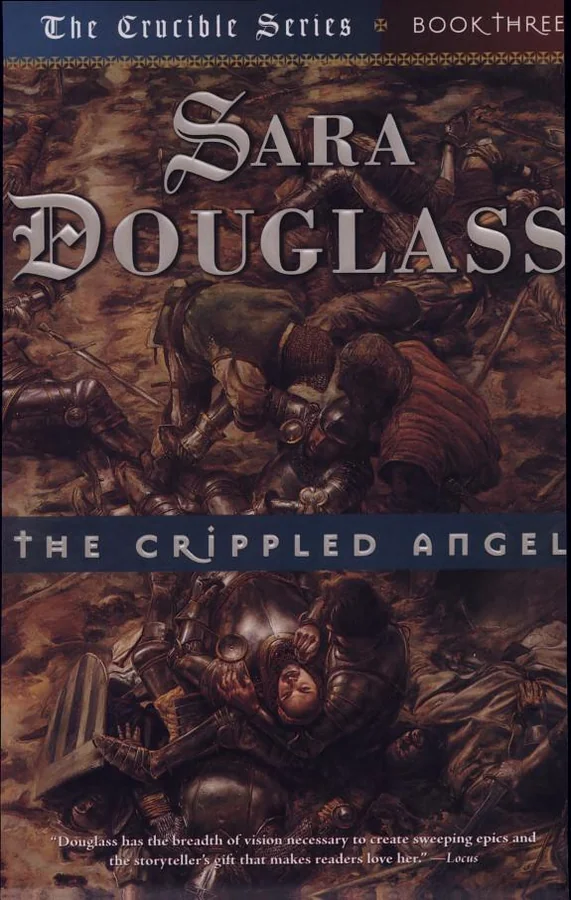
Sara Douglass concludes her medieval Roman epic with 'The Crippled Angel,' a volume that maintains the series' commitment to a grand, often dark, spiritual conflict. Thomas Neville’s pursuit of the hidden architects of moral decay is relentless, and Douglass excels at portraying the pervasive nature of this insidious evil. The strength of the novel lies in its intricate plotting and the sheer scope of its ambition, weaving together personal quests with a sweeping, cosmic struggle. However, the sheer density of the narrative, while impressive, can sometimes feel overwhelming, particularly for readers not fully immersed in the trilogy's established lore. A particular passage depicting Neville's internal struggle against despair, a manifestation of the demons' influence, vividly captures the book's thematic core. Despite its occasional narrative weight, 'The Crippled Angel' delivers a satisfyingly epic conclusion to a complex saga.
📝 Description
82
Sara Douglass concluded her trilogy with 'The Crippled Angel' in 2006, set in a reimagined medieval Rome.
Thomas Neville continues his pursuit of demonic forces in Sara Douglass's 'The Crippled Angel,' the final novel in her trilogy. Set in a vividly imagined medieval Rome, the story follows Neville as he confronts the insidious spread of moral corruption within society. Douglass crafts a world where good and evil are locked in a visible struggle, often personified by disguised malevolent entities. The narrative emphasizes the difficulty of discerning truth from deception as Neville works to uncover these hidden threats.
This novel will resonate with readers who enjoy epic fantasy that engages with substantial moral and philosophical questions. Its appeal lies in the complex character development of Neville, the richly detailed historical setting interwoven with supernatural elements, and a plot that directly addresses spiritual conflict. Familiarity with the earlier books in the series is beneficial for understanding the full scope of Neville's quest and the world he inhabits.
Published in 2006, 'The Crippled Angel' sits within a speculative fiction tradition that frequently draws on historical settings and mythological archetypes. Douglass's novel reinterprets the past by introducing supernatural elements, particularly the concept of disguised malevolent forces. The 'crippled angel' serves as a potent symbol for moral decay, suggesting a fallen or corrupted spiritual entity influencing individuals and society. The book's exploration of hidden evil and societal anxieties reflects a broader interest in the interplay between the seen and unseen worlds within contemporary speculative fiction.
💡 Why Read This Book?
• Gain insight into the symbolic representation of moral decay through Neville’s confrontation with disguised demons, a core element of the book's unique spiritual conflict. • Understand the thematic resonance of a 'crippled angel' within a medieval Roman setting, offering a specific lens on fallen divinity and corrupted influence. • Experience the culmination of a complex, multi-volume narrative that explores the interplay between individual faith and societal corruption, as Douglass brings her trilogy to a close.
⭐ Reader Reviews
Honest opinions from readers who have explored this book.
❓ Frequently Asked Questions
What is the main plot of 'The Crippled Angel'?
The book follows Thomas Neville's final pursuit of elusive, disguised demons who are systematically destroying moral values within his fantastically imagined medieval Roman world.
Is 'The Crippled Angel' a standalone novel?
No, 'The Crippled Angel' is the final volume in a trilogy. It is recommended to read the preceding books to fully understand the characters and overarching plot.
What historical period does 'The Crippled Angel' evoke?
The novel is set in a fantastically imagined medieval Rome, blending historical atmosphere with supernatural elements.
Who is the author of 'The Crippled Angel'?
The author is Sara Douglass, an Australian writer known for her fantasy novels.
What are the primary themes explored in 'The Crippled Angel'?
Key themes include the nature of good and evil, spiritual warfare, the corruption of morality, faith, and redemption.
When was 'The Crippled Angel' first published?
'The Crippled Angel' was first published on January 10, 2006.
🔮 Key Themes & Symbolism
The Nature of Hidden Evil
Douglass presents evil not as an overt force, but as a subtle, disguised corruption that infiltrates society. Thomas Neville's quest is to unmask these 'demons' who work through manipulation and the erosion of ethical standards. This theme explores how malevolence can thrive when it appears benign, forcing characters and readers alike to question appearances and the sources of moral decline in their world.
Spiritual Warfare and Faith
At its heart, 'The Crippled Angel' depicts a profound spiritual battle fought on both personal and societal levels. Neville's journey is one of maintaining his faith and moral compass against overwhelming spiritual opposition. The narrative examines the resilience of the human spirit and the power of conviction when faced with forces that seek to extinguish hope and virtue.
The Corrupted Ideal
The 'crippled angel' motif suggests a fallen or broken spiritual entity, symbolizing the perversion of what is meant to be pure or divine. This theme is central to the antagonists, who embody a twisted ideal, and potentially to characters who struggle with their own moral compromises. It speaks to the idea that even sacred or noble concepts can be corrupted and weaponized.
Medieval Rome as a Microcosm
The richly imagined medieval Rome serves as a stage for this epic struggle, acting as a microcosm of a larger world threatened by spiritual decay. The setting grounds the fantastical elements in a historical, albeit speculative, context, allowing Douglass to explore timeless questions of morality, power, and the divine within a specific, evocative atmosphere.
💬 Memorable Quotes
Direct passages from the work, attributed to the author.
“Demons are subtle, and their greatest trick is to convince you they do not exist.”
— This concept highlights the central conflict of the novel: the enemy is not overtly monstrous but insidiously hidden. It underscores the difficulty of fighting a foe that thrives on deception and denial, forcing a constant vigilance against internal and external corruption.
“Even a fallen angel carries the memory of light.”
— This concept, relating to the 'crippled angel,' implies that even corrupted beings or forces retain a vestige of their original nature. It introduces complexity, suggesting that redemption might be possible, or that the enemy's motives are not purely nihilistic but perhaps twisted by past ideals.
“Thomas Neville's search led him through shadows where morality itself seemed to fray.”
— This phrasing captures the essence of Neville's journey, portraying it as a descent into a world where ethical boundaries are blurred. It highlights the psychological and spiritual toll of confronting pervasive evil and the difficulty of maintaining one's own moral integrity.
“The architecture of Rome bore witness to centuries of human failing and divine aspiration.”
— This interpretation of the setting's symbolic weight connects the physical environment to the novel's thematic concerns. The ancient city becomes a repository of history, reflecting the eternal struggle between humanity's baser instincts and its nobler aspirations.
💡 Key Ideas
Editorial paraphrase of the work's core concepts — not direct quotes.
The true battle is not for the city, but for the souls within it.
This paraphrased idea emphasizes the spiritual dimension of the conflict. It suggests that the physical struggles and societal upheavals are secondary to the internal, moral battles fought by individuals, which ultimately determine the fate of their world.
🌙 Esoteric Significance
Tradition
While not strictly adhering to a single esoteric lineage, 'The Crippled Angel' draws heavily on Christian Gnostic themes of dualism, fallen spiritual entities, and the struggle against a corrupting Demiurge or its agents. The concept of 'crippled angels' and disguised demons aligns with Gnostic ideas of spiritual entrapment and the need for gnosis (knowledge) to overcome illusory or malevolent powers.
Symbolism
The 'crippled angel' is a potent symbol of corrupted divinity or fallen grace, representing how spiritual power can be twisted for destructive ends. The disguised demons symbolize the insidious nature of evil, which infiltrates society by appearing benign or even virtuous. Medieval Rome itself functions as a symbol of a fallen spiritual center, a once-sacred place now threatened by internal decay.
Modern Relevance
Contemporary esoteric thought, particularly within modern Gnostic-inspired or dualistic spiritual movements, finds resonance in Douglass's portrayal of hidden evil and the need for spiritual discernment. Thinkers and practitioners exploring the psychological manifestations of archetypal forces, or those examining societal structures through a lens of spiritual warfare, may draw parallels to the narrative's core conflicts.
👥 Who Should Read This Book
• Readers of epic fantasy who enjoy complex, character-driven narratives with significant spiritual and moral dimensions. • Students of comparative religion and mythology interested in how esoteric concepts like fallen angels and spiritual warfare are explored in contemporary fiction. • Fans of Sara Douglass's previous works seeking the conclusion to her trilogy set in a vividly imagined medieval Rome.
📜 Historical Context
Published in 2006, 'The Crippled Angel' by Sara Douglass arrived during a robust period for epic and dark fantasy. While Douglass's work is distinctly her own, it shares thematic ground with authors like Guy Gavriel Kay, who also blend historical settings with speculative elements. The early 2000s saw a continued fascination with intricate world-building and explorations of good versus evil. Douglass's specific focus on a spiritually corrupted medieval Rome can be seen as an engagement with enduring archetypes of fallen cities and moral decay, a theme present in literature since antiquity. The novel's emphasis on hidden, insidious evil might also reflect contemporary anxieties about societal corruption that were prevalent at the time. There is no record of significant censorship or particular reception events like major awards or specific academic citations for this particular volume, though Douglass herself was an established author in Australia.
📔 Journal Prompts
The concept of disguised demons and their methods of moral erosion.
Thomas Neville's internal struggle against despair and corruption.
Reflect on the symbolism of a 'crippled angel' within a spiritual context.
The role of medieval Rome as a setting for spiritual conflict.
How faith is maintained when faced with pervasive societal decay.
🗂️ Glossary
Crippled Angel
A symbolic entity representing a fallen, corrupted, or broken spiritual being, often associated with malevolent influence or a perversion of divine purpose.
Disguised Demons
Antagonistic forces in the novel that do not appear overtly monstrous but operate through subtle manipulation and the erosion of moral values, often hiding in plain sight.
Spiritual Warfare
The overarching conflict depicted in the book, involving a battle between good and evil forces that extends beyond the physical realm into the moral and spiritual lives of characters and society.
Medieval Rome
The specific, albeit fantastically imagined, historical setting of the trilogy, serving as a backdrop and symbolic microcosm for the novel's themes of corruption and redemption.
Moral Erosion
The gradual decline or destruction of ethical standards and values within a society or individual, a primary tactic employed by the novel's antagonists.
Gnostic Themes
Elements within the narrative that echo Gnostic philosophy, such as dualism, the presence of a corrupting force, and the importance of knowledge or spiritual discernment.
Thomas Neville
The protagonist of the trilogy, tasked with identifying and confronting the hidden forces of evil that threaten his world.
This book appears in 1 collection
🔮 Readers Also Liked
Browse all →








From the “Angels” Collection
View all →
More Free Occult Philosophy Books
View all →