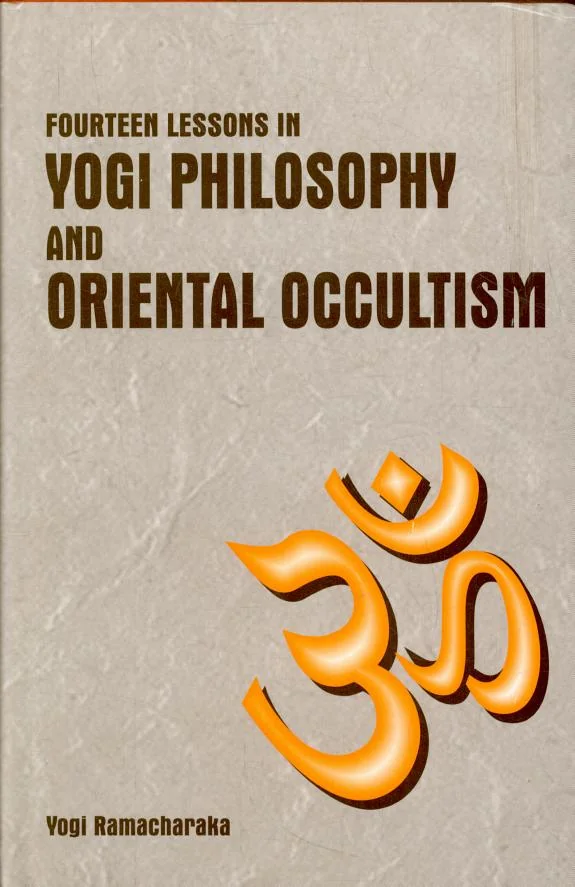
Fourteen Lessons On Yogi Philosophy And Oriental Occultism
 83
83

Fourteen Lessons On Yogi Philosophy And Oriental Occultism
The enduring appeal of 'Fourteen Lessons on Yogi Philosophy and Oriental Occultism' lies in its straightforward, lesson-based format, a deliberate choice by its author, Yogi Ramacharaka, to demystify complex Yogic concepts for a Western audience circa 1903. This approach, while effective for introduction, occasionally simplifies nuances. The strength of the work is its clear articulation of principles like the Seven Cosmic Principles, presented without the dense Sanskrit terminology that might alienate beginners. A notable limitation is the overlay of early 20th-century Western esoteric interpretations onto Eastern philosophy, which can feel dated. However, Ramacharaka's directness in explaining the mechanics of the mind and the concept of Prana remains a valuable primer. The book’s verdict: a foundational, if somewhat dated, introduction to Yogic philosophy for the curious Western mind.
📝 Description
83
Published in 1903, Fourteen Lessons on Yogi Philosophy and Oriental Occultism introduced Western readers to Yogic concepts.
Ramacharaka's 1903 book presents fourteen lessons designed to explain the core ideas of Yogi philosophy and its links to Eastern occult traditions. The author, writing under a pseudonym, intended this work as a clear introduction to complex spiritual ideas, focusing on practical application rather than academic study. It breaks down difficult concepts into manageable parts, making the esoteric accessible to a wider audience looking for knowledge outside of Western thought.
This book is for anyone interested in Eastern spiritual paths, especially those wanting to grasp the philosophy behind Yoga beyond its modern physical forms. Students of comparative religion, occultism, and metaphysics will find it a useful starting point for early 20th-century interpretations of Yogic thought. The structured, lesson-based approach suits readers who prefer a systematic way to learn about spiritual subjects.
This book emerged during a time of growing Western interest in Eastern spirituality, influenced by figures like Helena Blavatsky. It reflects the era's approach to presenting Yogic philosophy, often blending it with Western esoteric ideas for a Western audience. Many publications at this time aimed to simplify and demystify Eastern traditions for new readers, and Ramacharaka's work is part of that trend.
💡 Why Read This Book?
• Gain a structured understanding of Yogi philosophy's core tenets, such as the Seven Cosmic Principles, as presented in the early 20th century, offering a historical perspective on Western engagement with Eastern thought. • Learn practical methods for mental discipline and harnessing Prana, as detailed in the lessons, providing actionable techniques for personal spiritual development beyond mere theory. • Explore the concept of reincarnation and karma as fundamental laws governing existence, as elucidated by Ramacharaka, to deepen your comprehension of universal spiritual mechanics.
⭐ Reader Reviews
Honest opinions from readers who have explored this book.
❓ Frequently Asked Questions
When was 'Fourteen Lessons On Yogi Philosophy And Oriental Occultism' first published?
The book was first published in 1903, making it a key text from the early period of Western interest in Eastern philosophies and occultism.
Who is the author, Yogi Ramacharaka?
Yogi Ramacharaka is a pseudonym for William Walker Atkinson, a prolific writer on New Thought and esoteric subjects who sought to present Eastern philosophies in an accessible manner for Western readers.
What are the 'Seven Cosmic Principles' mentioned in the book?
The Seven Cosmic Principles, as outlined by Ramacharaka, form a metaphysical framework for understanding the universe and human existence, encompassing concepts of mind, energy, and manifestation.
Is this book about the physical practice of Yoga?
No, the book focuses primarily on the philosophical and mental aspects of Yogi philosophy, rather than the physical postures (asanas) commonly associated with modern Yoga.
Where can I find the original text of this book?
As a work first published in 1903, 'Fourteen Lessons On Yogi Philosophy And Oriental Occultism' is in the public domain and can be found in various online archives and digital libraries.
What is 'Prana' as discussed by Ramacharaka?
Ramacharaka explains Prana as the fundamental life force or energy that permeates the universe and sustains all living beings, a concept central to Yogic and Indian philosophy.
🔮 Key Themes & Symbolism
The Seven Cosmic Principles
This foundational concept structures the book, presenting a metaphysical map of existence. Ramacharaka outlines seven distinct principles, moving from the Absolute to the physical, offering a framework for understanding the universe's composition and the individual's place within it. It suggests that by comprehending these principles, one can better grasp the underlying unity of all things and the mechanics of manifestation, bridging esoteric cosmology with practical self-awareness. This is not merely theoretical; the book aims for the reader to internalize these principles for personal growth.
Mental Control and Evolution
A significant portion of the lessons is dedicated to the power and potential of the human mind. Ramacharaka details the different states of consciousness and emphasizes the importance of disciplined thought. He presents techniques for focusing the mind, asserting mental will, and directing mental energy, framing these as crucial steps in spiritual evolution. The work posits that mastery over one's thoughts is the key to unlocking higher potentials and influencing one's reality, aligning with early New Thought perspectives on the mind's creative power.
Prana and Universal Energy
The book introduces the concept of Prana, or life force, as the fundamental energetic substance of the universe. Ramacharaka explains how Prana animates all beings and how its manipulation through specific practices can lead to enhanced vitality, mental clarity, and spiritual development. This exploration of subtle energies connects the physical and mental realms, suggesting that understanding and working with Prana is essential for comprehending occult phenomena and achieving a higher state of being. It highlights an energetic perspective often overlooked in Western materialism.
Reincarnation and Karma
Ramacharaka presents reincarnation and karma not as abstract doctrines but as fundamental laws governing the soul's journey through successive lives. The lessons explain how actions and intentions in one life inevitably shape experiences in future existences, providing a framework for understanding suffering, personal responsibility, and spiritual progress. This perspective offers a rationale for the inequalities and challenges encountered in life, framing them as opportunities for learning and karmic balancing within a vast, cyclical process of evolution.
💬 Memorable Quotes
Direct passages from the work, attributed to the author.
“The mind is the great tool of the race.”
— This statement underscores the book's emphasis on mental faculties. It suggests that the mind is not merely a passive receiver of information but an active force capable of shaping reality and driving evolutionary progress, positioning mental discipline as paramount.
“Man is a little universe, a microcosm.”
— This highlights the Hermetic principle of 'As Above, So Below.' It implies that the same laws and principles governing the macrocosm (the universe) are reflected within the individual human being, suggesting that self-knowledge is key to cosmic understanding.
“Thought is a force.”
— This directly links the concept of mental activity to energetic principles. It suggests that thoughts are not ephemeral but possess tangible power that can influence oneself and the environment, supporting the idea of mental projection and manifestation.
“Prana is the etheric breath of the universe.”
— This evocative phrase describes Prana as the fundamental, animating energy pervading all existence. It positions this life force as the essential medium through which the universe breathes and sustains itself, connecting the individual to the cosmic flow.
“The law of cause and effect governs all.”
— This refers to the principle of Karma. It asserts that every action has a consequence, and understanding this universal law is crucial for navigating life's experiences and achieving spiritual liberation through conscious action.
🌙 Esoteric Significance
Tradition
This work fits within the broader Hermetic and Theosophical milieu of the late 19th and early 20th centuries, which sought to find universal spiritual truths across diverse traditions. While presenting Yogic philosophy, it does so through a lens that aligns with Western esoteric concepts of mental evolution and cosmic principles, rather than adhering strictly to orthodox Indian philosophical schools. It represents an early attempt to translate and adapt Eastern spiritual ideas into a framework understandable and applicable within a Western occult context.
Symbolism
While the book is more conceptual than symbolic, it implicitly uses the structure of the 'Seven Cosmic Principles' as a symbolic map of existence, representing the unfolding of consciousness from the Absolute to the manifest. The concept of 'Prana' itself functions symbolically as the vital, invisible breath of the universe, the energetic substrate connecting all things. The human being is often described metaphorically as a 'microcosm,' symbolizing the reflection of universal laws within the individual.
Modern Relevance
Contemporary interest in mindfulness, consciousness studies, and the philosophical underpinnings of Yoga continues to draw from works like Ramacharaka's. Modern practitioners and scholars of comparative spirituality often revisit these early 20th-century texts to understand the historical trajectory of how Eastern ideas were received and transmitted in the West. The book's focus on mental discipline and universal energetic principles continues to inform various New Age and self-help philosophies.
👥 Who Should Read This Book
• Students of early 20th-century esoteric thought seeking to understand the popularization of Eastern philosophies in the West. • Individuals interested in the philosophical and mental aspects of Yoga, who prefer a structured, lesson-based introduction over purely physical practices. • Seekers of metaphysical frameworks looking to comprehend concepts like the Seven Cosmic Principles and Prana as explained through a Western occult lens.
📜 Historical Context
First published in 1903, 'Fourteen Lessons On Yogi Philosophy and Oriental Occultism' emerged during a period of burgeoning Western interest in Eastern spiritual traditions. This era, marked by the influence of the Theosophical Society founded in 1875 and the lectures of Swami Vivekananda in the United States starting in 1893, saw a surge in books attempting to synthesize or explain Indian philosophies for a Western audience. The work reflects the prevailing Orientalist perspectives and the New Thought movement's emphasis on mental power. While competing schools of thought existed, such as the more ritualistic interpretations of Hinduism or the philosophical rigor of Vedanta presented by scholars, Ramacharaka’s approach aimed for accessibility and practical application. The book's reception was largely popular, contributing to the general dissemination of Yogic concepts, though it was not primarily an academic text engaging with critical scholarship of the time.
📔 Journal Prompts
The Seven Cosmic Principles as a framework for understanding your own existence.
Your personal definition of Prana and how you perceive its flow in daily life.
The role of disciplined thought in achieving personal goals, as presented in Lesson Four.
Reflecting on the concept of Karma in relation to your past actions and present circumstances.
The potential for mental evolution through focused intention and concentration.
🗂️ Glossary
Prana
The fundamental life force or energy that animates the universe and all living beings. Ramacharaka describes it as the universal etheric breath, essential for physical and mental vitality.
Seven Cosmic Principles
A metaphysical framework presented by Ramacharaka to explain the constitution of the universe and the human being, detailing hierarchical levels of existence from the Absolute to the physical plane.
Microcosm
The concept that the human being (microcosm) is a miniature reflection of the universe (macrocosm), containing within themselves the same fundamental laws and principles that govern the greater whole.
Mental Plane
The field of thought, consciousness, and ideas. The book emphasizes the importance of understanding and controlling the activities of the mental plane for spiritual development.
Reincarnation
The doctrine that the soul undergoes a process of rebirth into successive physical bodies, with each life offering opportunities for spiritual learning and evolution.
Karma
The universal law of cause and effect, where actions and intentions in one life determine the circumstances and experiences of future lives. It is presented as a fundamental principle of spiritual justice.
Will
The faculty of conscious choice and determination. Ramacharaka stresses the development of a strong, focused will as a key component of mental mastery and spiritual progress.
This book appears in 1 collection
🔮 Readers Also Liked
Browse all →









From the “Pranic Healing” Collection
View all →









More Free Occult Philosophy Books
View all →