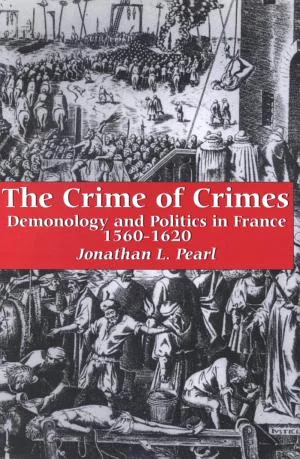
The Crime of Crimes
 82
82

The Crime of Crimes
Pearl’s "The Crime of Crimes" effectively dismantles the popular image of the witch hunts as an epoch of unremitting, nationwide slaughter. His meticulous examination of French legal records from the early modern period reveals a more complex reality, one where judicial moderation often tempered religious zeal. A particular strength lies in his demonstration of how Catholic legal officials, rather than passively executing decrees, actively resisted the more extreme demands of certain Catholic factions seeking to eliminate Protestants through accusations of sorcery. The work’s limitation, however, is its narrow geographical focus, which, while providing depth, may leave readers seeking a broader comparative analysis wanting. The discussion of how accusations of league with the devil were weaponized by a zealous Catholic faction against Protestants, yet often dismissed by French courts, is a compelling illustration of the book's central thesis. Pearl’s contribution is a crucial corrective to simplistic historical narratives.
📝 Description
82
Jonathan L. Pearl's 1999 book argues the European witch hunts were less about constant violence and more about legal and political machinations.
Jonathan L. Pearl's "The Crime of Crimes," published in 1999, reevaluates the European witch hunts, with a particular focus on France. Pearl challenges the common perception of widespread, constant violence associated with these events. Instead, he examines the legal and political mechanisms that actually governed accusations and executions. He contends that the narrative of immense bloodshed is a distorted view, often shaped by religious and political agendas rather than consistent judicial practice.
This work is aimed at scholars of early modern European history, religious studies, and legal history. It will also interest readers concerned with the socio-political factors behind mass persecutions. Those seeking an understanding of the witch trials that moves beyond sensationalism will find it valuable. Academics and advanced students who require primary source analysis of French legal records and theological disputes will find the book particularly useful.
This book fits within a tradition of historical inquiry that questions established narratives of religious persecution and supernatural belief. By focusing on the legal and political structures rather than the sensational aspects of the witch hunts, Pearl engages with a scholarly approach that seeks rational explanations for historical phenomena. His work examines how specific historical actors and institutions shaped the course of events, aligning with methods that analyze societal structures and power dynamics, even when dealing with topics often associated with folk belief or religious fervor.
💡 Why Read This Book?
• Understand the nuanced legal and political forces that shaped the witch hunts in France, moving beyond sensationalized accounts of widespread violence, as explored through Pearl's analysis of judicial records from the early modern period. • Gain insight into the strategic deployment of religious accusations, specifically how Catholic factions utilized charges of devil worship against Protestants, a concept detailed in the book's examination of political power struggles. • Appreciate the role of judicial restraint in mitigating persecution, by examining how moderate Catholic jurists in France countered extremist religious demands, a key argument presented in "The Crime of Crimes."
⭐ Reader Reviews
Honest opinions from readers who have explored this book.
❓ Frequently Asked Questions
What is the primary argument Jonathan L. Pearl makes in "The Crime of Crimes" regarding the witch hunts?
Pearl argues that the witch hunts were not uniformly or tremendously violent. He focuses on France, where he found relatively few executions, attributing this to moderate Catholic jurists who resisted zealous factions seeking to exterminate Protestants.
How did religious factions influence the witch hunts in France, according to Pearl?
Zealous Catholic factions characterized Protestants as being in league with the devil, seeking political and legal measures for their extermination. However, Pearl shows that moderate Catholic courts often refused to comply with these extreme demands.
When was "The Crime of Crimes" first published?
The book was first published on March 11, 1999.
What historical period does "The Crime of Crimes" primarily cover?
The book focuses on the early modern period in Europe, specifically examining the legal and political context of the witch hunts, with a concentrated look at the situation in France.
What is the significance of the title "The Crime of Crimes" in relation to Pearl's thesis?
The title likely refers to the persecution itself as the ultimate crime, or perhaps the mischaracterization of the witch hunts as uniformly violent is the 'crime' against historical accuracy. Pearl challenges the accepted narrative of pervasive brutality.
Who is Jonathan L. Pearl, the author of "The Crime of Crimes"?
Jonathan L. Pearl is a historian, affiliated with the University of Toronto, who specializes in early modern European history, particularly concerning religious conflicts and legal practices.
🔮 Key Themes & Symbolism
Judicial Restraint
Pearl emphasizes how moderate Catholic jurists in France acted as a crucial check against the more extreme demands of zealous Catholic factions. This "legalistic restraint" prevented widespread executions, countering the popular image of unrelenting persecution. The work analyzes how legal processes, rather than pure religious fervor, dictated outcomes, demonstrating that judicial discretion played a significant role in mitigating the scale of witch trials in the region.
Religious Accusations as Political Tools
The book explores how accusations of diabolism, particularly linking Protestants with the devil, were not solely theological condemnations but also potent political weapons. Pearl demonstrates how these accusations were employed by certain Catholic factions to destabilize and eliminate their rivals. The analysis highlights the intersection of religious belief, political ambition, and legal systems in shaping historical events.
Challenging the "Massacre" Narrative
A central theme is the reevaluation of the witch hunts, moving away from the widely held view of immense, consistent violence. Pearl presents France as a case study where comparatively fewer executions occurred, suggesting that the historical perception of the witch hunts has been exaggerated or generalized. The work aims to correct the record by focusing on specific legal and social dynamics.
The Role of Moderate Catholicism
Pearl's work gives significant attention to the influence of moderate elements within the Catholic Church, particularly among legal scholars and jurists. These individuals, while adhering to Catholic doctrine, held a more pragmatic and less fanatical approach to accusations of witchcraft and heresy, thereby influencing judicial decisions and limiting the scope of persecutions.
💬 Memorable Quotes
Direct passages from the work, attributed to the author.
“Zealous Catholic faction characterized Protestants as in league with the devil.”
— This highlights the weaponization of religious imagery and demonology during periods of intense sectarian conflict. Accusations of devil worship served as a powerful tool to demonize and justify the persecution of minority religious groups, particularly Protestants in France.
“Courts were dominated by moderate Catholics who thought very differently.”
— This points to the internal divisions within religious institutions and the presence of dissenting or moderating voices. It suggests that legal and judicial bodies often acted with more caution and less extremism than certain religious factions might have desired.
“Relatively few executions in France compared to a vision of tremendously violent witch hunts.”
— This contrasts the popular, often sensationalized, historical narrative of widespread bloodshed with the more nuanced reality observed in French legal records. It serves as the foundational argument for the book's reevaluation of the witch trials' scale.
“Sought political and legal measures to exterminate them.”
— This describes the active and systemic efforts by certain groups to eliminate religious or political opponents. It underscores that the witch hunts were not merely spontaneous outbursts of popular violence but were often driven by organized, politically motivated agendas.
“Moderate Catholics refused to go along.”
— This emphasizes the agency of judicial bodies and individuals in resisting extreme pressures. It shows that legal frameworks and the people operating them could act as a bulwark against persecution, even within a dominant religious structure.
🌙 Esoteric Significance
Tradition
While "The Crime of Crimes" is primarily a work of secular history, its examination of devil pacts and accusations of league with the devil touches upon themes relevant to certain branches of Western esotericism that engage with demonology or historical magical practices. It provides a historical counterpoint to esoteric traditions that might explore pacts or demonic alliances, grounding such concepts in the socio-political realities of persecution rather than purely spiritual or magical frameworks.
Symbolism
The central symbol explored, though not in a mystical sense, is the 'devil' or 'demon.' In the context of the book, this symbol functions as a powerful tool of accusation and political manipulation, representing evil and opposition. The concept of a 'pact with the devil' becomes a legal and rhetorical construct used to condemn and eliminate rivals, rather than an actual occult ritual, highlighting how potent symbols can be appropriated for earthly power struggles.
Modern Relevance
Contemporary scholars and practitioners interested in the history of religious intolerance, the sociology of belief, and the manipulation of ideology can draw from Pearl's work. It offers a critical lens for understanding how accusations of evil or association with dark forces are used to marginalize and persecute groups, a dynamic that unfortunately persists in various forms today. The book's analysis of legal and political systems as arbiters of truth remains relevant.
👥 Who Should Read This Book
• Academic historians specializing in early modern Europe, religious history, or legal history seeking to refine their understanding of the witch trials beyond common narratives. • Students of comparative religion and political science interested in how religious accusations are used as tools of power and social control. • General readers with a keen interest in the historical context of persecution and the complexities of justice systems, looking for a fact-based reevaluation of a controversial historical period.
📜 Historical Context
First published in 1999, Jonathan L. Pearl's "The Crime of Crimes" emerged during a scholarly period focused on revising and regionalizing the study of the European witch hunts. The preceding decades had seen significant scholarship, notably by historians like H.C. Erik Midelfort and Brian Levack, who analyzed the legal and social dimensions of witchcraft accusations. Pearl’s work directly engages with the established narrative, questioning the widespread assumption of immense violence. He specifically challenges the notion of a uniformly brutal phenomenon by examining the legal structures and moderate Catholic influence within France. This contrasted with earlier, more generalized accounts and offered a counter-narrative to scholarship that might have overemphasized the role of popular panic or consistent state-sanctioned terror. The book's reception likely contributed to ongoing debates about the specificities of legal systems and religious policies in different regions during the early modern era.
📔 Journal Prompts
The concept of "legalistic restraint" as a factor in the witch hunts.
How accusations of being "in league with the devil" functioned as political tools.
The role of moderate Catholic jurists in shaping judicial outcomes.
Contrasting the vision of "tremendously violent" witch hunts with French realities.
The intersection of religious zeal and legal process in early modern France.
🗂️ Glossary
Witch Hunts
Periods in early modern Europe (roughly 15th-18th centuries) characterized by widespread accusations, trials, and executions of individuals, predominantly women, accused of practicing witchcraft and making pacts with the devil.
Demonology
The study of demons or beliefs about demons. In the context of witch hunts, it refers to the theological and legal frameworks that defined witchcraft as a heresy involving pacts with Satan.
Zealous Catholic faction
A group within the Catholic Church exhibiting extreme religious fervor and advocating for aggressive measures, such as persecution, against perceived heretics or enemies, in this case, Protestants.
Moderate Catholics
Individuals or groups within the Catholic Church who held more measured views, particularly concerning legal and judicial matters, often acting as a counterpoint to more extreme or fanatical elements.
Legalistic Restraint
A concept suggesting that judicial processes and the adherence to legal procedures, even within a context of religious belief, could limit the extent of persecution and prevent overly harsh sentences.
Diabolism
Worship of the devil. In the context of witch trials, it refers to the accusation that individuals engaged in pacts with the devil and participated in satanic rituals.
Sectarian Conflict
Disputes or hostility between different religious groups or sects, such as the conflict between Catholics and Protestants in early modern France.
This book appears in 2 collections
🔮 Readers Also Liked
Browse all →









From the “Witchcraft” Collection
View all →






More Free Occult Philosophy Books
View all →