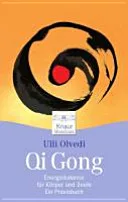
Qi-Gong
 84
84

Qi-Gong
Ulli Olvedi's 'Qi-Gong' offers a welcome departure from purely physical instruction, grounding the practice in its historical and philosophical origins. The section detailing the energetic pathways, or meridians, provides a clear, albeit brief, introduction to a concept often left opaque in less rigorous texts. However, the book's brevity, particularly concerning the practical application of advanced techniques, may leave seasoned practitioners wanting more depth. A specific passage on the 'Three Treasures' (Jing, Qi, Shen) offers a concise overview, but could benefit from more extensive examples. Olvedi's work is a solid primer, though not an exhaustive manual.
📝 Description
84
Ulli Olvedi's Qi-Gong, published in 2007, examines the ancient Chinese practice of cultivating vital energy.
This book details the practice of Qi-Gong, a method for developing and balancing vital energy, known as Qi, originating in China. Olvedi wrote for those who want to understand Qi-Gong more thoroughly than just its physical exercises. The work addresses practitioners interested in the philosophy, history, and subtle energetic aspects of the practice.
Olvedi places Qi-Gong within its historical and philosophical context, showing its connections to traditional Chinese medicine, Taoism, and martial arts. The book traces how these practices developed from ancient monastic forms into contemporary health methods. It breaks down Qi-Gong's main elements, such as breathing techniques, postures, meditation, and the concept of meridians. The author stresses how mind, body, and spirit work together to achieve energetic balance and health.
Qi-Gong belongs to a rich lineage of internal alchemy and energetic cultivation practices found across East Asia. These traditions, including Taoist Neidan (internal alchemy) and Buddhist meditation, seek to transform the practitioner's vital energy, consciousness, and physical body. Olvedi's work connects Qi-Gong to these broader esoteric currents, emphasizing its role not just as a health exercise but as a method for spiritual development and achieving a harmonious state of being. It highlights how the deliberate manipulation of Qi through posture, breath, and intention is central to these internal arts.
💡 Why Read This Book?
• Learn the foundational principles of Qi cultivation as outlined in the text, understanding the interplay of breath, movement, and intention, a core tenet of Taoist energy work. • Grasp the historical lineage of Qi-Gong, tracing its development from ancient Chinese practices to its modern forms, as discussed in the historical context section. • Understand the concept of the 'Three Treasures' (Jing, Qi, Shen) and their significance for vital energy balance, a key philosophical element presented within the book.
⭐ Reader Reviews
Honest opinions from readers who have explored this book.
❓ Frequently Asked Questions
What is the primary focus of Ulli Olvedi's Qi-Gong book?
The book primarily focuses on the philosophical underpinnings and historical context of Qi-Gong, exploring the cultivation of vital energy (Qi) and its connection to traditional Chinese medicine and Taoism.
When was Ulli Olvedi's Qi-Gong book first published?
Ulli Olvedi's book on Qi-Gong was first published in 2007, offering a contemporary perspective on ancient practices.
Does the book provide practical exercises for Qi-Gong?
While the book discusses core components like breathwork and postures, its emphasis is more on the theoretical and energetic principles rather than a comprehensive guide to performing specific exercises.
Who would benefit most from reading this book?
Individuals interested in the deeper meaning and historical background of Qi-Gong, practitioners seeking to understand the energetic aspects, and students of traditional Chinese philosophy would find this book beneficial.
What is the concept of Qi as explained in Olvedi's work?
Qi is explained as the vital life force or energy that flows through all living things, and Qi-Gong is presented as the practice of cultivating, balancing, and directing this energy for health and well-being.
How does this book relate to Taoism?
The book connects Qi-Gong practices to Taoist principles, particularly regarding the cultivation of internal energy, harmony with nature, and the pursuit of longevity and vitality, central themes in Taoist philosophy.
🔮 Key Themes & Symbolism
Energetic Cultivation (Qi)
The central theme revolves around Qi, the vital life force inherent in all existence. Olvedi elaborates on how Qi-Gong practices are designed to gather, refine, and circulate this energy within the body's energetic pathways. This concept is rooted in ancient Chinese cosmology and traditional medicine, where the harmonious flow of Qi is considered essential for health, vitality, and spiritual development. The book explores how conscious breathing and specific movements facilitate this internal energetic work.
Historical and Philosophical Roots
Olvedi situates Qi-Gong not merely as a physical exercise but as a discipline deeply embedded in Chinese history and philosophy. The work traces connections to Taoism, Buddhism, and traditional Chinese medicine, highlighting how these practices evolved over centuries. Understanding these origins provides context for the deeper purpose of Qi-Gong, moving beyond superficial interpretations to appreciate its role in self-cultivation and achieving balance with the natural world.
The Three Treasures
A significant concept explored is that of the 'Three Treasures' – Jing (essence), Qi (vital energy), and Shen (spirit). Olvedi explains how these fundamental aspects of human existence are interconnected and how Qi-Gong practices aim to nourish and harmonize them. Cultivating Jing ensures foundational vitality, Qi provides the active life force, and Shen represents consciousness and mental clarity, all essential for holistic well-being and spiritual awareness.
Mind-Body-Spirit Integration
The book consistently emphasizes the holistic nature of Qi-Gong, treating the mind, body, and spirit as an inseparable unit. It illustrates how focused intention (Yi) directs Qi, how physical postures (Xing) facilitate its flow, and how breath (Xi) acts as the bridge between the physical and energetic realms. This integration is presented as the pathway to profound health, emotional balance, and a deeper connection to oneself.
💬 Memorable Quotes
Direct passages from the work, attributed to the author.
“Qi is the fundamental substance that animates all life.”
— This highlights the core metaphysical principle that Qi is not merely an abstract concept but the very essence of existence, the animating force that differentiates the living from the inert.
“The practice of Qi-Gong is a method for harmonizing the internal landscape.”
— This interpretation points to the internal focus of Qi-Gong, suggesting that its primary benefit lies in bringing balance and order to one's inner energies and mental states, rather than solely external physical conditioning.
“Breath is the bridge between the physical and the energetic.”
— This emphasizes the critical role of controlled respiration in Qi-Gong, positioning it as the primary tool for consciously interacting with and influencing the body's vital energy flow.
“Jing, Qi, and Shen are the three vital pillars of human existence.”
— This interpretation underscores the foundational importance of these three elements – essence, energy, and spirit – suggesting that their cultivation and balance are paramount for overall health and vitality.
“The goal is not just physical health, but also mental clarity and spiritual awareness.”
— This clarifies that Qi-Gong's aims extend beyond mere physical well-being, encompassing the development of cognitive functions and a deeper connection to one's spiritual nature.
🌙 Esoteric Significance
Tradition
Qi-Gong belongs to the Taoist tradition, a major philosophical and religious system originating in China. It aligns with Taoist principles of cultivating internal harmony, longevity, and alignment with the Tao (the Way). Olvedi's work fits within this lineage by exploring the energetic cultivation practices that are central to Taoist self-mastery and spiritual development, moving beyond mere physical exercise to address the cultivation of vital essence and spirit.
Symbolism
Key symbols include the concept of Qi itself, representing the invisible life force flowing through all things, akin to the 'prana' in Indian traditions. Meridians are symbolic pathways within the body, like rivers carrying this vital energy, crucial for health. The 'Three Treasures' – Jing (essence), Qi (energy), and Shen (spirit) – symbolize the fundamental constituents of a balanced and vital human being, representing the physical, energetic, and conscious aspects.
Modern Relevance
Modern practitioners of holistic health, mindfulness, and alternative medicine draw significantly from Qi-Gong principles. Thinkers and practitioners in fields like somatic psychology, energy healing, and integrative medicine often reference the concepts of Qi flow and energetic balance. Contemporary schools of Qi-Gong and Tai Chi Chuan continue to evolve these practices, informed by foundational texts and philosophies that Olvedi’s work helps to illuminate for a broader audience.
👥 Who Should Read This Book
• Students of traditional Chinese medicine and philosophy seeking to understand the energetic basis of health and well-being as explored in the 2007 text. • Practitioners of contemplative arts and martial disciplines interested in the underlying principles of energy cultivation and mind-body integration. • Individuals exploring holistic health approaches who wish to learn about the historical and philosophical context of Qi-Gong beyond basic exercise routines.
📜 Historical Context
Published in 2007, Ulli Olvedi's 'Qi-Gong' emerged during a period of significant global interest in Eastern contemplative and physical practices. While Qi-Gong itself has ancient roots, its popularization in the West saw a surge in the late 20th century. Olvedi's work entered a landscape already populated by many books, some focusing on martial applications, others on therapeutic benefits. Notably, the 2000s saw increased academic and clinical interest in mind-body practices, aligning with Olvedi's approach of grounding Qi-Gong in traditional philosophy and medicine, distinguishing it from purely secularized fitness trends. Contemporaries like Mantak Chia were already well-established, offering extensive systems, while Olvedi's contribution focused on a more concise, philosophically-driven overview. The reception in this crowded field likely favored works that offered clear theoretical frameworks, which Olvedi's text aimed to provide.
📔 Journal Prompts
The concept of Qi as vital energy and its flow through meridians.
The interconnectedness of Jing, Qi, and Shen.
How breathwork facilitates the connection between physical and energetic states.
The historical evolution of Qi-Gong practices.
The role of intention (Yi) in directing energetic cultivation.
🗂️ Glossary
Qi
The fundamental vital life force or energy that animates all living beings and permeates the universe. Its harmonious flow is considered essential for health and well-being in Chinese traditions.
Gong
Meaning 'work,' 'achievement,' or 'cultivation.' In Qi-Gong, it refers to the skill and effort developed through consistent practice of cultivating Qi.
Meridians
A network of invisible channels or pathways within the body through which Qi is believed to flow, connecting organs and tissues.
Jing
Often translated as 'essence,' it represents the fundamental physical and reproductive energy or vitality stored in the body, considered a foundational 'Treasure'.
Shen
Translated as 'spirit' or 'mind,' it refers to consciousness, awareness, and mental clarity, the third of the 'Three Treasures'.
Taoism
An ancient Chinese philosophy and religion emphasizing living in harmony with the Tao (the Way), characterized by principles of balance, naturalness, and effortless action (wu wei).
Three Treasures
The fundamental constituents of life in Taoist philosophy: Jing (essence), Qi (vital energy), and Shen (spirit). Their balance is crucial for health and longevity.