Mindfulness
 78
78

Mindfulness
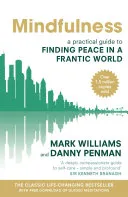
Mark Williams and Danny Penman’s 2011 bestseller, Mindfulness: A Practical Guide to Finding Peace in a Frantic World, succeeds remarkably in its stated aim: to offer a practical path to calm in an age of constant distraction. Its strength lies in its no-nonsense, step-by-step approach, presenting mindfulness not as a mystical pursuit but as a trainable skill. The book’s integration of scientific findings, particularly its nod to the work of Jon Kabat-Zinn and the development of Mindfulness-Based Cognitive Therapy (MBCT), lends it considerable authority. A potential limitation, however, is that for readers deeply entrenched in existential angst, the focus on practical application might feel somewhat insufficient in addressing the root philosophical questions of suffering. The guided meditations, particularly the body scan exercise, are well-explained and serve as effective anchors. Ultimately, this book provides a clear, accessible toolkit for managing everyday stress.
📝 Description
78
Published in 2011, Mindfulness offers a structured path to calm in a busy world.
Mark Williams and Danny Penman's 2011 book, Mindfulness: A Practical Guide to Finding Peace in a Frantic World, translates meditation principles into daily practices. It clarifies that mindfulness is not about stopping thoughts but observing them without judgment, aiming to reduce stress and improve focus. The authors present these techniques as accessible for anyone feeling overwhelmed or anxious, irrespective of prior meditation experience. This guide equips readers with actionable methods to build mental resilience and emotional balance.
The book addresses the common human tendency to dwell on the past or anticipate the future, which often causes distress. By teaching readers to anchor their attention in the present moment, it provides a way to interrupt these unhelpful mental cycles. The authors explain how this practice can lead to a clearer perspective and a greater sense of peace even amidst life's demands. Their approach is grounded in empirical research, making mindfulness a practical tool for modern well-being.
While mindfulness has roots stretching back millennia in Buddhist traditions, this book secularizes its practice. It presents mindful awareness not within a religious or spiritual framework, but as a psychological tool for managing stress and enhancing well-being. This demystified approach aligns with a broader trend in the late 20th and early 21st centuries, where ancient contemplative practices were adapted for Western audiences and integrated into therapeutic and healthcare settings, often diverging from their original monastic or devotional contexts.
💡 Why Read This Book?
• Learn a structured 8-week program for cultivating mindfulness, directly inspired by the development of Mindfulness-Based Cognitive Therapy (MBCT) in the early 1990s, offering a proven framework for reducing stress. • Discover practical exercises, such as the 'raisin exercise' detailed in Chapter 2, that train your attention to anchor you in the present moment, fostering a calmer internal state. • Gain insight into the mental habits that fuel anxiety and rumination, learning how to observe these patterns without getting caught up in them, as discussed throughout the book’s exploration of thought processes.
⭐ Reader Reviews
Honest opinions from readers who have explored this book.
❓ Frequently Asked Questions
What is the core philosophy behind the mindfulness taught in this book?
The core philosophy is secular mindfulness, focusing on non-judgmental awareness of the present moment. It's about observing thoughts and feelings as they arise, rather than trying to empty the mind, drawing from traditions but secularized for modern application.
How does this book differ from purely spiritual meditation guides?
This book emphasizes practical application and scientific backing, particularly its roots in MBCT, developed in the 1990s. It aims to reduce stress and anxiety in everyday life, rather than focusing on spiritual enlightenment or esoteric doctrines.
Is there a specific program or timeline recommended by the authors?
Yes, the book outlines an 8-week program designed to systematically introduce and deepen mindfulness practices, mirroring the structure of MBCT courses.
What kind of exercises can I expect to find in Mindfulness: A Practical Guide?
Readers can expect guided meditations, including body scans and mindful breathing exercises, as well as practical advice for integrating mindfulness into daily activities like eating and walking.
Who developed the concepts that this book is based on?
The book draws heavily on the work of Jon Kabat-Zinn, who founded Mindfulness-Based Stress Reduction (MBSR) in the late 1970s, and the subsequent development of MBCT by Mark Williams, John Teasdale, Zindel Segal, and others.
Can this book help with clinical anxiety or depression?
While not a substitute for professional therapy, the book is based on MBCT, which is clinically proven to help prevent relapse in depression and is effective for managing anxiety symptoms.
🔮 Key Themes & Symbolism
Mindful Awareness Practice
The central theme revolves around cultivating moment-to-moment awareness without judgment. This involves actively observing one's thoughts, feelings, and bodily sensations as they arise, rather than being swept away by them. The book details structured exercises, such as mindful breathing and body scans, to train this capacity. It posits that this practice can interrupt habitual patterns of negative thinking that contribute to stress and unhappiness, offering a direct path to greater equanimity.
Stress and Anxiety Reduction
A primary focus is the practical application of mindfulness techniques to alleviate common modern ailments like stress and anxiety. The authors explain the psychological mechanisms behind rumination and worry, demonstrating how mindful observation can disengage individuals from these detrimental thought loops. The book provides a clear, 8-week framework, rooted in MBCT principles, to systematically build resilience against psychological distress.
Integration into Daily Life
This work stresses that mindfulness is not confined to formal meditation sessions. It advocates for integrating present-moment awareness into everyday activities—eating, walking, interacting with others. The goal is to shift from autopilot functioning to conscious engagement with life, thereby enhancing enjoyment and reducing the feeling of being overwhelmed. Practical examples illustrate how small shifts in attention can lead to significant changes in well-being.
The Nature of Thoughts
The book explores the often-unseen nature of our thought processes, highlighting how we tend to identify with our thoughts rather than recognizing them as transient mental events. It teaches readers to acknowledge thoughts without automatically believing them or acting upon them. This perspective shift is crucial for reducing the impact of distressing thoughts and fostering a more balanced emotional state, moving away from automatic reactivity.
💬 Memorable Quotes
Direct passages from the work, attributed to the author.
“Mindfulness is about becoming aware of your life while you are living it.”
— This statement captures the book's core message: mindfulness isn't an escape from reality, but a way to engage more fully and consciously with the present experience, transforming the mundane into something more meaningful.
“The mind is always thinking. We want to learn to observe these thoughts without judgment.”
— This highlights a key practical instruction: recognizing that the mind's constant activity is normal. The skill lies not in stopping thoughts, but in changing our relationship to them, fostering acceptance rather than struggle.
“We are not our thoughts; we are the awareness of our thoughts.”
— This interpretation emphasizes the distinction between the observer and the observed. It suggests that our true self is the conscious awareness that perceives thoughts, rather than the thoughts themselves, offering a perspective shift.
“Stress is not what happens to us. It's our response to what happens.”
— This points to the agency individuals have in managing their experience of stress. The book teaches that by altering our response through mindfulness, we can significantly reduce the perceived burden of stressful events.
“Just being present, even for a few moments, can change your entire day.”
— This conveys the power of even brief moments of mindful attention. It suggests that cultivating presence isn't an all-or-nothing endeavor, but that small, consistent practices can yield substantial positive shifts in mood and outlook.
🌙 Esoteric Significance
Tradition
While presented secularly, the book draws heavily from Buddhist Vipassanā (insight) meditation traditions, adapted into the secular framework of MBCT. Its departure from traditional Buddhism lies in its deliberate removal of religious doctrine, focusing solely on the psychological and neurological benefits of cultivating present-moment awareness. It represents a modern Western interpretation that bridges ancient contemplative techniques with contemporary cognitive psychology and scientific validation.
Symbolism
The book primarily utilizes the concept of the 'autopilot' as a symbolic representation of habitual, unconscious reactivity. By contrast, 'mindful awareness' symbolizes conscious presence and intentionality. The simple act of focusing on the breath serves as a recurring motif, symbolizing the anchor to the present moment – a constant, readily available point of return amidst mental distractions and the symbolic 'storm' of daily life.
Modern Relevance
This work remains highly relevant, influencing numerous contemporary applications of mindfulness in corporate wellness programs, educational settings, and therapeutic interventions beyond MBCT. Thinkers and practitioners in fields ranging from positive psychology to neuroscience continue to reference its accessible approach. Its principles are foundational for many apps and online courses dedicated to mental well-being, demonstrating its lasting impact on popular understanding and practice of mindfulness.
👥 Who Should Read This Book
• Individuals experiencing significant stress, anxiety, or burnout who seek practical, non-pharmacological coping mechanisms, directly benefiting from the 8-week program outlined. • Healthcare professionals and educators looking for evidence-based techniques to recommend or integrate into their practice, grounded in the clinical development of MBCT. • Skeptics interested in the scientific and psychological underpinnings of meditation, who appreciate a secular approach devoid of overt religious or spiritual dogma.
📜 Historical Context
Published in May 2011, Mark Williams and Danny Penman's *Mindfulness: A Practical Guide to Finding Peace in a Frantic World* arrived at a key moment. The early 21st century saw a surge in scientific interest and public acceptance of meditation, largely fueled by the work of figures like Jon Kabat-Zinn, who had pioneered Mindfulness-Based Stress Reduction (MBSR) in the late 1970s. Williams himself was instrumental in developing Mindfulness-Based Cognitive Therapy (MBCT) in the 1990s, specifically to prevent depressive relapse. This book served as a highly accessible distillation of MBCT principles for a general audience, positioning mindfulness firmly within secular, evidence-based psychological frameworks. It stood in contrast to more traditional, often religiously-oriented meditation practices and offered a concrete alternative to purely pharmaceutical approaches to mental well-being, gaining widespread traction amidst growing concerns about societal stress levels.
📔 Journal Prompts
The experience of the raisin exercise in Chapter 2.
Observing the 'autopilot' mode during daily activities.
The role of non-judgmental awareness in managing difficult emotions.
Noticing the physical sensations associated with stress.
Integrating mindful pauses into a typical workday.
🗂️ Glossary
Mindfulness
The practice of paying attention in a particular way: on purpose, in the present moment, and non-judgmentally. It is about awareness of one's experience.
MBCT (Mindfulness-Based Cognitive Therapy)
An 8-week program developed by Mark Williams and colleagues, integrating mindfulness meditation techniques with cognitive therapy principles to prevent relapse in depression.
Rumination
The process of repetitively focusing on negative thoughts, feelings, or problems, often without actively trying to solve them, contributing to prolonged distress.
Body Scan
A mindfulness exercise involving systematically bringing awareness to different parts of the body, noticing any sensations without judgment, to foster present-moment awareness.
Non-judgmental Awareness
Observing thoughts, feelings, and sensations as they are, without labeling them as 'good' or 'bad', 'right' or 'wrong'.
Autopilot
A state of functioning mechanically and without conscious awareness, often leading to habitual reactions and missed experiences.
Formal Practice
Dedicated time set aside for mindfulness exercises, such as meditation or the body scan, as opposed to informal practice integrated into daily life.