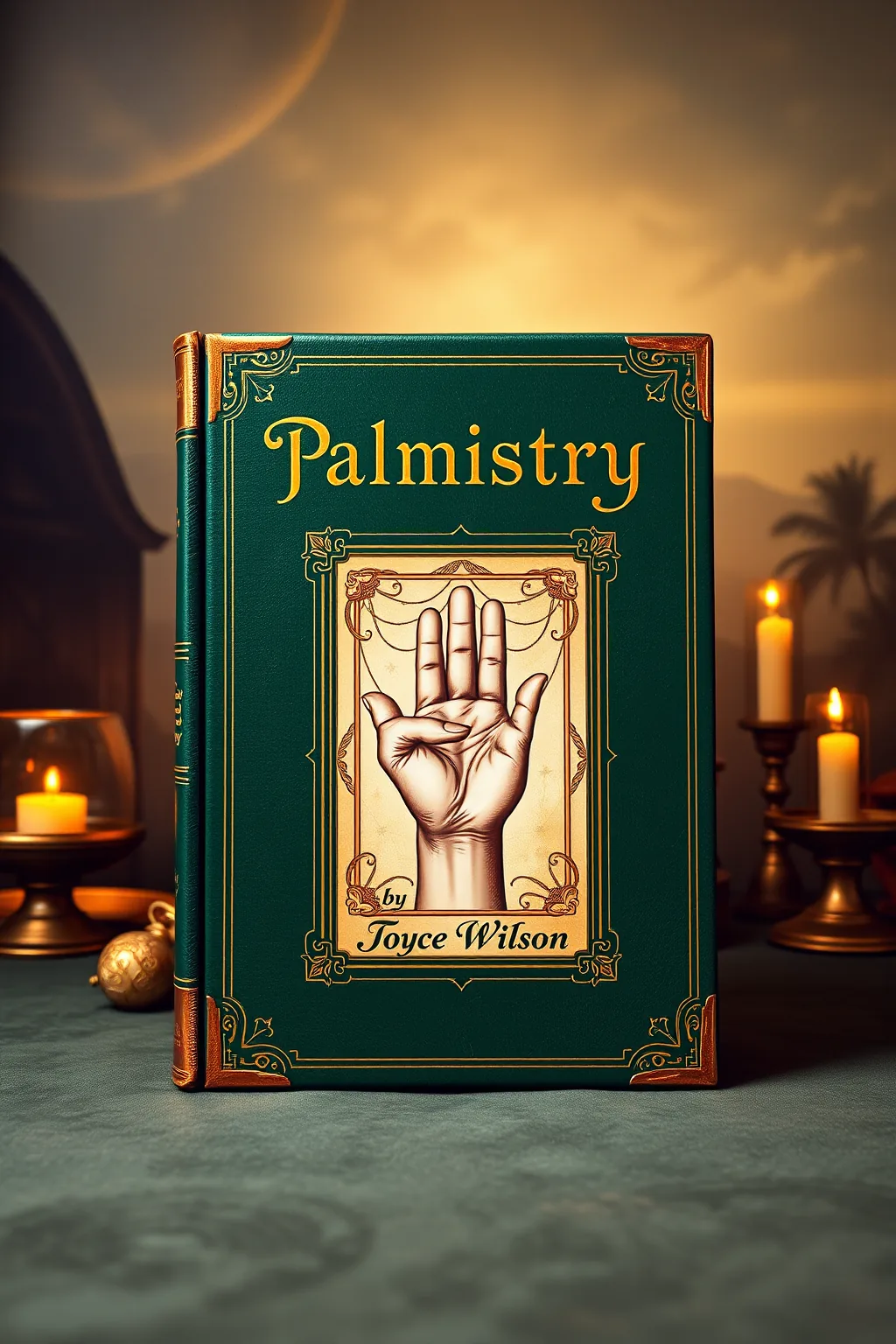
Palmistry
 61
61

Palmistry



Aurelia Blackwood, Occult Philosophy Critic — Joyce Wilson's 'Palmistry' is an illuminating beacon in the often-murky waters of divination. This text transcends simplistic fortune-telling, instead offering a deeply philosophical and symbolic interpretation of chiromancy. Wilson's erudition shines through as she meticulously details the intricate language of the palm, connecting it to ancient wisdom traditions and psychological archetypes. The book is exceptionally well-structured, making complex concepts accessible without sacrificing their esoteric depth. It is an indispensable resource for serious students of divination and anyone seeking to understand the profound connection between the physical hand and the spiritual self. An authoritative and essential read.
📝 Description
61
Joyce Wilson's 'Palmistry' was first published in 1988.
Joyce Wilson's 'Palmistry' examines the practice of chiromancy, interpreting the lines, mounts, and shapes of the human hand. Wilson presents the hand as a detailed map reflecting an individual's character, destiny, and latent abilities. The book guides the reader through the symbolic language of palmistry, aiming to foster self-understanding and a connection with broader cosmic forces. It treats the hand as a reflection of the self, suggesting that attentive observation can reveal significant personal insights. This work encourages a philosophical approach to self-discovery through the study of palmistry.
This book fits within the Western esoteric tradition of divination, specifically focusing on chiromancy. This practice has roots in ancient civilizations, including India, China, Greece, and Rome, and was particularly popular in Europe during the Renaissance and Victorian eras. Wilson's work engages with the historical and symbolic underpinnings of reading palms, treating it as a method for understanding individual psychology and fate within a larger, ordered cosmos. It assumes a correspondence between the physical hand and the individual's inner life and future.
💡 Why Read This Book?
Uncover the hidden narratives of your life journey through the ancient art of palmistry. This book empowers seekers and practitioners to decode the subtle language of the hands, offering profound insights into character, destiny, and untapped potential. Scholars will appreciate its historical depth, while beginners will find a clear, reverent guide to understanding this esoteric practice. Read to connect with the profound symbolism that lies within your very own being.
⭐ Reader Reviews
Honest opinions from readers who have explored this book.
❓ Frequently Asked Questions
Is palmistry a form of fortune-telling or self-discovery?
While palmistry can offer glimpses into potential future paths, its primary strength lies in self-discovery. It reveals character traits, inherent talents, and life lessons, empowering individuals to make conscious choices and navigate their journey with greater awareness.
What are the main elements analyzed in palmistry?
Key elements include the major lines (Life, Head, Heart, Fate), minor lines, hand shape, finger length and shape, and the mounts (areas on the palm associated with different planets and energies).
How does palmistry connect to other esoteric traditions?
Palmistry shares roots with ancient philosophies and astrological systems, viewing the hand as a microcosm reflecting the macrocosm. Its symbolism often aligns with concepts found in Hermeticism, Ayurveda, and various forms of mysticism.
Can palmistry be learned by beginners?
Absolutely. Joyce Wilson's 'Palmistry' is designed to be accessible to newcomers, providing clear explanations and detailed illustrations. It encourages a gradual and intuitive approach to understanding the language of the hands.
What is the philosophical significance of palmistry?
Philosophically, palmistry suggests a divinely ordered universe where our physical form carries symbolic meaning. It encourages introspection, acceptance of fate, and the pursuit of personal growth by understanding our innate blueprint.
🔮 Key Themes & Symbolism
The Hand as a Cosmic Map
This theme explores the profound concept of the hand as a microcosm, reflecting the vast energies and patterns of the universe. It looks at how the lines, mounts, and shapes are not random but rather intricate symbols, divinely inscribed, that map out an individual's life journey, inherent potential, and karmic lessons. The exploration emphasizes the interconnectedness of the physical self with the cosmic dance, suggesting that by understanding the patterns on our palms, we gain insight into our place within the greater cosmic order and the subtle forces that guide our existence.
Symbolism of Lines and Mounts
This section dissects the rich symbolic language of palmistry, focusing on the intricate meanings embedded within each line and mount. It moves beyond superficial interpretations to reveal the deeper psychological and spiritual significance of these palmographic features. Each line—from the Life Line to the Heart Line—and each mount—representing planetary influences like Venus, Mars, and Jupiter—is presented as a facet of the human psyche and spiritual destiny, offering a profound understanding of an individual's character, motivations, and life's challenges and opportunities.
Chiromancy as a Path to Self-Mastery
The book positions palmistry not just as a predictive tool, but as a potent catalyst for personal growth and self-mastery. By clear one's innate strengths, weaknesses, and life patterns, the practice of chiromancy empowers individuals to take conscious control of their destiny. This theme emphasizes how understanding the blueprint of one's hand can lead to greater self-awareness, acceptance, and the ability to navigate life's complexities with wisdom and intention, fostering a journey of continuous spiritual and personal evolution.
💬 Memorable Quotes
Direct passages from the work, attributed to the author.
“Lines are not chains, but pathways etched by the soul's intention.”
— This interpretation emphasizes agency, reframing palmistry's lines not as predetermined fates, but as symbolic representations of the soul's journey and the choices made along the way.
“To read the hand is to read the self in its most honest form.”
— This interpretation underscores palmistry's role in self-reflection, positioning the hand as a mirror reflecting an individual's core essence and true nature.
💡 Key Ideas
Editorial paraphrase of the work's core concepts — not direct quotes.
The palm is a silent oracle, speaking truths only the attentive can hear.
This quote highlights the inherent wisdom within the hand, suggesting that it holds profound knowledge waiting to be deciphered by those who cultivate patience and intuition.
Each mount pulses with the echo of cosmic energies.
This quote suggests a deep connection between the physical palm and celestial forces, implying that the raised areas on the hand are conduits for universal vibrations and influences.
The future is not written, but whispered in the lines of possibility.
This quote balances prediction with potential, suggesting that palmistry reveals opportunities and inclinations rather than fixed outcomes, empowering individuals to shape their own destinies.
🌙 Esoteric Significance
Tradition
This work is deeply rooted in the Hermetic and Neoplatonic traditions, which view the universe as a unified whole where the microcosm (human) reflects the macrocosm (cosmos). Palmistry, in this context, is seen as a divinely inscribed map of the soul's journey, aligning with the Hermetic principle of 'As Above, So Below.' It's a practice that bridges the material and spiritual realms, offering a tangible method for understanding one's spiritual purpose and karmic blueprint.
Symbolism
The symbolism in palmistry is vast and complex. Lines represent life's currents, challenges, and key experiences; mounts symbolize the influence of planetary energies and innate character traits; and the overall shape of the hand and fingers indicate elemental affinities and psychological tendencies. These symbols, when interpreted together, form a complex lexicon of the human psyche and destiny, rooted in ancient astrological and mythological associations.
Modern Relevance
In contemporary society, palmistry continues to offer a valuable avenue for self-exploration and personal empowerment. It provides a framework for understanding one's strengths, weaknesses, and potential, fostering self-awareness and acceptance. As individuals seek deeper meaning and connection in an increasingly complex world, palmistry offers a tangible, personal, and symbolic language for navigating life's challenges and embracing one's unique path towards fulfillment and spiritual growth.
👥 Who Should Read This Book
This comprehensive guide to palmistry is an invaluable resource for a diverse range of individuals. **Beginners** seeking a clear, respectful introduction to the art of hand reading will find Wilson's explanations exceptionally accessible. **Seekers** yearning for deeper self-understanding and a connection to esoteric wisdom will discover useful insights into their character and life path. **Practitioners** of divination and occult arts will find it a foundational text for expanding their knowledge and refining their skills. **Scholars** of mysticism and history will appreciate its detailed exploration of a timeless and influential divinatory practice.
📜 Historical Context
Joyce Wilson's 'Palmistry' emerges from a body of historical practices, tracing its lineage back to ancient civilizations like India, China, and Egypt. The art of chiromancy experienced significant revivals throughout Europe, particularly during the Renaissance and the Victorian era, where it was intertwined with occult studies, astrology, and phrenology. This period saw a surge in interest in hidden knowledge and personal divination, fueled by philosophical shifts and a growing fascination with the mystical. Wilson's work stands as a evidence of this enduring tradition, consolidating centuries of accumulated lore and interpretation into a cohesive and accessible form for the modern seeker. It reflects a desire to reconnect with ancient wisdom in an era often characterized by rapid technological advancement and a perceived spiritual void.
📔 Journal Prompts
Reflect on the dominant line on your dominant hand. What does this line's depth and clarity suggest about your primary life focus or energy?
Examine the mount of Venus on your palm. What qualities or desires does its prominence or lack thereof reveal about your approach to love and pleasure?
Consider the shape of your fingers and thumb. How do these physical attributes align with your perceived personality traits and strengths?
Trace the path of your Head Line. What insights does its trajectory offer about your thinking patterns, communication style, and intellectual pursuits?
If you were to offer a single piece of advice to someone based on their Heart Line, what would it be, and why?
🗂️ Glossary
Chiromancy
The ancient art and practice of foretelling fortunes or understanding character by the examination of the palm of the hand. It is synonymous with palmistry.
Mounts
The fleshy, raised areas on the palm of the hand, each associated with a specific planet and corresponding attributes such as love, intellect, ambition, or creativity.
Lines
The various creases and markings on the palm, most notably the major lines (Life, Head, Heart, Fate) and minor lines, which are interpreted to reveal aspects of a person's life, health, and destiny.
Dominant Hand
The hand that an individual uses most frequently for writing or other tasks. In palmistry, it is often seen as representing the present and future, while the non-dominant hand represents inherited traits and past influences.
Elemental Hand Types
A classification of hands based on their shape, associating them with the four classical elements: Earth (square palm, short fingers), Air (square palm, long fingers), Fire (oblong palm, short fingers), and Water (oblong palm, long fingers).
This book appears in 1 collection
🔮 Readers Also Liked
Browse all →








More by Joyce Wilson
All books →


From the “Palmistry” Collection
View all →








More Free Divination & Tarot Books
View all →