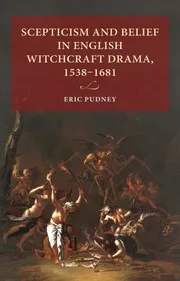
The Complete Book of Magic and Witchcraft
 79
79

The Complete Book of Magic and Witchcraft
Kathryn Paulsen's 1970 survey, "The Complete Book of Magic and Witchcraft," presents a broad overview of Western magical traditions with commendable thoroughness for its time. Its strength lies in its systematic approach, laying out diverse practices from ceremonial magic to folk witchcraft without excessive romanticization. The chapter detailing the construction and consecration of magical tools, for instance, provides concrete, actionable steps that illuminate the practical mindset of these disciplines. However, the work occasionally suffers from a slightly dated academic detachment, which, while providing clarity, can sometimes distance the reader from the visceral, lived experience of these practices. It also navigates a landscape of occultism that was rapidly evolving, meaning some interpretations feel more aligned with mid-20th-century scholarship than contemporary understandings. Nevertheless, for its historical sweep and detailed exposition of foundational concepts, it remains a valuable reference.
📝 Description
79
Kathryn Paulsen's 1970 book surveys Western magical practices and beliefs.
Published in 1970, "The Complete Book of Magic and Witchcraft" by Kathryn Paulsen surveys magical practices and beliefs within Western esotericism. The volume serves as both a historical record and a practical manual, detailing rituals, spells, divination techniques, and the symbolic systems of various occult traditions. Paulsen aims to clarify subjects often kept private, presenting them in a direct, though sometimes scholarly, fashion.
This book is suitable for dedicated students of Western esotericism, especially those interested in the historical progression and practical application of magic and witchcraft. It will also interest researchers of folklore, comparative religion, and cultural history seeking to understand the foundations of magical belief systems. Individuals exploring personal spiritual paths that include pre-modern magical frameworks may find it valuable, provided they approach the content with a critical perspective.
Paulsen's work emerged during a time of growing interest in occultism and alternative spirituality in 1970, a period influenced by counterculture movements and dissatisfaction with mainstream institutions. This era saw a significant reevaluation of historical magical texts and practices, often separated from their original religious settings. The book engages with traditions that had been suppressed or overlooked for centuries, making them accessible to a broader audience. It enters a conversation with figures like Gerald Gardner, whose popularization of Wicca had already begun to change perceptions of modern witchcraft.
Emerging in 1970, Paulsen's book appeared during a period of renewed interest in occultism, partly driven by the counterculture and a questioning of established norms. This era witnessed a significant re-examination of historical magical texts and practices, often viewed outside their original religious contexts. The work engages with traditions long marginalized, bringing them to a wider readership. It relates to figures like Gerald Gardner, whose popularization of Wicca had already begun to shape modern witchcraft perceptions.
💡 Why Read This Book?
• Gain a structured understanding of foundational magical concepts, such as the role of the will in spellcraft and the use of symbolic correspondences, as detailed in Paulsen's 1970 exploration. • Learn practical techniques for ritual preparation and the consecration of magical tools, offering insights into the systematic approach of historical magical disciplines. • Explore the historical context of occult revival movements in the mid-20th century, understanding how works like Paulsen's engaged with and presented traditions during that era.
⭐ Reader Reviews
Honest opinions from readers who have explored this book.
❓ Frequently Asked Questions
When was The Complete Book of Magic and Witchcraft first published?
The Complete Book of Magic and Witchcraft by Kathryn Paulsen was first published in 1970, placing it within a significant period of renewed interest in esoteric subjects.
What kind of magical practices does Kathryn Paulsen cover?
Paulsen's book covers a wide range of practices, including ceremonial magic, folk witchcraft, divination methods like tarot and scrying, and the use of symbolic language and correspondences.
Is this book suitable for absolute beginners in witchcraft?
While comprehensive, the book's academic tone and historical scope may be best suited for serious students or those with some prior familiarity with esoteric subjects, rather than absolute beginners seeking introductory material.
What is the historical significance of this book's publication date?
Published in 1970, the book emerged during a cultural moment of intense interest in occultism and alternative spiritualities, reflecting and contributing to the era's exploration of these topics.
Does the book discuss modern Wicca?
The book examines various forms of witchcraft and magic prevalent in Western esotericism, contextualizing them within historical traditions. While it predates some later developments, it engages with the foundational elements that influenced modern practices.
What are some key esoteric concepts discussed in the book?
Key concepts include the power of will in magical operations, the significance of symbolic language and correspondences (e.g., planetary, elemental), ritual preparation, and the use of divinatory tools.
🔮 Key Themes & Symbolism
The Mechanics of Will
Paulsen emphasizes the operative power of focused intention within magical practice. The work details how the practitioner's will, directed through ritual, visualization, and specific symbolic language, is considered the primary engine for manifesting desired outcomes. This concept underpins much of Western ceremonial magic, treating the universe as responsive to disciplined intent. Understanding this principle is crucial for grasping the efficacy attributed to spells and invocations within the traditions discussed.
Symbolic Language and Correspondences
A significant portion of the book is dedicated to the intricate system of correspondences that form the symbolic lexicon of magic. This includes planetary hours, elemental associations, the meanings of colors, herbs, and sacred geometry. Paulsen illustrates how these interconnected symbols are not arbitrary but are believed to hold inherent energies that can be harnessed. Mastery of this symbolic language is presented as essential for accurate spellcraft and effective divination, allowing practitioners to communicate with and influence subtle forces.
Ritual and Sacred Space
The book meticulously outlines the importance of ritual structure and the creation of consecrated space in magical workings. Paulsen describes the process of purification, the casting of circles, and the invocation of protective forces, all designed to create an optimal environment for magic. This structured approach aims to facilitate a shift in consciousness, separating the mundane from the sacred and amplifying the practitioner's energetic output for specific magical goals.
Divinatory Arts
Paulsen provides an extensive overview of various methods used for divination, presented as tools for understanding fate and gaining insight into the unseen. The work details the use of tarot cards, scrying with mirrors or water, and other techniques, explaining their historical usage and symbolic interpretations. These practices are framed not as fortune-telling in a simplistic sense, but as methods for accessing subconscious knowledge and understanding the flow of cosmic influences.
💬 Memorable Quotes
Direct passages from the work, attributed to the author.
“The will is the force that directs magical energy.”
— This statement captures the active role of the practitioner in Paulsen's framework. It posits that magic is not a passive reception of external power but an engaged process where focused human intention is the primary catalyst.
“Correspondences link the macrocosm and the microcosm.”
— This highlights the Hermetic principle that 'as above, so below.' Paulsen uses this to explain how earthly elements, symbols, and timings are believed to mirror celestial and spiritual patterns, allowing practitioners to work with these universal laws.
“Ritual requires precise execution and symbolic understanding.”
— This emphasizes the structured nature of magical ceremony. Paulsen suggests that the effectiveness of a ritual hinges on both performing the correct actions and comprehending the deeper meaning behind each symbolic gesture or element used.
“Divination offers insight into potential futures and hidden influences.”
— This frames divinatory practices as tools for gaining perspective. Paulsen presents them not as deterministic prophecies but as methods for understanding the currents affecting a situation, enabling informed choices.
“Tools must be consecrated to serve their magical purpose.”
— This speaks to the energetic preparation of implements used in magic. Paulsen details how items like wands or athames are charged and dedicated to specific functions, imbuing them with power for ritual use.
🌙 Esoteric Significance
Tradition
The work aligns primarily with the Western Esoteric Tradition, drawing heavily from ceremonial magic, Hermeticism, and folk witchcraft. It attempts to bridge the gap between the more structured, initiatory systems like those influenced by the Golden Dawn and the more grassroots practices of country witches. Paulsen's approach is largely descriptive and instructional, fitting within the lineage of compendia that aim to codify and transmit magical knowledge, though it predates some later academic and popular reinterpretations of these traditions.
Symbolism
Key symbols explored include the pentagram, representing the elements and the human form, and its use in invocation and banishing. The book also details the significance of planetary symbols and their associated hours, illustrating how celestial timings are believed to influence magical operations. Furthermore, the consecration of tools, such as the athame or wand, is presented as a symbolic act of imbuing objects with spiritual power and intent, transforming them into sacred instruments.
Modern Relevance
Contemporary practitioners of eclectic witchcraft and ceremonial magic often reference mid-20th-century texts like Paulsen's for foundational knowledge. Modern occultists and scholars of esotericism may consult it for historical context and understanding of the intellectual currents of the 1970s. Its systematic presentation of diverse practices continues to inform those seeking structured approaches to magic, even as newer schools of thought have emerged and adapted these concepts.
👥 Who Should Read This Book
• Students of Western Esotericism seeking a foundational overview of magical theory and practice from the mid-20th century. • Researchers of comparative religion and folklore interested in historical witchcraft and ceremonial magic traditions. • Individuals exploring personal spiritual paths who wish to understand the historical context and practical elements of various magical disciplines.
📜 Historical Context
Kathryn Paulsen's "The Complete Book of Magic and Witchcraft" emerged in 1970, a period marked by a significant revival of interest in occult and esoteric studies, fueled by countercultural movements and a desire for alternative spiritual paths. This era saw a growing availability and academic interest in historical magical texts, often previously confined to private collections or academic institutions. Paulsen's work contributed to this trend by synthesizing a broad spectrum of practices, from ceremonial magic rooted in figures like Aleister Crowley and the Hermetic Order of the Golden Dawn, to folk traditions of witchcraft. The book arrived in a cultural landscape where authors like Gerald Gardner had already popularized modern Wicca, creating a demand for comprehensive guides that explored the roots and diverse expressions of witchcraft. While not explicitly engaging in public debates, its publication implicitly countered the secularizing trends of the mid-20th century by presenting magical systems as viable fields of study and practice.
📔 Journal Prompts
The symbolic meaning of the pentagram in ritual context.
How correspondences between planets and herbs might influence a spell.
The role of focused will in achieving a desired outcome.
The purpose of consecrating a magical tool.
Interpreting the symbolic language of a specific divination method.
🗂️ Glossary
Athame
A ritual dagger, typically with a black handle and no sharp cutting edge, used for directing energy and marking magical circles, not for physical cutting.
Correspondences
The system of symbolic relationships between various elements, such as planets, colors, herbs, and days, believed to possess inherent magical affinities and energies.
Consecration
The act of dedicating an object or space to a sacred purpose through ritual, imbuing it with spiritual power and intent for magical use.
Divination
The practice of seeking knowledge of the future or the unknown by supernatural means, employing tools like tarot cards or scrying mirrors.
Invocation
A ritualistic calling upon deities, spirits, or energies to manifest or assist in magical workings, often for empowerment or guidance.
Scrying
A form of divination that involves gazing into a reflective surface, such as a mirror or bowl of water, to receive visions or insights.
Wand
A slender rod, often made of wood, used in ritual magic to direct energy, command spirits, or symbolize authority and will.
🔮 Readers Also Liked
Browse all →





More by Kathryn Paulsen
All books →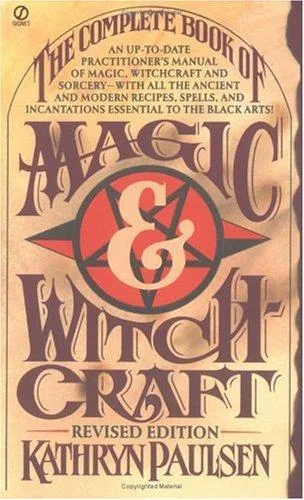
More Free Witchcraft & Paganism Books
View all →