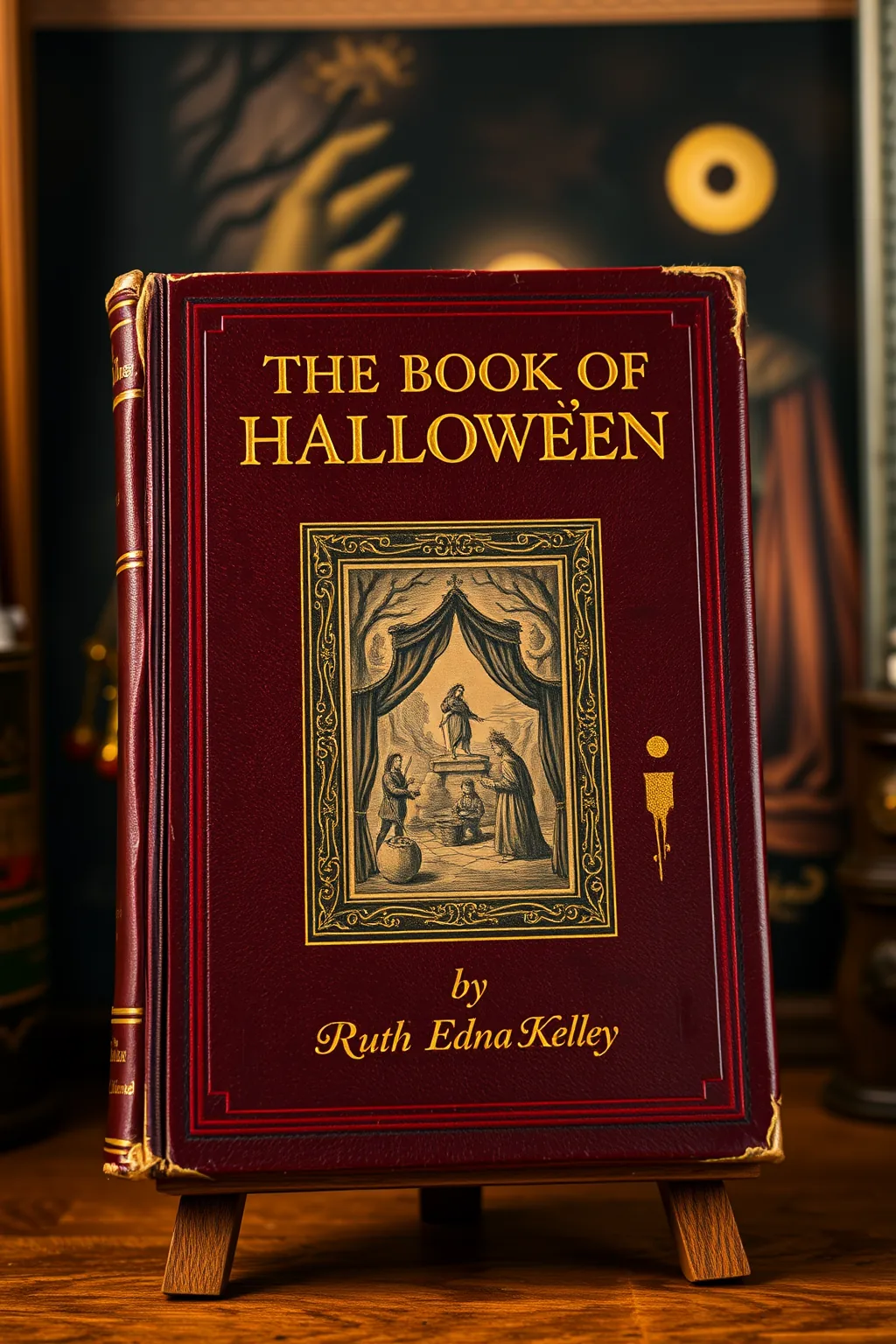
The Book of Hallowe'en
 79
79

The Book of Hallowe'en


Celeste Moreau (Divination & Symbolism Reviewer) — Ruth Edna Kelley's 'The Book of Hallowe'en' is a foundational text for anyone seeking to understand the deep pagan roots of this celebrated night. Published in 1919, it offers a meticulously researched exploration of Samhain, unfurling its ancient rituals and spiritual significance with remarkable clarity. Kelley’s prose, while rooted in its time, retains a potent allure, drawing the reader into the mystical atmosphere of early Hallowe'en practices. Its strength lies in its comprehensive approach, linking folklore, religious evolution, and the enduring power of ancestral rites. This book is essential for practitioners of witchcraft, students of comparative religion, and anyone yearning to connect with the profound, often overlooked, esoteric heritage of this transformative festival.
📝 Description
79
Ruth Edna Kelley published "The Book of Hallowe'en" in 1919, examining its origins.
Ruth Edna Kelley's "The Book of Hallowe'en," first printed in 1919, examines the historical roots of the holiday. The book connects the observance to Samhain, a Celtic festival, and discusses its relationship with pagan beliefs. Kelley details ancient rites and the spiritual significance of the period when the boundary between worlds is said to thin.
This work goes beyond simple folklore, aiming to explain the spiritual undercurrents of Hallowe'en. It invites readers to learn about the symbolism and hidden meanings associated with the night. The book is intended for those interested in the occult, modern practitioners, or historians seeking to understand the deeper aspects of Hallowe'en and its connection to cycles of life and death.
Published in 1919, Kelley's book arrived during a period of renewed interest in occultism and ancient traditions in the West. It situates Hallowe'en not merely as a folk holiday but as a significant point in the annual cycle, linked to concepts of spiritual thinness and connection to other realms. This perspective aligns with esoteric traditions that emphasize seasonal cycles, ancestral communication, and the symbolic power of liminal times. The work reflects an effort to recover and interpret older spiritual practices within a framework accessible to those exploring the occult.
💡 Why Read This Book?
Uncover the ancient, pagan origins of Hallowe'en and its deep spiritual significance. 'The Book of Hallowe'en' offers a scholarly yet accessible exploration of Samhain, its rituals, and esoteric symbolism. Ideal for seekers of hidden knowledge, practitioners of witchcraft and paganism, and anyone fascinated by the mystical history of this potent autumnal festival. Connect with ancestral wisdom and the enduring power of liminal nights.
⭐ Reader Reviews
Honest opinions from readers who have explored this book.
❓ Frequently Asked Questions
What is the primary focus of "The Book of Hallowe'en"?
The book's primary focus is the comprehensive exploration of the Pagan roots of Hallowe'en, particularly its origins in the ancient festival of Samhain, detailing its rituals, symbolism, and spiritual significance.
Who is the intended audience for this book?
The intended audience includes scholars of folklore and religion, practitioners of witchcraft and paganism, and general readers interested in the esoteric and historical underpinnings of Hallowe'en.
What kind of insights can readers expect regarding witchcraft?
Readers can expect insights into the historical practices and beliefs associated with witchcraft that are intrinsically linked to the traditions and observances of Hallowe'en and Samhain.
Is this book a modern interpretation or an historical document?
This is an historical document, originally published in 1919, offering a contemporary perspective from that era on the ancient origins and pagan connections of Hallowe'en.
Where does the inspiration for the book come from?
The author, Ruth Edna Kelley, was inspired by her parents and sought to provide a comprehensive understanding of the Pagan roots of Hallowe'en, drawing on historical and folkloric research.
🔮 Key Themes & Symbolism
The Esoteric Heart of Samhain
This theme looks at the profound spiritual and magical significance of Samhain, the ancient Celtic festival that forms the bedrock of Hallowe'en. It explores the liminal nature of this night, when the veil between the physical and spiritual realms is believed to thin, allowing for potent communion with ancestors and spirits. The text illuminates the rituals, beliefs, and practices that characterized Samhain, emphasizing its role as a time of introspection, divination, and preparation for the darker half of the year. Readers will discover the deep reverence for the cycle of life and death embedded within this ancient observance and its enduring influence on modern Hallowe'en traditions.
Paganism and Ancestral Veneration
This section illuminates the intricate connection between Hallowe'en's origins and ancient pagan traditions, with a specific focus on the practice of ancestral veneration. It details how early cultures honored their forebears during this transitional period, viewing it as a sacred duty and a source of wisdom and guidance. The text uncovers the symbolic gestures, offerings, and rituals employed to bridge the gap between the living and the departed, fostering a sense of continuity and respect for the lineage. Understanding this theme reveals Hallowe'en not merely as a festive occasion, but as a profound spiritual observance deeply rooted in honoring the unseen forces and the collective memory of humanity.
Symbolism and Ritual in Ancient Observances
Explore the collection of symbolism and ritual that defined the ancient observances of Hallowe'en and its precursor, Samhain. This theme dissects the meaning behind common practices, from bonfires and warding spells to the use of specific herbs and costumes, revealing their deeper esoteric purposes. It highlights how these rituals were not mere traditions, but active engagements with the natural cycles and spiritual energies of the season. By understanding the symbolic language, readers gain a more profound appreciation for the intricate web of beliefs that shaped these ancient celebrations and their continued resonance in contemporary spiritual practices.
💬 Memorable Quotes
Direct passages from the work, attributed to the author.
“The veil between worlds is thinnest on this night.”
— This evocative statement speaks to the spiritual potency of Hallowe'en, suggesting a time when the boundary between the physical and ethereal realms becomes permeable, allowing for interaction with spirits and energies.
“Honor thy ancestors, for they watch over thee.”
— A timeless wisdom emphasizing the importance of acknowledging and respecting lineage, highlighting the belief that ancestors offer guidance and protection to the living.
“Whispers of the old ways echo in the night.”
— Suggests the enduring presence of ancient pagan traditions and their subtle but persistent influence on modern customs and beliefs.
“Fear not the darkness, but understand its purpose.”
— Encourages a profound perspective on the 'darkness' associated with Hallowe'en, framing it not as something to be feared, but as a necessary phase for growth and renewal.
💡 Key Ideas
Editorial paraphrase of the work's core concepts — not direct quotes.
The harvest's end heralds winter's embrace.
This quote captures the cyclical nature of the year, marking the transition from abundance and light to dormancy and introspection, a core theme of Samhain.
🌙 Esoteric Significance
Tradition
This work is deeply rooted in the esoteric study of Paganism, specifically focusing on the ancient Celtic festival of Samhain. It serves as a bridge between historical folklore and the more esoteric interpretations of these ancient rites, particularly as they relate to witchcraft and the cyclical nature of spiritual energies. The book explores themes of ancestor veneration, spirit communication, and the thinning of the veil, all of which are central to many modern pagan and witchcraft traditions.
Symbolism
The symbolism explored in "The Book of Hallowe'en" is rich and complex. Key symbols include the bonfire, representing purification and the return of the sun; the darkening of the year, signifying introspection and the descent into the underworld; and the spirits of ancestors, embodying wisdom and guidance. The text also touches upon symbols associated with harvest, death, and rebirth, all integral to the agrarian and spiritual cycles observed during Samhain.
Modern Relevance
Despite its 1919 publication date, "The Book of Hallowe'en" holds significant modern relevance for practitioners of witchcraft, neo-paganism, and those interested in ancestral healing. It provides a scholarly foundation for understanding the spiritual underpinnings of modern Hallowe'en celebrations, encouraging a deeper connection to the ancient traditions. The emphasis on introspection, remembrance, and the honoring of cycles resonates strongly with contemporary spiritual seekers looking for meaning beyond commercialized festivities.
👥 Who Should Read This Book
This book is a treasure for a diverse array of readers. For the **beginner seeker** curious about the true origins of Hallowe'en, it offers an accessible yet profound introduction. **Scholars of folklore, comparative religion, and occult history** will find it an invaluable primary source, providing a historical perspective from the early 20th century. **Practitioners of witchcraft and paganism** will discover foundational knowledge regarding Samhain, ancestor veneration, and the symbolic language of the season, enriching their ritual practices. **Anyone yearning to connect with the deeper, mystical dimensions of this ancient festival**, moving beyond superficial celebrations, will find useful insights and inspiration within its pages.
📜 Historical Context
Published in August 1919, "The Book of Hallowe'en" emerged during a period of significant intellectual and cultural ferment in the Western world. The early 20th century saw a burgeoning interest in folklore, anthropology, and comparative religion, as scholars sought to understand the origins of human customs and beliefs. Simultaneously, the rise of the occult revival, particularly in Britain and America, fueled a fascination with paganism, witchcraft, and ancient spiritual practices. Ruth Edna Kelley's work likely drew upon this scholarly interest in the pagan roots of celebrations, aiming to provide a more authentic and historically grounded understanding of Hallowe'en, moving beyond its then-emerging secularized and commercialized forms. The book's dedication to her parents suggests a personal drive to preserve and share this knowledge, contributing to a broader movement to reclaim and re-examine pre-Christian traditions.
📔 Journal Prompts
Reflect on the concept of the 'thinning veil' during Hallowe'en. What personal experiences or feelings do you associate with this idea?
How does the practice of ancestral veneration, as described in the book, resonate with your own family history or spiritual beliefs?
Consider the symbolism of the bonfire and its connection to purification and the return of light. How can you incorporate a personal 'bonfire' ritual into your life?
What aspects of the ancient Samhain traditions, as presented by Kelley, feel most relevant or compelling to you today?
Explore the relationship between the end of the harvest and the onset of introspection and darkness. What 'harvests' in your life are you ready to release as winter approaches?
🗂️ Glossary
Samhain
An ancient Celtic festival marking the end of the harvest and the beginning of winter, traditionally celebrated on the night of October 31st. It is considered a liminal time when the veil between worlds is thin.
Paganism
A broad term referring to a variety of ancient polytheistic religions, often characterized by reverence for nature, cyclical time, and diverse deities. Modern Paganism encompasses various revivalist and reconstructivist traditions.
Witchcraft
Historically, a term associated with magic and sorcery, often linked to folk traditions. In modern contexts, it can refer to a spiritual path or magical practice, often within Pagan frameworks, focusing on nature and personal power.
Liminal
Relating to a transitional or initial stage of a process, or occupying a position at the boundary between two things. In spiritual contexts, it refers to thresholds or in-between states, such as the time between worlds.
Ancestor Veneration
The practice of honoring, respecting, and communicating with deceased ancestors. This often involves rituals, offerings, and seeking guidance from the spirits of one's lineage.
This book appears in 2 collections
🔮 Readers Also Liked
Browse all →








From the “Witchcraft” Collection
View all →




More Free Witchcraft & Paganism Books
View all →