Living With Honour
 76
76

Living With Honour
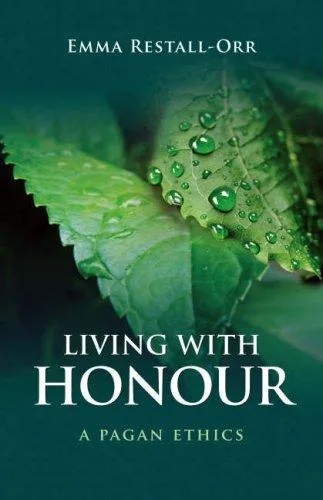
Emma Restall Orr’s Living With Honour is a welcome and necessary intervention into the discourse of modern paganism and esoteric practice. Rather than offering a prescriptive dogma, Orr meticulously unpacks the concept of honour, demonstrating its vital role in building robust, ethical communities. Her examination of oaths and vows, particularly how they function in contexts devoid of traditional religious enforcement, is insightful. One strength is the direct, no-nonsense prose that avoids the airy mysticism often found in similar texts; Orr is grounded. A limitation, however, is that while the historical parallels to pre-Christian European societies are drawn, the application to diverse modern paganisms, which often lack a singular cultural lineage, could be more extensively explored. The section on the societal impact of broken promises, illustrating how individual integrity strengthens collective bonds, is particularly strong. This book offers a vital framework for anyone serious about building ethical spiritual life.
📝 Description
76
Emma Restall Orr published Living With Honour in 2008 to guide ethical practice in modern paganism.
Living With Honour, published in 2008, addresses the practical application of honour codes within contemporary esoteric and pagan traditions. Orr moves past abstract philosophical debate to give concrete advice for ethical living, emphasizing personal integrity, community duties, and the importance of promises. The book is structured to help readers develop a personal ethic that is both consistent within themselves and relevant to the outside world. This is especially useful for those aiming to build or sustain spiritual communities founded on mutual respect and accountability. It appeals to practitioners of modern paganism, witchcraft, and other nature-based spiritual paths who care about ethical conduct and community formation. The book speaks to individuals who face difficulties in upholding personal honour in varied or secular settings, as well as those involved in establishing or leading spiritual groups. Readers interested in the basis of making vows, taking oaths, and the societal effects of ethical systems will find value here, particularly those drawn to pre-Christian European honour cultures.
Orr's work arrives from a time in the late 20th and early 21st centuries when contemporary paganism was actively working to establish its own ethical and social frameworks. The movement was moving away from moral systems that were adopted or imposed from outside. As this spiritual path grew, there was a greater need for writings that dealt with the practical aspects of living a spiritual life that was both personally satisfying and socially responsible. This book meets that need by referencing historical models of honour, such as those seen in ancient Germanic and Celtic societies, to help shape modern pagan ethics. It provides an alternative to simplistic or purely situational ethics, grounding its principles in the idea of personal integrity.
This book emerged as contemporary paganism sought to define its own ethical structures in the late 20th and early 21st centuries. It addresses a growing demand for texts that offered practical guidance for living a spiritual life responsibly. Orr draws on historical models of honour, like those in ancient Germanic and Celtic societies, to build a framework for modern pagan ethics. It stands as an alternative to situational ethics, rooting principles in personal integrity and accountability.
💡 Why Read This Book?
• Gain a concrete understanding of honour as a personal ethical framework, moving beyond vague notions of 'being good' by examining Orr's specific concept of 'right action.' • Learn the practical implications of making and keeping vows, understanding their spiritual weight and community impact, as discussed in the book's detailed exploration of oaths. • Discover how to foster integrity within spiritual communities by understanding the interconnectedness of personal honour and collective well-being, a core theme in the work’s analysis of community responsibility.
⭐ Reader Reviews
Honest opinions from readers who have explored this book.
❓ Frequently Asked Questions
What is the core philosophy behind Emma Restall Orr's Living With Honour?
The core philosophy centres on honour as a personal, internal code of ethics that guides actions and relationships, emphasizing integrity, truthfulness, and accountability within spiritual communities. It draws on historical honour codes to inform modern practice.
How does Living With Honour relate to contemporary paganism?
The book provides a framework for ethical living and community building specifically tailored for contemporary paganism, addressing the need for self-defined moral structures within diverse spiritual paths.
What does the book say about vows and promises?
It explores the profound spiritual power and societal impact of vows and promises, detailing the consequences of both their adherence and their breaking within personal and communal contexts.
Is Living With Honour a historical study or a practical guide?
It functions as both. It draws on historical examples, particularly from pre-Christian European cultures, to construct a practical guide for contemporary individuals and groups seeking to establish and maintain ethical conduct.
What distinguishes this book from other ethical guides?
Its distinction lies in its focus on 'honour' as a central, actionable concept within esoteric and pagan frameworks, and its direct, non-dogmatic approach to building responsible spiritual communities.
When was Living With Honour first published?
Living With Honour was first published in 2008, positioning it as a significant text within the evolving ethical discourse of early 21st-century paganism.
🔮 Key Themes & Symbolism
The Nature of Honour
This theme redefines honour not as a rigid social construct but as an internalized ethical compass. Orr emphasizes personal integrity, truthfulness, and the responsible exercise of agency. The work posits that honour is a dynamic principle, requiring constant conscious application and self-reflection. It moves away from external validation of honour towards an intrinsic understanding, crucial for individuals navigating complex social and spiritual landscapes. This concept is vital for establishing authentic relationships and self-respect within any community framework.
Vows and Promises
The book meticulously examines the power and implications of vows and promises within spiritual and personal life. It differentiates between casual commitments and sacred oaths, exploring the energetic and ethical weight they carry. Orr discusses the consequences of breaking such bonds, both for the individual's integrity and the community's trust. This theme is critical for understanding commitment in esoteric paths, where spoken words and sworn oaths often form the bedrock of spiritual contracts and relationships.
Community Accountability
Living With Honour posits that personal honour is inextricably linked to the health and stability of spiritual communities. Orr outlines how a shared understanding and practice of honour fosters mutual respect, trust, and effective collaboration. The work suggests that ethical frameworks, derived from principles of honour, are essential for the longevity and integrity of groups. This theme is particularly relevant for pagan and esoteric circles, which often seek to create self-governing structures based on shared values rather than external authority.
Practical Ethics in Practice
This theme focuses on the actionable application of ethical principles. Orr moves beyond theoretical discussions to provide concrete guidance on how to live honourably in daily life and within spiritual practice. It addresses the challenges of applying abstract ideals to real-world situations, offering a grounded approach to ethical decision-making. The emphasis is on cultivating a personal ethic that is both robust and adaptable, serving as a reliable guide for spiritual practitioners.
💬 Memorable Quotes
Direct passages from the work, attributed to the author.
“Honour is not a matter of outward appearance, but of inner truth.”
— This highlights the book's central argument that true honour stems from internal integrity rather than societal perception. It emphasizes self-awareness and personal conviction as the foundation of ethical behaviour, particularly relevant in spiritual practices.
“A promise made is a debt incurred.”
— This concise statement underscores the serious nature of vows and commitments within Orr's framework. It suggests that promises carry a tangible weight, creating an obligation that must be respected for personal and communal integrity.
“Truthfulness is the bedrock upon which all other virtues are built.”
— This emphasizes the foundational importance of honesty in Orr's ethical system. It suggests that without a commitment to truth, other ethical aspirations are unstable and lack genuine foundation.
“Living honourably requires constant vigilance and conscious choice.”
— This interpretation underscores the active and ongoing nature of ethical living. It frames honour not as a static state but as a continuous practice of mindful decision-making and self-discipline.
💡 Key Ideas
Editorial paraphrase of the work's core concepts — not direct quotes.
The strength of a community is measured by the honour of its members.
This paraphrase points to the interconnectedness of individual ethics and collective well-being. It implies that the ethical standards upheld by individuals directly contribute to the stability, trust, and effectiveness of the group.
🌙 Esoteric Significance
Tradition
Living With Honour draws primarily from the philosophical and cultural underpinnings of ancient Northern European traditions, particularly those associated with pre-Christian Germanic and Celtic societies. While not strictly a text of Hermeticism or Kabbalah, it aligns with esoteric traditions that emphasize personal responsibility, sacred oaths, and the manifestation of spiritual principles in the mundane world. It fits within the broader Western esoteric lineage by seeking to reconstruct and adapt ancient ethical frameworks for modern spiritual practitioners, focusing on the practical application of virtues and commitments.
Symbolism
While the book is more conceptual than symbolic, the core symbol is 'honour' itself, representing an internalized compass guiding action. Oaths and vows function symbolically as sacred contracts, binding individuals to spiritual principles and community. The concept of 'right action' also acts as a symbolic ideal, representing the ideal manifestation of an honourable life, aligning personal will with cosmic or natural order.
Modern Relevance
Contemporary thinkers and practitioners in paganism, heathenry, and witchcraft continue to draw on Orr's work for its robust ethical framework. Its emphasis on personal accountability and community integrity is highly relevant for modern spiritual groups seeking to establish clear, ethical guidelines. The book's re-examination of oaths and vows also appeals to modern discussions on commitment and sacred practice in diverse spiritual contexts, influencing how practitioners approach their spiritual commitments and community roles.
👥 Who Should Read This Book
• Beginning students of paganism and witchcraft looking to establish a strong ethical foundation for their practice and community involvement. • Established practitioners seeking to deepen their understanding of personal integrity and the spiritual significance of vows and promises. • Community leaders and organizers within esoteric or spiritual groups aiming to build frameworks of accountability and mutual respect.
📜 Historical Context
Emma Restall Orr's Living With Honour, published in 2008, emerged during a significant period of maturation for contemporary paganism and esoteric movements. As these spiritual paths moved beyond their formative stages, a pressing need arose for texts that addressed the practicalities of ethical living and community governance, distinct from established religious doctrines. Orr's work is situated within this context, offering a grounding in pre-Christian European honour cultures, such as those of the ancient Germanic and Celtic peoples, as a model for contemporary ethical frameworks. This approach offered an alternative to the often diffuse or situationally determined ethics prevalent in some circles. It engaged with intellectual currents seeking to define distinct pagan ethical systems, moving away from simply adopting or adapting Abrahamic morality. While not engaging directly with specific contemporaries in a public debate, the book’s focus on honour and oaths implicitly positions it as a counterpoint to more fluid or individualistic ethical perspectives within the broader New Age and esoteric landscape.
📔 Journal Prompts
The concept of inner truth as the basis of honour.
The weight and significance of a personal vow made in the last year.
How the principle of right action could inform a challenging decision.
The role of honour in fostering trust within a chosen community.
Reflecting on the consequences of a broken promise, real or perceived.
🗂️ Glossary
Honour
An internalized ethical code emphasizing personal integrity, truthfulness, accountability, and responsible action, distinct from mere social convention or reputation.
Right Action
Conduct aligned with one's personal honour code and spiritual principles, aiming for integrity and positive impact in all endeavours.
Vow
A solemn promise or pledge, often spiritual in nature, carrying significant ethical and energetic weight for the one making it.
Oath
A formal declaration or affirmation of truth or commitment, often invoking a higher power or sacred principle, carrying a strong sense of obligation.
Accountability
The state of being responsible for one's actions and their consequences, a central to honour and community trust.
Community Integrity
The collective ethical standard and trustworthiness of a spiritual group, built upon the honour and accountability of its individual members.
Paganism
A broad term for contemporary nature-based religions, often characterized by polytheism, earth reverence, and a focus on personal spiritual experience.
🔮 Readers Also Liked
Browse all →








More by Emma Restall Orr
All books →


More Free Witchcraft & Paganism Books
View all →