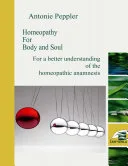
Homeopathy for Body and Soul
 82
82

Homeopathy for Body and Soul
Antonie Peppler's Homeopathy for Body and Soul offers a compelling, albeit dense, exploration of anamnesis through the lens of what she terms "Creative Homeopathy®." The strength of this work lies in its rigorous attempt to translate the symbolic language of physical symptoms into psychological conflict descriptions, directly referencing Hahnemann's spirit of meticulous observation. Peppler's analysis of how body language evolves into symptom expression provides a unique interpretative framework. However, the text's reliance on the specific lexicon of "Creative Homeopathy®" might present a barrier to readers unfamiliar with its specialized concepts. The emphasis on psychological depth is commendable, particularly in its discussion of interpreting conflict descriptions, but could occasionally feel overly theoretical without more case examples illustrating the practical application of this intricate symbolic system. It stands as a significant contribution to the more interpretive branches of homeopathy.
📝 Description
82
Antonie Peppler's 2003 book, Homeopathy for Body and Soul, reinterprets homeopathic case-taking.
This book goes beyond listing symptoms to analyze the psychological meaning behind a patient's complaints. Peppler argues that symptoms are a form of symbolic communication, revealing internal conflicts. The practice of anamnesis, or detailed case history, becomes a dialogue with the patient's inner state.
This approach is intended for homeopathic practitioners and students interested in a psycho-spiritual dimension. It is particularly relevant for those exploring "Creative Homeopathy®," a method that emphasizes the symbolic interpretation of symptoms. Readers interested in the connection between psychology, esoteric philosophy, and healing will find this work insightful. It speaks to anyone examining how the mind and body interact and how physical issues express deeper emotional or spiritual concerns.
Peppler's work builds on Samuel Hahnemann's original principles of homeopathy. Her "Creative Homeopathy®," developed in the early 21st century, integrates a deeper psychological understanding with traditional methods. This evolution aligns with other 20th century holistic movements that sought to treat the whole person, not just isolated symptoms.
Peppler's "Creative Homeopathy®" connects the physical manifestations of illness to the patient's inner psychological and spiritual state. This perspective aligns with esoteric traditions that view the body as a symbolic expression of deeper energies and consciousness. By focusing on the "language of symptoms," she positions illness not merely as a biological malfunction but as a message from the soul, inviting a more holistic understanding of healing that addresses the root causes of suffering.
💡 Why Read This Book?
• Gain a structured method for interpreting the symbolic "language of symptoms," moving beyond a mere list of physical complaints to understand their psychological significance as described in the work's approach to anamnesis. • Understand the foundational principles of "Creative Homeopathy®," a distinct school of thought originating in the early 21st century, and how it expands upon Samuel Hahnemann's original observations. • Learn to identify and interpret "conflict descriptions" embedded within bodily expressions, offering a unique psycho-spiritual perspective on healing that addresses the whole person.
⭐ Reader Reviews
Honest opinions from readers who have explored this book.
❓ Frequently Asked Questions
What is "anamnesis" according to Homeopathy for Body and Soul?
Anamnesis, as presented in Homeopathy for Body and Soul, is the detailed process of case-taking in homeopathy. It goes beyond gathering symptoms to interpret their psychological significance and symbolic meaning, viewing them as expressions of internal conflicts.
What is "Creative Homeopathy®"?
"Creative Homeopathy®" is a specific approach to homeopathy developed by Antonie Peppler. It emphasizes understanding the psychological depth and symbolic meaning of symptoms, viewing them as a form of body language that communicates underlying conflicts.
When was Homeopathy for Body and Soul first published?
Homeopathy for Body and Soul was first published on March 13, 2015.
Does this book offer practical homeopathic remedies?
While the book focuses on the interpretative method of anamnesis and understanding symptom language, it is a foundational work on the approach rather than a direct repertory of remedies. It aims to inform the practitioner's selection process.
Who developed the concept of "Creative Homeopathy®"?
The concept of "Creative Homeopathy®" was developed by Antonie Peppler, the author of Homeopathy for Body and Soul.
How does this book relate to Samuel Hahnemann's work?
The book is compiled 'in the spirit of Hahnemann,' adhering to his principles of exact observation. However, it expands upon his work by integrating significant psychological depth and a symbolic interpretation of symptoms within the framework of 'Creative Homeopathy®'.
🔮 Key Themes & Symbolism
Symptom as Symbolic Language
This work posits that physical symptoms are not arbitrary but constitute a sophisticated "language of symptoms." Developed through years of observation, this language articulates underlying psychological conflicts and the soul's state. Peppler argues that by meticulously observing and interpreting these expressions, practitioners can gain useful insights into the patient's inner world. This symbolic interpretation moves beyond a purely physiological understanding to embrace the holistic interconnectedness of mind, body, and spirit, aligning with esoteric traditions that see the physical as a manifestation of deeper realities.
Anamnesis as Psycho-Spiritual Inquiry
The book redefines anamnesis, the homeopathic case-taking process, as a deep psycho-spiritual inquiry. It emphasizes eliciting not just a patient's history and symptoms, but the very essence of their internal struggles as communicated through their ailment. This approach requires a practitioner to possess significant psychological depth, enabling them to understand the symbolic significance of body language and translate it into understandable conflict descriptions. The goal is to facilitate healing by addressing the root causes expressed through the symptomology.
Creative Homeopathy® Framework
Homeopathy for Body and Soul serves as a foundational text for "Creative Homeopathy®," a specific evolution of homeopathic practice. This school of thought, as articulated by Antonie Peppler, integrates extensive psychological analysis with homeopathic principles. It operates on the premise that a deeper understanding of the symbolic meaning of symptoms, combined with precise observation in the spirit of Hahnemann, leads to more effective and holistic healing outcomes. It represents a modern interpretation that seeks to enrich the therapeutic process.
Body Language and Conflict Resolution
A central tenet of the book is the direct correlation between a person's psychological state and their physical manifestations. The "body language" of symptoms is presented as a primary means through which internal conflicts are expressed. Peppler's method focuses on decoding these expressions to understand the nature of these conflicts. By recognizing and interpreting this symbolic communication, the path to resolving the underlying issues, and consequently alleviating the physical symptoms, becomes clearer, fostering a more profound level of well-being.
💬 Memorable Quotes
Direct passages from the work, attributed to the author.
“Compiled from exact observations in the spirit of Hahnemann, and with as much psychological depth as possible.”
— This highlights the methodological rigor Peppler applies. It emphasizes adherence to Samuel Hahnemann's observational principles while integrating a significant layer of psychological analysis, aiming for a comprehensive understanding of the patient.
“This language has now become one of the essential pillars of Creative Homeopathy®.”
— This statement underscores the importance of the symbolic interpretation of symptoms within the specific framework of 'Creative Homeopathy®.' It marks this approach as a distinct and fundamental component of Peppler's expanded homeopathic practice.
“Homeopathy for Body and Soul uses the language of symptoms... to understand conflict descriptions.”
— This concisely states the book's purpose: to teach readers how to interpret physical symptoms as a form of communication that directly illuminates internal psychological conflicts within the patient.
“A basic work on anamnesis according to Creative Homeopathy®.”
— This positions the book as an introductory yet essential guide to the specific case-taking methods employed in 'Creative Homeopathy®,' focusing on its unique interpretative approach to symptoms.
💡 Key Ideas
Editorial paraphrase of the work's core concepts — not direct quotes.
The language of symptoms, evolved over the years from symptoms and psychological significance of body language, to understand conflict descriptions.
This passage expresses the book's core thesis: symptoms are not random physical events but a coded language. Peppler suggests this language reveals psychological conflicts, bridging the gap between the body's expressions and the soul's inner state.
🌙 Esoteric Significance
Tradition
This work fits within the broader Hermetic tradition's principle of "As Above, So Below," suggesting that the inner spiritual or psychological reality is mirrored in the outer physical manifestation. It extends this by detailing how the body's "language of symptoms" acts as a direct correspondence. While not explicitly Kabbalistic or Gnostic, it shares with these traditions an emphasis on symbolic interpretation and the belief that understanding hidden correspondences can lead to healing and spiritual insight.
Symbolism
The primary symbol is the "language of symptoms" itself, treated as a form of body language carrying profound symbolic weight. This language is seen as directly reflecting internal "conflict descriptions," akin to the Hermetic idea of hidden correspondences. Another motif is the "soul" as the ultimate locus of disease and healing, implying that physical ailments are expressions of the soul's state, a concept resonant with various esoteric philosophies that view the physical body as a vehicle for spiritual experience.
Modern Relevance
Contemporary practitioners in integrative and holistic health fields, particularly those interested in psychosomatics and mind-body medicine, draw upon the principles articulated in this book. Thinkers and practitioners exploring symbolic healing, depth psychology's application to somatic experiences, and advanced homeopathic case-taking methods find value in Peppler's structured approach to symptom interpretation. It speaks to a growing movement seeking to understand illness not just as a biological malfunction but as a meaningful expression of the individual's inner life.
👥 Who Should Read This Book
• Homeopathic practitioners seeking to deepen their diagnostic skills by understanding the psycho-spiritual dimension of symptoms. • Students of esoteric philosophy interested in the symbolic correspondence between the inner self and physical manifestations. • Therapists and counselors exploring mind-body connections and alternative frameworks for understanding psychological distress through somatic expression.
📜 Historical Context
Antonie Peppler's Homeopathy for Body and Soul, first published in 2015, emerges within a field of continued interest in holistic and alternative medicine, particularly homeopathy, which itself dates back to Samuel Hahnemann's late 18th-century work. Peppler's "Creative Homeopathy®" represents a 21st-century development, integrating psychoanalytic and symbolic interpretations into the traditional homeopathic framework. This approach dialogues with the broader psychosomatic movement that gained significant traction throughout the 20th century, influenced by figures like Franz Alexander, who explored the mind-body connection. While homeopathy faced consistent skepticism from mainstream medical institutions throughout its history, often debated against conventional allopathic medicine, Peppler's work contributes to a specific niche seeking deeper symbolic and psychological meaning within the practice, distinguishing itself from purely materia medica-focused approaches.
📔 Journal Prompts
The "language of symptoms" as body language: Identify a recurring physical sensation you experience and explore its potential symbolic meaning related to an internal conflict.
Anamnesis through the "Creative Homeopathy®" lens: How might interpreting a personal ailment as a "conflict description" alter your perception of its cause?
Samuel Hahnemann's spirit of observation: Reflect on a time you observed a subtle detail about someone's behavior or condition that revealed a deeper truth.
The "psychological significance of body language": Consider how your own non-verbal cues might be communicating something about your inner state.
The concept of "body and soul" in healing: How does viewing illness as a "body and soul" issue, rather than purely physical, change your approach to well-being?
🗂️ Glossary
Anamnesis
In homeopathy, the detailed process of gathering a patient's medical history and symptom picture. In "Creative Homeopathy®," this includes a deep interpretation of the psychological and symbolic significance of symptoms.
Language of Symptoms
The concept that physical symptoms are not random but form a communicative system expressing underlying psychological states, conflicts, or the condition of the soul.
Creative Homeopathy®
A specific school of homeopathic practice developed by Antonie Peppler, emphasizing the psychological depth and symbolic interpretation of symptoms.
Conflict Descriptions
The underlying psychological struggles or internal dissonances that manifest as physical symptoms, as interpreted through the "language of symptoms."
Body Language
In this context, refers to the non-verbal, symbolic communication of the body through physical symptoms, revealing emotional or psychological states.
Psychological Significance
The meaning and implications of symptoms in relation to a person's mental and emotional state, particularly as they reflect internal conflicts.
Hahnemann
Refers to Samuel Hahnemann (1755-1843), the founder of homeopathy, whose principles of observation and individualization are foundational to the practice.









![The Complete Tales and Poems of Edgar Allan Poe [67 stories, 52 poems, 4 essays]](/img/thumb/the-complete-tales-and-poems-of-edgar-allan-poe-67-stories-52-poems-4-essays-edgar-allan-poe-716787.webp)