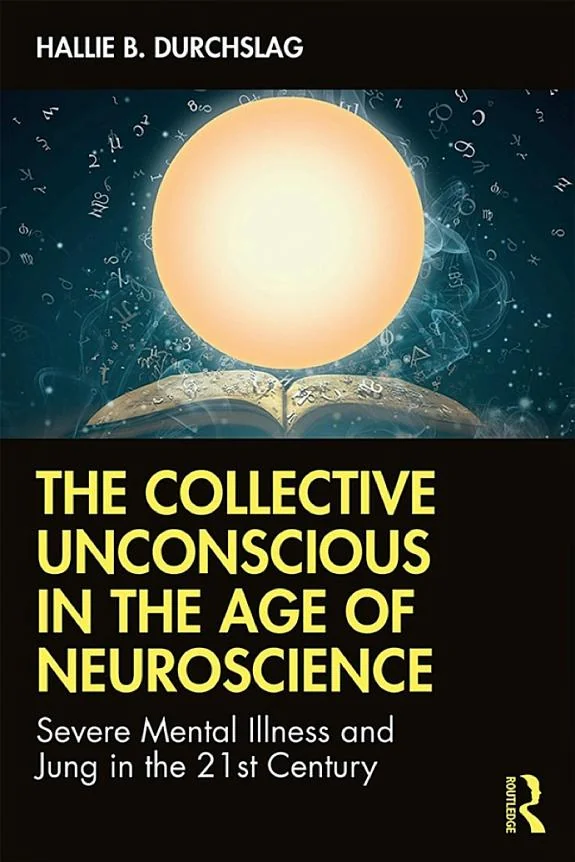
The Collective Unconscious in the Age of Neuroscience
 74
74

The Collective Unconscious in the Age of Neuroscience
Hallie B. Durchslag's "The Collective Unconscious in the Age of Neuroscience" offers a compelling, if occasionally challenging, exploration of Jungian theory through the lens of lived experience and contemporary science. Durchslag's decision to integrate her own narrative of mental illness with the analyses of three other autobiographical accounts is a bold stroke, lending the work an immediate and visceral authenticity. The strength lies in its earnest attempt to bridge the empirical with the archetypal, particularly in the sections discussing the physiological correlates of what Jung might have termed 'psychic material.' However, the book sometimes strains under the weight of its ambition; the narrative analysis, while insightful, can occasionally feel more descriptive than deeply explanatory, leaving the reader yearning for more explicit connections between specific neurological findings and Jungian symbols. The exploration of the anima and animus, for instance, feels particularly potent when grounded in the patient narratives. Durchslag's work serves as a valuable, if imperfect, contribution to the ongoing conversation between psychology and neuroscience, pushing the boundaries of how we understand the mind's deepest structures.
📝 Description
74
In 2020, Hallie B. Durchslag's book connected Jung's collective unconscious to neuroscience.
Hallie B. Durchslag's 2020 work, The Collective Unconscious in the Age of Neuroscience, examines the relationship between Carl Jung's theories of a shared psychic inheritance and modern neuroscience. Durchslag uses narrative analysis, including her own experiences with severe mental illness, to explore four autobiographical accounts. The book seeks to show how psychological content and physiological processes, as Jung suggested, influence each other.
This book is for readers interested in depth psychology, clinical experience, and contemporary scientific views on the mind. It appeals to students of Jungian psychology, those with personal experience of mental health issues, and researchers aiming to link subjective reports with objective biological data. It is for people who question a strict separation of mind and body.
Published in 2020, the book arrives at a time of significant discussion between psychological theories and neuroscientific research. It engages with C. G. Jung's mid-20th century ideas on the collective unconscious, often contrasted with behaviorist or biological models. Durchslag places Jung's concepts in a modern context, considering how they might be understood with current advances in brain imaging and neural network research.
This book engages with the esoteric tradition by re-examining C. G. Jung's concepts of the collective unconscious and archetypes. Jung's work itself drew from mythology, alchemy, and comparative religion to understand the psyche's deeper layers. Durchslag's approach attempts to bridge these ideas with contemporary scientific understanding, suggesting that Jung's framework for universal psychic patterns may find resonance or new interpretations within neurobiological findings. It questions purely materialist explanations of consciousness and mental states, aligning with a broader esoteric interest in the non-physical dimensions of human experience.
💡 Why Read This Book?
• Gain a nuanced understanding of C. G. Jung's collective unconscious theory, specifically how it might manifest in individuals experiencing severe mental illness, as explored through Durchslag's narrative analysis of autobiographical accounts. • Discover potential physiological correlates for archetypal patterns, moving beyond purely abstract psychological concepts to consider the interplay with human physiology discussed in the book. • Appreciate a unique methodology that combines autobiographical narrative, psychological theory, and insights from neuroscience, as presented in the work's unique approach to case studies.
⭐ Reader Reviews
Honest opinions from readers who have explored this book.
❓ Frequently Asked Questions
What is the primary focus of "The Collective Unconscious in the Age of Neuroscience"?
The book's primary focus is to connect C. G. Jung's theory of the collective unconscious with modern neuroscience, using narrative analysis of personal accounts of mental illness to explore the link between psychic material and human physiology.
Who is Hallie B. Durchslag and what is her background?
Hallie B. Durchslag is the author of the book. While her specific professional background is detailed within the text, she draws upon her own experiences with severe mental illness as a core element of her analysis.
What is narrative analysis as used in this book?
In this context, narrative analysis involves examining autobiographical accounts of mental illness to identify patterns, themes, and symbolic expressions that can illuminate the relationship between psychological experiences and physiological states.
How does the book relate C. G. Jung's ideas to modern science?
It bridges Jung's theories, such as the collective unconscious, with contemporary neuroscience by investigating how these psychological concepts might be understood or expressed through biological and neurological processes.
What kind of mental illnesses are discussed in the book?
The book addresses severe mental illness, utilizing four autobiographical accounts, including the author's own, to explore the theoretical connections between psychological states and neurological functions.
When was "The Collective Unconscious in the Age of Neuroscience" first published?
The book was first published on May 20, 2020, positioning it within contemporary discussions that integrate psychology and neuroscience.
🔮 Key Themes & Symbolism
Psyche Meets Physiology
This theme investigates the tangible ways in which Jung's concept of the collective unconscious—the inherited reservoir of human experience and archetypes—might intersect with the physical structure and function of the brain. Durchslag employs narrative analysis of autobiographical accounts of severe mental illness to illustrate how deeply ingrained psychic patterns could manifest physiologically. It challenges a purely reductionist view of mental health, suggesting a more integrated model where the 'psychic material' Jung described has a discernible, albeit complex, relationship with neurobiology.
Narrative as Diagnostic Tool
The book highlights the power of personal narrative in understanding mental illness. By analyzing four autobiographical accounts, including her own, Durchslag demonstrates how individual life stories can serve as a potent lens through which to view the interplay of psychological phenomena and biological processes. This approach moves beyond sterile clinical descriptions, offering a rich, human-centered perspective that seeks to find meaning and structure within experiences often categorized solely by pathology.
Jungian Archetypes in Modern Context
Durchslag re-examines C. G. Jung's foundational concepts, particularly archetypes and the collective unconscious, within the framework of 21st-century neuroscience. The work seeks to demonstrate that these archetypal patterns, far from being mere abstract theories, may have observable correlates in neural activity and subjective experience. It positions Jung's insights not as relics of the past, but as potentially relevant frameworks for understanding the human psyche's interaction with its biological substrate in the modern era.
Subjectivity and Objectivity
A core tension explored is the bridge between subjective lived experience, particularly of profound mental distress, and objective scientific observation. The book argues for the validity and importance of subjective accounts, using them as the primary data for exploring the collective unconscious. It then attempts to align these subjective reports with findings from neuroscience, suggesting that a complete understanding of the mind requires integrating both the inner world of experience and the outer world of biological function.
💬 Memorable Quotes
Direct passages from the work, attributed to the author.
“The interplay between psychic material and human physiology.”
— This phrase expresses the book's central thesis: that the intangible aspects of the psyche, as conceptualized by Jung, are not separate from but dynamically linked to the body's biological workings.
“Narrative analysis of autobiographical accounts of mental illness.”
— This describes the core methodology used by Durchslag, emphasizing the use of personal stories as a primary source for understanding complex psychological and potentially physiological phenomena.
“C. G. Jung’s theory of a collective unconscious.”
— This refers to the theoretical foundation upon which the book builds, highlighting Jung's idea of a shared, inherited layer of the human psyche containing universal patterns and symbols.
“Expressions of psychic material and human physiology.”
— This highlights the book's focus on how internal psychological states and external biological functions manifest and interact, particularly in the context of mental health challenges.
“The age of neuroscience.”
— This situates the book's inquiry within the current scientific landscape, acknowledging the significant advancements and perspectives offered by the field of neuroscience in understanding the brain and mind.
🌙 Esoteric Significance
Tradition
This work situates itself within the broad tradition of analytical psychology, a lineage stemming directly from C. G. Jung. While not strictly Hermetic, Gnostic, or Kabbalistic in its primary framework, it engages with Jung's integration of alchemical, mythological, and cross-cultural symbolic systems, which often draw from or parallel these esoteric traditions. Durchslag's exploration of the collective unconscious can be seen as a modern attempt to map the terrain of the soul and its archetypal foundations, a perennial concern in esoteric thought.
Symbolism
The book implicitly engages with archetypal symbolism, the core of Jung's contribution. While specific symbols are explored through the lens of autobiographical narratives of mental illness, concepts like the Shadow, the Anima/Animus, and the Self, all central to Jungian psychology, are touched upon. These archetypes, understood as universal psychic structures, function symbolically to represent fundamental human experiences and potentials, bridging the personal psyche with the universal patterns of the collective unconscious.
Modern Relevance
Durchslag's work speaks to contemporary thinkers and practitioners interested in the integration of psychology and neuroscience, a field increasingly populated by researchers and clinicians. It appeals to those in transpersonal psychology, consciousness studies, and even certain branches of neuroscience seeking to understand the subjective experience of consciousness and the biological underpinnings of archetypal patterns. It offers a conceptual bridge for those who find purely materialist explanations of the mind insufficient.
👥 Who Should Read This Book
• Students of C. G. Jung and analytical psychology seeking to understand how his theories might be examined through the lens of modern neuroscience and personal experience. • Individuals interested in the intersection of mental health, subjective experience, and biological correlates, looking for a text that bridges these domains. • Researchers and clinicians exploring narrative therapy, psychosomatic connections, and the application of psychological theories to contemporary scientific inquiry.
📜 Historical Context
Published in 2020, "The Collective Unconscious in the Age of Neuroscience" arrived at a time when the dialogue between depth psychology and empirical science was intensifying. It directly engages with the intellectual legacy of C. G. Jung, whose important work on archetypes and the collective unconscious was largely developed in the mid-20th century, often in parallel with figures like Erich Neumann and in contrast to the more behaviorist or purely biological approaches prevalent in some scientific circles. Durchslag's contribution is significant for attempting to bridge Jungian concepts with contemporary neuroscientific understanding, a move that many contemporary psychologists and neuroscientists are increasingly exploring. While Jung himself was interested in the biological basis of psychic phenomena, this book explicitly uses modern research and case studies to revisit those connections. The work matters by offering a potential framework for reconciling the subjective, symbolic world of Jungian psychology with the objective, data-driven findings of brain science, addressing a gap that has long been a point of contention and fascination.
📔 Journal Prompts
The collective unconscious's manifestation in personal narratives.
Physiological correlates of archetypal experiences.
Bridging subjective accounts and neurobiological findings.
The role of narrative analysis in understanding mental illness.
Reconciling Jungian concepts with modern scientific paradigms.
🗂️ Glossary
Collective Unconscious
A theoretical concept introduced by C. G. Jung, referring to a universal layer of the unconscious mind that is inherited and shared by all humans, containing archetypes and primordial images.
Archetype
Universal, archaic patterns and images that derive from the collective unconscious and are the psychic counterpart of a biological instinct; fundamental themes and characters that appear across cultures and time.
Psychic Material
The content of the psyche, including thoughts, feelings, images, and fantasies, which may originate from personal experience or the collective unconscious.
Neuroscience
The scientific study of the nervous system, including the brain, and its role in behavior and mental processes.
Narrative Analysis
A research method that involves studying the stories people tell to understand their experiences, beliefs, and the structure of their thinking.
Autobiographical Accounts
First-person written or spoken descriptions of an individual's own life experiences, particularly relevant here for understanding mental illness from a subjective perspective.
Physiology
The branch of biology that deals with the functions and activities of living organisms and their parts.
This book appears in 1 collection
🔮 Readers Also Liked
Browse all →









From the “Collective Unconscious” Collection
View all →




More Free Occult Philosophy Books
View all →