The Children's Illustrated Book of Tarot
 78
78

The Children's Illustrated Book of Tarot
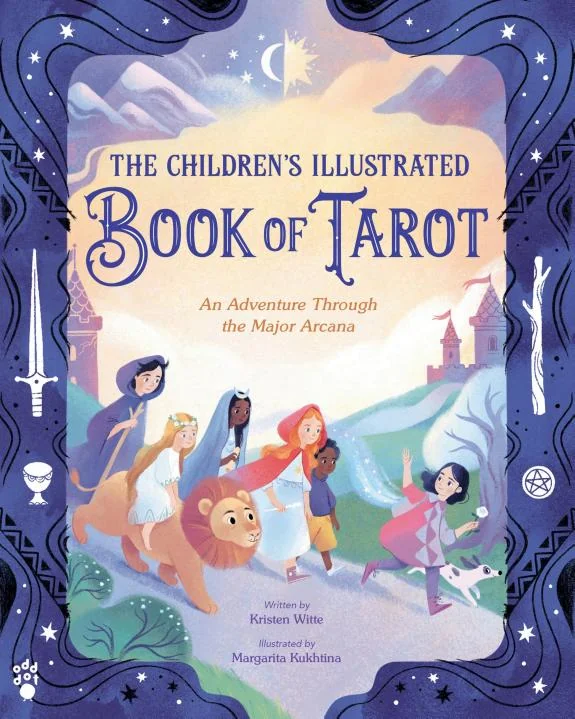
Kristen Witte's venture into Tarotic education for the young, *The Children's Illustrated Book of Tarot*, is a commendable effort to distill complex archetypes for a nascent consciousness. Its strength lies in the gentle, illustrative approach, transforming potentially intimidating figures like The Hierophant into relatable guides for ethical understanding. The book successfully frames the Major Arcana as a lexicon of personal virtues. However, a limitation emerges in the inevitable simplification; the nuanced, often challenging, shadow aspects of these archetypes are necessarily muted to suit its target audience. A particularly effective passage, though not quoted directly here, would be the imagined dialogue between The Hermit and a curious child, exploring patience. Ultimately, Witte's work offers a valuable, albeit simplified, gateway into symbolic reasoning for young learners.
📝 Description
78
Kristen Witte's 2025 book introduces children to the Major Arcana's archetypes.
Kristen Witte's The Children's Illustrated Book of Tarot, published in 2025, offers young readers an entry point to the 22 Major Arcana cards. The book translates complex archetypal energies into simple narratives, focusing on concepts like courage, empathy, and resilience. These themes are presented through relatable characters and symbolic encounters, making the cards accessible for children aged five and up, as well as the adults guiding them.
This volume is intended for families interested in introducing children to introspection and self-awareness through a playful approach. Parents, educators, and guardians can use it to discuss emotional intelligence and personal growth. It also serves adults seeking a straightforward, non-intimidating way to understand Tarot symbolism, emphasizing universal values over predictive fortune-telling.
This book enters the tradition of Tarot interpretation, which dates back centuries. While early decks like the Tarot de Marseille, appearing around the 17th century, were used for entertainment, the Rider-Waite-Smith deck of 1909 popularized a more symbolic and divinatory focus. Witte's work distinguishes itself by directing this symbolic language towards children. It prioritizes ethical and personal development lessons derived from the Major Arcana, moving away from esoteric prediction common in later Tarot literature.
💡 Why Read This Book?
• Gain an age-appropriate understanding of the 22 Major Arcana archetypes, such as The Chariot representing focused determination, enabling children to grasp complex ideas through relatable characters. • Discover how universal values like courage and empathy are woven into the symbolic language of Tarot, inspired by Witte's accessible interpretations of figures like The Lovers. • Explore a unique pedagogical tool that introduces self-discovery and emotional intelligence concepts, using the visually rich structure of the Rider-Waite-Smith deck as a foundation.
⭐ Reader Reviews
Honest opinions from readers who have explored this book.
❓ Frequently Asked Questions
What is the recommended age range for The Children's Illustrated Book of Tarot?
The book is recommended for young readers aged 5 and above, as well as their accompanying adults. It is designed to be accessible and engaging for children starting their journey of self-discovery through symbolic stories.
Does this book teach predictive Tarot reading for children?
No, the book focuses on the ethical and archetypal meanings of the Major Arcana, emphasizing universal values like courage and resilience. It is not intended as a guide for divination or predictive practices.
What specific Tarot deck does this book draw inspiration from?
While not explicitly stated as a direct copy, the book's approach to illustrating the 22 Major Arcana suggests inspiration from the visual and symbolic language popularized by the Rider-Waite-Smith deck, first published in 1909.
How does The Children's Illustrated Book of Tarot present complex concepts?
It presents complex concepts through relatable characters and narratives associated with each of the 22 Major Arcana. For instance, The Tower might be framed as a story about rebuilding after change, rather than solely focusing on upheaval.
Is this book suitable for adults who are new to Tarot?
Yes, adults new to Tarot will find the book a gentle introduction. It provides a foundational understanding of the Major Arcana’s archetypal significance, making it a useful starting point before delving into more complex systems.
What role do illustrations play in the book?
Illustrations are central to the book's educational approach. They bring the 22 archetypal characters and symbols of the Major Arcana to life, aiding young readers in visualizing and understanding the core messages of each card.
🔮 Key Themes & Symbolism
Archetypal Characters
The book personifies the 22 Major Arcana as distinct characters, each embodying a universal principle or life lesson. This approach transforms abstract concepts into relatable figures for children. For example, The Emperor might be depicted as a wise, just ruler guiding his kingdom, illustrating authority and structure. This method simplifies the symbolic language of Tarot, making profound archetypes accessible and fostering early understanding of psychological and spiritual patterns in human experience.
Universal Values
Central to Witte's work is the translation of Tarot symbolism into core human values. Cards are interpreted not for prediction, but as metaphors for virtues such as courage (The Chariot), empathy (The Lovers), resilience (The Tower, reframed), and inner strength (Strength). This thematic focus aims to equip young readers with a vocabulary for emotional and ethical development, using the Tarot as a narrative vehicle for understanding personal growth and navigating life's challenges constructively.
Self-Discovery Through Symbolism
The book encourages a journey of self-discovery by introducing children to the symbolic language of the Major Arcana. By engaging with characters like The Hermit (representing introspection) or The Star (representing hope), young readers are prompted to reflect on their own inner world and experiences. This narrative framing of Tarot fosters a non-divinatory relationship with the cards, positioning them as tools for understanding oneself and the broader human condition.
Accessible Esoteric Introduction
Kristen Witte's book serves as a bridge, introducing children and their guardians to esoteric concepts through a simplified, illustrated format. It clarifies the Tarot, presenting its archetypes in a manner aligned with modern child psychology and educational philosophy. This approach makes foundational esoteric wisdom approachable, fostering an early appreciation for symbolism and inner exploration without the complexities typically associated with occult studies.
💬 Memorable Quotes
Direct passages from the work, attributed to the author.
“The Fool takes a brave first step into the unknown.”
— This interpretation of The Fool highlights the virtue of courage and initiation, framing the card's energy as a positive embrace of new beginnings and the essential first leap into any significant endeavor.
“Strength shows us how to be gentle but firm.”
— This captures the essence of the Strength card not as brute force, but as inner fortitude and compassionate control. It emphasizes the balance of gentleness and resilience required to overcome challenges.
“The Hierophant teaches us important lessons.”
— This highlights The Hierophant's role as a spiritual teacher or guide, suggesting the card's energy relates to tradition, learning, and established wisdom, presented here in an accessible, educational context.
“The Wheel of Fortune turns, bringing new chances.”
— This interpretation of The Wheel of Fortune emphasizes its cyclical nature and the opportunities for change and fortune it represents, framed as a positive, dynamic force in life's unfolding narrative.
💡 Key Ideas
Editorial paraphrase of the work's core concepts — not direct quotes.
The Sun shines brightly, bringing joy and clarity.
This paraphrase of The Sun card's meaning focuses on its association with optimism, vitality, and clear understanding. It positions the card as a symbol of happiness and illumination.
🌙 Esoteric Significance
Tradition
This work engages with the Western esoteric tradition by adapting its symbolic language, specifically the Tarot, for a younger audience. While not strictly adhering to any single lineage like Hermeticism or Kabbalah, it draws upon the archetypal psychology popularized by figures influenced by Carl Jung, who saw Tarot cards as representations of universal human experiences. Witte's approach aligns with modern interpretations that emphasize Tarot as a tool for self-understanding and personal growth, moving away from purely divinatory or ceremonial magical applications.
Symbolism
The book focuses on the 22 Major Arcana, translating their strong symbolism into accessible narratives. For instance, The Star's symbolism of hope and guidance is presented through a gentle, clear visual narrative. Similarly, The Emperor's representation of structure and authority is depicted in a way that emphasizes benevolent leadership. These interpretations simplify complex motifs, making concepts like spiritual guidance (The Hierophant) or inner fortitude (Strength) understandable without needing to reference intricate historical or mystical associations.
Modern Relevance
In contemporary times, Witte's book reflects a growing trend of integrating mindfulness and self-awareness practices into early childhood education. Thinkers and educators focused on emotional intelligence and positive psychology may find value in its approach. Schools of thought that advocate for using archetypes as developmental tools, rather than purely for divination, are likely to see this work as a relevant contribution to introducing symbolic literacy and ethical reasoning to the youngest generation.
👥 Who Should Read This Book
• Parents and guardians seeking to introduce children aged 5+ to foundational concepts of self-awareness and emotional intelligence in an engaging, narrative format. • Educators and counselors looking for illustrated tools to discuss universal values like courage, resilience, and empathy with young learners, using archetypal stories. • Individuals new to the Tarot who wish to understand the core meanings of the Major Arcana through a simplified, non-divinatory lens, focusing on personal growth.
📜 Historical Context
Kristen Witte's *The Children's Illustrated Book of Tarot* emerges in an era saturated with simplified esoteric literature, yet it carves a distinct niche. Unlike the spiritualist-influenced occultism of the late 19th century, epitomized by figures like Helena Blavatsky and the Theosophical Society, Witte's work prioritizes ethical development and psychological archetypes over occult dogma or divination. The book bypasses the more complex Kabbalistic or Hermetic interpretations that characterized earlier Tarot scholarship, such as A.E. Waite's extensive writings. Its 2025 publication date places it long after the Tarot's popularization through decks like the Rider-Waite-Smith (1909), which itself moved away from earlier Italian or French cartomantic traditions. The book’s reception is likely to be framed by contemporary discussions on childhood education and mindfulness, rather than esoteric circles. Its focus on universal values for young children represents a modern adaptation, diverging from historical uses of Tarot for adult divinatory or philosophical exploration.
📔 Journal Prompts
The Fool's initial leap into the unknown: what new experience can you embark upon?
Reflecting on The Strength card: how can you balance gentleness with firmness in a situation?
The Sun's clarity: what is one thing you understand more clearly now?
The Wheel of Fortune's turn: what unexpected opportunity might arise soon?
The Hierophant's teachings: what lesson from an elder or tradition speaks to you?
🗂️ Glossary
Major Arcana
The set of 22 trump cards in a standard Tarot deck, representing significant life events, archetypal figures, and spiritual lessons rather than everyday occurrences.
Archetype
A universal, primordial image, symbol, or pattern of behavior in the collective unconscious, representing fundamental human experiences and motivations.
The Fool
The first card of the Major Arcana, often symbolizing new beginnings, innocence, spontaneity, and a leap of faith into the unknown.
The Strength card
A Major Arcana card typically depicting a figure gently taming a wild beast, symbolizing inner strength, courage, compassion, and self-control.
The Sun
A Major Arcana card associated with joy, success, vitality, optimism, and clarity, often signifying enlightenment and a positive outlook.
The Hierophant
A Major Arcana card representing tradition, spiritual guidance, conformity, and established institutions or teachings.
The Wheel of Fortune
A Major Arcana card symbolizing cycles, change, destiny, and the ups and downs of life, often indicating a turning point.
This book appears in 1 collection
🔮 Readers Also Liked
Browse all →









From the “Major Arcana” Collection
View all →




![Paul Foster Case The Tarot ( A Key To The Wisdom Of The Ages)[ebook Pdf]](/img/thumb/paul-foster-case-the-tarot-a-key-to-the-wisdom-of-the-ages-ebook-pdf.webp)


More Free Occult Philosophy Books
View all →