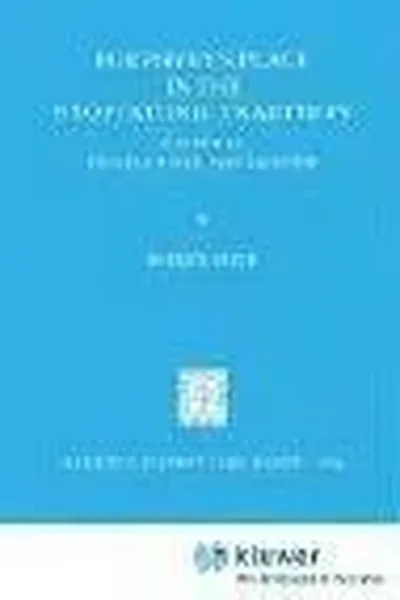
The chemical choir

 82
82

The chemical choir
P. G. Maxwell-Stuart's *The Chemical Choir* offers a meticulously researched argument for the often-overlooked alchemical underpinnings of early modern music. The strength of the book lies in its rigorous academic approach, drawing clear lines between the philosophical language of alchemy and the theoretical concerns of composers and music theorists. Maxwell-Stuart avoids sensationalism, presenting a sober yet compelling case. A slight limitation might be the density of the prose, which at times can make the intricate connections feel less immediately accessible to those not already steeped in both alchemical and musicological discourse. However, the section discussing the concept of "musical distillation" as a parallel to alchemical separation and refinement is particularly illuminating, demonstrating the author's keen eye for cross-disciplinary parallels. This is a valuable contribution for scholars of esoteric history and early music.
📝 Description
82
P. G. Maxwell-Stuart's 2008 book examines alchemy's influence on early modern music.
Published in 2008, The Chemical Choir investigates the connections between alchemical thought and musical practice in the early modern period. Maxwell-Stuart shows how concepts like transmutation, purification, and symbolic language, central to alchemy, found echoes in music theory and composition. He details how musicians and theorists of the Renaissance and Baroque eras might have seen their work as participating in or mirroring the alchemical quest for perfection.
The book argues that "musical alchemy" was a real concept, where creating and understanding music was likened to the alchemical process. It delves into shared symbolic systems, such as the parallels drawn between chemical operations and musical elements like intervals and modes. This work is suited for those interested in the historical interplay between the sciences, arts, and esoteric philosophies.
This study sits within the broader field of Western esotericism, specifically focusing on the Hermetic and alchemical traditions during the Renaissance and early Baroque. It examines how these esoteric currents were not confined to distinct magical or philosophical circles but actively informed other intellectual domains, including music. The book illuminates a period where the boundaries between natural philosophy, magic, and artistic creation were fluid, showing how alchemical cosmology and its associated symbolism permeated the understanding of harmony and sonic expression.
💡 Why Read This Book?
• Gain insight into the philosophical underpinnings of early modern music, understanding how alchemical concepts of purification and transmutation informed musical theory, a perspective often absent in standard musicological texts. • Explore the symbolic language shared between alchemy and music, learning how concepts like "musical distillation" were conceptualized and applied during the Renaissance and Baroque periods. • Appreciate the intellectual climate of the late 16th and early 17th centuries, recognizing how figures like Robert Fludd sought to unify esoteric cosmology with natural philosophy, impacting artistic creation.
⭐ Reader Reviews
Honest opinions from readers who have explored this book.
❓ Frequently Asked Questions
What is the primary focus of P. G. Maxwell-Stuart's 'The Chemical Choir'?
The book's primary focus is the historical relationship between alchemy and music, specifically how alchemical principles, symbolism, and philosophical ideas influenced musical theory and practice in the early modern period.
When was 'The Chemical Choir' first published?
'The Chemical Choir' by P. G. Maxwell-Stuart was first published in 2008.
Who would benefit most from reading 'The Chemical Choir'?
Academics, students, and enthusiasts of esoteric history, musicology, and Renaissance/Baroque studies would benefit most from this work.
Does the book connect specific composers to alchemical practices?
While the book examines broader theoretical and philosophical connections, it delves into how alchemical notions permeated the intellectual landscape from which composers and theorists operated, rather than focusing on direct biographical links for every figure.
What is the concept of 'musical alchemy' as discussed in the book?
'Musical alchemy' refers to the idea that the creation and understanding of music could mirror the alchemical process of transformation, purification, and the pursuit of perfect harmony.
What historical period does 'The Chemical Choir' primarily cover?
The book primarily covers the late Renaissance and early Baroque periods, a time when the boundaries between science, magic, and art were fluid.
🔮 Key Themes & Symbolism
Alchemical Principles in Music Theory
The work meticulously details how core alchemical concepts like purification, transmutation, and the pursuit of perfection were metaphorically applied to musical composition and theory. It examines how the ideal of achieving a perfect, incorruptible sound mirrored the alchemist's quest for the Philosopher's Stone. This exploration moves beyond simple analogy, suggesting a shared philosophical framework where sonic harmony was seen as a reflection of cosmic order and spiritual attainment, particularly evident in the harmonic investigations of the late 16th and early 17th centuries.
Symbolic Language of Alchemy and Music
Maxwell-Stuart highlights the shared symbolic lexicon between alchemical treatises and musical writings of the period. Elements like metals, celestial bodies, and chemical processes found resonance in musical intervals, modes, and structures. The book suggests that musical notation and theoretical discussions often employed allegorical language, akin to alchemical texts, to convey deeper spiritual or philosophical meanings. This shared language facilitated a cross-pollination of ideas, where musical structures could be interpreted through an alchemical lens and vice-versa.
The Quest for Perfect Harmony
Central to the book is the idea that both alchemists and musicians of the era were engaged in a parallel quest for ultimate harmony and order. For the alchemist, it was the prima materia transformed into gold; for the musician, it was the creation of music that perfectly reflected divine proportions and cosmic laws. The work explores how this aspiration manifested in the development of new tuning systems, contrapuntal techniques, and the philosophical understanding of music's power to influence the soul and the cosmos.
Integration of Esoteric and Natural Philosophy
The Chemical Choir situates musical thought within the broader context of Renaissance and Baroque esoteric traditions, where the study of nature was inseparable from spiritual inquiry. It examines how figures sought to synthesize macrocosmic (universal) and microcosmic (human/musical) principles. This perspective reveals how music was not merely an aesthetic pursuit but was deeply intertwined with cosmological models and the understanding of divine creation, drawing parallels to the work of contemporaries like Robert Fludd.
💬 Memorable Quotes
Direct passages from the work, attributed to the author.
“The search for perfect sonic proportion reflected the cosmic order.”
— This concept highlights the belief that musical harmony was not arbitrary but a direct manifestation of the universe's underlying structure, aligning with the alchemical pursuit of universal laws and divine blueprints.
“Alchemical symbolism permeated the theoretical language of music.”
— This interpretation points to the use of shared metaphors and allegorical language between alchemical texts and musical treatises, indicating a common conceptual ground for understanding both the material and sonic worlds.
“The ideal sound aimed for incorruptibility, much like alchemical gold.”
— This suggests that composers and theorists aspired to create music of enduring perfection and purity, a quality that alchemists sought in the transmutation of metals, viewing both as ultimate achievements.
💡 Key Ideas
Editorial paraphrase of the work's core concepts — not direct quotes.
Musical creation was understood as a process akin to alchemical purification.
This paraphrase suggests that the act of composing or performing music was seen not just as aesthetic expression but as a transformative act, mirroring the alchemist's efforts to refine base elements into something pure and perfected.
Music served as a means to apprehend divine principles.
This paraphrased concept indicates that music was viewed as a path or tool for accessing higher truths and understanding the fundamental workings of the divine, a notion central to many esoteric traditions of the era.
🌙 Esoteric Significance
Tradition
The work primarily engages with the Hermetic and Neoplatonic traditions prevalent in Renaissance and early Baroque Europe. It positions alchemy not merely as proto-chemistry but as a philosophical system deeply intertwined with cosmology and spiritual aspiration. This lineage sought correspondences between the terrestrial and celestial realms, viewing the material world as a reflection of divine order. Maxwell-Stuart's analysis fits within this by demonstrating how musical structures and theories were understood as participating in this grand, divinely orchestrated harmony, departing from purely aesthetic considerations.
Symbolism
Key symbols explored include the concept of "musical distillation," mirroring the alchemical process of separating and purifying essences, and the pursuit of "perfect harmony," analogous to the alchemist's quest for the Philosopher's Stone. Metals (like gold, associated with the Sun) and celestial bodies, frequently referenced in alchemical texts, also found symbolic resonance in musical keys, modes, and the perceived spiritual effects of different sounds, linking sonic phenomena to cosmic principles.
Modern Relevance
Contemporary interest in the integration of esoteric thought with historical arts and sciences provides a fertile ground for Maxwell-Stuart's work. Scholars and practitioners in fields like comparative mythology, Hermetic studies, and historical musicology continue to explore these cross-disciplinary links. The book's insights are relevant to modern occult traditions seeking to understand the historical roots of their philosophies and how these ancient ideas manifested in creative arts, offering a model for analyzing the symbolic depth within various disciplines.
👥 Who Should Read This Book
• Students of Renaissance and Baroque musicology seeking to understand the philosophical and esoteric influences shaping musical theory beyond purely technical aspects. • Researchers in Western Esotericism interested in the practical and theoretical manifestations of alchemical thought in the arts and sciences during a formative historical period. • Enthusiasts of intellectual history who appreciate the interconnectedness of disciplines and wish to explore how mystical and proto-scientific ideas informed creative expression.
📜 Historical Context
Published in 2008, *The Chemical Choir* emerges from a later scholarly engagement with the intellectual currents of the late Renaissance and early Baroque. This era, roughly spanning from the mid-16th to the mid-17th century, was characterized by a fervent blending of natural philosophy, occultism, and artistic innovation. Thinkers like Robert Fludd sought to create comprehensive esoteric cosmologies, and the very definition of "science" was broad enough to encompass what we now consider disparate fields. Maxwell-Stuart’s work revisits this period, positing a significant, if often implicit, alchemical influence on musical thought. While contemporary musicology had largely moved past purely symbolic interpretations, the book engages with a scholarly environment that, since the mid-20th century, has increasingly recognized the importance of Hermeticism and Neoplatonism in Renaissance thought. The book’s specific contribution is to map these influences onto the nascent field of music theory, offering a counterpoint to purely formalist or historical-materialist analyses of the period’s music.
📔 Journal Prompts
The concept of 'musical distillation' in relation to alchemical purification.
Reflecting on the symbolic language shared between alchemical texts and musical theory.
The pursuit of 'perfect harmony' as a parallel between alchemy and music.
Correlations between celestial bodies and musical principles discussed in the text.
The integration of esoteric cosmology within early modern musical thought.
🗂️ Glossary
Prima Materia
In alchemy, the primordial, undifferentiated substance from which all matter is derived. It represents the starting point for the alchemical Great Work, a state of potentiality before separation and refinement.
Philosopher's Stone
The legendary alchemical substance believed to be capable of transmuting base metals into gold and producing the elixir of life. It symbolizes ultimate perfection and spiritual enlightenment.
Hermeticism
A philosophical and religious tradition based on writings attributed to Hermes Trismegistus. It emphasizes the unity of all things, the principle of 'as above, so below,' and the pursuit of spiritual knowledge through understanding the cosmos.
Neoplatonism
A school of philosophy derived from Plato's teachings, emphasizing the transcendent One, from which all reality emanates. It influenced many esoteric traditions by positing a hierarchical universe and the possibility of mystical union with the divine.
Great Work (Major work)
The process of alchemical transformation, involving the purification, separation, and recombination of elements to achieve the Philosopher's Stone. It is often interpreted as a metaphor for spiritual development and enlightenment.
Microcosm/Macrocosm
The principle that the human being (microcosm) is a reflection of the universe (macrocosm), and vice versa. This concept was central to Renaissance thought, linking human experience and natural phenomena.
Musical Distillation
A conceptual parallel drawn between the alchemical process of distillation (separating and purifying substances) and musical composition or theory, suggesting a similar refinement of sonic elements.
🔮 Readers Also Liked
Browse all →







More by P. G. Maxwell-Stuart
All books →

More Free Alchemy & Hermeticism Books
View all →