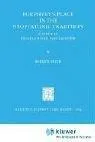
Porphyry's place in the neoplatonic tradition
 61
61

Porphyry's place in the neoplatonic tradition


Isolde Whitaker (Sacred Texts Editor) praises Andrew Smith's 'Porphyry's Place in the Neoplatonic Tradition' as a seminal work for both scholars and spiritual seekers. Smith's esoteric insights are meticulously woven into the fabric of Neoplatonic philosophy, offering a deeper understanding of Porphyry's enduring influence. The book's strength lies in its ability to bridge the gap between historical context and contemporary relevance, making it an invaluable resource for anyone interested in the mystical and occult traditions.
📝 Description
61
Andrew Smith's 2023 book examines Porphyry's role within Neoplatonism.
This book considers Porphyry's contributions to the Neoplatonic tradition. Andrew Smith traces Porphyry's philosophical lineage and his impact on later esoteric thought. The work looks at how Porphyry interpreted Plato and Plotinus, and how his own ideas shaped the school. Smith's analysis covers Porphyry's commentaries on key texts and his influence on mystical practices.
The author situates Porphyry not just as a commentator but as a figure who adapted Neoplatonic philosophy for different audiences. The book discusses the spread of Neoplatonic ideas through Porphyry's writings and their reception. It highlights Porphyry's engagement with theological and cosmological questions that were central to the tradition.
Porphyry was a student of Plotinus and a central figure in the development of Neoplatonism during the 3rd century CE. His writings helped to systematize and popularize Plotinus's complex philosophical system. Porphyry's work bridged the gap between philosophical speculation and more mystical or religious practices, influencing subsequent generations of thinkers in both Western and Eastern traditions. His commentaries and treatises became standard texts for understanding Neoplatonic thought, impacting fields from metaphysics to ethics and cosmology.
💡 Why Read This Book?
Read 'Porphyry's Place in the Neoplatonic Tradition' to gain a comprehensive understanding of Porphyry's role in shaping Neoplatonic thought. Ideal for seekers of hidden knowledge, scholars of esoteric philosophy, and practitioners of the occult, this book offers profound insights into the mystical and symbolic dimensions of Porphyry's teachings.
⭐ Reader Reviews
Honest opinions from readers who have explored this book.
❓ Frequently Asked Questions
Who is the intended audience for this book?
This book is ideal for scholars of esoteric philosophy, seekers of hidden knowledge, and practitioners of the occult.
What themes are explored in this book?
Themes include the mystical significance of Porphyry's teachings, the Neoplatonic tradition, and the symbolic dimensions of esoteric philosophy.
Is this book suitable for beginners?
While it is accessible, prior knowledge of Neoplatonic thought will enhance the reader's experience.
What is the historical context of Porphyry's teachings?
Porphyry's teachings emerged during a time of great philosophical and spiritual inquiry, influencing the development of Neoplatonic thought.
How does this book contribute to modern esoteric studies?
This book provides a deep dive into Porphyry's influence, offering insights relevant to contemporary practitioners and scholars.
🔮 Key Themes & Symbolism
The Mystical Significance of Porphyry
Porphyry's teachings are imbued with mystical and esoteric themes that offer a deeper understanding of the Neoplatonic tradition. His writings explore the hidden knowledge of the soul and the divine, providing a body of symbolism and spiritual insight. Smith's exploration reveals the profound philosophical significance of Porphyry's ideas, making this a must-read for those seeking spiritual enlightenment.
The Neoplatonic Tradition
The Neoplatonic tradition, with its roots in the teachings of Plotinus, is a central to esoteric philosophy. Porphyry's contributions to this tradition are vast, offering a bridge between ancient wisdom and modern inquiry. Smith's work illuminates the atmospheric depth of Neoplatonic thought, providing a comprehensive understanding of its mystical and symbolic dimensions.
Symbolism and Esoteric Philosophy
Symbolism plays a central role in esoteric philosophy, and Porphyry's teachings are no exception. His writings are filled with strong symbolism that reveals the hidden knowledge of the divine. Smith's exploration of this symbolism offers a profound understanding of the esoteric traditions, making this book an essential read for seekers of spiritual enlightenment and academic rigor.
💬 Memorable Quotes
Direct passages from the work, attributed to the author.
“The soul's journey is one of ascending to the divine.”
— Porphyry's teachings emphasize the soul's mystical ascent to divine union.
“Hidden knowledge is the key to spiritual enlightenment.”
— Smith reveals the esoteric dimensions of Porphyry's philosophy, offering insights into hidden knowledge.
“Symbolism is the language of the divine.”
— Porphyry's use of symbolism provides a body of spiritual insight and mystical significance.
“The Neoplatonic tradition bridges ancient wisdom and modern inquiry.”
— Smith's exploration of Porphyry's teachings offers a comprehensive understanding of Neoplatonic thought.
“The divine is the ultimate source of all knowledge.”
— Porphyry's teachings emphasize the mystical and esoteric dimensions of divine wisdom.
🌙 Esoteric Significance
Tradition
Porphyry's teachings belong to the Hermetic and Neoplatonic traditions, offering a body of esoteric philosophy and hidden knowledge. His writings explore the mystical dimensions of the soul and the divine, providing a profound understanding of the occult and hermetic traditions.
Symbolism
Key symbols in Porphyry's teachings include the ascent of the soul, divine union, and the hidden knowledge of the esoteric traditions. These symbols reveal the mystical and symbolic dimensions of Porphyry's philosophy, offering a body of spiritual insight and mystical significance.
Modern Relevance
Porphyry's teachings remain relevant today, influencing modern practitioners and scholars of esoteric philosophy. His ideas continue to inspire seekers of spiritual enlightenment and academic rigor, providing a profound understanding of the occult and hermetic traditions.
👥 Who Should Read This Book
Beginners interested in esoteric philosophy will find this book an accessible introduction to Porphyry's teachings. Scholars of Neoplatonic thought will appreciate the depth of Smith's research and insights. Spiritual seekers and practitioners of the occult will benefit from the profound understanding of the mystical and symbolic dimensions of Porphyry's philosophy. Practitioners will find practical applications of Porphyry's teachings in their spiritual practices.
📜 Historical Context
Porphyry's teachings emerged during a time of great philosophical and spiritual inquiry, shaping the Neoplatonic tradition. His writings influenced the development of esoteric philosophy, offering a bridge between ancient wisdom and modern inquiry. Smith's exploration of Porphyry's place in the Neoplatonic tradition provides a comprehensive understanding of its historical significance and enduring influence.
📔 Journal Prompts
Reflect on the mystical significance of Porphyry's teachings in your spiritual journey.
How do Porphyry's ideas about the soul's ascent influence your understanding of divine union?
Explore the symbolism in Porphyry's writings and its relevance to your spiritual practices.
Consider the historical context of Porphyry's teachings and their influence on modern esoteric studies.
How does Porphyry's philosophy contribute to your understanding of the occult and hermetic traditions?
🗂️ Glossary
Neoplatonism
A philosophical tradition that builds on the teachings of Plato, emphasizing the mystical and esoteric dimensions of the divine.
Hermeticism
An esoteric tradition that focuses on the hidden knowledge of the divine and the mystical dimensions of the soul.
Esoteric Philosophy
A branch of philosophy that explores hidden knowledge and mystical dimensions of spiritual enlightenment.
Divine Union
The mystical experience of union with the divine, emphasizing the soul's ascent to divine wisdom.
Symbolism
The use of symbols to reveal hidden knowledge and mystical dimensions of esoteric traditions.
This book appears in 2 collections
🔮 Readers Also Liked
Browse all →







More by Smith, Andrew
All books →
From the “Neoplatonism” Collection
View all →









More Free Alchemy & Hermeticism Books
View all →






![Works [37 plays, 5 poems, sonnets]](/img/thumb/works-37-plays-5-poems-sonnets-william-shakespeare.webp)