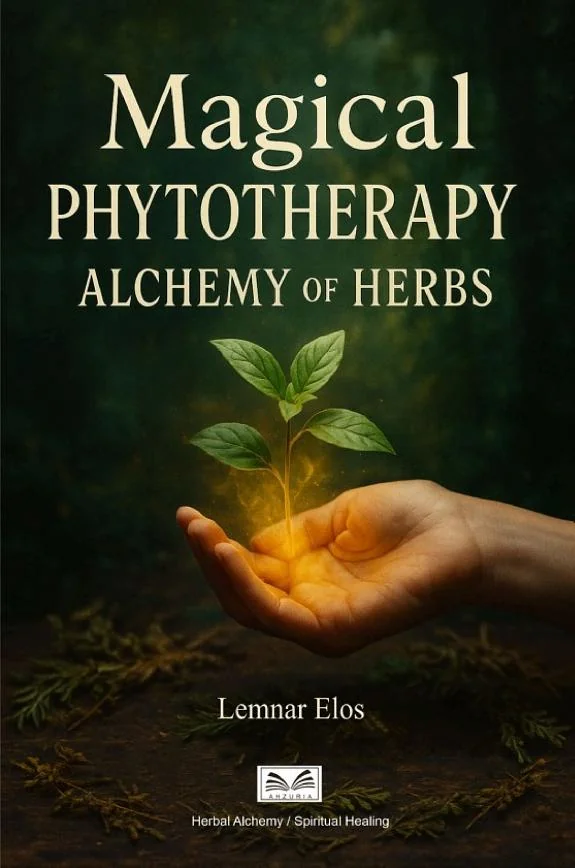
Magical Phytotherapy
 71
71

Magical Phytotherapy
Lemnar Elos and Luiz Santos's *Magical Phytotherapy* offers a compelling argument for the spiritual efficacy of plants, grounding its practices in hermetic principles rather than mere folk remedies. The text is most potent when detailing alchemical preparations, moving beyond common tinctures to discuss the energetic distillation of plant consciousness. For instance, the chapter on lunar tinctures provides a practical framework for imbuing essences with specific celestial influences, a technique rarely detailed with such clarity outside of specialized alchemical circles. Its primary limitation lies in the brevity of its historical sections; while it invokes Paracelsus, a deeper engagement with the specific botanical texts of the 16th and 17th centuries would have provided richer context for its alchemical assertions. Nevertheless, the work succeeds in reframing plant interaction as a sacred dialogue, transforming self-care into a ritual of vital reconnection.
📝 Description
71
Magical Phytotherapy, published in 2025, connects herbalism with alchemical philosophy.
This book examines plant use through the lens of energetic and spiritual dimensions, extending beyond purely medicinal applications. It situates botanical practices within the hermetic tradition. The authors detail methods for conscious harvesting, alchemical preparation of plant essences, and energetic application aimed at personal transformation.
It is written for practitioners of esotericism, spiritual herbalists, and those who wish to deepen their connection with nature. The text appeals to individuals interested in the overlap between botany, hermeticism, and consciousness studies. It speaks to those who consider self-care a sacred act of re-attunement with the natural world.
The book draws from a lineage of thought that regards plants as carriers of vital force and spiritual intelligence. This perspective aligns with traditions in Paracelsian medicine and Rosicrucianism. The renewed interest in plant spirits and animism within contemporary esoteric circles makes this exploration timely.
Magical Phytotherapy builds upon historical views that treated plants not just as physical substances but as vessels of spiritual energy. This approach resonates with the medical theories of Paracelsus, the symbolic language of Rosicrucianism, and early botanical texts that blended magic with healing. The book taps into a modern esoteric resurgence of interest in plant animism and the subtle energies of flora, framing these ideas within a practical alchemical framework.
💡 Why Read This Book?
• Learn specific methods for conscious harvesting, treating plants as sentient allies, a practice detailed in the 'Sacred Gathering' chapter, offering a respectful approach to botanical interaction. • Master alchemical preparations beyond simple tinctures, focusing on the energetic distillation of plant essences as described in the alchemical sections, enhancing your personal remedies. • Discover techniques for energetic application of plant allies, as outlined in the 'Vital Currents' chapter, to consciously balance your subtle anatomy and foster expanded awareness.
⭐ Reader Reviews
Honest opinions from readers who have explored this book.
❓ Frequently Asked Questions
What is the primary philosophical approach of Magical Phytotherapy?
The book's primary approach is rooted in hermetic philosophy, viewing plants as carriers of spiritual and energetic forces. It synthesizes alchemical principles with herbal practices to facilitate inner balance and consciousness expansion.
Who are the authors of Magical Phytotherapy?
The authors are Lemnar Elos and Luiz Santos. The book's first publication date is May 2, 2025.
Does this book offer practical herbal remedies?
Yes, it offers practical guidance on preparing and using plant essences, but with an emphasis on their energetic and spiritual qualities, moving beyond purely physiological effects.
What makes the harvesting methods in this book unique?
The book emphasizes 'conscious harvesting,' a ritualistic and respectful approach to gathering plants, treating them as sentient beings and aligning the act with alchemical and hermetic principles.
Is prior knowledge of alchemy or hermeticism required to read this book?
While prior knowledge can enhance understanding, the book aims to present foundational concepts clearly, making it accessible to those new to hermeticism but eager to explore the spiritual dimension of phytotherapy.
What kind of personal transformation does Magical Phytotherapy aim to facilitate?
It aims to foster a deeper reconnection with nature, transform self-care into a sacred practice, promote inner balance, and cultivate expanded consciousness through the intelligent use of plants.
🔮 Key Themes & Symbolism
Alchemical Plant Essences
The work details the alchemical transmutation of plant matter into potent essences, focusing on the extraction of their subtle energies and spiritual signatures. This goes beyond standard tinctures, exploring methods that capture the plant's vital force for energetic application. Preparations like solar and lunar distillations are presented as means to imbue essences with specific cosmic influences, aligning them with hermetic principles of correspondence and macrocosm-microcosm unity.
Conscious Harvesting Rituals
A central tenet is the practice of 'conscious harvesting.' This involves approaching plants with reverence and intention, understanding them as living beings with their own consciousness. The book guides readers on how to perform these gatherings as sacred acts, ensuring energetic reciprocity and respect for the plant kingdom. This ethical framework is essential for unlocking the deeper spiritual potential of phytotherapy.
Hermetic Correspondences in Botany
Magical Phytotherapy extensively explores the doctrine of signatures and hermetic correspondences as applied to plants. It posits that a plant's physical form, habitat, and energetic qualities reflect its spiritual purpose and correspondences with planetary forces, elements, and human subtle anatomy. This understanding allows for a more targeted and spiritually informed selection and application of plant allies.
Energetic Application for Balance
The book provides methods for applying plant energies to harmonize the human energetic field. This includes rituals, meditations, and the use of alchemically prepared essences to address imbalances in the aura, chakras, and consciousness. The goal is to foster spiritual growth, emotional equilibrium, and an expanded state of awareness through directed botanical intervention.
💬 Memorable Quotes
Direct passages from the work, attributed to the author.
“Transform self-care into a sacred practice of reconnection with nature.”
— This phrase expresses the book's core aim: elevating mundane wellness routines into profound spiritual engagements. It suggests that true healing involves not just physical remedies but a conscious re-establishment of our bond with the natural world.
“Each chapter invites a deeper communion with the plant kingdom.”
— This highlights the progressive and invitational nature of the text. It suggests that reading the book is not a passive act but an active process of building a relationship with plants, guided by alchemical wisdom.
“The alchemy of herbs is the art of spiritualizing botanical matter.”
— This interpretation clarifies the book's unique perspective, framing herbalism within an alchemical context. It implies that the process involves more than just extraction; it's about raising the energetic and spiritual potential of plants.
“Understanding plant energetics unlocks the path to expanded consciousness.”
— This statement connects the practical application of herbal knowledge to esoteric goals. It suggests that by working with the subtle energies of plants, practitioners can achieve higher states of awareness and spiritual insight.
“Conscious harvesting is the first step in the sacred dialogue with plant allies.”
— This emphasizes the ethical and spiritual foundation of the book's approach. It positions the act of gathering plants as a respectful, intentional engagement, setting the stage for a deeper, reciprocal relationship.
🌙 Esoteric Significance
Tradition
This work is deeply rooted in the Western Esoteric Tradition, specifically drawing from Hermeticism and Alchemy. It interprets botanical knowledge through the lens of macrocosm-microcosm correspondence, viewing plants as conduits for celestial energies and spiritual forces. The book adapts alchemical processes, typically associated with metals, to the vegetal kingdom, aiming for the spiritualization of matter and the elevation of human consciousness.
Symbolism
Key symbols include the 'Tree of Life,' representing the interconnectedness of all beings and the flow of divine energy, which is mirrored in the plant kingdom. The 'Sun' and 'Moon' symbolize alchemical principles of Sol and Luna, influencing the energetic properties of plants gathered under their respective influences. The 'Vessel' is also a recurring motif, representing both the alchemical alembic and the human body as a recipient for plant essences.
Modern Relevance
Modern practitioners of animistic witchcraft, eco-shamanism, and various forms of modern Hermeticism draw upon the principles outlined in Magical Phytotherapy. Thinkers and groups focused on re-enchanting nature and fostering direct spiritual experiences with the plant world find its blend of practical botany and esoteric philosophy highly relevant for contemporary spiritual exploration and therapeutic practices.
👥 Who Should Read This Book
• Aspiring spiritual herbalists seeking to deepen their practice beyond the physical, integrating alchemical and hermetic principles into their plant work. • Students of Western Esotericism interested in understanding the alchemical and energetic properties of flora within a Hermetic framework. • Individuals drawn to nature-based spirituality and conscious self-care, looking for methods to foster a sacred connection with plants and enhance their personal well-being.
📜 Historical Context
Magical Phytotherapy emerges within a contemporary resurgence of interest in animism, plant spirits, and esoteric botany, a trend notably explored by scholars of modern occultism. While its specific publication date is 2025, its intellectual lineage traces back to the alchemical and medical writings of figures like Paracelsus in the 16th century, who also advocated for a spiritual understanding of materia medica. This work can be seen as a modern articulation of Hermetic principles applied to phytotherapy, diverging from the purely biochemical focus of mainstream pharmacology. It engages with, yet transcends, the historical 'doctrine of signatures.' Unlike contemporary academic botanical studies, its focus remains firmly on the subtle and spiritual dimensions of plants, a perspective that has seen periodic revivals throughout esoteric history, often met with skepticism by orthodox science but embraced by spiritual practitioners.
📔 Journal Prompts
The concept of conscious harvesting and its ethical implications.
Your personal definition of 'alchemical preparation' for plants.
How can the principle of hermetic correspondence be applied to your favorite plant?
Reflect on a plant you feel a strong connection with and its potential energetic signature.
Envisioning the transformation of self-care into a sacred practice.
🗂️ Glossary
Conscious Harvesting
A ritualistic and respectful method of gathering plants, involving intentionality, gratitude, and an awareness of the plant's vital energy, aligning with hermetic principles of reciprocity.
Alchemical Preparation
Methods for extracting and concentrating the subtle energies and spiritual essence of plants, often involving processes that mirror classical alchemical operations like distillation or tincturing.
Hermetic Principles
Fundamental concepts derived from Hermeticism, such as the principle of correspondence ('As above, so below'), which posits sympathetic relationships between different levels of reality, including plants and celestial bodies.
Energetic Application
The use of plant essences or energies to influence the subtle bodies (aura, chakras) and consciousness of an individual, aiming for balance, healing, and spiritual expansion.
Plant Allies
Plants viewed not merely as resources but as sentient beings with whom a practitioner can establish a reciprocal, spiritual relationship for mutual growth and healing.
Doctrine of Signatures
The historical belief that the physical appearance or characteristics of a plant indicate its medicinal or spiritual properties and correspondences.
Vital Force
The inherent life energy or spirit believed to animate all living things, including plants, which can be accessed and utilized through alchemical and energetic practices.
This book appears in 1 collection
🔮 Readers Also Liked
Browse all →








From the “Mental Alchemy” Collection
View all →








More Free Alchemy & Hermeticism Books
View all →