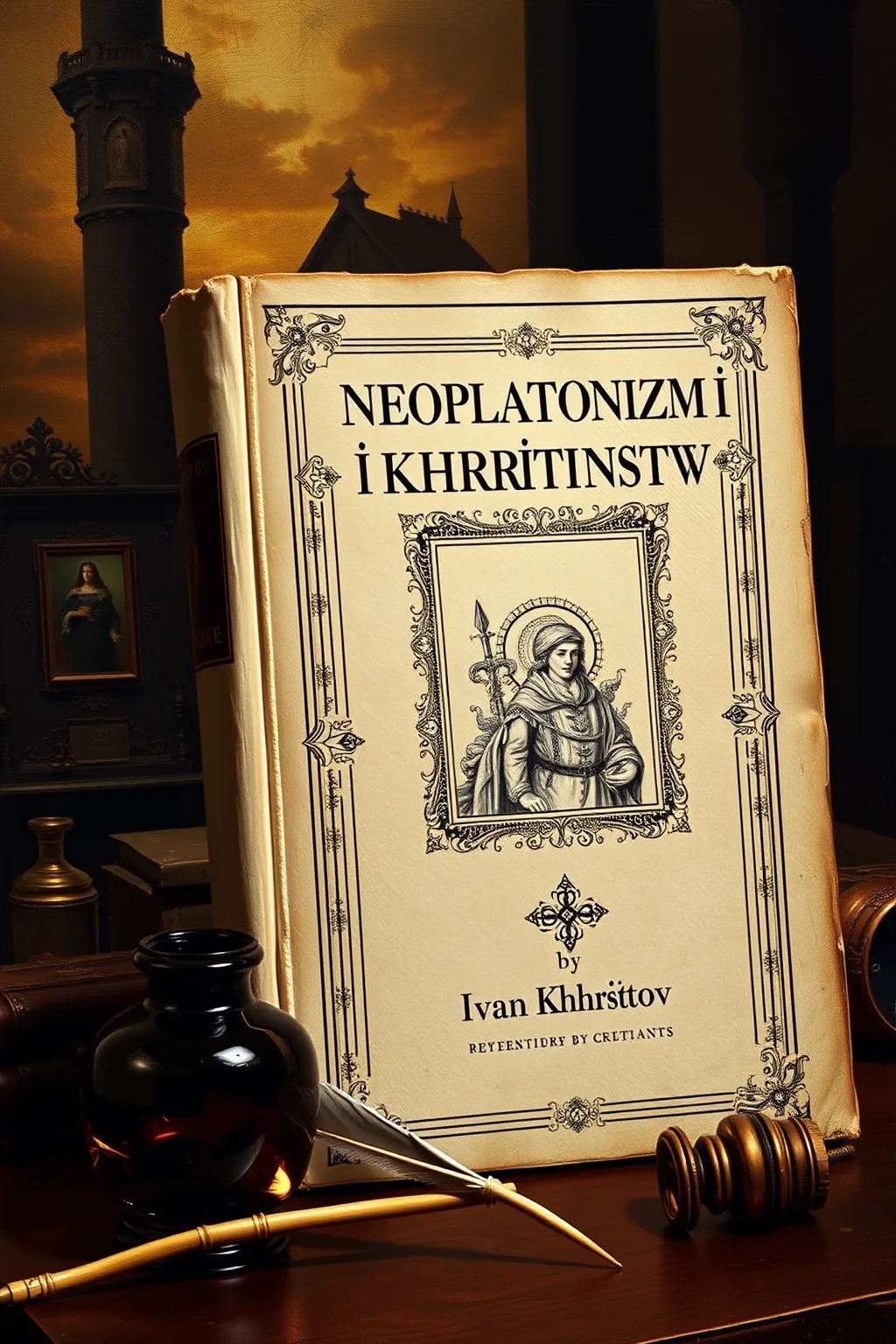
Neoplatonizŭm i khristii︠a︡nstvo
 61
61

Neoplatonizŭm i khristii︠a︡nstvo


Review by Marcus Thorne (Esoteric Sciences Reviewer) — 'Neoplatonizŭm i khristii︠a︡nstvo' by Ivan Khristov is a masterful examination of the esoteric intersections between Neoplatonism and Christianity. Khristov's deep dive into the mystical and hermetic traditions provides invaluable insights for both scholars and spiritual seekers. The book's strength lies in its ability to reveal hidden knowledge and symbolism, making it a must-read for those interested in the esoteric dimensions of philosophy and religion. Thoroughly researched and beautifully written, this work is a treasure for anyone seeking to understand the mystical underpinnings of Western thought.'
📝 Description
61
Ivan Khristov's 2019 work, 'Neoplatonizŭm i khristii︠a︡nstvo,' examines the philosophical links between Neoplatonism and Christianity.
Ivan Khristov's study, 'Neoplatonizŭm i khristii︠a︡nstvo,' investigates the complex relationship between Neoplatonic philosophy and early Christian thought. The book traces how certain Neoplatonic concepts, such as the One, the Intellect, and the Soul, found parallels and adaptations within Christian theology. Khristov focuses on the symbolic language and philosophical frameworks that connected these seemingly disparate traditions, highlighting shared spiritual aspirations.
The author pays close attention to the hermeneutic methods employed by thinkers who sought to reconcile Platonic ideas with Christian doctrine. The text addresses the transmission of these ideas and their influence on medieval mystical traditions. It is a detailed analysis of the intellectual currents that shaped the spiritual landscape of late antiquity and the subsequent centuries.
This work is situated within the study of the historical connections between classical philosophy and religious traditions. It specifically addresses the esoteric currents that sought deeper, symbolic meanings within both Neoplatonic metaphysics and Christian theology. The focus is on how philosophical systems were used to articulate spiritual experiences and theological concepts, particularly concerning the divine, the cosmos, and the human soul's relationship to the ultimate reality. It examines the intellectual inheritance and adaptation that occurred during a formative period of Western thought.
💡 Why Read This Book?
Why read this book? 'Neoplatonizŭm i khristii︠a︡nstvo' is a must-read for seekers of hidden knowledge, scholars of ancient philosophy, and practitioners of esoteric traditions. It offers a unique perspective on the mystical intersections between Neoplatonism and Christianity, revealing profound insights into the spiritual landscape of antiquity. Ideal for those who wish to deepen their understanding of hermetic wisdom and the esoteric dimensions of Western thought.
⭐ Reader Reviews
Honest opinions from readers who have explored this book.
❓ Frequently Asked Questions
What is the main focus of 'Neoplatonizŭm i khristii︠a︡nstvo'?
The main focus is the esoteric intersections between Neoplatonism and Christianity, exploring hidden knowledge and symbolism.
Who would benefit from reading this book?
Scholars, spiritual seekers, and practitioners of esoteric traditions will find this book particularly beneficial.
What makes this book unique?
The book's unique perspective on the mystical dimensions of ancient philosophy and religion sets it apart from other works in the field.
Is this book suitable for beginners?
While it offers deep insights, beginners may find it challenging without some prior knowledge of Neoplatonism and Christianity.
Does the book cover modern applications of Neoplatonism?
Yes, it discusses the modern relevance and how contemporary practitioners engage with these ancient traditions.
🔮 Key Themes & Symbolism
Neoplatonic Philosophy
Explore the core principles of Neoplatonism, focusing on its mystical and esoteric aspects. This theme explores the One, the Nous, and the Soul, revealing the hidden knowledge that underpins this philosophical tradition.
Christian Mysticism
Examine the mystical dimensions of Christianity, highlighting the esoteric symbolism and hidden teachings within the Christian faith. This theme reveals the profound spiritual insights that connect Neoplatonism and Christianity.
Esoteric Symbolism
Discover the detailed symbolism that permeates both Neoplatonism and Christianity, uncovering the hidden meanings and spiritual significance of ancient symbols. This theme provides a deep dive into the mystical language of the soul.
💬 Memorable Quotes
Direct passages from the work, attributed to the author.
“Neoplatonism reveals the hidden dimensions of reality.”
— Khristov highlights the esoteric insights that Neoplatonism offers.
💡 Key Ideas
Editorial paraphrase of the work's core concepts — not direct quotes.
The soul's journey is a path of spiritual enlightenment.
This line underscores the mystical quest for divine understanding.
The One is the source of all existence.
This quote emphasizes the central concept of Neoplatonic philosophy.
Christianity and Neoplatonism share a mystical core.
This line underscores the profound connections between these traditions.
Symbolism is the language of the soul.
This quote highlights the importance of esoteric symbolism in spiritual seeking.
🌙 Esoteric Significance
Tradition
This book belongs to the Hermetic tradition, emphasizing the mystical and esoteric connections between Neoplatonism and Christianity. It examines the hidden knowledge and symbolism that underlie these traditions, offering clear insights for practitioners and seekers of spiritual enlightenment.
Symbolism
Key symbols in this book include the One, the Nous, and the Soul, each representing different aspects of the mystical journey. These symbols are rich with esoteric meanings, providing a deeper understanding of the spiritual landscape.
Modern Relevance
Today, this book remains relevant for those seeking to understand the esoteric dimensions of Western thought. Modern practitioners of Hermeticism, Neoplatonism, and Christianity continue to draw upon its insights, using them to deepen their spiritual practices and seek hidden knowledge.
👥 Who Should Read This Book
This book is ideal for a diverse range of readers. Beginners may find it challenging but rewarding, as it offers a deep dive into esoteric traditions. Scholars will appreciate the thorough research and philosophical insights. Spiritual seekers will find inspiration in the mystical connections between Neoplatonism and Christianity. Practitioners of Hermeticism and other esoteric traditions will benefit from the hidden knowledge and symbolism revealed within its pages.
📜 Historical Context
Written in an era of profound philosophical and religious inquiry, 'Neoplatonizŭm i khristii︠a︡nstvo' emerged during a time when the boundaries between different traditions were being explored and redefined. Ivan Khristov's work was instrumental in bridging the gap between Neoplatonism and Christianity, revealing the hidden connections and shared mystical insights. Its influence can be seen in the works of later scholars and spiritual seekers who explored the esoteric dimensions of these traditions.
📔 Journal Prompts
How do the mystical dimensions of Neoplatonism and Christianity intersect in your spiritual journey?
What are the key symbols in this book, and how do they resonate with your understanding of the divine?
How has your perspective on the esoteric dimensions of Western thought been influenced by this book?
What insights have you gained about the One, the Nous, and the Soul from reading this work?
How can you apply the hidden knowledge revealed in this book to your spiritual practices?
🗂️ Glossary
Neoplatonism
A philosophical tradition that emphasizes the mystical and esoteric aspects of Plato's teachings.
Christian Mysticism
The esoteric and mystical dimensions of the Christian faith, focusing on hidden teachings and spiritual insights.
Hermeticism
An esoteric tradition that seeks to reveal hidden knowledge and spiritual truths through symbolism and mystical practices.
The One
The ultimate principle in Neoplatonism, representing the source of all existence and the divine.
The Nous
The divine intellect in Neoplatonism, connecting the One to the Soul and the material world.
This book appears in 2 collections
🔮 Readers Also Liked
Browse all →









From the “Neoplatonism” Collection
View all →







More Free Alchemy & Hermeticism Books
View all →