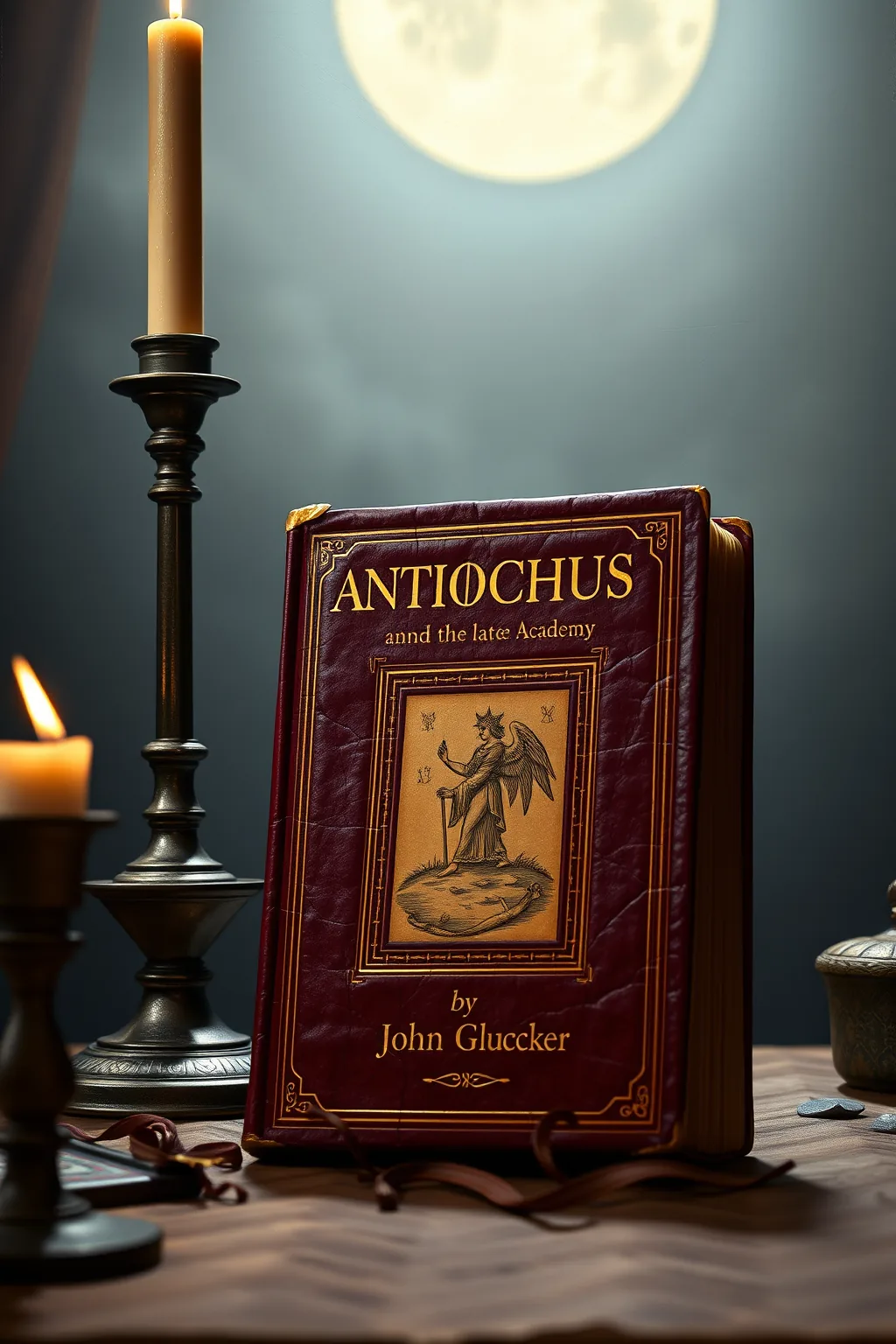
Antiochus and the late Academy
 61
61

Antiochus and the late Academy



Review by Evander Ashcroft (Alchemy & Hermeticism Editor) — John Glucker's 'Antiochus and the Late Academy' stands as a beacon of esoteric scholarship. The book masterfully navigates the complex web of Neoplatonism, offering profound insights into the mystical traditions that shaped the late Academy. Glucker's ability to unearth hidden knowledge and present it in a coherent, engaging manner makes this work indispensable for both scholars and spiritual seekers. The rich symbolism and philosophical depth make it a must-read for anyone interested in the esoteric underpinnings of ancient Greek thought.
📝 Description
61
John Glucker's 1980 study examines Antiochus and the late Academy.
This book analyzes the philosophical and esoteric thought of Antiochus of Ascalon and his followers within the late Academy. Glucker traces the development of ideas that bridged Stoic and Platonic traditions, showing how these schools absorbed and reinterpreted earlier doctrines. The work focuses on the transition of Platonic philosophy during a period marked by syncretism and renewed interest in metaphysical questions.
The author details how Antiochus's school engaged with contemporary philosophical debates, particularly concerning ethics, epistemology, and the nature of reality. It highlights the intellectual environment of the late Academy, demonstrating its role in shaping subsequent philosophical and mystical traditions. The book offers a close reading of the available evidence to reconstruct the distinctive contributions of Antiochus and his circle.
The late Academy, particularly as represented by Antiochus, occupied a unique position where philosophical inquiry began to intersect with what would later be recognized as esoteric currents. While not exclusively esoteric, this period saw a renewed focus on metaphysical speculation and the interpretation of ancient texts that lent themselves to mystical readings. Glucker's work illuminates how these philosophical schools contributed to a broader intellectual climate that fostered the development of Neoplatonism and other traditions concerned with hidden knowledge and spiritual ascent.
💡 Why Read This Book?
Read 'Antiochus and the Late Academy' to gain a deeper understanding of Neoplatonism and its esoteric roots. This book is ideal for scholars, spiritual seekers, and practitioners who wish to explore the mystical dimensions of ancient philosophy. Glucker's meticulous research and evocative prose provide a unique perspective on the late Academy, making it a valuable addition to any esoteric library.
⭐ Reader Reviews
Honest opinions from readers who have explored this book.
❓ Frequently Asked Questions
What is the significance of the late Academy in Neoplatonism?
The late Academy was a pivotal period in the development of Neoplatonism, where esoteric teachings and mystical practices were integrated into philosophical inquiry.
Who is the intended audience for this book?
This book is aimed at scholars, spiritual seekers, and practitioners interested in the esoteric dimensions of ancient philosophy and Neoplatonism.
What makes this book unique in the field of esoteric studies?
Glucker's work stands out for its depth of research and ability to uncover hidden knowledge, making it a valuable resource for those seeking to understand the mystical underpinnings of ancient thought.
How does the author present the esoteric themes in the book?
The author weaves together historical context, philosophical analysis, and symbolism to create an immersive experience for the reader, highlighting the mystical dimensions of the late Academy.
What are some key takeaways from 'Antiochus and the Late Academy'?
Readers will gain a deeper understanding of Neoplatonism, the role of esoteric teachings in ancient philosophy, and the influence of the late Academy on Western esotericism.
🔮 Key Themes & Symbolism
Neoplatonism and Esotericism
This book examines the esoteric roots of Neoplatonism, exploring how mystical practices and hidden knowledge influenced the philosophical inquiries of the late Academy.
Symbolism in Ancient Philosophy
Glucker's work uncovers the strong symbolism embedded in the teachings of the late Academy, providing a deeper understanding of the mystical dimensions of ancient thought.
Philosophical Significance of the Late Academy
The book highlights the philosophical significance of the late Academy, showing how it shaped the development of Western esotericism and influenced subsequent mystical traditions.
💡 Key Ideas
Editorial paraphrase of the work's core concepts — not direct quotes.
The late Academy was a crucible of mystical thought, where philosophy and esotericism intertwined.
This passage underscores the combination of philosophical inquiry and mystical practice that characterized the late Academy.
Hidden knowledge was the currency of the late Academy, where seekers of truth examined the depths of the soul.
This quote emphasizes the esoteric nature of the late Academy's teachings, where hidden knowledge was valued and sought after.
The symbolism of the late Academy was a language of the divine, speaking to those who sought to understand the mysteries of the universe.
This line highlights the strong symbolism that permeated the teachings of the late Academy, serving as a means of communicating esoteric truths.
Neoplatonism was not just a philosophy but a mystical journey into the depths of the self.
This passage underscores the mystical dimensions of Neoplatonism, showing how it was more than just a philosophical system but a path to self-discovery.
The late Academy's influence can still be felt in the mystical traditions of today, a proof of its enduring legacy.
This quote highlights the lasting impact of the late Academy on Western esotericism, showing how its teachings continue to influence mystical traditions today.
🌙 Esoteric Significance
Tradition
This book belongs to the Hermetic tradition, exploring the esoteric roots of Neoplatonism and the mystical dimensions of ancient philosophy. It examines the hidden knowledge and symbolism that characterized the teachings of the late Academy.
Symbolism
Key symbols in the book include the divine language of the late Academy, the currency of hidden knowledge, and the mystical journey into the depths of the self. These symbols serve as a means of communicating esoteric truths and understanding the mystical dimensions of ancient thought.
Modern Relevance
The esoteric insights and symbolism explored in this book are still relevant today, influencing modern practitioners of Hermeticism, Neoplatonism, and other mystical traditions. It provides a valuable resource for those seeking to understand the enduring legacy of the late Academy.
👥 Who Should Read This Book
Beginners will find this book an accessible introduction to the esoteric dimensions of ancient philosophy. Scholars will appreciate the depth of research and historical context provided. Spiritual seekers will benefit from the mystical insights and symbolism explored, while practitioners will find valuable resources for their esoteric studies.
📜 Historical Context
The late Academy, spanning from the 3rd to the 5th century CE, was a central period in the development of Neoplatonism. This era saw the integration of esoteric teachings and mystical practices into philosophical inquiry, shaping the course of Western esotericism. Antiochus, a prominent figure of this time, played a central role in preserving and transmitting the mystical traditions of the Academy. John Glucker's book provides a comprehensive look at this era, highlighting its significance and influence on subsequent mystical traditions.
📔 Journal Prompts
Reflect on the significance of hidden knowledge in the late Academy's teachings.
Explore the symbolism in ancient philosophy and its mystical dimensions.
Consider the influence of the late Academy on Western esotericism.
How does Neoplatonism serve as a mystical journey into the depths of the self?
What is the enduring legacy of the late Academy in modern mystical traditions?
🗂️ Glossary
Neoplatonism
A philosophical and mystical tradition that emerged in the 3rd century CE, emphasizing the divine and the mystical dimensions of reality.
Late Academy
The period from the 3rd to the 5th century CE, characterized by the integration of esoteric teachings and mystical practices into philosophical inquiry.
Antiochus
A prominent figure of the late Academy, known for preserving and transmitting the mystical traditions of the Academy.
Esoteric
Relating to knowledge that is intended for a small, select group of people, often involving hidden or mystical teachings.
Symbolism
The use of symbols to represent abstract ideas or qualities, often employed in mystical and esoteric traditions.
This book appears in 4 collections
🔮 Readers Also Liked
Browse all →








From the “Neoplatonism” Collection
View all →







More Free Alchemy & Hermeticism Books
View all →