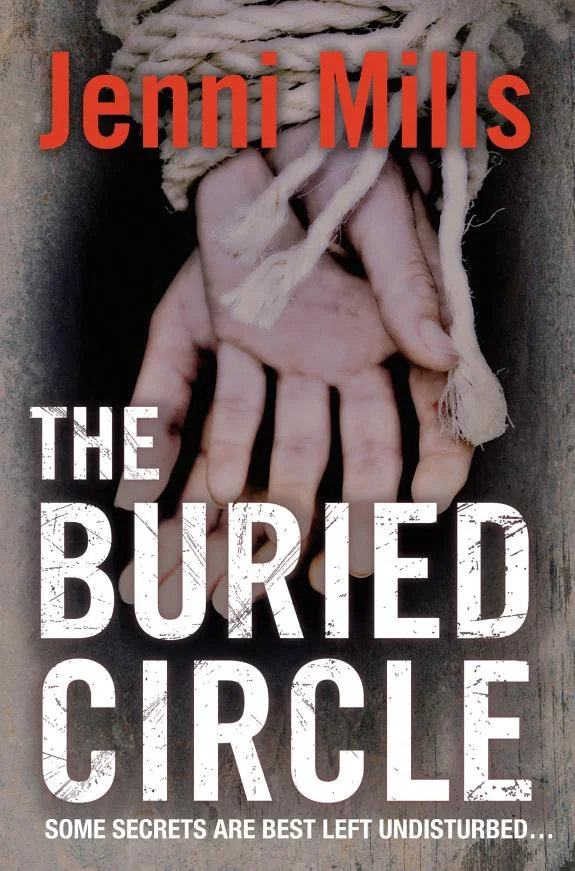
The Buried Circle
 79
79

The Buried Circle
Jenni Mills's "The Buried Circle" offers a welcome departure from the often-hagiographic tone found in many esoteric texts. Its strength lies in its meticulous dissection of historical occult systems, particularly its engagement with the practical application of ceremonial magic as documented in early modern grimoires. The work effectively traces the lineage of specific rituals and symbolic frameworks, demonstrating how they evolved. However, the book’s dense prose and academic focus might prove challenging for readers expecting a more accessible introduction. A passage discussing the practical interpretation of the Lesser Key of Solomon, for instance, is illuminating but demands significant prior knowledge. Ultimately, "The Buried Circle" serves as a valuable, if demanding, scholarly resource for those dedicated to understanding the mechanics of Western esotericism.
📝 Description
79
Jenni Mills's "The Buried Circle" (2009) examines occult doctrines with an analytical, not devotional, stance.
"The Buried Circle," published in 2009, moves past conventional narratives to analyze specific occult doctrines and practices. Jenni Mills approaches these subjects with an analytical, rather than devotional, viewpoint. The work dissects historical occult movements and their primary texts, offering a critical look at their development and impact. It seeks to clarify the core structures and philosophies that have shaped esoteric thought across centuries, providing a structured, though complex, overview.
This book is for serious students of occult and esoteric traditions, especially those with some prior knowledge of subjects like Hermeticism or ceremonial magic. Readers looking for a scholarly examination of occult history, not an introductory text, will find value. It suits individuals interested in tracking the evolution of specific magical theories and their practical uses through different historical eras. Those who appreciate detailed textual analysis and historical context will find this work engaging.
Published in 2009, "The Buried Circle" appeared during a time of growing interest in esoteric studies, partly due to increased online access to historical occult literature. This period saw many digital archives and forums emerge for subjects previously found only in rare print. Mills's book follows figures like Eliphas Levi and Manly P. Hall, who worked to organize and interpret occult traditions. It offers a more rigorous, academically informed perspective than the simpler presentations of magic common in New Age circles then.
💡 Why Read This Book?
• Gain a structured understanding of ceremonial magic's historical evolution, specifically by examining the transmission of ritual practices from the publication of the Lemegeton (a key grimoire discussed in the text) to later occult revivals. • Explore the symbolic language of esoteric traditions, learning how concepts like the "astral body" are interpreted within different historical occult frameworks presented in the book. • Understand the foundational principles of esoteric orders by analyzing the structure of initiation and doctrine as detailed in Mills's examination of historical magical societies.
⭐ Reader Reviews
Honest opinions from readers who have explored this book.
❓ Frequently Asked Questions
When was Jenni Mills's The Buried Circle first published?
The Buried Circle by Jenni Mills was first published in 2009, placing it within a contemporary wave of scholarly interest in esoteric subjects.
What is the primary focus of The Buried Circle?
The book primarily focuses on the historical development and practical application of Western esoteric traditions, particularly ceremonial magic and occult doctrines.
Does The Buried Circle offer beginner-friendly explanations of magic?
No, it is written for a more advanced audience. Its scholarly approach and detailed analysis assume a reader already familiar with fundamental esoteric concepts and historical texts.
Which historical occult figures or texts are discussed in The Buried Circle?
The work engages with historical occult figures and texts, referencing grimoires like the Lemegeton and exploring doctrines prevalent in traditions influenced by Hermeticism and ceremonial magic.
Is The Buried Circle considered a primary source for occult research?
While not a primary source in the sense of an ancient grimoire, it is a valuable secondary source, offering scholarly analysis and contextualization of primary esoteric literature and practices.
What makes The Buried Circle distinct from other books on esotericism?
Its distinction lies in its analytical and critical tone, moving beyond mere exposition to dissect the historical mechanics and symbolic underpinnings of occult systems, especially those related to ceremonial magic.
🔮 Key Themes & Symbolism
Evolution of Ceremonial Magic
This theme examines the historical trajectory of ceremonial magic, tracing its roots and transformations through various epochs. Mills analyzes how key texts, such as the Lemegeton, influenced subsequent magical practices and theoretical frameworks. The focus is on understanding magic not as static dogma, but as a dynamic system that adapts and reinterprets its core principles over time. This exploration highlights the intellectual currents that shaped its development, from medieval grimoires to the esoteric societies of the 19th and 20th centuries.
Symbolic Language of Esotericism
The book looks at the intricate symbolic lexicon employed within esoteric traditions. It deciphers the meanings embedded in symbols, archetypes, and allegorical narratives that form the bedrock of occult philosophy. Mills explores how these symbols function not merely as decorative elements but as crucial vehicles for transmitting complex metaphysical ideas and initiatory knowledge. Understanding this language is presented as essential for grasping the deeper layers of meaning within esoteric texts and practices.
Structure of Esoteric Orders
A significant focus is placed on the organizational structures and doctrines of historical esoteric societies. Mills investigates the nature of initiation, the hierarchical progression of members, and the specific teachings imparted within these closed groups. The work analyzes how these orders served as conduits for preserving and disseminating occult knowledge, often through carefully guarded curricula and ritualistic practices. This theme illuminates the institutional aspect of esoteric traditions.
Interpretation of Occult Doctrines
This theme addresses the methods and challenges involved in interpreting core occult doctrines, such as those concerning cosmology, psychology, and the nature of consciousness. Mills examines how different schools of thought have approached these concepts, highlighting variations in interpretation and the historical contexts that influence them. The exploration emphasizes critical engagement with esoteric material, encouraging readers to analyze rather than passively accept various philosophical and metaphysical claims.
💬 Memorable Quotes
Direct passages from the work, attributed to the author.
“The transmission of magical knowledge relies on both preserved texts and the living practice of initiates.”
— This concept underscores the dual nature of esoteric traditions: their reliance on historical documentation and the necessity of active, embodied participation for true understanding and continuation.
“Symbolism in grimoires often serves as a cipher for psychological states as much as for external forces.”
— This suggests that the esoteric symbols found in magical texts are not merely literal representations but also metaphorical keys to understanding the human psyche and its inner workings.
“Initiation into esoteric orders is a process of structured unveiling, not spontaneous revelation.”
— This highlights the deliberate and progressive nature of learning within formal occult groups, emphasizing a carefully guided journey of discovery rather than random insight.
“The interpretation of planetary correspondences evolved significantly between the Renaissance and the early 20th century.”
— This points to the dynamic nature of esoteric symbolism, showing how established correspondences could be re-contextualized and understood differently by later generations of occultists.
“Understanding the historical context of a magical text is crucial to discerning its intended application.”
— This emphasizes that the original purpose and meaning of occult writings are deeply tied to the era in which they were produced, requiring historical awareness for accurate interpretation.
🌙 Esoteric Significance
Tradition
This work engages primarily with the Western Esoteric Tradition, particularly the lineage of ceremonial magic and Hermeticism. It departs from purely devotional or experiential accounts by applying a critical, analytical lens to historical practices and doctrines. Mills's approach seeks to understand the internal logic and historical development of these systems, fitting within a modern scholarly endeavor to map and interpret the diverse range of occult thought.
Symbolism
Key symbols explored include the "astral body," representing a subtle energetic form associated with consciousness and perception beyond the physical. The "Seven Planets" are also central, not just as celestial bodies but as symbolic reservoirs of specific energies and influences that practitioners aim to channel or understand through ritual. These symbols function within the book as tools for deciphering the mechanics of esoteric cosmology and practice.
Modern Relevance
Contemporary practitioners of ceremonial magic and scholars of Western Esotericism draw upon works like "The Buried Circle" to ground their understanding in historical context. Thinkers exploring the intersection of ritual, psychology, and symbolic systems find its analytical approach valuable. It informs modern discussions on the efficacy and interpretation of ancient magical texts and practices within a digitally connected world.
👥 Who Should Read This Book
• Advanced students of Western Esotericism seeking a scholarly examination of ceremonial magic and its historical doctrines. • Researchers interested in comparative occultism who need to understand the lineage and evolution of specific magical theories and practices. • Practitioners of ritual magic looking to deepen their theoretical knowledge and historical perspective on the systems they engage with.
📜 Historical Context
Published in 2009, "The Buried Circle" emerged within a growing academic and popular interest in esoteric studies, a trend amplified by digital archives and online communities. This period saw a resurgence of engagement with historical occultism, moving beyond earlier New Age interpretations. Mills's work is situated in a lineage of scholarly occultism that includes figures like Eliphas Levi, who attempted to systematize magical theory in the 19th century, and later esoteric historians. It offers a more analytical counterpoint to the spiritual interpretations prevalent in contemporary occult circles, focusing on textual and practical historical reconstruction. The reception of such works in 2009 often involved discussions within specialized forums and academic journals, differentiating them from broader spiritual self-help literature.
📔 Journal Prompts
The concept of the "astral body" as presented in the text: how does it differ from modern notions of consciousness?
Reflect on the historical evolution of planetary correspondences discussed in the book.
Analyze the structure of initiation within the esoteric orders detailed by Mills.
Consider the role of grimoires, such as the Lemegeton, as sources of magical doctrine.
Examine the interplay between preserved texts and living practice in magical traditions.
🗂️ Glossary
Ceremonial Magic
A branch of Western esotericism involving ritualistic practices aimed at invoking or banishing entities, altering consciousness, or achieving specific magical goals, often drawing on complex symbolic systems and historical texts.
Lemegeton
A 17th-century grimoire, also known as the Lesser Key of Solomon, detailing demons, rituals, and magical operations. It is a significant text in the study of ceremonial magic.
Astral Body
In esoteric traditions, a subtle or energetic body distinct from the physical, believed to be the seat of consciousness, emotion, and perception during dreams, trance, or after death.
Hermeticism
A philosophical and religious tradition based primarily upon writings attributed to Hermes Trismegistus, emphasizing divine wisdom, the correspondence between the macrocosm and microcosm, and the potential for human spiritual ascent.
Grimoire
A textbook of magic or witchcraft, containing instructions on how to create magical tools, perform rituals, cast spells, and invoke spirits. Often includes lists of spirits, their seals, and associated rituals.
Planetary Correspondences
The system of associating specific planets (in an astrological or symbolic sense) with colors, metals, days, deities, and magical influences, used in ritual and divination.
Initiation
A formal rite of passage or ceremony that marks a person's entry into a particular group, order, or level of knowledge, often involving symbolic teachings and a transformation of status.
🔮 Readers Also Liked
Browse all →








More by Jenni Mills
All books →
More Free Occult Philosophy Books
View all →