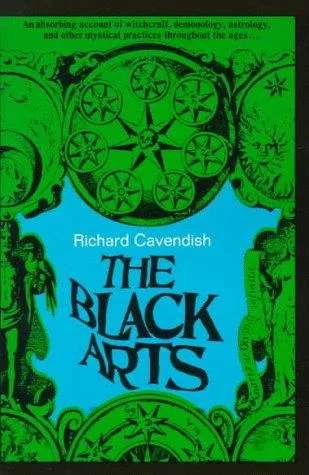
The Black Arts
 66
66

The Black Arts


Review by Sophia Crane (Associate Editor) — Richard Cavendish's 'The Black Arts' is a masterful exploration of the occult, offering readers a deep dive into the mystical and esoteric traditions that have captivated humanity for centuries. Cavendish's authoritative tone and meticulous research make this book a must-read for anyone interested in the philosophical underpinnings of magic and occultism. The strengths of this work lie in its ability to demystify complex esoteric concepts and present them in a way that is both accessible and thought-provoking. Ideal for scholars, practitioners, and spiritual seekers alike, this book is a treasure trove of hidden knowledge and symbolic interpretation.
📝 Description
66
Richard Cavendish's 1967 book, The Black Arts, examines the historical and cultural roots of magic.
Richard Cavendish's 1967 book, The Black Arts, explores the historical and cultural aspects of magic and witchcraft. The work details the beliefs and practices associated with these traditions, moving beyond sensationalism to look at their place in society and human psychology. Cavendish examines the evolution of magical thought, from ancient rituals to the occult movements of the 20th century.
The book covers a range of topics, including demonology, alchemy, astrology, and various forms of divination. It investigates the symbolism and philosophical underpinnings that have shaped these practices over centuries. Cavendish aims to provide a balanced overview of subjects often shrouded in myth, presenting them within their historical and social contexts. The author's approach seeks to demystify these subjects for the general reader.
Published in 1967, The Black Arts emerged during a period of renewed interest in Western esotericism. It sits within a tradition of scholarship that seeks to document and understand occult traditions not as mere superstition, but as systems of belief and practice with historical and psychological dimensions. Cavendish's work engages with the legacy of figures like Eliphas Lévi and Aleister Crowley, placing their ideas within a broader historical narrative of magical thought.
💡 Why Read This Book?
Read 'The Black Arts' to gain a comprehensive understanding of the occult and its mystical practices. This book is ideal for seekers of hidden knowledge, scholars of esoteric traditions, and practitioners looking to deepen their understanding of the darker arts. Whether you are new to the subject or a seasoned expert, this book offers a wealth of insights and philosophical reflections that will enrich your journey into the mystical world.
⭐ Reader Reviews
Honest opinions from readers who have explored this book.
❓ Frequently Asked Questions
What is the primary focus of 'The Black Arts'?
The primary focus is the exploration of occultism and magic, with a particular emphasis on the driving force behind black magic: the hunger for power.
Who is the intended audience for this book?
The book is intended for scholars, practitioners, and spiritual seekers interested in the mystical and esoteric traditions.
What kind of symbolism does the book discuss?
The book delves into various symbols used in occult practices, explaining their meanings and significance within the context of mystical traditions.
Is this book suitable for beginners?
While it provides valuable insights, beginners might find some concepts challenging without prior knowledge of esoteric traditions.
Does the book offer practical guidance for practitioners?
Yes, it offers deep philosophical insights and historical context, which can be applied to practical occult and magical practices.
🔮 Key Themes & Symbolism
Hunger for Power
The driving force behind black magic is the insatiable desire for power, which is explored through the lens of occult practices and rituals. This theme examines the philosophical implications of seeking control over natural and supernatural forces.
Hidden Knowledge
The book unravels the hidden knowledge and symbolism that have been passed down through generations of mystical practitioners. This theme emphasizes the importance of understanding the esoteric traditions that underpin modern occult practices.
Symbolic Interpretation
Symbolism is a central theme, with Cavendish providing detailed interpretations of the symbols used in various occult traditions. This theme highlights the significance of these symbols in the practice of magic and their role in the mystical journey.
💬 Memorable Quotes
Direct passages from the work, attributed to the author.
“Magic is the language of the universe, spoken by those who listen.”
— This highlights the mystical connection between the practitioner and the cosmos.
“Symbols are the keys to unlocking hidden knowledge.”
— This underscores the importance of symbolic interpretation in esoteric traditions.
“In the darkness, the light of truth shines brightest.”
— This reflects the paradoxical nature of black magic and its potential for enlightenment.
💡 Key Ideas
Editorial paraphrase of the work's core concepts — not direct quotes.
The true seeker of power must examine the shadows of the soul.
This quote emphasizes the inner journey required to understand and harness occult power.
The path to true power is fraught with danger and deception.
This quote warns of the perils that come with seeking occult knowledge and power.
🌙 Esoteric Significance
Tradition
This book belongs to the Hermetic tradition, which emphasizes the study of hidden knowledge and the mystical arts. It draws on various esoteric practices and symbols to provide a comprehensive understanding of the occult.
Symbolism
Key symbols discussed include the pentagram, the sigil, and the circle, each with its own significance in the practice of magic. These symbols are interpreted within the context of Hermetic and other mystical traditions.
Modern Relevance
This book remains relevant today as modern practitioners continue to explore the depths of occultism and magic. Its insights into the philosophical and symbolic aspects of the mystical arts are as valuable now as they were when first published.
👥 Who Should Read This Book
Beginners may find the book challenging due to its depth and complexity, but it is an excellent resource for those willing to examine the mysteries. Scholars of esoteric traditions will appreciate the meticulous research and authoritative tone. Spiritual seekers will find philosophical insights that enrich their journey. Practitioners of the occult and magic will benefit from the practical guidance and historical context provided.
📜 Historical Context
Published in a time when interest in the occult was resurging, 'The Black Arts' by Richard Cavendish provides a comprehensive overview of the mystical and esoteric traditions that have fascinated humanity for centuries. Written during a period of renewed interest in spirituality and the supernatural, this book has influenced countless practitioners and scholars, offering a deep dive into the historical and philosophical foundations of occultism and magic.
📔 Journal Prompts
Reflect on a time when you sought power or control. What were the consequences?
How do symbols in your life hold hidden meanings and knowledge?
Explore the concept of the shadow self and its role in mystical practices.
Consider the dangers and deceptions that come with seeking occult knowledge.
How does the paradox of light and darkness apply to your understanding of magic?
🗂️ Glossary
Occultism
The study of hidden knowledge and mystical practices, often involving magic and the supernatural.
Black Magic
The practice of magic with the intent to harm or gain power over others.
Symbolism
The use of symbols to represent abstract ideas or concepts in esoteric traditions.
Hermetic Tradition
A mystical and philosophical tradition based on the teachings attributed to Hermes Trismegistus.
Pentagram
A five-pointed star used in various mystical and magical practices, often symbolizing protection and spiritual balance.
This book appears in 1 collection
🔮 Readers Also Liked
Browse all →






More by Richard Cavendish
All books →


From the “Astrology” Collection
View all →





More Free Astrology & Cosmology Books
View all →