The logic and science of astrology
 61
61

The logic and science of astrology


Silas Hawthorne (Hermetic Studies Editor) — D. D. Mehta's 'The Logic and Science of Astrology' is a luminous exposition, bridging the empirical with the esoteric. Mehta navigates the complex currents of Vedic astrology with an erudition that is both scholarly and spiritually resonant. He skillfully demystifies the intricate calculations and symbolic language, revealing the underlying philosophical principles that animate celestial mechanics. This book is an indispensable resource for practitioners seeking a deeper theoretical foundation and for scholars interested in the scientific underpinnings of ancient astrological systems. It offers a compelling argument for astrology as a profound, albeit often misunderstood, science of cosmic interconnectedness.
📝 Description
61
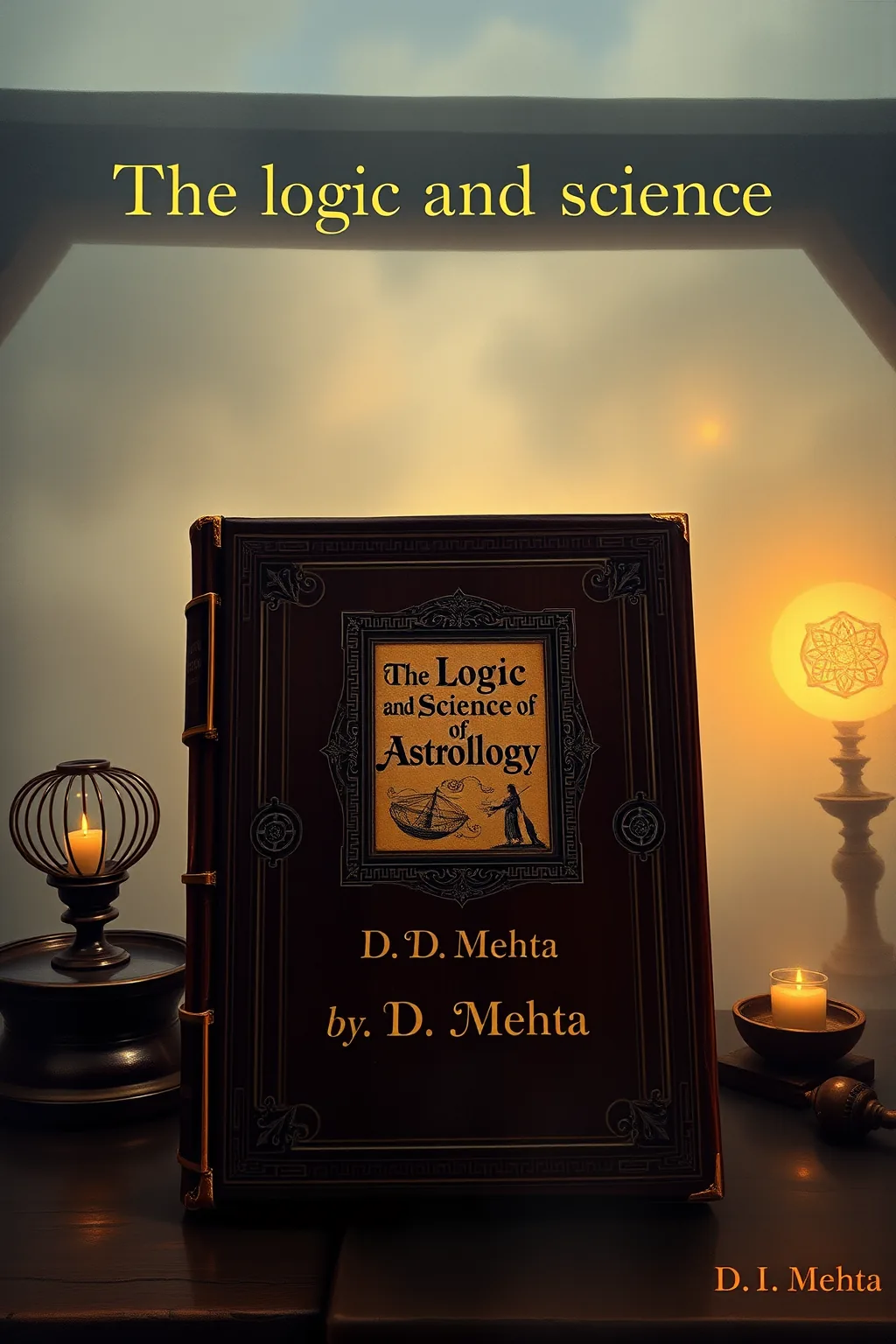
D. D. Mehta's 1997 book argues astrology possesses a discoverable logic and scientific basis.
Published in 1997, 'The Logic and Science of Astrology' by D. D. Mehta moves beyond simple chart readings. Mehta examines how celestial bodies and their movements connect with human life and consciousness. The book details how planetary positions and star patterns form a system that influences individuals. Mehta presents astrology as a structured discipline, not random chance. He aims to show readers how to understand this cosmic order for personal insight and spiritual growth.
The author builds a case for astrology as a coherent system. He connects the macrocosm, the universe, with the microcosm, the individual human experience. This approach seeks to bridge a purely material view of reality with a more spiritual understanding. The book encourages a deeper apprehension of existence by decoding the symbolic language of the stars.
This work engages with traditions that view the cosmos as an interconnected whole, where celestial events carry meaning for earthly life. It draws on philosophical inquiries into the relationship between the heavens and human destiny, a theme present in Hermeticism and Neoplatonism. Mehta's approach seeks to find order and discoverable principles within these connections, distinguishing it from purely symbolic or divinatory interpretations.
💡 Why Read This Book?
Unlock the secret language of the cosmos and your own destiny. 'The Logic and Science of Astrology' offers a rare blend of scientific rigor and esoteric wisdom, revealing the profound interconnectedness between celestial bodies and human experience. Ideal for those seeking deeper self-awareness, spiritual growth, and a nuanced understanding of ancient wisdom traditions. Discover the hidden patterns that shape your life and learn to navigate them with insight and grace.
⭐ Reader Reviews
Honest opinions from readers who have explored this book.
❓ Frequently Asked Questions
Is this book purely theoretical or does it offer practical applications?
This book masterfully balances theoretical depth with practical insights, providing the foundational knowledge for understanding astrological principles and their application in interpreting individual charts and life patterns.
What makes this book's approach to astrology unique?
Mehta's unique approach lies in its rigorous examination of the logical and scientific underpinnings of astrology, moving beyond mere superstition to reveal its sophisticated cosmological framework.
Is prior knowledge of astrology required to read this book?
While some familiarity with basic astrological concepts may enhance the reading experience, Mehta's clear explanations make it accessible to dedicated beginners eager to learn the science behind the art.
Does the book focus on Western or Eastern astrological systems?
The book primarily delves into the rich and ancient traditions of Hindu (Vedic) astrology, exploring its intricate calculations and philosophical depth.
What kind of reader would benefit most from this work?
This book is ideal for serious students of astrology, philosophers, spiritual seekers, and anyone curious about the scientific and metaphysical dimensions of celestial influence.
🔮 Key Themes & Symbolism
The Celestial Blueprint of Existence
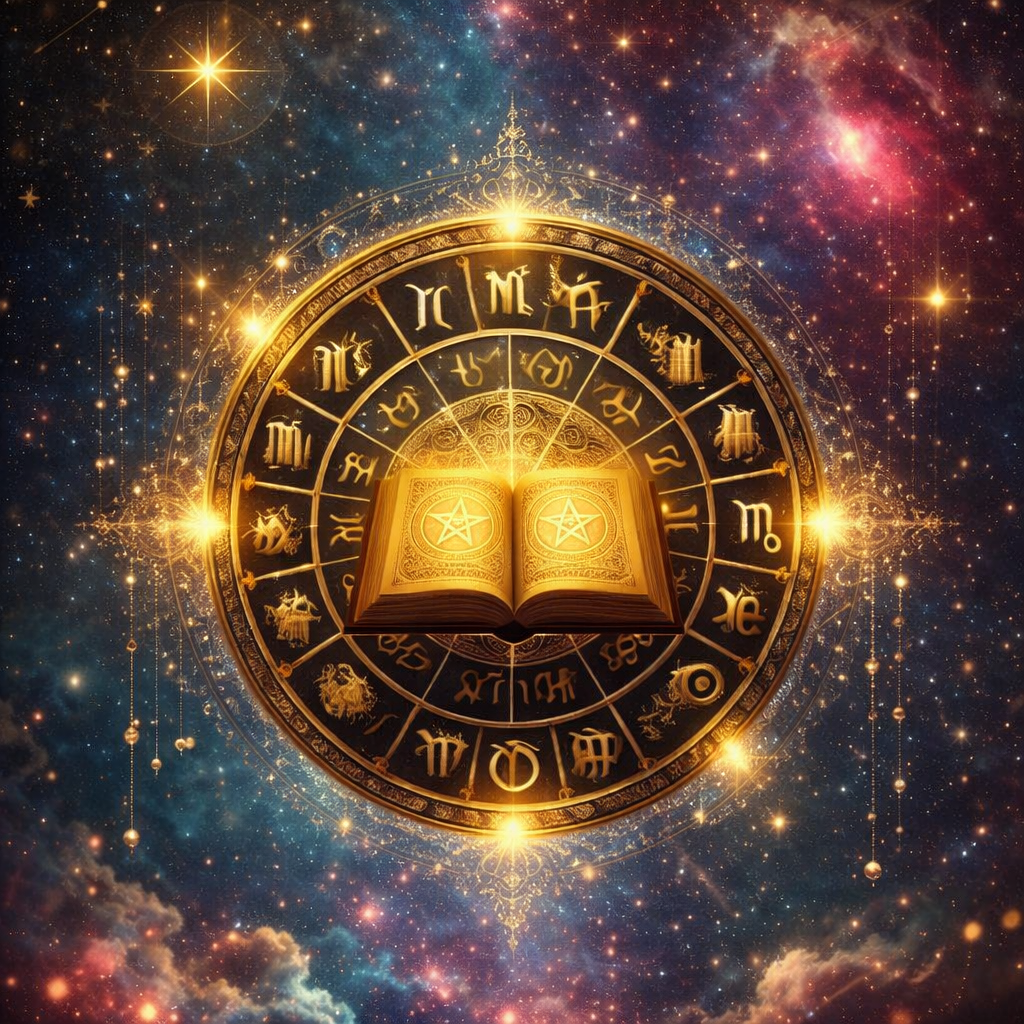
This theme explores the profound concept of the cosmos as a divinely ordered system, where celestial bodies act as cosmic clocks and intricate mechanisms influencing terrestrial life. Mehta posits that astrology is not merely a predictive tool but a science that maps the energetic blueprint imprinted upon an individual at the moment of birth. It examines how planetary positions and their relationships create a unique cosmic signature, guiding the soul's journey through its earthly incarnation. This perspective elevates astrology from a mere superstition to a profound philosophical and scientific inquiry into the interconnectedness of all things.
Vedic Wisdom and Cosmic Harmony
The book delves deeply into the ancient wisdom of Vedic astrology, presenting it as a sophisticated science rooted in millennia of observation and contemplation. Mehta elucidates the principles of karma, rebirth, and the soul's evolutionary path as understood through the lens of celestial influences. It highlights the concept of Dharma and how astrological configurations can reveal one's inherent purpose and challenges. The emphasis is on achieving cosmic harmony by understanding and aligning with these universal laws, fostering a sense of balance and spiritual progress.
The Interplay of Macrocosm and Microcosm
A central tenet of this work is the inseparable link between the vast universe (macrocosm) and the individual human being (microcosm). Mehta illustrates how the same universal laws and energies that govern the cosmos are reflected within each person's psyche and life experiences. Astrology, in this context, becomes the key to understanding this profound resonance, allowing individuals to gain self-knowledge by studying the celestial patterns. This theme encourages a shift in perspective, viewing personal challenges and triumphs as reflections of larger cosmic cycles.
💬 Memorable Quotes
Direct passages from the work, attributed to the author.
“Every birth is a cosmic punctuation mark.”
— This highlights the idea that each individual's existence is significant and unique, marked by a specific alignment of celestial forces at their inception.
“Astrology is the science of cosmic sympathy.”
— This suggests that astrology reveals a deep, underlying connection and resonance between the celestial realm and earthly existence, fostering a sense of universal interconnectedness.
“The heavens are a book, and the planets its living words.”
— This evocative metaphor presents the cosmos as a text to be read and understood, with celestial bodies acting as dynamic elements within this grand narrative.
“To know the stars is to know oneself.”
— This captures the core principle of astrology as a path to self-discovery, asserting that by studying the macrocosm, one gains clear insights into their own inner landscape.
💡 Key Ideas
Editorial paraphrase of the work's core concepts — not direct quotes.
The stars do not compel, they counsel.
This quote emphasizes that astrological influences are not deterministic but offer guidance, suggesting that free will plays an important role in how we respond to cosmic energies.
🌙 Esoteric Significance
Tradition
This work is deeply rooted in the esoteric tradition of Vedic (Hindu) astrology, known as Jyotisha. It represents a sophisticated system that views celestial bodies not just as physical entities but as carriers of karmic energies and divine intelligence. Jyotisha is intrinsically linked to Hindu philosophy, encompassing concepts of karma, rebirth, dharma, and moksha, viewing the astrological chart as a map of the soul's journey through these cycles. Mehta's approach emphasizes the subtle, energetic, and philosophical dimensions that are central to this ancient tradition.
Symbolism
The symbolism in 'The Logic and Science of Astrology' is rich and many-sided, drawing from the profound archetypes of the planets (Grahas), zodiac signs (Rashis), and houses (Bhavas). Each element carries layers of meaning, representing universal forces, psychological tendencies, and life experiences. Planets symbolize divine energies and their manifestation, zodiac signs describe the quality and expression of these energies, and houses delineate the areas of life where these cosmic forces play out. Mehta guides the reader to interpret these symbols as a unified, interconnected language of the cosmos.
Modern Relevance
In an era often characterized by disconnection and existential questioning, 'The Logic and Science of Astrology' offers a profound framework for understanding our place in the universe and our intrinsic connection to its rhythms. It provides tools for self-awareness, personal growth, and navigating life's challenges with greater insight and resilience. The book's emphasis on cosmic harmony and the interplay of macrocosm and microcosm appeals to contemporary desires for spiritual fulfillment and a more meaningful existence, demonstrating the enduring power of ancient wisdom in the modern world.
👥 Who Should Read This Book
This book is a vital resource for a diverse range of readers. For the **beginner**, it offers a clear and insightful introduction to the foundational principles of astrology, clarifying its complexities. **Scholars** of comparative religion, philosophy, and ancient sciences will find a rigorous exploration of astrological logic and its place within broader cosmological thought. **Spiritual seekers** will discover a profound path to self-understanding and a deeper connection to the universal energies that shape existence. Finally, **practitioners** of astrology, particularly those interested in Vedic traditions, will gain invaluable theoretical depth and a renewed appreciation for the scientific and philosophical underpinnings of their craft.
📜 Historical Context
Published during a period of burgeoning interest in both scientific inquiry and esoteric philosophies, 'The Logic and Science of Astrology' by D. D. Mehta emerges as a significant contribution to the discourse on Vedic astrology. The mid-20th century saw a global revival of interest in ancient wisdom traditions, often viewed through a lens that sought to reconcile them with emerging scientific understandings. Mehta's work aligns with this intellectual climate, aiming to present astrology not as a mystical art divorced from reason, but as a system with inherent logic and observable, albeit subtle, scientific principles. It draws upon the rich heritage of Indian astronomical and philosophical texts, seeking to validate and elucidate these ancient insights for a modern, rational audience.
📔 Journal Prompts
Reflect on a significant life event and consider how its timing might align with the astrological principles discussed.
What planetary archetypes or energies described in the book do you feel most strongly resonate with your own personality?
How does the concept of 'cosmic sympathy' challenge or confirm your current worldview?
Consider the 'celestial blueprint' as a map for your soul's journey; what areas of exploration does this perspective open up for you?
How can understanding the interplay of macrocosm and microcosm lead to greater self-acceptance and a sense of belonging?
🗂️ Glossary
Jyotisha
The traditional Indian system of astrology, often translated as 'science of celestial lights' or 'science of time'. It encompasses astronomical observation, calculation, and interpretation of celestial influences.
Graha
In Vedic astrology, the term for 'planet'. It refers to the seven visible planets (Sun, Moon, Mercury, Venus, Mars, Jupiter, Saturn) and the two lunar nodes (Rahu and Ketu), each carrying distinct energetic qualities.
Rashi
The Sanskrit term for 'zodiac sign'. There are twelve Rashis, each representing a specific segment of the ecliptic and embodying unique characteristics and influences.
Bhava
The Sanskrit term for 'house' in astrology. The twelve Bhavas represent different spheres of life and experiences, such as self, wealth, siblings, home, and career.
Karma
A fundamental concept in Indian religions and philosophies, referring to the principle of cause and effect, where actions in this life or previous lives influence future experiences and destiny.
This book appears in 2 collections
🔮 Readers Also Liked
Browse all →









From the “Astrology” Collection
View all →








More Free Astrology & Cosmology Books
View all →