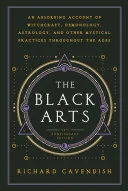
The Black Arts (50th Anniversary Edition)
 82
82

The Black Arts (50th Anniversary Edition)
Richard Cavendish's *The Black Arts* functions less as a grimoire and more as an ethnographic survey of the occult imagination. First appearing in 1968, its strength lies in its broad, almost encyclopedic coverage, touching upon witchcraft, astrology, alchemy, and Kabbalah with a dispassionate, academic tone. Cavendish excels at presenting complex ideas accessibly, a feat evident in his section on ceremonial magic, which demystifies rituals often shrouded in jargon. However, the book's sheer breadth sometimes leads to a lack of depth; certain topics, like the intricacies of Tarot symbolism, feel somewhat glossed over. The 50th Anniversary Edition's introduction by Mitch Horowitz commendably frames Cavendish's work within its historical context, acknowledging both its scholarly merit and its place in the broader occult revival of the mid-20th century. *The Black Arts* remains a solid, informative overview for those beginning their exploration of Western esotericism.
📝 Description
82
Richard Cavendish's The Black Arts, first published in 1968, surveys occult traditions with historical detail.
The Black Arts, first published in 1968, is a broad survey of occult practices and beliefs. Richard Cavendish details a wide range of subjects, from the theory of magic to its actual use in different esoteric paths. The book covers witchcraft, spellcasting, numerology, astrology, alchemy, Kabbalah, Tarot, and the summoning of spirits. Cavendish presents these as systems with their own logic and history, not simply as superstition. The 50th Anniversary Edition includes a new introduction by Mitch Horowitz. This edition places Cavendish's work within the context of contemporary interest in alternative spiritualities. It is intended as an accessible introduction for those new to Western esotericism. The book offers essential knowledge for understanding the various streams within occultism. It serves as a reference for students and enthusiasts alike.
Published in 1968, The Black Arts emerged during a period of renewed interest in Western esotericism. It sits within a tradition of occult compendia that aim to systematize and explain magical practices. Cavendish's approach grounds these traditions in historical development and cultural context, moving beyond mere description to analyze their internal coherence. This perspective aligns with scholarly efforts to understand occultism as a distinct intellectual and spiritual current, rather than dismissing it as irrationality. The book reflects a desire to make these complex systems understandable to a wider audience curious about alternative spiritual paths.
💡 Why Read This Book?
• Understand the historical development of occult practices, including the roots of ceremonial magic as detailed in the book's early chapters, allowing for a comparative study of different magical traditions. • Gain insight into the structure and symbolism of the Kabbalah, as presented by Cavendish, offering a foundational understanding for those interested in Jewish mysticism and its esoteric interpretations. • Explore the practical applications of astrology and numerology as described in the text, providing a historical perspective on divinatory systems that still influence modern occult thought.
⭐ Reader Reviews
Honest opinions from readers who have explored this book.
❓ Frequently Asked Questions
What is the original publication date of The Black Arts?
The Black Arts by Richard Cavendish was first published on January 17, 1968, making the 50th Anniversary Edition a significant commemoration of its enduring influence.
Who wrote the introduction for the 50th Anniversary Edition?
The introduction for the 50th Anniversary Edition of The Black Arts was written by historian Mitch Horowitz, an expert in alternative spirituality and the history of ideas.
What esoteric subjects does The Black Arts cover?
The book covers a wide range of subjects including witchcraft, spells, numerology, astrology, alchemy, Kabbalah, Tarot, charms, and spirit summoning and control.
Is The Black Arts a practical guide to performing magic?
While it explores the theory and practice of various occult arts, The Black Arts is primarily an informative historical and descriptive survey rather than a step-by-step manual for practitioners.
What makes this book significant for understanding occultism?
Its comprehensive scope, first published in 1968, provides a foundational overview of Western esoteric traditions that has informed subsequent generations of occult students and scholars.
What historical context does Mitch Horowitz provide?
Horowitz frames the book within the context of the occult revival of the 1960s and 1970s, discussing its impact and place within the history of alternative spirituality.
🔮 Key Themes & Symbolism
Ceremonial Magic and Ritual
Cavendish systematically examines the structure and aims of ceremonial magic, detailing practices associated with summoning and controlling spirits, and the creation of magical circles. He explores the historical lineage of these rituals, connecting them to figures like Agrippa and the broader Hermetic tradition. The work emphasizes the psychological and symbolic aspects of ritual, presenting it as a method for altering consciousness and interacting with unseen forces.
Witchcraft and Folk Magic
The book studies the historical perceptions and practices of witchcraft, distinguishing between folkloric beliefs and more organized magical traditions. Cavendish discusses the evolution of the concept of the witch, from pre-Christian fertility cults to the accusations during the witch trials. It also touches upon the use of charms and spells as forms of folk magic aimed at protection, healing, or influencing events.
Divinatory Arts
A significant portion of *The Black Arts* is dedicated to the study of divination, including astrology, numerology, and the Tarot. Cavendish outlines the principles behind these systems, explaining their historical development and their role in seeking knowledge of the future or understanding hidden influences. The text presents these as complex symbolic languages used for interpretation and guidance.
Alchemy and Hermeticism
The esoteric philosophy of Hermeticism and the mystical science of alchemy are explored, focusing on their symbolic language and spiritual goals. Cavendish describes the alchemical quest for transformation, both material and spiritual, and its connection to concepts of universal wisdom. The work highlights alchemy's influence on later occult movements and its deep roots in ancient traditions.
💬 Memorable Quotes
Direct passages from the work, attributed to the author.
“The Black Arts is a fascinating and wonderfully readable exploration of the practice, theory, and underlying rationale of magick and occultism in all its branches.”
— This blurb highlights the book's dual nature: it's both an academic study ('theory,' 'rationale') and an engaging narrative ('readable exploration') of diverse occult practices.
“The work explores witchcraft, spells, numerology, astrology, alchemy, kabbalah, tarot, charms, and summoning and control of spirits.”
— This statement clearly outlines the vast scope of subjects covered, indicating the book's ambition to provide a comprehensive overview of Western esoteric traditions.
“This edition features a 50th anniversary introduction by historian of alternative spirituality Mitch Horowitz.”
— This points to the updated edition's value, with Horowitz providing historical context and framing the book for contemporary readers interested in the evolution of occult thought.
“Cavendish meticulously details a vast array of practices, from the theoretical underpinnings of magic to its practical application.”
— This emphasizes the thoroughness of Cavendish's research, suggesting that the book bridges the gap between abstract magical philosophy and concrete ritualistic or divinatory methods.
“The book serves as an accessible entry point for those curious about the history and methodologies of Western esotericism.”
— This positions *The Black Arts* as a foundational text, suitable for beginners seeking to understand the field of occultism without being overwhelmed by overly specialized or arcane material.
🌙 Esoteric Significance
Tradition
The Black Arts draws primarily from the Western Esoteric Tradition, encompassing Hermeticism, Kabbalah, ceremonial magic, and historical witchcraft. It fits within this lineage by synthesizing diverse practices and philosophies that have been influential since antiquity. Cavendish's work acts as a bridge, connecting ancient roots to the occult revival of the 20th century, presenting these traditions as a coherent, albeit complex, field of study.
Symbolism
Key symbols explored include the Pentagram, central to protection and invocation in ceremonial magic, and the Tree of Life in Kabbalah, representing a map of creation and consciousness. Alchemy's symbolism, such as the Ouroboros (serpent eating its tail), signifies cycles of transformation and unity. These symbols are presented not just as decorative elements but as keys to understanding the underlying principles of the magical worldview.
Modern Relevance
Contemporary occultists and scholars of esotericism continue to reference *The Black Arts* for its historical overview. It informs modern discussions on the evolution of witchcraft, the interpretation of Kabbalistic texts, and the study of Western magical history. Thinkers like Mitch Horowitz, who penned the introduction to the 50th anniversary edition, engage with its legacy, placing Cavendish's work within the ongoing dialogue about alternative spiritualities and their historical roots.
👥 Who Should Read This Book
• Aspiring students of Western Esotericism: Individuals beginning their exploration of occult history, magic, and mysticism will find this a valuable, broad-ranging introduction to key traditions like Kabbalah and ceremonial magic. • Comparative Religion Scholars: Researchers interested in the historical development and diversity of belief systems will benefit from Cavendish's survey of occult practices and their cultural contexts. • Enthusiasts of 20th Century Esotericism: Readers curious about the occult revival of the 1960s and 1970s will appreciate the historical perspective offered, especially with Mitch Horowitz's contextualizing introduction.
📜 Historical Context
Published in the cultural ferment of 1968, Richard Cavendish's *The Black Arts* arrived during a resurgence of interest in the occult, fueled by counter-cultural movements and a growing dissatisfaction with mainstream materialism. The era saw figures like Aleister Crowley gaining posthumous notoriety and Gerald Gardner popularizing modern witchcraft. Cavendish's work, however, offered a more historically grounded and less practitioner-focused survey than many contemporary texts. It stood apart from the more mystical outpourings of Theosophy, which had dominated earlier decades, and provided a more accessible entry into the complex world of Western esotericism than highly specialized academic treatises. Its reception was generally positive among those interested in the occult, seen as a well-researched and balanced introduction, though some practitioners might have found its academic detachment limiting.
📔 Journal Prompts
The Kabbalah's structure as described by Cavendish, and its potential as a cosmological map.
Historical witchcraft practices and their divergence from modern interpretations.
The symbolic language of alchemy and its role in spiritual transformation.
Ritualistic elements in ceremonial magic and their psychological impact.
Divinatory systems like Tarot and their function in providing guidance.
🗂️ Glossary
Kabbalah
A system of Jewish mysticism that explores the nature of God and creation through esoteric interpretations of scripture, often involving symbolic diagrams like the Tree of Life.
Alchemy
An ancient practice focused on the transformation of base metals into gold, often understood as a spiritual allegory for the purification and perfection of the soul.
Ceremonial Magic
A form of magic involving elaborate rituals, incantations, and the use of specific tools and symbols, often aimed at invoking or commanding spiritual entities.
Numerology
The study of the mystical or symbolic significance of numbers and their influence on human life and events.
Tarot
A deck of cards featuring symbolic imagery, used for divination, introspection, and as a tool for exploring psychological and spiritual themes.
Witchcraft
Historically, a term associated with folk magic and alleged malevolent practices; in modern contexts, often refers to Neopagan spiritual paths.
Hermeticism
A philosophical and religious tradition based on writings attributed to Hermes Trismegistus, emphasizing divine knowledge, the interconnectedness of all things, and spiritual ascent.