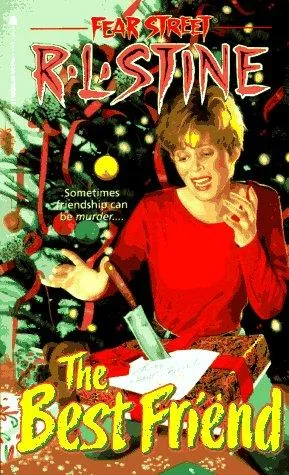
The Best Friend
 74
74

The Best Friend
R.L. Stine’s *The Best Friend* offers a disquieting exploration of childhood anxieties, presenting a narrative that, while ostensibly for a younger audience, carries a genuine sense of unease. The strength of the book lies in its masterful manipulation of atmosphere; Stine crafts a palpable sense of dread that permeates the seemingly ordinary interactions between the protagonist and their titular friend. The ambiguity surrounding the 'friend's' true nature—is it a product of a child’s overactive imagination, or something more sinister?—is the narrative's most compelling hook. However, the pacing, particularly in the latter half, can feel somewhat predictable for seasoned readers of the genre, with certain plot turns telegraphed a little too clearly. A passage detailing the protagonist's increasing isolation, where even familiar surroundings begin to feel alien, stands out for its effectiveness in conveying psychological distress. Ultimately, *The Best Friend* succeeds as a chilling, if occasionally simplistic, examination of how our closest bonds can sometimes become the conduits for our deepest fears.
📝 Description
74
Robert Lawrence Stine's 1992 novel, The Best Friend, examines childhood anxieties through a supernatural lens.
Published in 1992, The Best Friend focuses on a child protagonist who becomes increasingly isolated. Their only companion, initially a source of comfort, grows into something menacing. Stine crafts a narrative that blurs the lines between a child's imagination and actual threats, building a disquieting atmosphere. The story suggests that even close relationships can hide unsettling anxieties. This novel taps into common childhood fears, presenting a scenario where perceived safety is fragile.
The book is suited for readers who enjoy psychological suspense with a supernatural twist. It appeals to those interested in narratives that explore the uncanny within familiar settings. Individuals who like stories with ambiguous threats, where the source of unease could be internal or external, will find this work resonant. It probes the complexities of trust and the vulnerability of perceived security. Readers who appreciate Stine's atmospheric approach to horror may find familiarity here.
In its time, The Best Friend emerged during a period when young adult literature began to more openly engage with darker psychological themes. R.L. Stine, already known for children's horror, was establishing a reputation for works that, while accessible, touched on primal fears. The early 1990s cultural climate showed a broader interest in suspense and the subversion of normalcy across various media. This book fits within a tradition of supernatural fiction that uses seemingly ordinary settings to explore unsettling psychological states, particularly those experienced by children.
💡 Why Read This Book?
• Gain insight into the psychological underpinnings of childhood fears, specifically how the concept of a 'best friend' can become a focal point for anxiety, a theme explored extensively in the narrative's progression. • Experience a masterclass in atmospheric tension building, a signature of R.L. Stine's work since its 1992 publication, which creates a pervasive sense of unease through subtle environmental cues. • Understand the narrative technique of ambiguous threat, learning how the author cultivates suspense by leaving the true nature of the 'friend' open to interpretation, challenging reader perceptions.
⭐ Reader Reviews
Honest opinions from readers who have explored this book.
❓ Frequently Asked Questions
Is 'The Best Friend' by R.L. Stine part of a series?
While 'The Best Friend' is a standalone novel, it shares thematic elements and a similar target audience with other R.L. Stine books published around 1992, particularly those focusing on suspense and childhood fears.
What age group is 'The Best Friend' recommended for?
The book is generally recommended for middle-grade readers, typically ages 10-14, who enjoy suspenseful stories with a touch of horror and psychological intrigue.
Does 'The Best Friend' contain graphic content?
No, 'The Best Friend' is known for its psychological suspense rather than graphic violence. The horror is primarily derived from atmosphere and suggestion, making it appropriate for its intended young adult audience.
What are the main themes explored in 'The Best Friend'?
The primary themes include childhood anxiety, the nature of friendship, isolation, the blurring of reality and imagination, and the fear of the unknown, all central to the narrative's unsettling plot.
When was 'The Best Friend' first published?
R.L. Stine's 'The Best Friend' was first published in 1992, positioning it within the boom of young adult suspense fiction of that era.
Are there any specific symbols or motifs in 'The Best Friend'?
The narrative often uses familiar childhood settings and objects to create a sense of the uncanny. The 'best friend' themselves acts as a primary symbol, representing both comfort and potential menace.
🔮 Key Themes & Symbolism
Ambiguity of Threat
The work masterfully cultivates suspense through the deliberate ambiguity of the 'best friend' character. Readers are left to question whether the perceived threats are external dangers manifesting through the companion, or internal psychological projections of the protagonist's own fears. This uncertainty forces an engagement with the narrative on a deeper, more unsettling level. The narrative often places the protagonist in situations where the friend's actions are open to dual interpretation, a core element of the book's psychological tension since its 1992 release.
Isolation and Dependence
A significant theme is the protagonist's increasing isolation, which drives their dependence on the titular 'best friend.' As social connections outside this singular relationship fray or are perceived as inadequate, the friend becomes the sole pillar of perceived support. This dependence amplifies the stakes of any potential threat posed by the friend, creating a claustrophobic narrative where escape seems impossible. The book explores how extreme reliance can blind one to danger.
The Uncanny in the Familiar
The Best Friend excels at transforming ordinary settings and relationships into sources of dread. The book plays on the unsettling notion that danger can lurk within the most familiar environments – a child's bedroom, a schoolyard, or a supposedly trusted companion. This subversion of the familiar is a hallmark of psychological horror, making the reader question the safety of their own perceived realities. The narrative consistently juxtaposes comfort with a creeping sense of unease.
Perception vs. Reality
Central to the narrative is the exploration of subjective perception versus objective reality. The protagonist's experiences and interpretations of events are often presented as fact, yet the reader is encouraged to question their validity. This theme is crucial for understanding the psychological field of the story, as the unraveling of the protagonist's reality mirrors the escalating tension. The work probes how our internal state can color our external world.
💬 Memorable Quotes
Direct passages from the work, attributed to the author.
“The friend was always there, but sometimes it felt like a shadow.”
— This phrase captures the dual nature of the 'best friend' – a constant presence offering companionship, yet simultaneously casting a metaphorical shadow of doubt or unease, hinting at a darker, underlying aspect to their relationship.
“Nobody else seemed to notice what the best friend was doing.”
— This highlights the protagonist's isolation and the uncanny nature of their experience. It suggests that the unsettling events or behaviors are perceived only by the protagonist, blurring the lines between their reality and that of others.
“The house felt quiet, but not in a peaceful way.”
— This interpretation of a descriptive passage points to the pervasive atmosphere of dread. The silence is not comforting but ominous, signifying an unsettling calm before further disturbances, a common technique in suspense narratives.
“What if the scariest thing was the one I trusted the most?”
— This internal question from the protagonist directly confronts the core theme of betrayal of trust within a close relationship, embodying the narrative's exploration of fear found in the most intimate connections.
💡 Key Ideas
Editorial paraphrase of the work's core concepts — not direct quotes.
Sometimes the things you want most can be the scariest.
This paraphrased concept speaks to the central paradox of the 'best friend.' The desire for companionship and acceptance, embodied by the friend, paradoxically becomes the source of the protagonist's deepest fears.
🌙 Esoteric Significance
Tradition
While not directly aligned with a specific esoteric lineage like Hermeticism or Gnosticism, *The Best Friend* taps into the archetypal concept of the Shadow Self, a key idea in Jungian psychology, which has significant overlap with esoteric thought. The 'friend' can be interpreted as an externalized manifestation of the protagonist's repressed fears, anxieties, or darker impulses, a common motif in alchemical and psychological traditions that explore the integration of one's darker aspects.
Symbolism
The 'best friend' itself functions as a potent symbol, representing the duality of companionship and threat, mirroring archetypes of the trickster or the shadow figure. The familiar, domestic settings that become imbued with dread symbolize the intrusion of the uncanny into the mundane, a frequent theme in occult literature exploring hidden realities. The protagonist's increasing isolation symbolizes a spiritual or psychological withdrawal from the external world, forcing an internal confrontation.
Modern Relevance
Contemporary explorations of psychological horror and unreliable narration in literature and film often echo the techniques employed in *The Best Friend*. Thinkers and practitioners in areas like shadow work or inner child healing might find the book's portrayal of externalized childhood anxieties relevant. Its enduring appeal lies in its exploration of the often-unsettling dynamics within close relationships, a theme that continues to resonate in modern psychological discourse and narrative fiction.
👥 Who Should Read This Book
• Young readers aged 10-14 seeking suspenseful stories with a psychological edge, who enjoy narratives that explore common childhood fears in a relatable context. • Fans of R.L. Stine's broader body of work, particularly those interested in his earlier, more atmospheric tales that prioritize mood and tension over explicit horror. • Educators and parents looking for literature that can spark discussions about friendship dynamics, anxiety, and the difference between perceived threats and actual danger.
📜 Historical Context
The Best Friend, published in 1992, arrived during a fertile period for young adult suspense and horror, a genre R.L. Stine was rapidly defining. This era saw a growing appetite for narratives that explored darker psychological themes with accessible prose, moving beyond simple ghost stories. Stine’s work, while often categorized as children's horror, frequently touched upon anxieties relevant to adolescents, such as social pressures and the fear of the unknown. He stood in contrast to authors like Christopher Pike, who often explored more mature or overtly supernatural themes within the YA space. The early 90s were also marked by a general cultural fascination with thrillers, evident in popular films and novels, suggesting a broader societal interest in suspenseful narratives. Stine's approach, emphasizing atmosphere and psychological unease over explicit gore, made his stories particularly impactful for a younger demographic, establishing a distinct niche. The book's reception reflected the growing acceptance of more complex emotional landscapes in literature for younger readers.
📔 Journal Prompts
The protagonist's reliance on the 'best friend' despite growing unease.
The transformation of familiar settings into sources of fear.
Interpreting the ambiguous actions of the 'best friend'.
The feeling of isolation and its impact on perception.
Reflecting on personal experiences of trust and suspicion in relationships.
🗂️ Glossary
The Best Friend
The central, ambiguous character in the novel whose nature shifts between comforting companion and source of dread, embodying the protagonist's deepest fears and anxieties.
Ambiguity
The narrative technique of presenting situations or characters with unclear meanings or intentions, creating suspense and encouraging the reader to question the perceived reality of the story.
Psychological Suspense
A genre of storytelling that relies on building tension through a character's mental state, internal conflicts, and the creation of unease, rather than explicit violence or supernatural elements.
Uncanny
The quality of seeming strange or mysterious, especially in an unsettling or eerie way, often by being familiar yet also foreign or distorted.
Isolation
A state of being alone or separated from others, which in the context of the book, exacerbates the protagonist's vulnerability and dependence on their singular companion.
Subjective Reality
An individual's personal experience and interpretation of the world, which may differ significantly from objective reality or the perceptions of others.
Archetype
A recurring symbol, character type, or motif that is universally understood across cultures, such as the Shadow Self or the Trickster, which can inform the interpretation of characters like the 'best friend'.
🔮 Readers Also Liked
Browse all →







More by Robert Lawrence Stine
All books →





More Free Spiritualism & Afterlife Books
View all →