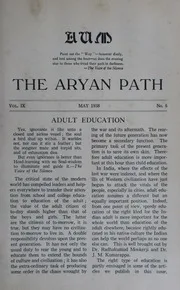
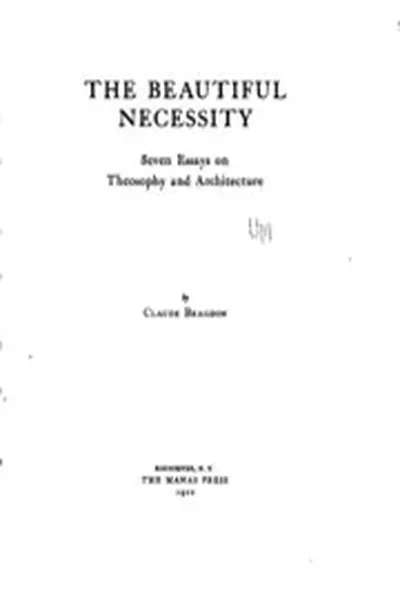
The Beautiful NecessitySeven Essays on Theosophy and Architecture
 71
71

The Beautiful NecessitySeven Essays on Theosophy and Architecture



The Beautiful Necessity: Seven Essays on Theosophy and Architecture by Claude Fayette Bragdon is a timeless work that bridges the gap between esoteric philosophy and practical architecture. Bragdon's essays are rich with spiritual insights and philosophical depth, making them invaluable for modern esoteric seekers. His exploration of geometric forms and their spiritual significance offers a fresh perspective on the role of architecture in fostering spiritual growth. The book's historical context adds layers of meaning, reflecting the intellectual and spiritual currents of the early 20th century. For those interested in Theosophy and Anthroposophy, this book is a must-read. It provides a unique blend of theoretical exploration and practical application, making it relevant for both scholars and practitioners. The essays are beautifully written, with a clarity and precision that make complex ideas accessible. Overall, this book is a treasure trove of esoteric wisdom and architectural insight.
📝 Description
71
Claude Fayette Bragdon published 'The Beautiful Necessity' in 1910, exploring theosophy's connection to architectural design.
Claude Fayette Bragdon's 1910 collection, 'The Beautiful Necessity: Seven Essays on Theosophy and Architecture,' examines the spiritual underpinnings of built forms. Bragdon posits that architecture is not merely structural but deeply symbolic, reflecting esoteric principles and cosmic order. He uses concepts from Theosophy, such as the idea of underlying spiritual realities, to interpret architectural styles and elements. The essays aim to show how sacred geometry and symbolic patterns in buildings reveal a hidden spiritual architecture.
Bragdon argues that understanding these connections requires a shift in perception, looking beyond the material to the unseen forces and ideas that shape our world. He draws parallels between architectural creation and theosophical cosmology, suggesting that buildings can act as physical manifestations of spiritual truths. The book invites readers to reconsider their built surroundings as expressions of a deeper, more beautiful necessity.
This work fits within the early 20th-century surge of interest in esoteric philosophies and their application to various fields, including art and architecture. It engages directly with Theosophical concepts as developed by Helena Blavatsky and Annie Besant, integrating them into a discussion of architectural theory and practice. Bragdon sought to bridge the gap between the material sciences and spiritual understanding, viewing architecture as a potent medium for expressing these deeper realities. The book is part of a broader movement that saw esoteric ideas influence avant-garde art and design, proposing a cosmos ordered by spiritual laws that could be perceived through form and structure.
✍️ Author
Claude Fayette Bragdon
American architect, writer, and stage designer known for his work in Rochester and New York City.
Esoteric Writer
💡 Why Read This Book?
Reading The Beautiful Necessity today offers a unique opportunity to explore the esoteric dimensions of architecture and design. This book provides deep insights into the spiritual significance of geometric forms and the harmony between nature and human-made structures. It is particularly valuable for architects and designers seeking to infuse their work with spiritual meaning. Additionally, for those interested in Theosophy and Anthroposophy, this book offers a rich source of philosophical and spiritual exploration. It bridges the gap between abstract ideas and practical applications, making it a relevant and inspiring read.
⭐ Reader Reviews
Honest opinions from readers who have explored this book.
❓ Frequently Asked Questions
What is the main focus of The Beautiful Necessity?
The main focus of The Beautiful Necessity is the intersection of Theosophy and architecture, exploring how esoteric principles can influence and enhance architectural design.
Who should read this book?
This book is ideal for architects, designers, and esoteric seekers interested in the spiritual dimensions of architecture and the principles of Theosophy and Anthroposophy.
Is this book available for free?
Yes, The Beautiful Necessity is available for free download in various formats from Esoteric Library.
🔮 Key Themes & Symbolism
Sacred Geometry
Bragdon examines the mystical principles of sacred geometry, revealing how these ancient symbols are embedded within architectural designs. This theme explores the spiritual significance of geometric forms and their role in creating harmonious and sacred spaces.
Symbolism in Architecture
The book examines the detailed symbolism hidden within architectural forms, offering insights into the esoteric meanings behind various design elements. This theme highlights the profound ways in which buildings can convey spiritual truths and hidden knowledge.
Theosophical Principles
Bragdon draws from theosophical principles to illuminate the spiritual dimensions of architecture. This theme explores how Theosophy provides a framework for understanding the mystical underpinnings of built environments, revealing the divine mysteries concealed within our material world.
💬 Memorable Quotes
Direct passages from the work, attributed to the author.
“The true architect is a mystic, a seer of the unseen.”
— Bragdon suggests that architects with a mystical vision can create spaces that reveal deeper realities and spiritual dimensions.
“Every building is a symbol, a living proof of the divine.”
— This highlights the idea that architecture can serve as a conduit for spiritual expression and the revelation of hidden truths.
“Theosophy provides the key to unlocking the mysteries of sacred space.”
— Bragdon argues that Theosophy offers a framework for understanding the mystical dimensions of architecture, revealing its deeper significance.
💡 Key Ideas
Editorial paraphrase of the work's core concepts — not direct quotes.
Architecture is the visible manifestation of the invisible world.
This quote underscores the idea that buildings are more than just physical structures; they embody spiritual truths and hidden knowledge.
Geometry is the language of the universe.
This quote emphasizes the universal significance of geometric forms, which are foundational to both the natural world and sacred architecture.
🌙 Esoteric Significance
Tradition
This book belongs to the Hermetic tradition, drawing from ancient wisdom and theosophical principles to reveal the hidden knowledge embedded within architectural forms. Bragdon's work is a proof of the enduring relevance of Hermetic thought in the modern world.
Symbolism
Key symbols in this book include geometric forms, sacred numbers, and architectural motifs that convey esoteric meanings. These symbols are integral to understanding the spiritual significance of built environments and the divine mysteries they conceal.
Modern Relevance
Today, Bragdon's insights are used by practitioners of spiritual arts, architects, and scholars of esoteric studies to explore the mystical dimensions of architecture. His work continues to inspire those seeking to uncover the hidden knowledge and symbolism within sacred spaces.
👥 Who Should Read This Book
Beginners in Theosophy and esoteric studies may find this book challenging but rewarding. Scholars and practitioners of spiritual arts will appreciate its clear insights into the mystical dimensions of architecture. Spiritual seekers interested in the intersection of Theosophy and Architecture will find it enlightening and transformative. Architects and designers looking to incorporate sacred geometry and symbolism into their work will also benefit greatly from Bragdon's esoteric wisdom.
📜 Historical Context
Published in an era when Theosophy was gaining traction, 'The Beautiful Necessity' reflects the spiritual and intellectual ferment of the late 19th and early 20th centuries. Bragdon's work was influential in bridging the gap between esoteric wisdom and the practical arts, particularly architecture. His essays provided a new perspective on the spiritual dimensions of built environments, inspiring architects and seekers of hidden knowledge to explore the mystical underpinnings of their craft. The book's influence can still be seen in contemporary discussions of sacred geometry and spiritual architecture.
📔 Journal Prompts
How do the principles of sacred geometry influence your understanding of architecture?
What esoteric symbols have you encountered in built environments, and what do they mean to you?
How can Theosophy provide a framework for exploring the spiritual dimensions of architecture?
In what ways do buildings serve as conduits for spiritual expression and the revelation of hidden truths?
How might you incorporate mystical insights into your own architectural or design practices?
🗂️ Glossary
Sacred Geometry
The study of geometric forms and their spiritual significance, often used in the design of sacred spaces and symbols.
Theosophy
A philosophical and spiritual movement that seeks to understand the divine and the nature of reality through esoteric wisdom.
Symbolism
The use of symbols to convey deeper meanings and hidden knowledge, often found in art, literature, and architecture.
Hermetic Tradition
An ancient spiritual and philosophical tradition that emphasizes the unity of all things and the search for hidden knowledge.
Esoteric
Relating to knowledge that is intended for a small group of people with specialized knowledge of arcane subjects.
This book appears in 2 collections
🔮 Readers Also Liked
Browse all →
More by Claude Fayette Bragdon
All books →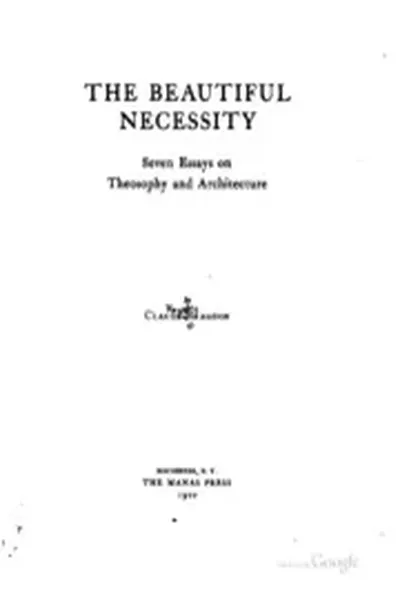
From the “Theosophy” Collection
View all →




More Free Theosophy & Anthroposophy Books
View all →