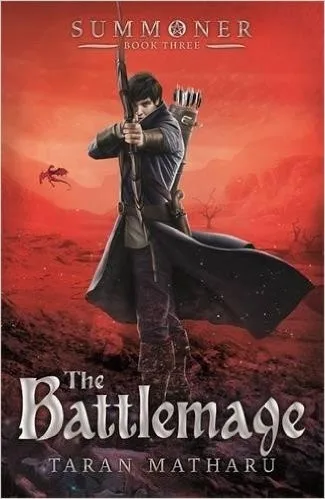
The Battlemage
 80
80

The Battlemage
Taran Matharu's *The Battlemage* introduces Fletcher, a compelling protagonist whose discovery of forbidden elemental magic propels him into the prestigious but perilous Inquisitor's academy. Matharu excels at crafting a detailed magical system and a world where power is strictly policed, particularly the fear surrounding elementalists. The early scenes depicting Fletcher’s struggle to control his burgeoning abilities within the academy’s structured environment are particularly strong, showcasing a keen understanding of how limitations can forge character. However, the narrative occasionally leans into predictable plot points, especially in the latter half, and some character motivations, like that of the antagonist, could benefit from further nuance beyond sheer malevolence.
The concept of the 'Ordeal' in chapter 15, a trial by combat that Fletcher must survive, is a well-executed set piece that vividly illustrates the stakes. Despite its occasional reliance on familiar fantasy archetypes, *The Battlemage* delivers a solid, engaging entry into the YA fantasy landscape.
Read more ↓
Verdict: A well-executed fantasy debut that skillfully balances familiar tropes with a unique magical system.
📝 Description
80
Taran Matharu's 2017 novel, The Battlemage, introduces Fletcher, an orphan discovering forbidden elemental magic.
The Battlemage, published in 2017, is the first book in Taran Matharu's Summoner series. It centers on Fletcher, an orphan who learns he possesses outlawed elemental magic. This discovery places him in direct opposition to the established magical order and the rigid doctrines of his society. The story unfolds within a structured magical academy setting, where Fletcher must learn to control his powers while facing prejudice and the corrupting influence of authority.
The novel taps into a young adult fantasy readership familiar with magic school narratives and underdog protagonists. It presents a world where magic is a controlled force, deeply woven into society. Fletcher's journey involves grappling with his identity and destiny as he confronts external conflict and internal struggles. Themes of courage, prejudice, and the fight against oppressive systems are central to his experience.
This novel engages with the occult fiction tradition by focusing on the clandestine nature of certain magical abilities and the societal fear they inspire. The concept of 'elemental' magic being outlawed contrasts with the accepted practice of 'summoning,' suggesting a hidden, perhaps darker, power source that challenges the status quo. The narrative explores the tension between sanctioned, institutionalized magic and the wild, untamed forces that lie outside its control, a common trope in stories about occult powers.
💡 Why Read This Book?
• You will learn about the strict societal control over elemental magic, a forbidden force, as seen through Fletcher's struggles within the Inquisitor's academy after his 2017 debut. • You will experience the tension of a young protagonist navigating a dangerous magical education, particularly during the climactic 'Ordeal' trials. • You will gain insight into how prejudice against magical abilities, specifically elemental magic, shapes alliances and conflicts within the book's world.
⭐ Reader Reviews
Honest opinions from readers who have explored this book.
❓ Frequently Asked Questions
What is the primary magical system in The Battlemage?
The primary magical system involves 'summoning,' where mages call upon creatures to fight for them. This is contrasted with the forbidden 'elemental magic,' which Fletcher, the protagonist, discovers he possesses.
Who is the main protagonist of The Battlemage?
The main protagonist is Fletcher, an orphan who discovers he has innate elemental magic, a power feared and outlawed by the ruling Inquisitors.
What is the setting for The Battlemage?
The story is largely set within the confines of the Inquisitor's academy, a prestigious institution where young mages are trained, but also where Fletcher's forbidden magic makes him a target.
When was The Battlemage first published?
The Battlemage was first published in 2017, making it a contemporary addition to the young adult fantasy genre.
What are the main themes explored in The Battlemage?
Key themes include prejudice against certain types of magic, the struggle between destiny and free will, courage in the face of oppression, and the corrupting influence of power.
Is The Battlemage part of a series?
Yes, The Battlemage is the first book in the Summoner series by Taran Matharu, with subsequent books continuing Fletcher's story.
🔮 Key Themes & Symbolism
Forbidden Magic & Control
The narrative centers on the societal fear and suppression of elemental magic, contrasting it sharply with the sanctioned practice of summoning. Fletcher's innate elemental abilities represent a dangerous deviation from the established order, forcing him to conceal his true power. This theme highlights the tension between natural talent and imposed doctrine, questioning the legitimacy of controlling inherent abilities and exploring the consequences of outlawing potent magical forces.
Destiny vs. Free Will
Fletcher grapples with a destiny he never anticipated. As an orphan, his life is suddenly defined by the discovery of his magic, forcing him into a path of training and conflict. The book explores whether his future is predetermined by his powers or if he can forge his own path, defying the expectations and prejudices of the world around him. This internal conflict drives much of his character development.
Prejudice and Othering
Elementalists are branded as dangerous and are subject to extreme prejudice, mirroring real-world discrimination. Fletcher’s journey is one of overcoming this 'othering,' as he learns to navigate a society that fears and persecutes him for something he cannot change. The novel uses this as a vehicle to explore themes of acceptance, empathy, and the dangers of judging individuals based on group affiliation.
The Corruptibility of Power
While Fletcher strives to use his abilities for good, the novel hints at the darker side of power and the potential for corruption. The established magical orders, meant to protect society, are shown to be fallible and susceptible to abuse. This theme serves as a cautionary element, suggesting that even sanctioned power requires constant vigilance and ethical grounding.
💬 Memorable Quotes
Direct passages from the work, attributed to the author.
“He was not a demon. He was a mage.”
— This statement expresses Fletcher's internal struggle and defiance. It asserts his identity as a practitioner of magic, pushing back against the label of 'demon' imposed by a society that fears his elemental abilities.
“The Ordeal was designed to test their limits.”
— This highlights a central conflict: the academy's brutal trials designed to push students to their breaking point. It underscores the dangerous and unforgiving nature of the magical education Fletcher undergoes.
“Fletcher’s magic was a fire that could not be contained.”
— This metaphorical description emphasizes the uncontrollable and potent nature of Fletcher's elemental magic, hinting at the challenges he faces in mastering and hiding his power.
“They feared what they did not understand.”
— This simple observation explains the root of the prejudice against elementalists like Fletcher, pointing to ignorance and fear as the driving forces behind societal condemnation.
“A summoner’s bond was sacred.”
— This highlights the core magical practice of summoning and the deep, often spiritual, connection between a mage and their summoned creature, a concept central to the world's magical framework.
🌙 Esoteric Significance
Tradition
While *The Battlemage* is primarily a work of secular young adult fantasy, its exploration of elemental magic and inherent power can be loosely connected to older esoteric traditions that classify magic by elemental correspondences (earth, air, fire, water). It departs from strict Hermetic or Gnostic frameworks by focusing on a more action-oriented narrative and a structured, almost military, approach to magical training rather than purely spiritual or philosophical development.
Symbolism
Elemental magic itself serves as a primary symbol, representing raw, untamed power that often clashes with societal order. The 'summoning' of creatures can be interpreted as a form of externalizing internal forces or manifesting will, a concept found in various occult traditions. The academy setting can symbolize the disciplined path of initiation, where raw power must be refined and controlled through rigorous training and adherence to rules.
Modern Relevance
Contemporary fantasy readers and writers often draw inspiration from narratives that explore the ethical implications of power and the struggle against oppressive systems. *The Battlemage*'s depiction of forbidden magic and the persecution of those who wield it speaks to modern discussions about societal control, prejudice, and the importance of individual expression. It provides a fictional lens through which to examine these themes, making it relevant to current cultural conversations.
👥 Who Should Read This Book
• Young adult readers seeking immersive fantasy worlds with well-developed magic systems and relatable protagonists who overcome adversity. • Fans of magical school settings who enjoy narratives about training, trials, and the challenges of mastering powerful, often dangerous, abilities. • Readers interested in stories that explore themes of prejudice, destiny, and the courage required to challenge societal norms and fight for one's identity.
📜 Historical Context
Published in 2017, *The Battlemage* arrived during a robust period for young adult fantasy, a genre that had been significantly shaped by J.K. Rowling’s *Harry Potter* series and Suzanne Collins’ *The Hunger Games*. Taran Matharu’s novel tapped into this established market by presenting a familiar magical academy setting but differentiating it with a unique magic system centered on summoning and forbidden elemental powers. The early 2010s saw a surge in YA fantasy, with authors like Leigh Bardugo gaining prominence. *The Battlemage* offered a narrative that blended the wonder of magical training with high stakes and a protagonist facing significant societal prejudice. While specific contemporary reviews are varied, the book found a strong audience among readers seeking adventure and character-driven fantasy, fitting comfortably within the landscape dominated by authors who also explored themes of rebellion and chosen ones.
📔 Journal Prompts
Fletcher's discovery of elemental magic, a power outlawed by the Inquisitors.
The concept of summoning and its role within the academy's magical hierarchy.
The societal prejudice directed at elementalists and its impact on Fletcher.
The 'Ordeal' as a crucible for testing magical aptitude and character.
The internal conflict between Fletcher's burgeoning power and the rules of the academy.
🗂️ Glossary
Elemental Magic
A forbidden type of magic in the novel that draws power directly from the natural elements (fire, water, earth, air), as opposed to sanctioned magical practices.
Summoner
A type of mage who specializes in calling forth creatures from other realms to serve them, a sanctioned and respected form of magic.
Inquisitor
An elite group responsible for maintaining order and enforcing magical laws, particularly those against elemental magic. They also run the primary magical academy.
The Ordeal
A series of dangerous trials and combat challenges undertaken by students at the Inquisitor's academy to test their magical skills and combat readiness.
Demonology
The study and practice of summoning and controlling demons, a specific branch of magic that is often viewed with suspicion.
Elementalists
Individuals who possess the rare and forbidden ability to wield elemental magic.
Fletcher
The protagonist of The Battlemage, an orphan who discovers his hidden talent for elemental magic.
🔮 Readers Also Liked
Browse all →







More by Taran Matharu
All books →

More Free Occult Philosophy Books
View all →