Rosicrucianism
 81
81

Rosicrucianism
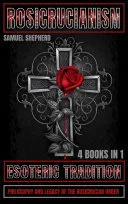
Samuel Shepherd's compilation, *Rosicrucianism*, serves as a sturdy, if somewhat dry, introduction to a complex tradition. The strength lies in its systematic presentation of core ideas, particularly its detailed breakdown of the symbolic language inherent in Rosicrucian philosophy. For instance, the section on the rose and cross motif, while not groundbreaking, is meticulously explained, anchoring the reader in specific imagery. However, the work occasionally suffers from an overabundance of historical speculation, particularly concerning the Order's earliest days. While the book attempts to cover a broad scope, it sometimes feels like a survey rather than a deep engagement with the lived experience of Rosicrucian practice. Shepherd's reliance on secondary sources, while necessary given the scarcity of primary material from the earliest periods, means the reader is always one step removed from the direct initiatory voice. Nevertheless, for those seeking a structured overview of Rosicrucian thought, this collection provides a solid, fact-based foundation.
📝 Description
81
Samuel Shepherd's compilation gathers Rosicrucian texts, tracing the order's spiritual inquiry and esoteric knowledge.
This volume presents a collection of Rosicrucian writings, detailing the movement's origins and its evolution. It examines the philosophical ideas, symbolic systems, and personal practices associated with Rosicrucian teachings. The book aims to give a thorough account for those interested in this Western mystery tradition.
The work is intended for individuals studying Western esotericism, those curious about the history of secret societies, and practitioners seeking a deeper grasp of symbolic frameworks. It appeals to readers who value careful scholarship and in-depth textual study, focusing on the central principles of Rosicrucian philosophy rather than surface-level interpretations. Both new students and experienced researchers will find value here.
Shepherd places Rosicrucianism within the context of Renaissance thought, Hermeticism, and Christian Kabbalah. The book discusses the movement's beginnings, often tied to the 1614 publication of the *Fama Fraternitatis*, and its later impact on figures like Heinrich Khunrath and subsequent Masonic and alchemical circles. It notes the secretive nature of early Rosicrucian activity and the difficulty in separating historical accounts from myth.
This book situates Rosicrucianism within the Western Esoteric Tradition, specifically connecting it to Renaissance Hermeticism and Christian Kabbalah. It explores the historical emergence of the movement, notably around the *Fama Fraternitatis*, and its subsequent influence on alchemical and Masonic thought. The text acknowledges the challenges in reconstructing its early history due to its clandestine nature.
💡 Why Read This Book?
• Gain a foundational understanding of Rosicrucian principles, including the symbolic significance of the rose and cross, as presented in the text's detailed examinations of their philosophical meaning. • Explore the historical lineage of Rosicrucianism, connecting its origins to the intellectual milieu of the 17th century and understanding its influence on subsequent esoteric movements. • Appreciate the structured approach to spiritual development outlined in the book, offering a practical framework for inner transformation and the pursuit of esoteric knowledge.
⭐ Reader Reviews
Honest opinions from readers who have explored this book.
❓ Frequently Asked Questions
When was Rosicrucianism first documented?
The earliest widely recognized Rosicrucian manifestos, the *Fama Fraternitatis* and *Confessio Fraternitatis*, were published in Germany in 1614 and 1615, respectively, marking the beginning of the movement's public presence.
What is the primary symbol of Rosicrucianism?
The most central symbol is the rose intertwined with a cross. This emblem represents the union of the material and spiritual, the terrestrial and the divine, and the unfolding of consciousness.
Who were some early figures associated with Rosicrucianism?
While concrete historical figures are debated, early Rosicrucian literature mentions figures like Christian Rosenkreutz, and later thinkers like Heinrich Khunrath and Robert Fludd engaged with its ideas.
Is Rosicrucianism related to alchemy?
Yes, Rosicrucianism is deeply intertwined with alchemical symbolism and philosophy, viewing spiritual alchemy as a path to inner transformation and the purification of the soul.
Does this book cover modern Rosicrucian organizations?
This collection primarily focuses on the historical tradition and foundational philosophical concepts of Rosicrucianism, rather than detailing specific modern groups or their contemporary practices.
What is the 'Great Work' in Rosicrucianism?
The 'Great Work' (Magnum Opus) in Rosicrucianism refers to the process of spiritual transformation and self-realization, often paralleled with the alchemical process of transforming base metals into gold.
🔮 Key Themes & Symbolism
The Rosicrucian Manifestos
This work studies the foundational texts, the *Fama Fraternitatis* (1614) and the *Confessio Fraternitatis* (1615), which publicly announced the existence of the Rosicrucian Order. It analyzes their allegorical narratives, their call for spiritual and intellectual reform in Europe, and their role in sparking widespread interest and debate across the continent.
Symbolism of the Rose and Cross
A core element examined is the potent symbolism of the rose and the cross. The book interprets this emblem as representing the union of opposites—the feminine (rose) and the masculine (cross), the material and the spiritual, the inner and the outer. It explores how this symbol functions as a map for spiritual transformation.
Spiritual Alchemy
The text connects Rosicrucianism to the principles of spiritual alchemy, viewing the alchemical Great Work not as a literal transmutation of metals, but as an inner process of purifying the soul and achieving divine consciousness. It highlights the parallels between alchemical stages and the journey of the Rosicrucian aspirant.
The Quest for Hidden Knowledge
Rosicrucianism is presented as a tradition dedicated to the pursuit of hidden or Gnostic knowledge, seeking esoteric truths veiled in ancient wisdom. The book discusses the Rosicrucian ideal of a brotherhood dedicated to preserving and transmitting this knowledge for the betterment of humanity.
💬 Memorable Quotes
Direct passages from the work, attributed to the author.
“The Order's purpose was the reformation of mankind.”
— This highlights the Rosicrucian ideal of societal and spiritual improvement, suggesting their teachings were intended not just for personal enlightenment but for a wider, beneficial impact on the world.
“The rose symbolizes the heart's unfolding.”
— This interpretation focuses on the rose as a metaphor for spiritual awakening and the development of love and compassion, a central theme in the inner work of Rosicrucianism.
“Christian Rosenkreutz is the legendary founder.”
— This points to the central, almost mythical, figure of Christian Rosenkreutz, whose supposed life and travels form the narrative backbone of the early Rosicrucian accounts.
“Symbolism provides a language for the ineffable.”
— This emphasizes the crucial role of symbolic representation in Rosicrucianism, allowing practitioners to articulate and engage with spiritual concepts that transcend ordinary language.
“Initiation marks a transformation of consciousness.”
— This suggests that the path within Rosicrucianism involves distinct stages of development, each marked by a profound shift in the individual's perception and understanding of reality.
🌙 Esoteric Significance
Tradition
Rosicrucianism sits within the Western Esoteric Tradition, drawing heavily from Hermeticism, Neoplatonism, and Christian Kabbalah. This work positions it as a bridge, attempting to synthesize Gnostic, alchemical, and mystical Christian elements into a coherent system for spiritual advancement.
Symbolism
Key symbols explored include the rose, representing the heart, love, and the unfolding of divine potential, and the cross, symbolizing the material plane and the human condition. Their fusion signifies the Rosicrucian path of integrating spirit and matter, achieving wholeness through the union of opposites.
Modern Relevance
Contemporary thinkers and practitioners in Western esotericism, particularly those within Hermetic orders and related philosophical circles, continue to draw upon Rosicrucian symbolism and concepts. The emphasis on inner transformation, symbolic language, and spiritual alchemy remains relevant for modern spiritual seekers.
👥 Who Should Read This Book
• Students of Western Esotericism seeking a structured overview of Rosicrucian philosophy and its historical roots. • Researchers interested in the history of secret societies and their impact on European intellectual history following the 17th century. • Individuals drawn to symbolic systems and spiritual alchemy as paths to personal growth and understanding.
📜 Historical Context
Samuel Shepherd's *Rosicrucianism* emerges from a fertile period of renewed interest in esoteric traditions following the Enlightenment. While the Rosicrucian manifestos first appeared in the early 17th century (1614-1615), this compilation engages with their legacy as it filtered through later centuries. The work situates Rosicrucianism amidst the intellectual currents of Hermeticism, Kabbalah, and early speculative Freemasonry, movements that often sought to synthesize diverse spiritual and philosophical streams. It implicitly contrasts the Rosicrucian ideal with more dogmatic religious or purely rationalistic philosophical systems prevalent during the periods of its influence. The text acknowledges the difficulty in tracing a continuous, unbroken line from the 17th-century publications to later Rosicrucian organizations, a common challenge in the study of Western mystery schools.
📔 Journal Prompts
The symbolism of the rose and cross: Consider its dual nature.
Reformation of mankind: What does this ideal mean today?
The Great Work: Reflect on its personal significance.
Hidden knowledge: How is it preserved and transmitted?
The balance of spirit and matter: Explore your own experiences.
🗂️ Glossary
Fama Fraternitatis
One of the foundational manifestos of Rosicrucianism, published in 1614, which announced the existence of a secret society and its quest for universal knowledge.
Confessio Fraternitatis
A second Rosicrucian manifesto, published in 1615, which further elaborated on the Order's aims and principles, responding to public interest and criticism.
Christian Rosenkreutz
The legendary founder of the Rosicrucian Order, whose life and travels are described in the early manifestos, though his historical existence is debated.
Spiritual Alchemy
The practice of inner transformation and purification of the soul, paralleled with the alchemical process of creating the philosopher's stone.
Theurgy
A system of ritual magic or divine work aimed at invoking divine presence or achieving spiritual union.
Hermeticism
A philosophical and religious tradition based on writings attributed to Hermes Trismegistus, emphasizing divine wisdom and the interconnectedness of all things.
Gnosis
Spiritual knowledge or insight, particularly a knowledge of the divine that offers salvation or liberation from the material world.