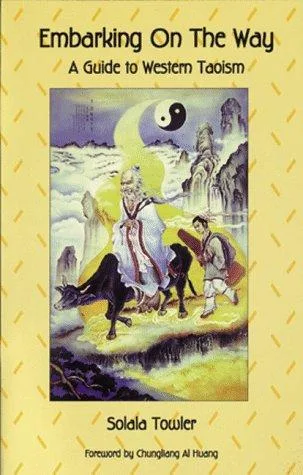
Embarking on the Way
 79
79

Embarking on the Way
Solala Towler’s "Embarking on the Way" approaches the vast landscape of spiritual practice with a gentle, invitational tone. Unlike many guides that proselytize a singular path, Towler skillfully sketches the contours of numerous traditions, highlighting their shared human impulse toward the transcendent. The strength of the book lies in its accessibility; it demystifies complex spiritual concepts without sacrificing their depth. For instance, the section on "right livelihood" offers practical, grounded advice that transcends mere ethical platitudes, framing work itself as a potential avenue for spiritual practice. A limitation, however, is that in its breadth, some readers might find the explorations too brief, yearning for a deeper dive into specific traditions. Nevertheless, the work succeeds in its aim to be a companion for the seeker, offering a calm harbor for contemplation in a often-turbulent spiritual sea.
📝 Description
79
Published in 1998, Solala Towler's 'Embarking on the Way' offers a guide to diverse spiritual paths.
This book presents a series of contemplations and practices designed to foster personal growth and spiritual awareness. It does not favor a single dogma, instead highlighting common threads and unique expressions found across different spiritual traditions. The work is intended as a companion for individuals seeking to deepen their connection to the sacred. It suits beginners exploring various paths and seasoned practitioners looking for fresh perspectives. Readers interested in comparative religion, mysticism, and personal spiritual development will find value here. Those who appreciate reflective writing and practical exercises for introspection are also likely to connect with its contents. The text encourages a personal exploration of faith, moving beyond rigid doctrines to embrace a more fluid and experiential relationship with the divine. It emphasizes cultivating inner peace and understanding through various contemplative practices.
Published in 1998, 'Embarking on the Way' appeared during a time of growing interest in New Age spirituality and interfaith dialogue. The late 20th century saw a significant increase in accessible esoteric literature. Towler's work contributed to this trend by providing an approachable entry point to diverse spiritual concepts. It aligns with a broader movement towards interspiritual approaches, drawing from various mystical traditions.
💡 Why Read This Book?
• You will learn to identify and cultivate your "inner teacher," a concept central to Towler's approach, providing a unique internal compass for spiritual decision-making, distinct from dogma. • You will gain practical methods for "right livelihood," transforming everyday work into a contemplative practice, a specific application of spiritual principles to daily life introduced in the book. • You will explore the commonalities across diverse spiritual paths, fostering an interspiritual perspective that encourages personal faith development beyond rigid, singular doctrines, as exemplified by the book's comparative approach.
⭐ Reader Reviews
Honest opinions from readers who have explored this book.
❓ Frequently Asked Questions
When was 'Embarking on the Way' first published?
'Embarking on the Way' by Solala Towler was first published in 1998, placing it within a period of increased interest in interfaith and New Age spirituality.
What is the 'inner teacher' concept in 'Embarking on the Way'?
The 'inner teacher' is a core concept, representing an intuitive, guiding presence within each individual that offers wisdom and direction on one's spiritual path.
Does 'Embarking on the Way' focus on one specific religion?
No, the book explores a variety of spiritual paths and traditions, focusing on their commonalities and the universal human quest for meaning rather than adhering to a single dogma.
What kind of practices does the book suggest?
The book suggests contemplative practices such as meditation, prayer, and mindful engagement with daily life, including the concept of 'right livelihood'.
Who is Solala Towler?
Solala Towler is an author and spiritual teacher known for works that encourage personal spiritual exploration and understanding across different traditions.
Is 'Embarking on the Way' suitable for beginners in spirituality?
Yes, its accessible language and broad exploration of spiritual concepts make it a good starting point for individuals new to spiritual inquiry and comparative traditions.
🔮 Key Themes & Symbolism
The Inner Teacher
A central theme is the cultivation of the 'inner teacher,' an internal source of wisdom and guidance. Towler posits that each person possesses this innate capacity, distinct from external religious authorities or doctrines. The book provides contemplative exercises designed to help readers access and strengthen this internal compass, fostering self-reliance and intuitive discernment in their spiritual journey. This concept emphasizes a personalized approach to spirituality, encouraging individuals to trust their own inner knowing as they navigate life's questions and challenges.
Right Livelihood
This theme reframes work not merely as a means of sustenance but as a potent spiritual practice. Towler encourages readers to examine their vocations through a contemplative lens, seeking alignment between their work and their values. The book explores how one can bring mindfulness, integrity, and a sense of purpose to their professional activities, thereby transforming employment into a path of service and self-discovery. It suggests that engaging in "right livelihood" contributes to a more integrated and spiritually fulfilling life.
Comparative Spirituality
Rather than advocating for a single religious or spiritual system, 'Starting the Way' engages in a comparative exploration of various traditions. Towler highlights the shared human aspirations and universal truths found across different spiritual expressions, from Eastern mysticism to Western contemplative practices. This approach aims to foster an interspiritual perspective, encouraging readers to appreciate the richness and diversity of human religious experience and to find resonance across different paths.
Contemplative Practice
The book offers practical guidance on various forms of contemplative practice, including different styles of meditation and prayer. It emphasizes the importance of stillness, introspection, and direct experience of the divine or the sacred. Towler suggests that these practices are essential tools for quieting the mind, fostering self-awareness, and cultivating a deeper connection to oneself and the wider universe. The emphasis is on experiential knowing over intellectual assent.
💬 Memorable Quotes
Direct passages from the work, attributed to the author.
“The path is not found 'out there,' but rather emerges from within.”
— This statement emphasizes the internal nature of spiritual discovery. It suggests that true spiritual progress comes from introspection and self-awareness, rather than solely relying on external teachings or seeking enlightenment in external circumstances.
“Stillness is the fertile ground for inner knowing.”
— This highlights the importance of quietude and meditation. It suggests that in moments of inner silence, one is best able to access their intuition and higher wisdom, facilitating spiritual insight.
“Each tradition offers a unique lens on the same universal mystery.”
— This interpretation underscores the book's theme of comparative spirituality, suggesting that diverse religious and spiritual paths, while different in form, all point towards a shared, fundamental reality or divine essence.
“Listen to the quiet voice of your inner teacher.”
— This is an encouragement to trust one's intuition and inner guidance system. It promotes self-trust and discernment, positioning the 'inner teacher' as a reliable source of wisdom.
💡 Key Ideas
Editorial paraphrase of the work's core concepts — not direct quotes.
Right livelihood is work that aligns with your deepest values.
This paraphrased concept defines 'right livelihood' as a practice where one's professional activities are in harmony with their core ethical and spiritual principles, fostering a sense of purpose and integrity.
🌙 Esoteric Significance
Tradition
This work aligns with the broader modern esoteric movement, particularly its interest in comparative mysticism and personalized spirituality. While not strictly adhering to a single lineage like Hermeticism or Kabbalah, it draws from the universalist currents found in traditions that emphasize inner experience and the divine immanence. It fits within the post-Theosophical landscape that sought to synthesize diverse spiritual teachings into accessible formats for Western seekers.
Symbolism
The concept of the "inner teacher" functions as a potent symbol of the divine spark or higher self, present within all individuals, a motif common in Gnostic and Hermetic thought. The "path" itself symbolizes the journey of spiritual development, often depicted as a winding road or a process of unfolding. "Right livelihood" can be seen as symbolizing the integration of the spiritual into the material world, where daily actions become sacred acts.
Modern Relevance
In contemporary spiritual circles, 'Starting the Way' remains relevant for its encouragement of interspiritual understanding and its focus on cultivating inner wisdom. Thinkers and practitioners interested in the "Spiritual But Not Religious" (SBNR) movement find Towler's approach validating. Its emphasis on the "inner teacher" appeals to modern mindfulness and self-discovery practices, while its exploration of diverse traditions appeals to those engaged in comparative religion or seeking to build a personalized spiritual practice.
👥 Who Should Read This Book
• Seekers exploring multiple spiritual traditions: Individuals curious about different religious and mystical paths will find a non-dogmatic overview that encourages personal discernment. • Beginners in contemplative practice: Those new to meditation, prayer, or introspection can utilize the book's accessible guidance and practical exercises. • Individuals questioning traditional religious structures: Readers seeking a spiritual path that emphasizes personal experience and inner authority over external dogma will appreciate its approach.
📜 Historical Context
Published in 1998, 'Starting the Way' emerged during a period of significant spiritual exploration and diversification in Western culture. The late 20th century witnessed a surge in interest in alternative spiritualities, Eastern religions, and New Age thought, moving many people beyond traditional religious frameworks. This era was characterized by a growing openness to interfaith dialogue and a search for personal meaning outside of established institutions. Solala Towler's work contributed to this milieu by offering accessible contemplations on a range of spiritual practices and concepts. It arrived at a time when authors like Marianne Williamson were popularizing spiritual self-help and Deepak Chopra was introducing Eastern philosophies to a mainstream audience. The book's emphasis on personal experience and inner guidance resonated with a generation seeking direct connection rather than mediated dogma, positioning it as a gentle guide within the broader field of contemporary spirituality.
📔 Journal Prompts
Reflections on the nature of your "inner teacher" and how it communicates.
Exploring the alignment of your current work with your core values.
Identifying common threads between different spiritual traditions you are familiar with.
The role of stillness in accessing deeper self-understanding.
How can daily actions become a form of spiritual practice?
🗂️ Glossary
Inner Teacher
An internal, intuitive source of wisdom and guidance within each individual, distinct from external doctrines or authorities. It represents one's innate spiritual knowing.
Right Livelihood
The practice of engaging in work that is in alignment with one's deepest ethical and spiritual values, transforming employment into a path of purpose and integrity.
Contemplation
A form of prayer or meditation focused on deep reflection, quiet observation, and direct experience of the divine or spiritual truths, rather than intellectual analysis.
Interspiritual
Relating to or characterized by an understanding and appreciation of the commonalities and diverse expressions of various spiritual and religious traditions.
Discernment
The ability to judge well, especially in matters of spirituality; the process of distinguishing between different spiritual influences or insights.
Spiritual Path
The personal journey of spiritual growth and development, often involving exploration of beliefs, practices, and one's relationship with the sacred or ultimate reality.
Divine Immanence
The belief that the divine is present within the material universe and human experience, rather than being entirely transcendent or separate.
🔮 Readers Also Liked
Browse all →









More by Solala Towler
All books →


More Free Occult Philosophy Books
View all →