The Atlantis code

 81
81

The Atlantis code
Charles Brokaw's 'The Atlantis code' attempts to reconstruct a lost civilization from fragments of myth and esoteric lore. The book's strength lies in its comprehensive cataloging of disparate sources, linking Plato's dialogues to obscure archaeological finds. However, its primary limitation is the speculative leap required to connect these elements into a cohesive historical account. Brokaw's exploration of the Atlantean 'energetic imprint' on certain geological sites, for instance, is imaginative but lacks empirical substantiation. The work presents a compelling, if unproven, thesis on the potential survival of Atlantean knowledge. Ultimately, 'The Atlantis code' functions more as a speculative philosophical inquiry than a factual historical treatise.
📝 Description
81
Charles Brokaw's 2009 book, The Atlantis code, investigates the Atlantis myth as a source of lost knowledge.
Published in 2009, The Atlantis code by Charles Brokaw treats the Atlantis myth not as simple legend, but as a potential reservoir of forgotten knowledge and advanced civilization. The author connects this myth to subsequent human cultures, identifying links between ancient stories, archaeological puzzles, and esoteric traditions across the globe. Brokaw probes the idea that Atlantean influence shaped later human societies.
This book is for readers interested in alternative historical accounts and the philosophical ideas behind ancient societies. It suits those who question standard historical accounts and consider the possibility that some ancient cultures held knowledge beyond our current grasp. Readers who enjoy ancient mysteries, comparative mythology, and esoteric philosophy will find much to consider.
The Atlantis code fits within a tradition of writers seeking evidence for a lost, advanced precursor civilization. This approach often stands apart from mainstream academic archaeology. Brokaw's work engages with concepts like the Akashic records, earth changes, and the idea of lost ancient technologies and spiritual practices. It suggests that remnants of Atlantean wisdom might have survived through select groups, impacting global spiritual and cultural trajectories.
💡 Why Read This Book?
• Gain insight into the concept of the 'Atlantean blueprint' and how Brokaw suggests its energetic residues might influence modern consciousness, offering a unique perspective on collective memory. • Understand the book's specific interpretation of Plato's 'Critias' and 'Timaeus' dialogues as coded historical accounts, providing a different lens for examining ancient philosophical texts. • Explore Brokaw's theorized links between Atlantean civilization and specific archaeological sites, such as the Bimini Road, which he uses as tangible evidence for lost Atlantean presence.
⭐ Reader Reviews
Honest opinions from readers who have explored this book.
❓ Frequently Asked Questions
When was Charles Brokaw's 'The Atlantis code' first published?
Charles Brokaw's 'The Atlantis code' was first published in 2009, entering a landscape of esoteric literature interested in ancient civilizations and lost knowledge.
What is the main premise of 'The Atlantis code'?
The book's central premise is that the legend of Atlantis represents a real, advanced civilization whose knowledge and influence persist in subtle ways throughout history and on global consciousness.
Does the book offer concrete proof of Atlantis?
Brokaw's work presents speculative arguments and interpretations of ancient texts and anomalies, rather than definitive archaeological proof, inviting readers to consider possibilities beyond conventional history.
What esoteric traditions does 'The Atlantis code' draw upon?
The book references concepts found in various esoteric traditions, including ideas about lost knowledge, ancient wisdom keepers, and the energetic imprints of past civilizations, often aligning with New Age and speculative historical thought.
Who is the author Charles Brokaw?
Charles Brokaw is an author known for his work exploring esoteric themes, ancient mysteries, and speculative theories about lost civilizations, with 'The Atlantis code' being a significant entry in his bibliography.
What kind of reader would appreciate 'The Atlantis code'?
Readers interested in Atlantis, ancient myths, comparative religion, alternative history, and speculative esotericism, who enjoy exploring theories beyond mainstream academic consensus, would likely find this book engaging.
🔮 Key Themes & Symbolism
Elements of Atlantean Knowledge
The work explores the persistent idea that remnants of Atlantean wisdom, particularly in areas of advanced science and spiritual discipline, were not entirely lost. Brokaw suggests these fragments may have influenced subsequent human development, appearing in various ancient cultures and esoteric teachings. The book posits that understanding these echoes is key to unlocking deeper human potential and historical truths, framing Atlantis not just as a place but as a source of enduring conceptual frameworks.
Myth as Historical Record
A core theme is the reinterpretation of ancient myths, particularly Plato's account of Atlantis, not as allegory but as a distorted historical record. Brokaw examines how universal symbols and narratives across disparate cultures might point to a shared, ancient origin. This perspective challenges conventional historical methodology, suggesting that symbolic language holds vital clues to forgotten epochs and lost civilizations, urging a symbolic-literal approach to ancient texts.
Geological Cataclysm and Civilization
The book looks at theories of planetary cataclysms and their role in the rise and fall of civilizations, with Atlantis serving as the prime example. It investigates geological evidence and ancient accounts of floods and upheavals to support the notion that major environmental events shaped human history profoundly. This theme connects the physical destruction of Atlantis to the scattering of its knowledge and the subsequent trajectory of human societal evolution.
Energetic Imprints and Consciousness
Brokaw explores the concept of 'energetic imprints' left by advanced civilizations or significant historical events. The book suggests that certain locations, artifacts, or even lineages retain a psychic or energetic residue of Atlantean civilization. This idea posits a non-physical continuity, where the influence of Atlantis transcends material remnants and affects human consciousness and spiritual development in subtle, pervasive ways across millennia.
💬 Memorable Quotes
Direct passages from the work, attributed to the author.
“The elements of Atlantis are not merely stories; they are encoded in the very fabric of our collective memory and the planet's geological history.”
— This statement expresses Brokaw's central argument that the Atlantean civilization left a profound, lasting impact that can be perceived through historical records, myths, and even the Earth's physical structure.
“Plato’s dialogues offer more than philosophy; they are veiled historical accounts waiting for the right key to unlock their true meaning.”
— This highlights the book's approach to ancient texts, viewing them not just as philosophical treatises but as potentially coded historical documents that require an esoteric interpretation to reveal hidden truths about lost eras.
“Certain geological formations and submerged structures serve as tangible markers of a civilization that predates our accepted timelines.”
— This reflects Brokaw's use of archaeological anomalies and geological features, like the Bimini Road, as evidence to support the existence of advanced, ancient civilizations that challenge conventional historical chronologies.
“Understanding the Atlantean energetic imprint is crucial for comprehending the patterns of human spiritual evolution.”
— This points to the book's exploration of the non-physical legacy of Atlantis, suggesting that its influence continues to shape human consciousness and spiritual development in ways that are not immediately apparent but are nonetheless significant.
💡 Key Ideas
Editorial paraphrase of the work's core concepts — not direct quotes.
The cataclysm that submerged Atlantis also scattered the seeds of its advanced knowledge across the ancient world.
This paraphrased concept emphasizes the theory that the destruction of Atlantis was also an event that disseminated its wisdom, suggesting that elements of Atlantean civilization influenced various subsequent cultures and spiritual traditions.
🌙 Esoteric Significance
Tradition
The Atlantis code fits within the broader esoteric tradition of seeking lost ancient wisdom, often associated with Theosophy and New Age thought, which posits a highly advanced precursor civilization. While not strictly adhering to any single lineage like Hermeticism or Gnosticism, it draws on the common esoteric theme of cyclical history and hidden knowledge that predates current human understanding. Brokaw's work departs by focusing intensely on Atlantis as the singular, archetypal source of this lost knowledge, integrating geological and mythological interpretations.
Symbolism
Central symbols include Plato's description of Atlantis, particularly its concentric rings of land and water, often interpreted as representing cosmic order or stages of spiritual development. The concept of advanced Atlantean technology, though often vaguely defined, symbolizes a lost mastery over natural forces and consciousness. Furthermore, the idea of cataclysm serves as a potent symbol for transformation and the cyclical nature of existence, signifying the end of an era and the potential for rebirth or descent.
Modern Relevance
Contemporary thinkers and practitioners in fields like consciousness studies, alternative history, and certain branches of spiritual psychology find resonance in Brokaw's exploration of collective memory and energetic imprints. The book's ideas about lost knowledge and the potential for rediscovering ancient wisdom align with modern quests for meaning and alternative paradigms. While not always cited directly, the underlying themes of a forgotten golden age and the possibility of hidden histories continue to inform discussions in esoteric communities and among independent researchers.
👥 Who Should Read This Book
• Students of comparative mythology and ancient legends who are eager to explore speculative theories connecting global myths to a single, lost civilization. • Enthusiasts of alternative history and archaeology seeking to examine evidence and arguments that challenge mainstream historical narratives and timelines. • Esoteric philosophy readers interested in the concept of lost ancient wisdom and its potential influence on human consciousness and spiritual development across millennia.
📜 Historical Context
Published in 2009, Charles Brokaw's 'The Atlantis code' emerged within a continuing wave of interest in ancient civilizations, a field significantly shaped by earlier works like Ignatius Donnelly's 'Atlantis: The Antediluvian World' (1882). This period saw a popular fascination with esoteric theories and alternative historical narratives, often fueled by the internet's accessibility to diverse information. Brokaw's work engaged with a broader intellectual current that questioned established archaeological timelines and sought empirical or symbolic evidence for lost, advanced societies. While academic archaeology generally maintained a skeptical stance towards Atlantis, works like Brokaw's tapped into a readership seeking explanations beyond conventional frameworks. The book's approach can be seen as a continuation of speculative historical inquiry, drawing parallels with the burgeoning New Age movement and its interest in ancient wisdom traditions, without direct engagement with specific academic critiques or contemporary scholars in the same vein.
📔 Journal Prompts
The concept of the 'Atlantean blueprint' and its potential influence on modern consciousness.
Reflect on Plato's descriptions of Atlantis and how they might be interpreted as veiled historical accounts.
Consider the idea of geological cataclysms shaping civilizations and their subsequent impact on knowledge dissemination.
Explore the theory of 'energetic imprints' left by lost civilizations and their perceived effect on specific locations.
Analyze how universal symbols and narratives across cultures might point to a shared, ancient origin as suggested in the book.
🗂️ Glossary
Atlantean Blueprint
The underlying pattern or structure of knowledge, societal organization, and spiritual understanding believed to have existed in the lost civilization of Atlantis.
Energetic Imprint
A residual psychic or energetic trace left behind by significant events, civilizations, or individuals, believed by some esoteric traditions to influence subsequent environments or consciousness.
Plato's Dialogues
Philosophical texts written by the ancient Greek philosopher Plato, notably 'Timaeus' and 'Critias,' which contain the earliest known narrative of the mythical island of Atlantis.
Geological Cataclysm
A large-scale, destructive event affecting the Earth's surface, such as massive floods, volcanic eruptions, or earthquakes, theorized to have caused the destruction of ancient civilizations like Atlantis.
Comparative Mythology
The study of myths and legends from different cultures to identify common themes, symbols, and origins, often used to support theories of a shared ancient history.
Esoteric Traditions
Systems of belief and practice focused on hidden knowledge or inner spiritual experience, often passed down through select groups, which may include concepts of lost wisdom and ancient civilizations.
Akashic Records
In some esoteric philosophies, a compendium of all universal events, thoughts, and emotions that have ever occurred or will occur. The book may reference this as a potential source of knowledge about Atlantis.
🔮 Readers Also Liked
Browse all →









More by Charles Brokaw
All books →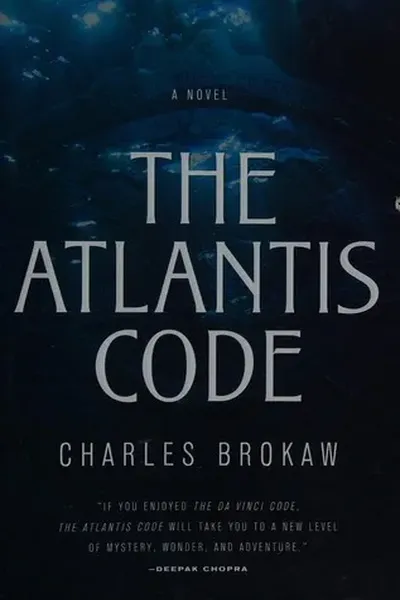
More Free Occult Philosophy Books
View all →