The Astral World
 76
76

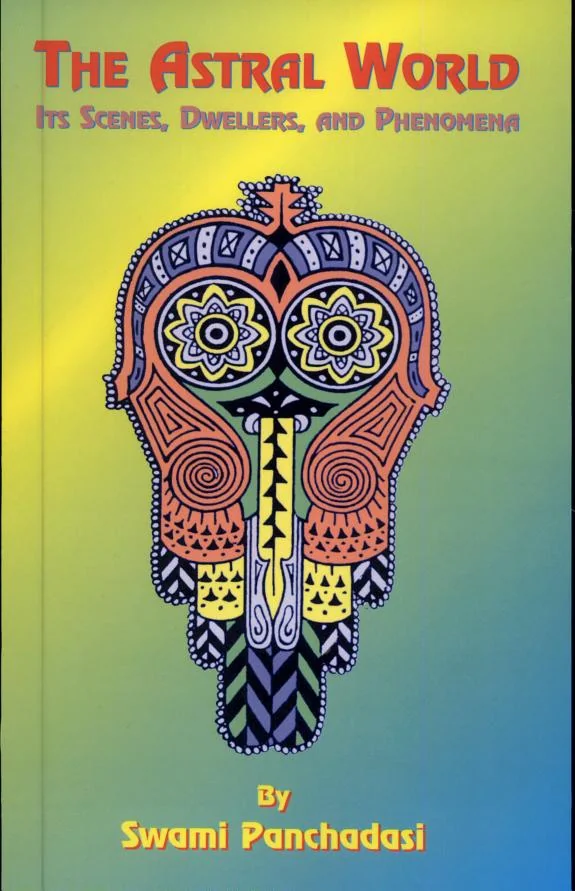
The Astral World
Swami Panchadasi's The Astral World is a remarkably compact manual for navigating the non-physical. Its strength lies in its directness; within its 100 pages, the author provides what feels like a seasoned traveler's itinerary for the astral planes. The book's structure, moving from foundational ideas to more advanced concepts, is commendable, avoiding the overwhelming nature often associated with such subjects. I particularly appreciated the clarity with which the author describes the composition of the astral body and the mechanics of astral travel, presenting it as an achievable skill rather than a mystical attainment. However, the brevity, while an advantage for accessibility, can sometimes feel like a limitation. Certain complex ideas are introduced rapidly, and readers accustomed to more extensive explanations might desire further elaboration. For instance, the discussion on "thought-forms" is concise but leaves one wanting more specific examples of their creation and dissolution. Despite this, the work offers a potent and practical framework for exploration.
The Astral World provides a clear, actionable guide to the subtle realms.
📝 Description
76
Swami Panchadasi's 2000 book, The Astral World, maps the non-physical planes.
The Astral World, by Swami Panchadasi, offers a practical guide to the subtle planes of existence. Published in 2000, this relatively brief work systematically introduces readers to the astral realm. Panchadasi, an Indian spiritual master, bases the book on his own experiences, presenting it as a navigational tool for those interested in consciousness beyond the physical body.
The book progresses from fundamental ideas to more complex teachings. This structure makes it accessible for individuals new to esoteric concepts, while also providing sufficient detail for those already familiar with such subjects. Panchadasi aims to equip readers with the knowledge to engage actively with astral phenomena, rather than just understanding them intellectually.
It is suitable for beginners seeking an introduction to astral projection and the subtle anatomy of consciousness. It also serves practitioners looking for a clear set of principles. Readers interested in comparative spirituality, Eastern metaphysics, or practical consciousness studies will find its direct approach useful.
Emerging at the turn of the millennium, The Astral World arrived during a period of increased interest in Eastern philosophies within Western esotericism. While earlier movements like Theosophy had established cosmologies of multiple planes, Panchadasi's work emphasizes a more direct, experiential mapping of the astral. It distinguishes itself by focusing on practical application and personal experience, moving beyond purely theoretical discussions and reflecting a broader shift towards embodied spiritual knowledge.
💡 Why Read This Book?
• You will learn a structured method for understanding the astral body and its potential for independent travel, as detailed in the book's systematic progression from simple to advanced concepts. • You will gain insight into the layered nature of the astral planes and the "thought-forms" that inhabit them, directly from an author claiming personal experience and mapping these realms. • You will discover practical techniques for engaging with the astral world, presented as a "map" by Swami Panchadasi, enabling you to move from passive reading to active exploration.
⭐ Reader Reviews
Honest opinions from readers who have explored this book.
❓ Frequently Asked Questions
What is the primary purpose of Swami Panchadasi's "The Astral World"?
The book serves as a practical guide and "map" for understanding and navigating the astral planes. It aims to demystify astral projection and the non-physical dimensions for both beginners and more experienced seekers, drawing on the author's purported firsthand knowledge.
How does "The Astral World" differ from other books on astral projection?
Published in 2000, its conciseness (100 pages) and structured, gradual approach from simple to advanced topics distinguish it. It emphasizes a direct, experiential perspective, offering a Western audience a potentially missing dimension from traditional Eastern spiritual masters.
Is "The Astral World" suitable for someone with no prior knowledge of esoteric subjects?
Yes, the author specifically structured the book to cater to curious beginners. It progressively introduces concepts like the astral body and planes, making complex ideas accessible without assuming prior esoteric education.
What kind of "map" does the book provide?
The "map" refers to the book's detailed explanation of the astral planes, their inhabitants (like thought-forms), and the mechanics of astral travel. It's intended to guide readers through these dimensions safely and effectively.
When was "The Astral World" first published?
The book was first published in the year 2000, placing it within the context of late 20th and early 21st-century esoteric literature.
What does the author mean by 'what is missing from the traditional western perspective'?
This likely refers to a more direct, experiential, and less dogmatic approach to understanding the astral. The author, an Indian spiritual master, offers insights potentially less emphasized in Western philosophical or religious traditions, focusing on practical application.
🔮 Key Themes & Symbolism
Astral Body and Travel
The work centers on the concept of the "astral body," a subtle vehicle distinct from the physical form, capable of independent locomotion. Panchadasi presents astral projection not as a rare phenomenon but as an attainable skill. The book acts as a guide, detailing the nature of this body and the processes involved in separating it from the physical, enabling exploration of non-physical dimensions. This theme is crucial for understanding the practical applications of the text, moving beyond theoretical cosmology to personal experience.
Structure of the Astral Planes
A significant focus is placed on mapping the "astral planes," described as distinct realms or states of consciousness. The book delineates these levels, offering a framework for understanding the environment one encounters during astral experiences. It discusses the characteristics of these planes, the entities or "thought-forms" that may be present, and the "astral light" as a fundamental medium. This provides readers with a conceptual structure to orient themselves within the non-physical.
Thought-Forms and Mental Constructs
The creation and influence of "thought-forms" are explored as key components of the astral environment. Panchadasi explains how concentrated thought can manifest as semi-independent entities or influences within these planes. Understanding thought-forms is presented as vital for reading through the astral safely and effectively, as they can impact the traveler's experience. This aspect highlights the psychological and energetic principles at play in the higher dimensions.
The Indian Spiritual Master's Perspective
The author's background as an Indian spiritual master provides a unique lens, offering insights potentially differing from traditional Western esoteric thought. The book bridges Eastern metaphysical concepts with practical guidance, aiming to fill perceived gaps in Western understanding. This perspective emphasizes direct experience and inner wisdom, framing the astral world as an accessible aspect of consciousness rather than a purely abstract or inaccessible realm.
💬 Memorable Quotes
Direct passages from the work, attributed to the author.
“He has been there and returned, providing a useful map.”
— This concise statement emphasizes the author's purported direct experience with the astral world, positioning the book as a practical, reliable guide based on firsthand knowledge rather than speculation.
“structured to go gradually from simple to advanced information”
— This highlights the pedagogical design of the book, indicating that it systematically builds understanding of complex esoteric concepts, making it accessible for newcomers while offering depth.
“reveals much of what is missing from the traditional western perspective.”
— This suggests the author's work introduces unique insights or approaches to the astral realm, potentially offering a more holistic or experiential view than typically found in Western philosophical or religious traditions.
“A great book for curious beginners and serious seekers alike”
— This defines the intended audience, showcasing the book's versatility in catering to individuals at different stages of their spiritual or esoteric journey, from initial inquiry to dedicated practice.
“covers all aspects of the astral world.”
— This bold claim suggests the book offers a comprehensive overview of the subject matter, aiming to provide a complete foundational understanding within its focused scope.
🌙 Esoteric Significance
Tradition
The Astral World aligns with the broader Hermetic and Theosophical traditions that posit the existence of subtle planes of reality beyond the physical. It departs from purely philosophical Hermeticism by emphasizing direct, verifiable experience of these planes, akin to the practical focus found in some branches of Yoga or certain tantric traditions. While Theosophy provided detailed cosmologies, Panchadasi's work offers a more distilled, experiential "map," potentially making these concepts more accessible than the complex hierarchies outlined by figures like Helena Blavatsky.
Symbolism
A central symbol is the "astral body," representing the principle of consciousness separable from the physical form, often depicted as an ethereal or luminous double. The "astral planes" themselves function symbolically as layered states of consciousness or dimensions of existence, analogous to Dante's circles or the levels described in Kabbalistic cosmology, but approached experientially. "Thought-forms" act as symbols of the mind's creative power, demonstrating how mental energy manifests and shapes reality in these non-physical realms.
Modern Relevance
Contemporary practitioners of lucid dreaming, remote viewing, and various forms of consciousness exploration often draw upon the foundational concepts presented in works like The Astral World. Thinkers in the field of transpersonal psychology and researchers into altered states of consciousness may find its direct approach valuable. The book's emphasis on a personal "map" appeals to modern seekers who prioritize subjective experience and practical techniques for expanding awareness beyond conventional physical limitations.
👥 Who Should Read This Book
• Aspiring astral travelers seeking a clear, step-by-step guide to understanding the astral body and projection techniques, directly from an author claiming extensive experience. • Students of comparative spirituality interested in Eastern metaphysical perspectives on consciousness and the afterlife, particularly those looking for distilled wisdom from an Indian master. • Individuals exploring the nature of consciousness and reality beyond the physical world, who prefer practical, mapped-out information over abstract philosophical discourse.
📜 Historical Context
Published in 2000, Swami Panchadasi's The Astral World emerged during a period of significant interest in consciousness studies and alternative spiritualities. The preceding decades had seen the popularization of concepts like out-of-body experiences (OBEs) and astral projection, partly influenced by figures like Robert Monroe and the broader New Age movement. Unlike purely academic explorations or the dense cosmologies of earlier movements like Theosophy (founded 1875), Panchadasi's work offered a more direct, practical mapping of the astral. It engaged with a spiritual milieu that increasingly sought experiential knowledge. While not directly engaging with specific Western esoteric schools in detail, its accessible format and focus on personal exploration positioned it as a contemporary guide for individuals seeking to understand non-physical realities, potentially filling a niche for those finding earlier works too theoretical or inaccessible.
📔 Journal Prompts
The author's description of the astral body: how does this concept align with your current understanding of self?
Consider the "astral planes" as mapped by Panchadasi; what initial impressions or questions arise about their nature?
Reflect on the concept of "thought-forms" and their potential influence during sleep or meditation.
Panchadasi's claim of providing a "map": what are the key landmarks you anticipate encountering in your own explorations?
The "astral light" as described: how might this pervasive medium relate to intuition or psychic perception?
🗂️ Glossary
Astral Body
A subtle, non-physical body composed of finer matter, believed to be the vehicle of consciousness for experiences such as astral projection, dreams, and potentially life after physical death.
Astral Planes
Non-physical dimensions or states of consciousness that are layered and accessible through the astral body. These planes are often described as existing alongside the physical world but at a different vibratory rate.
Astral Projection
The intentional or unintentional separation of the astral body from the physical body, allowing consciousness to travel and perceive on the astral planes.
Thought-Forms
Manifestations of concentrated thought or emotion that take on a semi-independent existence within the astral planes. They can influence the environment and the experience of travelers.
Astral Light
A fundamental, pervasive medium within the astral planes, analogous to ether in the physical world. It is believed to be the substance through which consciousness operates and thought-forms are created.
Indian Spiritual Master
Refers to the author's background, implying a lineage of wisdom and direct spiritual experience originating from Eastern traditions, offering a perspective distinct from Western esotericism.
Esoteric
Relating to or accessible only by a relatively small number of people with a specialized knowledge or interest; pertaining to the hidden or inner meaning of something.
This book appears in 1 collection
🔮 Readers Also Liked
Browse all →









From the “Astral Projection” Collection
View all →








More Free Occult Philosophy Books
View all →