Religion of China
 81
81

Religion of China
Weber's "Religion of China" offers a densely argued sociological framework for understanding a civilization often viewed through simplistic lenses. His analysis of Confucianism's emphasis on social duty and ritual propriety, and how this shaped a particular kind of social order, remains a compelling starting point. He compellingly argues that while Confucianism provided stability, its very nature may have inhibited the development of a capitalism driven by individualistic innovation. One limitation is the inherent Western perspective; Weber's search for parallels to the Protestant Ethic can sometimes feel like an imposition of his own theoretical preoccupations onto Chinese culture, potentially overlooking indigenous dynamics. A particularly striking section discusses how the "magic" inherent in religious practice was gradually rationalized or separated from the dominant Confucian ethic, a process he sees as crucial for understanding social evolution. The book provides a potent, if dated, sociological lens through which to view Chinese religious and social history.
📝 Description
81
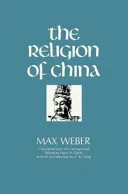
Max Weber's Religion of China, published posthumously in 1951, analyzes the religious life of imperial China.
Max Weber's "Religion of China" is a sociological study of Chinese religious traditions and their influence on economic behavior. First published in 1951, the book compiles Weber's extensive research and lectures on the subject, aiming to understand how specific ethical and social structures shaped economic development in China. Weber does not approach this as a theologian; rather, he examines the social functions and significance of religious beliefs and practices within Chinese society.
The work is grounded in comparative sociology, a field Weber helped shape. He sought to identify factors that either encouraged or restricted certain economic activities, drawing parallels and contrasts with his earlier work on Protestantism and capitalism. Key to his analysis are Confucianism and Taoism, which he scrutinizes for their impact on social organization and economic outlook. The book offers a systematic analysis of complex cultural phenomena, predating many modern interpretations of East Asian societies.
While not strictly an esoteric text in the occult sense, Weber's "Religion of China" engages with the philosophical and ethical underpinnings of a major world civilization. It examines how the deep structures of belief, particularly within Confucianism and Taoism, shaped social organization and economic rationales. This approach aligns with a broader esoteric interest in understanding the fundamental principles that guide human societies and their development, seeking meaning beyond surface appearances. Weber's sociological lens provides a framework for analyzing these foundational elements of Chinese culture.
💡 Why Read This Book?
• Understand the sociological impact of Confucianism on societal structure and ethics, as Weber details its role in shaping "Confucian bureaucracy" and its influence on daily life, offering a unique perspective on social order. • Gain insight into Weber's comparative method by examining his analysis of "ancestor worship" as a foundational element of familial and social obligation, and how this differs from Western religious structures. • Explore the interplay between "magic" and the development of ethical systems in China, as Weber traces how these forces evolved and influenced economic conduct, providing a framework for understanding religious rationalization.
⭐ Reader Reviews
Honest opinions from readers who have explored this book.
❓ Frequently Asked Questions
When was Max Weber's 'Religion of China' first published?
Max Weber's "Religion of China" was first published in 1951, several years after his death, compiled from his extensive research and notes.
What are the main religious traditions discussed in Weber's 'Religion of China'?
The primary religious traditions examined are Confucianism and Taoism, with significant discussion on ancestor worship and the role of magic in Chinese religious life.
What is the central argument of Max Weber's 'Religion of China' regarding economic development?
Weber's central argument explores how the ethical systems and social structures, particularly those associated with Confucianism, influenced or potentially hindered the development of a capitalist economy in China.
Is 'Religion of China' a theological study?
No, "Religion of China" is primarily a sociological analysis, focusing on the social functions, ethical implications, and cultural impact of religious beliefs and practices rather than their theological content.
What is the relationship between 'Religion of China' and 'The Protestant Ethic'?
Both works are part of Weber's broader comparative sociological project examining the relationship between religious ethics and economic behavior. 'Religion of China' applies this methodology to an East Asian context.
What historical period does Weber's analysis of Chinese religion primarily cover?
Weber's analysis largely focuses on imperial China, examining the religious and social structures that were dominant during that extensive historical period.
🔮 Key Themes & Symbolism
Confucian Bureaucracy and Ethics
Weber meticulously dissects the "Confucian bureaucracy" not just as a political structure but as a manifestation of a deeply ingrained ethical system. He emphasizes its focus on ritual propriety, social harmony, and duty, arguing this system, while providing stability, fostered a conservatism that may have impeded radical economic innovation. The ethos promoted by Confucianism, with its emphasis on tradition and established roles, is presented as a crucial factor in understanding China's historical trajectory.
Ancestor Worship's Social Role
The book treats "ancestor worship" as far more than a mere ritualistic practice; it's portrayed as a central to Chinese social organization and familial piety. Weber highlights how this practice reinforced kinship ties, cemented hierarchical structures within the family and society, and instilled a profound sense of obligation and continuity. This collective focus, he suggests, shaped individual behavior and economic decision-making within a framework of deeply embedded traditions and social responsibilities.
The Evolution of Magic and Religion
Weber explores the complex relationship between "magic" and the development of more formalized religious and ethical systems in China. He examines how magical beliefs and practices interacted with Confucianism and Taoism, and how, over time, certain forms of magic might have been rationalized, integrated, or relegated to the background as more systematic ethical frameworks gained prominence. This process is seen as integral to understanding the intellectual and spiritual evolution of Chinese society.
The Ethos of Chinese Religions
Central to Weber's analysis is the concept of "ethos"—the distinctive character and guiding principles of Chinese religions. He seeks to identify the specific ethical orientations that characterized Confucianism and Taoism, differentiating them from Western religious traditions. This ethos, he argues, profoundly influenced not only spiritual life but also the everyday conduct of individuals, including their attitudes towards work, wealth, and social engagement, thereby impacting economic patterns.
💬 Memorable Quotes
Direct passages from the work, attributed to the author.
“The Confucian official was primarily a scholar and a judge.”
— This highlights Weber's view of the Confucian elite as custodians of tradition and order, emphasizing their role in maintaining societal norms through learning and judicial authority rather than purely military or economic might.
“Magic often persisted alongside, or was sublimated within, dominant ethical systems.”
— This concept illustrates Weber's observation that even as formal religions and ethical codes developed, elements of magical belief and practice continued to exist, sometimes integrated, sometimes marginalized, within the broader religious landscape.
“The ethos of Chinese religions emphasized duty and ritual over individual salvation.”
— This interpretation captures Weber's distinction between Chinese religious ethics and Western traditions, suggesting a focus on social responsibility and correct practice within this life rather than an intense pursuit of individual spiritual redemption.
💡 Key Ideas
Editorial paraphrase of the work's core concepts — not direct quotes.
Ancestor worship served as the bedrock of familial and social order.
This paraphrase underscores Weber's argument that the veneration of ancestors was not just a spiritual practice but a fundamental mechanism for structuring Chinese society, reinforcing kinship obligations and social hierarchies.
The structure of Chinese society was deeply tied to kinship and status.
This paraphrase points to Weber's understanding of the pervasive influence of familial relationships and social standing on all aspects of Chinese life, including religious expression and economic activity.
🌙 Esoteric Significance
Tradition
While not strictly an esoteric text in the Western occult sense, Weber's "Religion of China" offers a sociological lens on systems that have profound spiritual dimensions. It intersects with traditions that value structured social order and ethical conduct, such as certain interpretations of Confucianism that can be seen as a form of philosophical-ethical discipline rather than purely religious dogma. It provides a framework for understanding how these societal structures influenced individual spiritual lives and collective belief systems, relevant to those studying comparative spiritual philosophies.
Symbolism
The book implicitly engages with symbols of order and hierarchy. "Ancestor worship" itself can be viewed as a symbolic system reinforcing lineage, respect for elders, and continuity across generations. The "Confucian scholar-official" embodies the ideal of learned governance and adherence to ritual, serving as a symbol of societal stability and intellectual tradition. These symbolic representations are analyzed for their function in maintaining social cohesion and shaping collective consciousness.
Modern Relevance
Contemporary scholars in sociology of religion and comparative studies continue to engage with Weber's foundational work. Thinkers exploring globalization, secularization, and the interplay of culture and economics often reference "Religion of China" to understand historical patterns of societal development. Its analysis of how ethical systems influence economic behavior remains relevant in discussions about East Asian economies and the persistence of traditional values in modern contexts, influencing studies on cultural psychology and economic sociology.
👥 Who Should Read This Book
• Students of comparative religion and sociology of religion seeking to understand Weber's seminal theories on the relationship between religious ethics and economic development in a non-Western context. • Researchers in Asian studies and East Asian history interested in the foundational sociological analyses of Confucianism, Taoism, and ancestor worship during the imperial era. • Individuals curious about the historical underpinnings of societal structures and ethical frameworks in China, and how they might have shaped economic and cultural trajectories.
📜 Historical Context
Max Weber's "Religion of China" was published in 1951, a significant period for sociological inquiry into non-Western cultures. The work emerged from his broader intellectual project initiated in the early 20th century, most famously with "The Protestant Ethic and the Spirit of Capitalism" (1905). Weber was engaged in a global comparative study of religion's role in economic life, a field populated by scholars like Émile Durkheim, though their approaches differed. "Religion of China" was developed posthumously from notes and lectures, contributing to a burgeoning academic interest in East Asian societies. Its reception was part of a larger academic discourse, where Weber's theories were both influential and subject to critique, particularly from scholars who felt his framework imposed Western sociological paradigms onto distinct cultural contexts. The work offered a counterpoint to earlier, more sinocentric or colonialist interpretations, attempting a systematic sociological analysis.
📔 Journal Prompts
The Confucian emphasis on ritual propriety and its societal function.
Ancestor worship as a pillar of social cohesion and familial obligation.
The interplay between magic and ethical development in Chinese religious thought.
Weber's concept of 'ethos' in relation to Confucian and Taoist principles.
The role of the scholar-official within the Confucian bureaucracy.
🗂️ Glossary
Confucian bureaucracy
The administrative system of imperial China, deeply influenced by Confucian principles of ethics, meritocracy (in theory), and social order, which Weber analyzed for its impact on societal structure.
Ancestor worship
A practice central to Chinese religious and social life, involving rituals and reverence for deceased family members, seen by Weber as crucial for maintaining familial and social continuity.
Ethos
In Weber's sociology, the characteristic spirit, guiding principles, and ethical orientation of a particular religious or social group, as applied to Chinese religions.
Magic
Belief and practice concerned with supernatural phenomena and the manipulation of natural forces, which Weber examined in its historical interaction with more formalized religious systems in China.
Taoism
A major Chinese philosophical and religious tradition, often contrasted with Confucianism, emphasizing living in harmony with the Tao (the Way) and natural principles.
Ritual propriety (Li)
A core Confucian concept referring to proper conduct, etiquette, and ceremonial rites, which Weber identified as a key element in maintaining social order and distinguishing Confucianism.
Social order
The systems of social relationships, institutions, and norms that maintain stability and predictability within a society, a central focus of Weber's analysis of Chinese religion.