Yoga
 83
83

Yoga
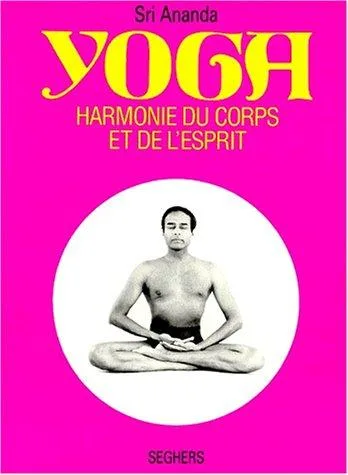
Sri Ananda's "Yoga," a 1977 publication, offers a refreshingly direct approach to a subject often diluted by commercialization. The author prioritizes the philosophical underpinnings and energetic mechanics of Yoga over the more accessible asana practice, a choice that distinguishes this work. One particularly insightful section discusses the intricate interplay of the *nadis* (energy channels), detailing how their purification is essential for the ascent of *kundalini*. However, the book's density can be a barrier for absolute beginners, with its reliance on Sanskrit terminology and abstract concepts requiring dedicated study. The original blurb's absence is noticeable, leaving the initial reader to rely solely on the text's inherent merit. Ultimately, "Yoga" serves as a robust, scholarly exploration for those committed to understanding the esoteric dimensions of this ancient discipline.
📝 Description
83
First published in 1977, Sri Ananda's Yoga moves beyond postures to detail spiritual and philosophical dimensions.
Sri Ananda's 1977 book "Yoga" details the discipline as a spiritual and philosophical practice, not merely physical exercise. It guides readers to a deeper understanding of self-awareness, mental control, and energetic transformation. The work is intended for serious students of esoteric philosophy and contemplative practices.
This book is particularly useful for those who wish to understand the yogic path as a system for spiritual growth and self-realization, rather than just a physical regimen. Readers interested in the origins of modern spiritual movements will also find value in its content. Sri Ananda's text anchors the practice in its original philosophical and esoteric contexts.
Emerging in the late 1970s, a time of growing Western interest in Eastern spiritual traditions, Sri Ananda's "Yoga" addressed a need for deeper understanding. It distinguished itself from popular, often superficial, interpretations by grounding yogic philosophy in its original esoteric and spiritual roots. The book explains core concepts like prana, chakras, and kundalini, positioning Yoga as a path to union between the individual and universal consciousness.
💡 Why Read This Book?
• Gain an understanding of *prana* and its role in yogic practice, as detailed in the sections concerning the subtle body, offering a perspective distinct from purely physical training. • Explore the concept of *kundalini* and its energetic pathways, providing specific insights into its awakening that go beyond common speculative accounts. • Study the philosophy of *moksha* (liberation) as presented in the text, offering a concrete goal for contemplative practice rooted in the traditions discussed since 1977.
⭐ Reader Reviews
Honest opinions from readers who have explored this book.
❓ Frequently Asked Questions
When was Sri Ananda's "Yoga" first published?
Sri Ananda's "Yoga" was first published in 1977, placing it within a significant period of increased Western engagement with Eastern spiritual philosophies.
Does this book focus primarily on physical yoga postures?
No, "Yoga" by Sri Ananda emphasizes the spiritual, philosophical, and energetic dimensions of Yoga, moving beyond a sole focus on asana (postures).
What is the concept of 'prana' as discussed in the book?
Prana, as explored in Sri Ananda's "Yoga," refers to the vital life force energy that permeates all existence and is manipulated through yogic techniques.
Is 'Yoga' by Sri Ananda suitable for beginners?
While comprehensive, the book's depth and philosophical focus may be more accessible to those with some existing interest in esoteric studies or contemplation.
What is the primary goal of Yoga according to this text?
The primary goal, as presented in the book, is *moksha*, or spiritual liberation, achieved through the union of the individual consciousness with the universal.
Are there specific energy centers discussed in "Yoga"?
Yes, the book details the concept of *chakras*, which are described as energetic centers within the subtle body crucial for spiritual development.
🔮 Key Themes & Symbolism
The Subtle Body
The work details the intricate architecture of the subtle body, including the network of *nadis* (energy channels) and the primary *chakras* (energy centers). Sri Ananda posits that understanding and purifying these energetic components is fundamental to yogic advancement. This perspective elevates Yoga from a physical practice to a sophisticated system for energetic and consciousness transformation, exploring how imbalances in these subtle structures can manifest as physical or mental discord.
Prana and Consciousness
Central to Sri Ananda's exposition is the concept of *prana*, the universal life force. The book elucidates how the control and direction of prana through yogic techniques directly influences the state of consciousness. It argues that by mastering prana, practitioners can achieve profound states of meditative awareness, leading to a deeper connection with the self and the cosmos, moving towards the ultimate goal of liberation.
Kundalini Awakening
The text offers an esoteric interpretation of *kundalini*, the dormant spiritual energy residing at the base of the spine. Sri Ananda describes the process of its awakening not as a sudden event but as a gradual unfolding facilitated by dedicated practice, purification of the *nadis*, and focused meditation. The book emphasizes the transformative power of this energy when guided correctly through the central channel.
Moksha: The Ultimate Union
The ultimate aim of the yogic path, *moksha* (liberation), is thoroughly examined. Sri Ananda presents this state not merely as an escape from suffering but as the realization of unity between the individual self (*Atman*) and the universal consciousness (*Brahman*). The book outlines the philosophical framework and practical disciplines necessary to attain this profound state of being, free from the limitations of ego and material existence.
💬 Memorable Quotes
Direct passages from the work, attributed to the author.
“The body is the temple, but the spirit is the deity.”
— This highlights the book's emphasis on the physical form as a vessel for spiritual realization, asserting that the true essence and purpose lie in the inner spiritual work.
“Prana flows where the attention goes.”
— This interpretation points to the book's exploration of how focused intention and awareness can direct vital life force energy, a core principle in yogic practice.
“Liberation is not an acquisition, but a recognition.”
— This signifies the book's philosophical stance that spiritual freedom is not something to be gained externally but rather an inherent state to be realized within oneself.
“The chakras are the great wheels of spiritual energy within.”
— This straightforward description emphasizes the book's teaching on the energetic centers of the subtle body and their critical role in the yogic path.
💡 Key Ideas
Editorial paraphrase of the work's core concepts — not direct quotes.
Where the mind is quiet, there the universal consciousness is perceived.
This paraphrased concept underscores the book's focus on mental discipline as the key to accessing higher states of awareness and spiritual insight.
🌙 Esoteric Significance
Tradition
This work fits within the broader Indic esoteric traditions, specifically drawing from classical Yoga philosophy and Vedanta, while presenting it through a lens accessible to Western esoteric students. It aligns with the perennial philosophy's approach to universal spiritual truths, framing yogic practices as a means to attain self-realization and union with the divine, a common thread in Hermetic, Gnostic, and Theosophical explorations of consciousness.
Symbolism
Key symbols include the *lotus flower*, representing purity, spiritual awakening, and the unfolding of consciousness from the base *chakra* upwards. The *serpent* is a potent symbol for *kundalini* energy, signifying dormant power, transformation, and the evolutionary ascent. The *sun* and *moon* symbols likely relate to the balance of energetic principles (Ha and Tha in Hatha Yoga) and the dualities that must be integrated for wholeness.
Modern Relevance
Contemporary practitioners of subtle body energetics, advanced meditation techniques, and those exploring consciousness studies find value in Sri Ananda's precise descriptions. Modern schools focusing on energy healing, advanced yogic philosophy, and non-dualistic spiritual paths often reference or are influenced by the foundational principles laid out in works like this, particularly concerning the mechanics of prana and chakra systems.
👥 Who Should Read This Book
• Students of esoteric philosophy seeking to understand Yoga beyond its physical manifestations, gaining insight into its energetic and consciousness-altering dimensions. • Contemplative practitioners interested in deepening their meditation practices with a framework that explains the underlying principles of subtle energy and mental stillness. • Researchers of comparative religion and spiritual traditions looking for a text that bridges classical Indian Yoga with Western esoteric discourse.
📜 Historical Context
Published in 1977, Sri Ananda's "Yoga" emerged during a period of intense Western fascination with Eastern spirituality, following the counterculture movements of the 1960s. While popular media often presented Yoga through the lens of physical fitness or simplified spiritualism, this work aimed for a more rigorous, esoteric interpretation. It contrasted with the more academic, anthropological studies of Yoga emerging concurrently and the burgeoning self-help interpretations. The book's focus on concepts like *kundalini* and the subtle body positioned it within a lineage of esoteric thought that had been gaining ground since Theosophy's rise in the late 19th century. Its reception was likely within dedicated spiritual and philosophical circles rather than mainstream consciousness, offering a counterpoint to the more accessible, Westernized versions of Yoga.
📔 Journal Prompts
The nature of prana and its directed flow.
The role of the chakras in spiritual development.
Manifestations of subtle body imbalances.
The path towards recognizing moksha.
Reflections on the mind's quietude and perception.
🗂️ Glossary
Prana
The vital life force energy that animates all beings and is manipulated through yogic techniques like breath control (pranayama).
Chakra
Energetic centers within the subtle body, often visualized as wheels of light, which govern different aspects of physical, emotional, and spiritual well-being.
Kundalini
A dormant, primal spiritual energy believed to reside at the base of the spine, which, when awakened, ascends through the central energetic channel, leading to profound spiritual experiences.
Nadis
Channels or pathways within the subtle body through which prana flows. Key nadis include Ida, Pingala, and Sushumna.
Moksha
The ultimate goal in many Indian spiritual traditions, signifying liberation from the cycle of birth and death, and the realization of one's true nature as divine or universal consciousness.
Asana
Physical postures practiced in Yoga, traditionally intended to prepare the body for long periods of meditation by promoting stability and health.
Atman
The individual self or soul, often considered to be identical with Brahman (universal consciousness) in Advaita Vedanta philosophy.
🔮 Readers Also Liked
Browse all →








More Free Occult Philosophy Books
View all →