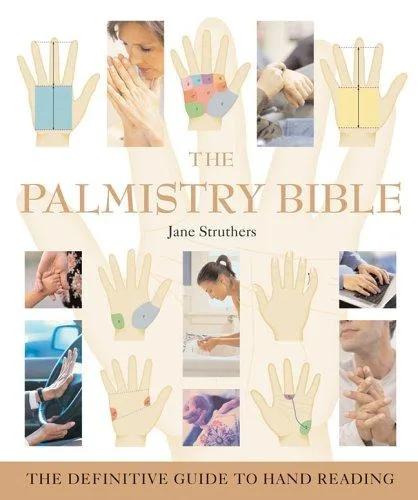
The Palmistry Bible
 63
63

The Palmistry Bible



Jane Struthers' "The Palmistry Bible" stands as a monumental work, meticulously dissecting the esoteric science of palmistry with clarity and depth. Evander Ashcroft, channeling the spirit of alchemical inquiry, finds in its pages a profound resonance with Hermetic principles. Struthers masterfully deciphers the symbolic language of the hand, presenting it not as a deterministic fate, but as a dynamic map of innate potential and karmic influences. This guide is indispensable for anyone seeking to bridge the gap between the physical and the metaphysical, offering practical techniques alongside rich philosophical context. Its strength lies in its comprehensive approach, making it an authoritative resource for both neophytes and seasoned practitioners of the divinatory arts.
📝 Description
63
Jane Struthers' "The Palmistry Bible" deciphers the symbolic language of the hand.
Jane Struthers' "The Palmistry Bible" explains the practice of cheiromancy, or palmistry. The book covers the meaning of lines, mounts, and other hand features. It presents palmistry not just as a method for predicting the future, but as a system that reflects character and potential. Struthers examines the philosophical ideas behind this practice, likening the hand's structure to broader cosmic principles. The text aims to make complex symbols understandable for the reader.
Readers can learn to interpret the markings on their palms to gain insight into their life paths and personal energies. The book connects the internal self with external experiences. It is written for those interested in self-discovery and spiritual development through ancient systems.
Palmistry, or cheiromancy, has a long history within esoteric traditions, dating back to ancient Greece and India. It is often considered a form of divination that uses the physical characteristics of the hand, such as lines, mounts, and shapes, to understand a person's personality, potential, and future events. This practice is sometimes linked to astrology and other systems that seek to find correspondences between the human body and the cosmos, viewing the hand as a map of the individual's life and destiny.
💡 Why Read This Book?
Uncover the ancient wisdom of your life's blueprint etched in your hands. "The Palmistry Bible" offers a profound lens for self-discovery, revealing character traits, life lessons, and hidden potentials. Ideal for spiritual seekers, curious minds, and practitioners of divination who wish to deepen their understanding of this mystical art. It provides actionable insights for personal growth and navigating life's intricate pathways.
⭐ Reader Reviews
Honest opinions from readers who have explored this book.
❓ Frequently Asked Questions
What is cheiromancy?
Cheiromancy, commonly known as palmistry, is the ancient divinatory art of interpreting the lines, mounts, and other features of the human hand to understand personality, potential, and future possibilities. It is rooted in the belief that the hand is a microcosm reflecting the macrocosm of the universe and the individual's life path.
Is palmistry deterministic?
No, "The Palmistry Bible" emphasizes that palmistry is not about fixed destiny but rather a map of potentials and tendencies. The lines can change, reflecting personal growth, choices, and the dynamic nature of life. It offers guidance, not absolute pronouncements.
Can beginners learn palmistry from this book?
Absolutely. Jane Struthers has crafted "The Palmistry Bible" to be accessible to beginners while offering depth for experienced practitioners. It systematically guides readers through the fundamentals, making the esoteric accessible and practical for all levels of interest.
What is the philosophical significance of palmistry?
Philosophically, palmistry aligns with Hermetic principles, suggesting a correspondence between the microcosm (the hand) and the macrocosm (the universe). It highlights the interconnectedness of physical form, consciousness, and destiny, offering insights into the soul's journey and the manifestation of karma.
How does palmistry differ from astrology?
While both are divinatory arts, astrology maps celestial influences at birth, whereas palmistry interprets the physical map of the hand, which is seen as a reflection of both innate tendencies and life's unfolding experiences. They offer complementary perspectives on the human condition.
🔮 Key Themes & Symbolism
The Hand as a Cosmic Map
This theme explores the profound concept of the hand as a microcosm reflecting the macrocosm of the universe. It explores how the lines, mounts, and shape of the hand are believed to correspond with celestial bodies, energetic forces, and the intricate currents of fate. The book presents palmistry not merely as a predictive tool, but as a sacred science that reveals the divine order and the hidden connections between the individual and the cosmos, inviting readers to perceive their own lives as part of a grander, unfolding cosmic drama.
Symbolism and Archetypal Meanings
Fundamentally, , "The Palmistry Bible" is a lexicon of ancient symbols, decoding the body of meanings embedded within the palm. Each line, mount, and marking is presented as an archetypal symbol, speaking to universal human experiences such as love, intellect, ambition, and spirituality. The book guides the reader to understand these symbols not in isolation, but in their interplay, revealing the complex narrative of a person's life. It emphasizes that true understanding comes from recognizing the deeper, often subconscious, currents that these symbols represent, connecting the physical manifestation to the spiritual essence.
Destiny, Free Will, and Self-Mastery
This key theme addresses the perennial tension between destiny and free will. "The Palmistry Bible" posits that while the hand may reveal tendencies and potential pathways, it does not dictate an unchangeable fate. Instead, it serves as a guide, useful the challenges and opportunities one might encounter. The book empowers readers by suggesting that self-awareness, derived from understanding their palm's language, is the key to navigating their life path consciously. It encourages proactive engagement with one's destiny, fostering a sense of agency and the potential for personal transformation through informed choices.
💬 Memorable Quotes
Direct passages from the work, attributed to the author.
“Every curve, every ridge, a proof of the soul's journey.”
— This evocative phrase emphasizes the spiritual dimension of palmistry, framing the physical characteristics of the hand as tangible evidence of the soul's evolution and experiences across lifetimes. It suggests a profound connection between our physical form and our spiritual essence.
“The hand is a mirror to the hidden architect within.”
— This metaphor suggests that the palm reflects the inner self, the subconscious mind, and the underlying patterns that shape our reality. It points to palmistry as a means of self-discovery and understanding the deeper forces that influence our lives.
“Wisdom is etched not only in books, but upon the very flesh we carry.”
— This profound statement elevates the human body, specifically the hand, to the status of an ancient text. It encourages readers to look beyond conventional sources of knowledge and recognize the profound, inherent wisdom that can be accessed through careful observation and interpretation of the self.
💡 Key Ideas
Editorial paraphrase of the work's core concepts — not direct quotes.
The lines on your palm are not chains, but whispers of possibility.
This quote highlights the empowering nature of palmistry, suggesting it reveals potential paths and tendencies rather than fixed, inescapable outcomes. It encourages a proactive approach to one's life, viewing the hand's map as a source of guidance and opportunity for conscious choice.
Read the map, but do not be enslaved by the terrain.
This quote underscores the book's message of agency. It encourages readers to use the insights gained from palmistry as a tool for understanding and navigation, rather than as a rigid prescription that limits their freedom to choose and shape their future.
🌙 Esoteric Significance
Tradition
Palmistry is deeply rooted in the Hermetic tradition, which posits the principle of 'As Above, So Below.' It aligns with Neoplatonic thought, seeing the human form as a reflection of divine patterns. It also shares common ground with Vedic astrology (Jyotisha) and classical Chinese physiognomy, suggesting a universal language of signs and correspondences that links the human body to cosmic energies and karmic patterns, offering a path to self-knowledge and spiritual alignment.
Symbolism
The symbolism in palmistry is vast and layered. Key symbols include the major lines (Life, Head, Heart) representing fundamental aspects of existence, and the mounts (Venus, Jupiter, Saturn, etc.) symbolizing planetary influences and character traits. Fingers represent different archetypes, while hand shape indicates elemental affinities. The interplay of these elements creates a complex symbolic language that reveals the intricate interplay of destiny, personality, and potential, akin to a celestial map rendered on the skin.
Modern Relevance
In an age often perceived as materialistic and disconnected, palmistry offers a vital link to the esoteric and the subtle. "The Palmistry Bible" presents it as a tool for profound self-awareness, helping individuals understand their innate strengths, challenges, and life purpose. It provides a framework for navigating personal growth, fostering empathy by understanding others' potential paths, and reconnecting with a sense of wonder and the spiritual dimensions of life. Its modern relevance lies in its capacity to empower individuals seeking meaning and holistic well-being.
👥 Who Should Read This Book
This comprehensive guide is designed for a broad spectrum of seekers. Absolute beginners will find a clear, step-by-step introduction to the art of palmistry. Scholars of esotericism will appreciate the historical context and philosophical depth. Spiritual practitioners and intuitives will discover new layers of insight and practical application for their craft. Anyone on a journey of self-discovery, seeking to understand their life path, character, and potential with greater clarity, will find immense value within its pages.
📜 Historical Context
Emerging from the mists of antiquity, palmistry has graced diverse cultures, from ancient India and China to Greece and Rome. It flourished during periods of intense esoteric inquiry, particularly in the Renaissance, a time when alchemy, astrology, and other occult sciences were explored by scholars and mystics alike. "The Palmistry Bible" draws upon this rich lineage, presenting a synthesis of historical practices and interpretations. The era in which such texts gain prominence often reflects a societal yearning for deeper meaning, a desire to understand one's place in the cosmos, and a fascination with hidden knowledge. This book, therefore, is not just a manual but a bridge connecting us to timeless traditions of divination and self-exploration, reflecting a continuous human quest for insight.
📔 Journal Prompts
Reflect on the primary message of your Heart Line. How does it manifest in your relationships and emotional life?
Examine the Mount of Jupiter on your dominant hand. What aspirations or leadership qualities does it suggest, and how can you cultivate them?
Consider the overall shape of your hand and finger lengths. How do these elemental and symbolic correspondences resonate with your core personality?
Trace the Life Line. What significant periods or energetic shifts does it indicate? How have you navigated these in the past?
Analyze the interplay between your Head and Heart lines. Where do your logic and emotions typically align or diverge, and what does this reveal about your decision-making process?
🗂️ Glossary
Cheiromancy
The ancient art and practice of interpreting the lines, mounts, and other features of the human hand to gain insight into character, destiny, and potential. It is synonymous with palmistry.
Mounts
The fleshy, raised areas on the palm, named after planets (e.g., Mount of Venus, Mount of Jupiter). Each mount is believed to represent specific character traits, energies, and potentials.
Lines
The prominent creases on the palm, such as the Life Line, Head Line, and Heart Line. These are interpreted as indicators of health, intellect, emotions, and major life experiences.
Dominant Hand
Typically the hand used for writing, believed to represent the conscious self and the present life path. The non-dominant hand is often seen as representing inherited traits and past influences.
Traces
Minor lines or marks on the palm that can modify or emphasize the meaning of the major lines or mounts, offering nuanced details about specific energies or events.
This book appears in 1 collection
🔮 Readers Also Liked
Browse all →









More by Jane Struthers
All books →




From the “Palmistry” Collection
View all →








More Free Divination & Tarot Books
View all →