Principles of Palmistry
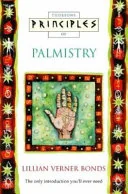
 72
72

Principles of Palmistry
Lilian Verner-Bonds' *Principles of Palmistry* presents a remarkably clear and organized system for approaching the ancient art. Unlike many contemporary guides that skim the surface, this 1997 text dedicates itself to methodical instruction, treating the hand as a complex symbolic language. The strength lies in its systematic breakdown of elements – from the major lines to the subtle contours of the mounts. For instance, the detailed exegesis of the Saturn line’s potential variations offers a nuanced view of fate and responsibility rarely found elsewhere. However, the text occasionally leans towards an overly deterministic interpretation, a common pitfall in palmistry literature, sometimes overlooking the agency the reader might expect in a 'principles' text. Despite this, the work’s clarity and depth make it a solid reference for serious students. It is a competent manual for deciphering the hand's script.
📝 Description
72
Lilian Verner-Bonds published Principles of Palmistry in 1997, detailing hands as maps of character.
Published in 1997, Lilian Verner-Bonds' Principles of Palmistry offers a structured method for reading the hand, viewing it as a map of character and destiny rather than solely a fortune-telling tool. The book systematically guides readers through understanding the lines, mounts, and shapes of the palm. It explains how these physical features are thought to relate to an individual's past experiences, current situation, and future possibilities.
This work is intended for those serious about palmistry as a means of self-awareness and psychological insight. It provides a practical, organized framework for learning the practice, moving beyond superficial interpretations. Readers interested in esotericism, comparative mythology, and the history of divination will find its coverage thorough.
Verner-Bonds emphasizes that the hand is dynamic, reflecting evolving personal stories. Key concepts include detailed analyses of the Life, Head, and Heart lines, along with minor lines and mounts like Venus and Jupiter. The book also examines hand shapes, connecting them to personality traits and life events. It treats the palm as a symbolic representation of inner potential and external influences, not a fixed predictor.
Principles of Palmistry emerged in the late 20th century, a period of renewed interest in esoteric subjects. Verner-Bonds presented a systematic and grounded approach to chiromancy, distinguishing it from more New Age interpretations. The book draws on ancient Greek and Indian traditions of palm reading, aiming for a methodical study of the hand's symbolic language. It positions palmistry as a tool for understanding character and potential, rooted in historical practices but applied with a contemporary, analytical perspective.
💡 Why Read This Book?
• Gain a systematic understanding of chiromancy, learning to interpret the specific meanings of the Saturn line and other major hand features as detailed by Verner-Bonds. • Develop a nuanced perspective on palmistry, moving beyond simple prediction to analyze character and potential, as explored through the book's analysis of hand mounts like Venus and Jupiter. • Appreciate the historical lineage of palmistry, recognizing how Verner-Bonds' 1997 publication builds upon traditions tracing back to ancient Greek and Indian divinatory practices.
⭐ Reader Reviews
Honest opinions from readers who have explored this book.
❓ Frequently Asked Questions
What is the primary focus of Lilian Verner-Bonds' 'Principles of Palmistry'?
The book focuses on palmistry as a systematic guide to understanding character and destiny through the lines, mounts, and shapes of the hand, rather than solely as a fortune-telling tool.
When was 'Principles of Palmistry' first published?
The book was first published in 1997, positioning it within a late 20th-century revival of esoteric studies.
Does the book cover palmistry for beginners?
Yes, it provides a systematic guide suitable for those beginning their study, offering a structured approach to learning the art of palm reading.
What are 'mounts' in palmistry according to this book?
In Verner-Bonds' system, 'mounts' refer to the fleshy, raised areas on the palm beneath the fingers (e.g., Mount of Venus, Mount of Jupiter), each associated with specific personality traits and potentials.
Can 'Principles of Palmistry' predict specific future events?
While it explores potential future pathways, the book emphasizes palmistry as a map of character and destiny, suggesting potentials rather than fixed, deterministic events.
What is the significance of the Life Line in this palmistry guide?
The Life Line, as presented in the book, is analyzed not just for physical vitality but also for significant life events, energy levels, and overall life experiences.
🔮 Key Themes & Symbolism
The Hand as a Symbolic Map
Verner-Bonds posits the palm as a complex cartography of the self. The work meticulously details how the major and minor lines, the prominent mounts (like the Mount of Venus, associated with love and vitality, or the Mount of Saturn, linked to discipline and fate), and even the shape of the fingers and palm itself, serve as symbolic representations of an individual's psychological landscape, past experiences, and inherent potentials. This perspective moves palmistry from simple prognostication towards a tool for self-awareness and understanding one's life trajectory.
Systematic Interpretation Framework
A core theme is the establishment of a clear, logical framework for interpreting the palm. Unlike anecdotal or intuitive approaches, 'Principles of Palmistry' emphasizes a methodical process. It breaks down the analysis into distinct components—lines, mounts, shapes—and explores their interrelationships. This systematic approach aims to clarify chiromancy, making it accessible and learnable for serious students seeking a structured method to decipher the meanings encoded in the hand.
Character and Destiny Analysis
The book explores the dual nature of palmistry: its capacity to reveal inherent character traits and its function in outlining potential life paths or 'destiny'. Verner-Bonds connects specific palm features, such as the curvature of the Heart Line or the presence of certain markings on the Mount of Jupiter, to distinct personality attributes and life challenges or opportunities. The emphasis is on understanding these as potentials rather than immutable decrees, allowing for personal agency.
Historical Continuity in Divination
Verner-Bonds' work implicitly situates palmistry within a long continuum of divinatory practices. By presenting a systematic guide, she acknowledges the historical development of chiromancy, which has roots in ancient civilizations like Greece and India. The book’s structured method can be seen as an effort to codify and preserve the essential knowledge of this ancient art for contemporary practitioners, connecting them to a lineage of seers and interpreters.
💬 Memorable Quotes
Direct passages from the work, attributed to the author.
“The palm is a living document, perpetually rewritten by experience.”
— This highlights the dynamic nature of palmistry as presented by Verner-Bonds, suggesting that the hand reflects ongoing personal development and life events, rather than a static prediction.
“Each line and mount is a chapter in the autobiography of the hand.”
— This metaphor emphasizes the narrative quality of palmistry in the book, portraying the hand's features as distinct elements contributing to a comprehensive life story.
“Understanding the Mount of Venus reveals our capacity for love, pleasure, and vitality.”
— This illustrates the book's approach to analyzing specific palm features, connecting the Mount of Venus to core aspects of human experience and personality.
“The Head Line's clarity and length indicate the nature of one's thought processes.”
— This statement exemplifies the book's focus on correlating specific palm lines with psychological attributes, specifically linking the Head Line to intellectual faculties.
“Palmistry offers not fixed fate, but potentials to be understood and navigated.”
— This interpretation underscores Verner-Bonds' nuanced view of palmistry, framing it as a tool for insight and personal agency rather than deterministic fortune-telling.
🌙 Esoteric Significance
Tradition
Verner-Bonds' work fits within the Western esoteric tradition, specifically drawing from the long lineage of chiromancy that has been integrated into various occult systems throughout history. While not explicitly Hermetic or Kabbalistic, its systematic approach to understanding hidden correspondences between the physical (the hand) and the metaphysical (character, destiny) aligns with the Hermetic principle of 'As Above, So Below.' It represents a modern codification of an ancient practice, aiming for clarity and practical application within this broader esoteric framework.
Symbolism
Key symbols include the major palm lines (Life Line, Head Line, Heart Line) which are interpreted as narrative threads of existence, vitality, intellect, and emotion. The mounts, such as the Mount of Venus (representing love, sensuality, and vitality) and the Mount of Saturn (associated with fate, discipline, and wisdom), function as symbolic indicators of specific life energies and potentials. Hand shapes themselves, often categorized into elemental types (Earth, Air, Fire, Water), serve as overarching symbolic archetypes for personality.
Modern Relevance
Contemporary practitioners of divination, comparative mythology enthusiasts, and those interested in psychological astrology or symbolic analysis often reference texts like Verner-Bonds' for their structured approach. While the field has evolved, the demand for clear, systematic guides to traditional practices remains. Her work provides a foundational understanding that can be integrated with modern psychological insights or comparative spiritual studies, appealing to those who seek practical tools for self-exploration within esoteric traditions.
👥 Who Should Read This Book
• Aspiring palmists seeking a structured, methodical introduction to chiromancy, moving beyond superficial interpretations. • Individuals interested in Western esoteric traditions and the history of divination, looking for a text that codifies ancient knowledge. • Those curious about self-analysis and psychological profiling through symbolic systems, who value a practical, systematic approach to understanding character.
📜 Historical Context
Lilian Verner-Bonds' *Principles of Palmistry*, first published in 1997, emerged during a period of renewed interest in esoteric studies, following the counter-cultural shifts of the preceding decades. The late 20th century saw a diverse field of spiritual and occult practices, ranging from the New Age movement's emphasis on intuition and channeling to more academic explorations of Western esotericism. Verner-Bonds' work sought to provide a grounded, systematic approach to chiromancy, distinguishing itself from more generalized or speculative fortune-telling. It engaged with a tradition that had seen significant figures like William Gurney (author of *The Power of the Hand in the 19th Century*) and drew upon ancient roots in Greek and Indian culture. Unlike the more mystical interpretations often favored by contemporaries, Verner-Bonds aimed for a methodical, almost psychological, analysis of the hand, positioning her text as a serious study within the broader field of divination.
📔 Journal Prompts
The specific configuration of your Head Line and its relation to the Mount of Jupiter.
Reflections on the meaning of the Mount of Saturn in your own palm.
How the perceived quality of your Life Line corresponds to periods of significant change.
Interpreting the balance of mounts on your dominant hand.
The symbolism of your primary hand shape (e.g., Earth, Air, Fire, Water) in relation to your life experiences.
🗂️ Glossary
Chiromancy
The practice of divination and character analysis through the study of the palm, including lines, mounts, and hand shape. It is often considered a branch of physiognomy.
Mounts
The fleshy, raised pads on the palm beneath the fingers, each named after a classical planet or deity (e.g., Mount of Venus, Mount of Jupiter) and associated with specific traits and energies.
Life Line
The curved line on the palm extending from near the thumb and around the Mount of Venus. It is traditionally associated with vitality, physical health, and significant life events.
Head Line
The horizontal line originating near the Life Line and extending across the palm. It is interpreted as representing mental faculties, intellect, and communication style.
Heart Line
The horizontal line closest to the fingers, running across the palm. It is traditionally associated with emotional nature, romantic relationships, and heart health.
Dominant Hand
In palmistry, the hand most actively used (usually the writing hand) is considered to represent the present and future, while the non-dominant hand may represent inherited traits or the past.
Hand Shape
The overall form of the palm and fingers, often categorized into elemental types (Earth, Air, Fire, Water) which provide a broad overview of personality characteristics.
This book appears in 1 collection
🔮 Readers Also Liked
Browse all →








From the “Palmistry” Collection
View all →






More Free Occult Philosophy Books
View all →