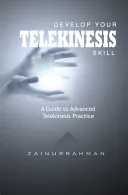
The Art of Ectoplasm
 78
78

The Art of Ectoplasm
Serena Keshavjee’s The Art of Ectoplasm offers a compelling look into the rigorous, albeit ultimately inconclusive, investigations of T.G. and Lillian Hamilton. The strength of this work lies in its presentation of primary source material – the Hamiltons' own photographic archive – which allows readers to engage directly with the alleged phenomena of ectoplasm. The sheer volume of documented séances and the couple’s methodical approach are striking, especially given the societal context of profound loss. However, the book could benefit from a more critical analysis of the photographic evidence itself, moving beyond mere presentation to a deeper deconstruction of potential artifacts or misinterpretations, a point the Hamiltons themselves grappled with. The section detailing the Hamiltons' home laboratory setup, including their specific equipment and protocols, provides a vivid glimpse into their scientific aspirations. Ultimately, The Art of Ectoplasm serves as a valuable historical document, illuminating a specific chapter in the persistent human quest for evidence of an afterlife.
📝 Description
78
In 1920s Winnipeg, physician T.G. Hamilton and nurse Lillian Hamilton meticulously documented séances for ectoplasm.
The Art of Ectoplasm details the extensive work of T.G. and Lillian Hamilton, who, in their Winnipeg home laboratory, conducted séances following the immense losses of World War I and the 1918-19 pandemic. Their research, spanning hundreds of photographs, aimed to capture ectoplasm, a substance purportedly exuded by mediums as evidence of post-death consciousness. This collection offers a unique archive from a time of heightened public interest in the paranormal. The book is relevant for those studying spiritualism, early 20th-century paranormal investigations, and the history of psychology. It will interest readers examining scientific and pseudoscientific efforts to prove life after death, especially in the post-WWI context. Anyone fascinated by historical photography, the intersection of science and belief, or the impact of grief will find value in the Hamiltons' detailed work.
The Hamiltons' research occurred during a period of widespread mourning and a strong desire for contact with the deceased. The aftermath of the Great War and the Spanish Flu pandemic fostered the growth of spiritualist movements. Organizations like the Society for Psychical Research investigated phenomena such as telepathy and materialization. The Hamiltons' structured approach, using a home lab and photography, reflects a wider trend of applying nascent scientific methods to the study of the unseen and the afterlife. The core concept revolves around ectoplasm, a viscous substance said to emerge from mediums during trance states. The book scrutinizes the photographic evidence the Hamiltons presented, analyzing visual cues and claims of materialization.
This work sits within the broader spiritualist movement of the late 19th and early 20th centuries, a period marked by intense public fascination with contacting the dead. Fueled by widespread grief and societal upheaval, spiritualism sought to reconcile scientific inquiry with profound personal loss. The Hamiltons' systematic photographic documentation of alleged ectoplasmic phenomena reflects a specific attempt to apply empirical methods to validate spiritualist claims, placing their efforts within a tradition of seeking tangible proof for survival of consciousness.
💡 Why Read This Book?
• Learn about the specific photographic techniques used by T.G. and Lillian Hamilton in their Winnipeg home laboratory to document séances, offering a tangible look at early 20th-century parapsychological investigation methods. • Understand the concept of ectoplasm as defined and observed within the spiritualist movement following World War I, exploring its purported physical properties and significance. • Gain insight into the historical context of survival research, examining how the Hamiltons' work fits within the broader intellectual currents and societal grief of the 1920s.
⭐ Reader Reviews
Honest opinions from readers who have explored this book.
❓ Frequently Asked Questions
What is ectoplasm and why was it studied?
Ectoplasm was considered a physical substance allegedly exuded by mediums during séances, believed to be a manifestation of spiritual energy. Its study, particularly by figures like T.G. and Lillian Hamilton, aimed to provide tangible proof of the survival of human consciousness after death.
Where and when did the Hamiltons conduct their research?
Physician T.G. Hamilton and nurse Lillian Hamilton conducted their extensive research on spiritualism and ectoplasm in their home laboratory in Winnipeg, Canada, primarily in the years following World War I and the 1918-19 pandemic.
What kind of evidence does 'The Art of Ectoplasm' present?
The book primarily presents a collection of hundreds of photographs taken during séances held by the Hamiltons. These images are intended to document alleged ectoplasmic manifestations and other phenomena related to spirit communication.
Who were the Hamiltons?
T.G. Hamilton was a physician, and Lillian Hamilton was a nurse. Together, they dedicated themselves to the scientific investigation of spiritualism and the survival of consciousness, meticulously documenting their findings in Winnipeg.
What historical period does this book cover?
The book focuses on the period following World War I and the 1918-19 pandemic, a time when interest in spiritualism and evidence of life after death was particularly high due to widespread grief and loss.
Is this book about proving ghosts exist?
While the Hamiltons sought evidence for the survival of consciousness, the book is primarily an archival presentation of their specific research into spiritualism and ectoplasm, documenting their methods and findings from the early 20th century.
🔮 Key Themes & Symbolism
Photographic Evidence of the Paranormal
The core of this work lies in its extensive photographic archive, featuring hundreds of images captured during the Hamiltons' séances. These photographs are presented as primary evidence of ectoplasmic materialization, offering a visual record of alleged spiritual phenomena. The book examines how photography was employed as a tool to validate spiritualist claims, reflecting a broader societal fascination with capturing the unseen world in the early 20th century. The visual documentation serves as a tangible link to a period when scientific inquiry met profound personal grief.
The Hamiltons' Scientific Spiritualism
Physician T.G. Hamilton and nurse Lillian Hamilton approached spiritualism with a methodical, almost clinical, perspective. Their home laboratory in Winnipeg was equipped for systematic investigation, aiming to bridge the gap between the spiritual and the material. This work details their efforts to apply scientific rigor to phenomena like ectoplasm, seeking verifiable proof of consciousness survival. Their research reflects a significant intellectual current of the time, where many sought rational explanations and empirical support for belief in the afterlife.
Grief, Loss, and the Search for Survival
The context of post-World War I and the Spanish Flu pandemic is crucial to understanding the Hamiltons' work. A profound sense of loss permeated society, fueling a widespread interest in spiritualism and communication with the deceased. The book implicitly explores how this collective trauma drove individuals to seek comfort and confirmation of continued existence. The Hamiltons' documentation of séances and alleged ectoplasmic manifestations can be seen as a response to this deep-seated human need to reconnect with lost loved ones.
Ectoplasm as Manifestation
The concept of ectoplasm is central to the Hamiltons' investigations. This mysterious substance, often depicted as luminous or vaporous material exuded by mediums, was considered direct physical evidence of spirit presence. The book details the visual characteristics attributed to ectoplasm as captured in the photographs. It studies the spiritualist belief that such materializations offered irrefutable proof of the disembodied consciousness interacting with the physical world, a key tenet for believers seeking validation.
💬 Memorable Quotes
Direct passages from the work, attributed to the author.
“The Hamiltons documented hundreds of photographs capturing alleged manifestations of ectoplasm.”
— This statement highlights the core evidentiary basis of the Hamiltons' research. It underscores their commitment to photographic documentation as a means to record and potentially validate the existence of ectoplasm, a central phenomenon in their study of survival.
“The séances were held in their home laboratory.”
— This simple fact grounds the research in a specific, personal setting. It suggests a controlled environment, albeit a domestic one, where the Hamiltons attempted to apply systematic observation to spiritual phenomena, differentiating their work from more public or less structured spiritualist gatherings.
“Physician T.G. Hamilton and nurse Lillian Hamilton began their research in the wake of the First World War and the 1918–19 pandemic.”
— This contextualizes the Hamiltons' work within a period of immense societal grief and loss. It suggests that the wide impact of these events likely fueled their dedication to proving the survival of consciousness, seeking solace and answers amidst widespread mourning.
“Hundreds of photographs documented alleged ectoplasmic manifestations.”
— This refers to the visual records central to the Hamiltons' study. The term 'alleged manifestations' acknowledges the interpretive nature of the evidence, while 'hundreds of photographs' points to the sheer volume of data collected in their quest to document ectoplasm.
💡 Key Ideas
Editorial paraphrase of the work's core concepts — not direct quotes.
Their extensive study of the survival of human consciousness after death resulted in a stunning collection of hundreds of photographs.
This paraphrased concept emphasizes the primary objective behind the Hamiltons' séances: to gather evidence supporting the continuation of consciousness beyond physical death. The photographic collection is presented as the tangible outcome of this dedicated, long-term investigation.
🌙 Esoteric Significance
Tradition
The Hamiltons' work fits within the broad tradition of spiritualism and emergent parapsychology, which sought empirical validation for phenomena traditionally relegated to religious or mystical belief. While not strictly adhering to Hermeticism or Theosophy, their pursuit of evidence for consciousness survival aligns with the perennial quest for knowledge beyond the material realm, a common thread in many esoteric lineages.
Symbolism
Ectoplasm itself functions as a potent symbol in this context, representing the tenuous bridge between the physical and spiritual worlds. Its alleged semi-physical nature signifies the possibility of tangible interaction with disembodied entities. The photographs, often featuring ethereal or semi-formed shapes, symbolize the elusive nature of the afterlife and the human desire to make the intangible visible and comprehensible.
Modern Relevance
Contemporary interest in consciousness studies, quantum mysticism, and the neuroscience of altered states can draw parallels to the Hamiltons' foundational, albeit controversial, attempts to empirically investigate consciousness. Their work serves as a historical precursor to modern efforts exploring phenomena like out-of-body experiences and near-death experiences, reminding us of the persistent human drive to understand subjective reality through observation.
👥 Who Should Read This Book
• Researchers of early 20th-century spiritualism and paranormal investigation methods, seeking primary source material and historical context for the study of ectoplasm. • Students of the history of psychology and parapsychology, interested in how scientific inquiry was applied to beliefs about life after death following major global conflicts. • Individuals fascinated by historical photographic archives and the intersection of grief, belief, and attempted scientific validation in the post-WWI era.
📜 Historical Context
The research of T.G. and Lillian Hamilton unfolded in the shadow of profound global trauma: World War I and the 1918-19 influenza pandemic. This era saw a surge in spiritualist activity as countless individuals sought solace and connection with lost loved ones. In this climate, the Hamiltons, a physician and nurse, established a home laboratory in Winnipeg to investigate claims of survival. Their meticulous photographic documentation of séances and alleged ectoplasmic phenomena aligns with a broader, early 20th-century push to apply scientific methodology to paranormal subjects, exemplified by organizations like the Society for Psychical Research. While figures like Sir Arthur Conan Doyle championed spiritualism, skeptical voices and scientific scrutiny, particularly regarding photographic evidence, were also prevalent. The Hamiltons' work navigated this complex landscape, attempting to provide empirical grounding for beliefs widely held by a grieving populace, while facing inherent challenges in verifying such subjective experiences.
📔 Journal Prompts
The Hamiltons' photographic documentation of séances.
The societal impact of the 1918-19 pandemic on spiritual beliefs.
Physician T.G. Hamilton's approach to investigating the paranormal.
The concept of ectoplasm as a physical manifestation.
Home laboratory settings for spiritualist research.
🗂️ Glossary
Ectoplasm
A supposed viscous, semi-physical substance exuded by mediums during séances, believed to be a manifestation of spiritual energy and a sign of spirit presence.
Séance
A meeting where spiritualists attempt to make contact with the spirits of the dead, often involving a medium who facilitates communication.
Survival of Consciousness
The spiritualist belief that human consciousness or spirit continues to exist in some form after the death of the physical body.
Medium
An individual believed to have the ability to communicate with spirits of the dead or to act as an intermediary between the spirit world and the physical world.
Home Laboratory
A domestic space set up and equipped by the Hamiltons for the systematic investigation and documentation of spiritual phenomena, including séances.
Paranormal Investigation
The systematic study or exploration of phenomena that are considered outside the scope of conventional scientific understanding, such as ghosts, telepathy, and materialization.
Spiritualism
A religious movement and belief system that asserts the possibility of communicating with the spirits of the deceased, often seeking evidence for life after death.
This book appears in 1 collection
🔮 Readers Also Liked
Browse all →









From the “Ectoplasm” Collection
View all →





More Free Occult Philosophy Books
View all →