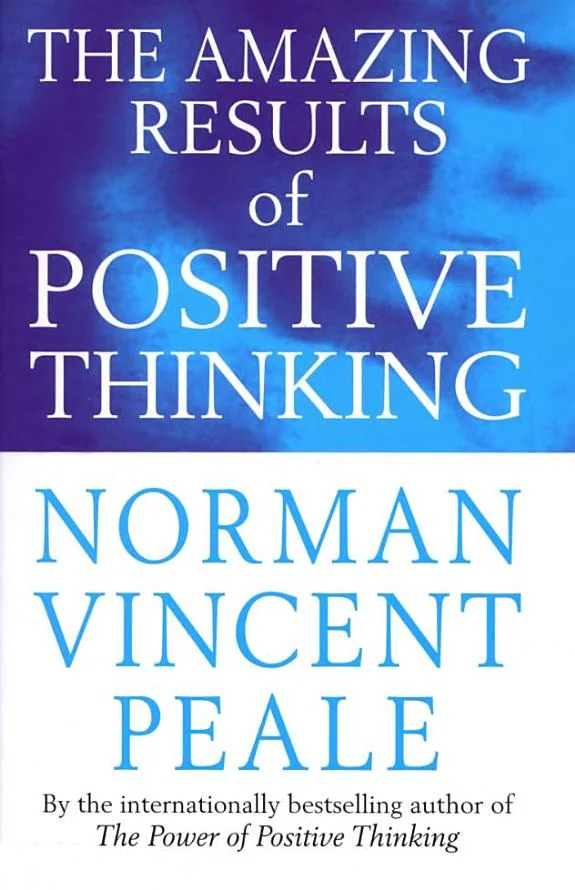
The Amazing Results of Positive Thinking
 73
73

The Amazing Results of Positive Thinking
Norman Vincent Peale’s 1990 offering, The Amazing Results of Positive Thinking, revisits familiar territory but does so with a persistent, if somewhat repetitive, earnestness. The strength of the book lies in its sheer volume of anecdotal evidence, showcasing transformations from everyday people who seemingly willed their circumstances to change through sheer force of belief. One particularly striking narrative involves individuals overcoming severe financial hardship by reorienting their financial thinking. However, a significant limitation is the lack of critical engagement with potential psychological underpinnings beyond simple affirmations; the book rarely acknowledges the complexities of mental health conditions that might require more than positive self-talk. The constant emphasis on divine intervention, while central to Peale's message, may alienate readers seeking secular self-help strategies. Ultimately, it’s a volume that offers comfort and encouragement through faith-based optimism, best suited for those already aligned with its theological underpinnings.
📝 Description
73
Norman Vincent Peale's The Amazing Results of Positive Thinking, published in 1990, offers practical guidance for cultivating mental fortitude.
This book by Norman Vincent Peale, first appearing in 1990, collects anecdotes and advice aimed at building mental strength and optimistic outlooks. Peale outlines a method for individuals to access their inner capabilities, encouraging a proactive approach to challenges through faith and self-belief. The text stresses practical application, including structured plans to confront and conquer specific personal weaknesses and insecurities.
It is intended for people looking for self-improvement and a stronger mental state. The book is especially useful for those feeling burdened by doubt, fear, or a lack of confidence in their personal or professional lives. Readers seeking straightforward strategies to encourage a more positive disposition and utilize their hidden potential will find its contents directly applicable. It functions as a guide for building spiritual resilience with faith-based exercises.
Published in 1990, this work follows Peale's influential 1952 book, The Power of Positive Thinking. It continues to promote the mind-body connection and the efficacy of faith, ideas that resonated widely. The book sits within the broader context of New Thought and Christian psychology movements that emphasized spiritual and mental well-being.
💡 Why Read This Book?
• Gain practical, faith-infused techniques for confronting insecurity, directly referencing Peale's structured programs designed to eliminate personal weaknesses, offering a concrete method not found in generic advice. • Understand the impact of focused belief and prayer on tangible outcomes, as illustrated by the numerous real-world success stories Peale compiles, demonstrating the application of these principles in diverse life situations. • Explore the enduring influence of Norman Vincent Peale's philosophy, examining its place within the post-war self-help movement and its continued appeal to those seeking spiritual strength through confidence.
⭐ Reader Reviews
Honest opinions from readers who have explored this book.
❓ Frequently Asked Questions
When was The Amazing Results of Positive Thinking first published?
The Amazing Results of Positive Thinking by Norman Vincent Peale was first published in 1990, building upon the themes of his earlier influential works on positive thinking.
What kind of stories are featured in The Amazing Results of Positive Thinking?
The book features stories of men and women from around the world who transformed their lives by adopting a philosophy of confidence and faith, overcoming challenges through belief.
Does The Amazing Results of Positive Thinking offer practical methods?
Yes, the book offers specific methods and detailed programs designed to help readers grow spiritually, eliminate weaknesses, overcome insecurity, and release inner energies.
Who is Norman Vincent Peale?
Norman Vincent Peale was an American Lutheran minister and author, best known for his work on the power of positive thinking and his influential book 'The Power of Positive Thinking'.
What is the core philosophy behind The Amazing Results of Positive Thinking?
The core philosophy centers on the idea that a positive mental attitude, coupled with faith and consistent spiritual practice, can lead to remarkable improvements in one's life circumstances.
Is this book related to 'The Power of Positive Thinking'?
Yes, The Amazing Results of Positive Thinking is a follow-up to Peale's highly successful 1952 book, 'The Power of Positive Thinking', further exploring and illustrating its core principles.
🔮 Key Themes & Symbolism
The Power of Faith
Central to Peale's message is the transformative effect of unwavering faith, particularly Christian faith, in overcoming life's adversities. The book posits that through prayer and trust in a higher power, individuals can tap into a source of strength beyond their own capabilities. This belief system is presented not merely as solace but as an active agent for change, capable of altering circumstances and fortifying the spirit against doubt and despair. The work encourages readers to actively engage their faith as a practical tool for problem-solving.
Cultivating Confidence
Peale argues that confidence is not an innate trait but a skill that can be deliberately developed. He outlines methods for building self-assurance, often by reframing negative thought patterns and replacing them with positive affirmations and visualizations. This process involves recognizing and challenging internal barriers such as insecurity and fear. The book emphasizes that a confident mindset is crucial for achieving personal goals and for maintaining spiritual well-being, seeing it as a direct outcome of applying positive thought principles.
Spiritual Strength and Well-being
The work directly links spiritual vitality to overall life success and happiness. Peale suggests that by nurturing one's spiritual life through practices like prayer, meditation, and positive self-talk, individuals can achieve a profound sense of inner peace and resilience. This spiritual strength is depicted as the foundation upon which one can build a fulfilling life, effectively managing stress, overcoming challenges, and maintaining an optimistic outlook. The book offers practical programs aimed at fostering this inner fortitude.
Overcoming Insecurity
A significant portion of the book is dedicated to addressing the pervasive issue of insecurity. Peale provides readers with actionable strategies to confront and dismantle feelings of inadequacy and self-doubt. These methods often involve learning to rely on divine assistance and cultivating a belief in one's inherent worth. By applying the principles of positive thinking and faith, individuals are encouraged to move beyond crippling insecurity towards a state of empowered self-belief and proactive engagement with life.
💬 Memorable Quotes
Direct passages from the work, attributed to the author.
“Believe in yourself and in God.”
— This succinct phrase captures Peale's dual emphasis: personal agency bolstered by divine support. It suggests that true efficacy arises from the synergy of self-belief and spiritual conviction, forming the bedrock of his positive thinking philosophy.
“The great thing is to get out of your own way.”
— This highlights the internal obstacles that hinder progress. Peale implies that our own limiting beliefs, fears, and negative thought patterns are the primary barriers to achieving our potential, and overcoming them is key to unlocking success.
“Practice the art of asking for help.”
— This points to the importance of prayer and seeking divine intervention. It frames asking for help not as a weakness, but as a fundamental practice for accessing greater strength and guidance.
“Fill your mind with positive thoughts.”
— This is a core directive for implementing positive thinking. It emphasizes the deliberate and active process of shaping one's mental landscape by consciously choosing uplifting and constructive thoughts over negative ones.
“God’s love is available to all.”
— This statement underscores the universal accessibility of divine grace and support. It serves as a foundational assurance, intended to empower individuals by reminding them they are never truly alone in their struggles.
🌙 Esoteric Significance
Tradition
While rooted in mainstream Protestant Christianity, Peale's work shares significant conceptual overlap with esoteric traditions, particularly New Thought and the broader Hermetic principle of 'Mind is All.' It adapts principles often found in esoteric literature—like the power of focused intention and the mind's influence over physical reality—into a more accessible, religiously orthodox framework. It functions as a bridge, popularizing ideas about mental causation and spiritual efficacy that have deeper, older roots in mystical thought.
Symbolism
The most prominent symbolic motif is the 'light' or 'illumination' associated with positive thinking and faith, representing clarity, divine presence, and the dispelling of ignorance or despair. 'Strength' itself functions symbolically, not just as physical or mental fortitude, but as spiritual resilience derived from connection to the divine. The 'seed' or 'growth' metaphor is also present, representing the potential within each individual that, when nurtured by positive thought and faith, can blossom into remarkable results.
Modern Relevance
Peale's ideas continue to influence contemporary self-help, motivational speaking, and positive psychology movements. Thinkers and practitioners in fields like wellness coaching, law of attraction principles, and even certain branches of Christian mindfulness echo his emphasis on mental reframing and faith-based resilience. His work remains a touchstone for understanding the popularization of mind-over-matter concepts within a religious context, bridging traditional spirituality with secular self-improvement aspirations.
👥 Who Should Read This Book
• Individuals grappling with persistent feelings of self-doubt or insecurity who are open to a faith-based approach to building confidence. • Seekers of practical spiritual guidance who appreciate anecdotal evidence and structured programs for personal development, particularly those familiar with Norman Vincent Peale's previous works. • Students of 20th-century American religious and cultural history interested in the popularization of self-help philosophies and the intersection of psychology and theology.
📜 Historical Context
Published in 1990, Norman Vincent Peale's *The Amazing Results of Positive Thinking* arrived during a flourishing period for the self-help industry, which had been significantly shaped by his earlier important work, *The Power of Positive Thinking* (1952). Peale's optimistic, faith-based approach was a prominent voice within the broader range of Christian psychology and the New Thought movement, which emphasized the mind's role in shaping reality. His philosophy stood in contrast to more secular or psychoanalytic approaches to well-being gaining currency at the time. While Peale enjoyed widespread popularity, his work also faced criticism from some theological quarters for potentially oversimplifying faith or promoting a 'gospel of success' that bordered on prosperity theology. Nevertheless, his message of hope and practical spiritual application continued to resonate with millions seeking guidance in reading through the complexities of modern life.
📔 Journal Prompts
Positive thought cultivation: How can the 'power of the spoken word' be applied to overcome specific insecurities?
Faith and confidence: Reflect on a moment when belief in a higher power directly influenced your actions.
Overcoming weakness: Identify one area of personal weakness and brainstorm positive affirmations to address it.
Spiritual strength: How does consistent prayer, as described by Peale, reinforce your sense of inner resilience?
Imagination's role: Describe a visualization exercise that could help achieve a personal goal mentioned in the book.
🗂️ Glossary
Positive Thinking
A mental attitude that focuses on the good and expects positive outcomes. In Peale's context, it is closely intertwined with faith and belief in divine assistance.
Spiritual Strength
Inner resilience and fortitude derived from a connection with the divine, characterized by faith, hope, and a positive outlook, enabling one to face life's challenges.
Insecurity
A feeling of uncertainty or anxiety about oneself; a lack of confidence. Peale offers methods to overcome this through faith and positive self-perception.
Faith
Strong belief or trust in someone or something, particularly in Peale's work, referring to unwavering trust in God and His power to effect change.
Visualization
The practice of forming mental images or concepts of something that is not present to the senses. Peale uses it as a tool to mentally prepare for success.
Mental Attitude
The state of mind or disposition towards life and its circumstances. Peale argues that a positive mental attitude is crucial for achieving desired results.
Imagination
The faculty or action of forming new ideas, or images or concepts of external objects not present to the senses. Peale encourages its use in envisioning success.
This book appears in 1 collection
🔮 Readers Also Liked
Browse all →









From the “Self-Realization” Collection
View all →








More Free Occult Philosophy Books
View all →