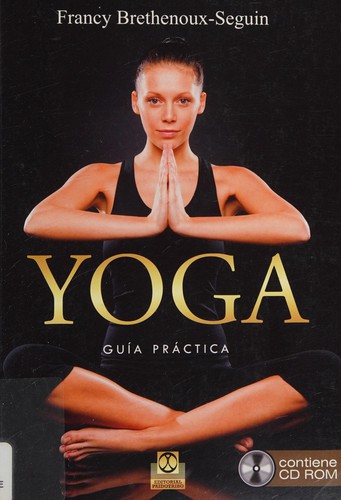
Yoga

 83
83

Yoga
Francy Brethenoux-Seguin’s "Yoga" approaches its subject with a scholarly rigor often absent in contemporary discussions. The author rightly emphasizes the philosophical breadth of Yoga, moving swiftly past the common asana-centric view to engage with its deeper metaphysical currents. A particular strength lies in its clear exposition of the Samkhya cosmology, providing a vital intellectual foundation for understanding Yogic aims. However, the text occasionally becomes dense, particularly when detailing intricate philosophical arguments, which might challenge readers without prior exposure to Indian philosophy. The section on *pranayama* offers a compelling, though brief, glimpse into the energetic mechanics central to advanced practice. Brethenoux-Seguin’s work serves as a valuable corrective to modern distortions, grounding the reader in Yoga's original intent.
📝 Description
83
Francy Brethenoux-Seguin's 'Yoga' (1990) moves beyond physical postures to detail its philosophical depth.
This book examines Yoga's origins and philosophical foundations, contrasting them with common Western interpretations. It argues that Yoga is a complete system for self-discovery and spiritual growth, not just a series of exercises. The text aims to connect modern Yoga practices with their historical and metaphysical roots.
The work places Yoga within the broader context of Indian spiritual thought, specifically its links to Vedanta and Samkhya philosophies. It acknowledges key figures like Patanjali and his Yoga Sutras, showing how Yogic practices and their philosophical underpinnings developed over time. The book also touches on the early 20th-century interest in Eastern spirituality.
Central to the discussion are the Samkhya concepts of *Prakriti* and *Purusha*, which explain the relationship between the material world and the self. The book also covers the *Eight Limbs of Yoga* (Ashtanga Yoga), including ethical guidelines (*yamas* and *niyamas*), breath control (*pranayama*), and meditation (*dharana*, *dhyana*, *samadhi*). The ultimate aim of liberation (*moksha*) through self-knowledge is a recurring theme.
This work is situated within the study of Indian esoteric traditions, particularly the philosophical schools that inform Yoga. By detailing concepts like *Prakriti* and *Purusha* from Samkhya, it grounds the spiritual practice in a specific metaphysical framework. The emphasis on the *Eight Limbs* and the ultimate goal of *moksha* aligns it with classical Yoga philosophies that seek inner transformation and liberation from worldly entanglement. The book contrasts this comprehensive system with superficial understandings, positioning itself as a guide to the deeper, spiritual dimensions of Yoga.
💡 Why Read This Book?
• Gain a foundational understanding of the Samkhya philosophy's role in shaping Yoga's metaphysical framework, moving beyond simple posture practice. • Comprehend the complete system of Ashtanga Yoga, including the ethical observances (*yamas* and *niyamas*) and meditative disciplines, as detailed in the text. • Appreciate Yoga's original goal of *moksha* (liberation) by understanding its philosophical context, as explored by Brethenoux-Seguin in relation to ancient Indian thought.
⭐ Reader Reviews
Honest opinions from readers who have explored this book.
❓ Frequently Asked Questions
What is the primary philosophical system underpinning Yoga discussed in this book?
The book emphasizes the Samkhya philosophy as a foundational system for understanding Yoga. It details the concepts of Purusha (consciousness) and Prakriti (matter) as central to the Yogic worldview and the path to liberation.
Does this book focus solely on physical Yoga postures (asanas)?
No, the work deliberately moves beyond a sole focus on asanas. It explores the broader system of Ashtanga Yoga, encompassing ethical disciplines, breath control (pranayama), concentration, meditation, and the ultimate goal of spiritual realization.
When was Francy Brethenoux-Seguin's Yoga first published?
The original publication date for Francy Brethenoux-Seguin's "Yoga" was 2014. This edition provides access to a comprehensive study of the practice and philosophy.
What is the concept of 'moksha' as presented in the book?
Moksha, discussed within the context of Indian philosophy, refers to liberation or release from the cycle of birth and death. The book presents Yoga as a primary path towards achieving this ultimate spiritual freedom.
Are there specific ancient Indian philosophers mentioned in relation to Yoga?
Yes, the work frequently references Patanjali and his seminal text, the Yoga Sutras, as a crucial historical and philosophical anchor for the practice and theory of Yoga.
How does this book differentiate itself from modern Yoga popularization?
Brethenoux-Seguin distinguishes this work by focusing on the philosophical and spiritual depth of Yoga, contrasting it with contemporary interpretations that often prioritize physical fitness or stress reduction over self-realization.
🔮 Key Themes & Symbolism
The Dualism of Purusha and Prakriti
The text meticulously unpacks the Samkhya philosophical concept of Purusha (pure consciousness) and Prakriti (primordial matter). This fundamental duality serves as the metaphysical bedrock upon which the entire system of Yoga is built. Understanding this distinction is presented as crucial for distinguishing the true Self from the transient material world and its manifestations, a key step toward liberation.
Ashtanga Yoga: Beyond Asana
Brethenoux-Seguin challenges the prevalent Western focus on *asana* (physical postures) by elaborating on the complete eight-limbed path of Ashtanga Yoga, as outlined by Patanjali. The work details the ethical observances (*yamas* and *niyamas*), breath regulation (*pranayama*), sense withdrawal (*pratyahara*), concentration (*dharana*), meditation (*dhyana*), and absorption (*samadhi*), presenting them as integral components of the Yogic journey.
Moksha: The Ultimate Goal
The ultimate aim of Yoga, *moksha* (liberation), is consistently presented as the central objective. The book explains this as release from the cycle of suffering and rebirth, achieved through profound self-knowledge and the cessation of ignorance. It frames the entire Yogic discipline as a systematic method designed to guide the practitioner towards this state of ultimate freedom and enlightenment.
The Philosophical Roots of Yoga
This work grounds Yoga firmly within its historical and philosophical origins in ancient India. It explores the intricate connections and influences between Yoga and other schools of Indian thought, particularly Vedanta and Samkhya. This contextualization provides readers with a scholarly appreciation for the intellectual depth and evolutionary history of Yogic practices and philosophies.
💬 Memorable Quotes
Direct passages from the work, attributed to the author.
“Yoga is not merely a physical discipline but a profound philosophical system for understanding existence.”
— This statement underscores the book's core argument: that the true essence of Yoga lies in its metaphysical and spiritual dimensions, far exceeding the common perception focused solely on bodily postures.
“The distinction between Purusha and Prakriti is the a core part of Yogic inquiry.”
— This highlights the central role of Samkhya philosophy's dualistic framework in the book's exploration of Yoga, emphasizing consciousness versus matter as a primary lens for self-understanding.
“True liberation (moksha) arises from the cessation of ignorance.”
— This conceptual quote expresses the ultimate aim of Yoga as freedom from suffering, achieved by eradicating misunderstanding about the nature of reality and the self.
“Breath (pranayama) is the bridge between the physical and subtle bodies.”
— This interpretation emphasizes the critical role of breath control in Yogic practice, positioning it as a vital link enabling access to deeper states of consciousness and energetic manipulation.
💡 Key Ideas
Editorial paraphrase of the work's core concepts — not direct quotes.
Patanjali's eight limbs provide a systematic pathway to self-realization.
This paraphrase points to the structured approach of Ashtanga Yoga as presented in the text, emphasizing that all eight components, not just asana, are essential for achieving the ultimate goal.
🌙 Esoteric Significance
Tradition
This work firmly belongs within the Hermetic and esoteric study of Eastern spiritual traditions, particularly drawing from the philosophical underpinnings of classical Indian Yoga. It aligns with the Hermetic principle of 'As Above, So Below' by exploring the macrocosmic principles of Purusha and Prakriti and their reflection in the microcosm of human consciousness and physical form.
Symbolism
Key symbols explored include the duality of Purusha (pure consciousness, often symbolized by light or the ethereal) and Prakriti (primordial matter, the manifest universe, symbolized by the earth or dense substance). The concept of the Eight Limbs of Yoga itself functions as a symbolic map, guiding the practitioner through stages of purification and integration towards enlightenment.
Modern Relevance
Contemporary practitioners and scholars seeking to reconnect with the metaphysical depth of Yoga find Brethenoux-Seguin's work invaluable. It informs modern discussions on consciousness studies, mindfulness, and contemplative practices by providing a rigorous historical and philosophical grounding, challenging purely secular or physical interpretations.
👥 Who Should Read This Book
• Students of comparative philosophy and religion seeking to understand the esoteric roots of Yoga beyond popular culture. • Dedicated practitioners of Yoga who wish to deepen their theoretical knowledge and connect their practice to its ancient metaphysical origins. • Scholars of esoteric traditions interested in the cross-pollination of ideas between Eastern and Western mystical thought.
📜 Historical Context
First published in 2014, Francy Brethenoux-Seguin's "Yoga" emerged in an era saturated with popular, often simplified, Western interpretations of the practice. The work situates itself against this backdrop, aiming to re-establish Yoga's profound philosophical and spiritual heritage. It engages directly with the foundational texts and philosophies of ancient India, particularly the Samkhya school and Patanjali's Yoga Sutras, which date back centuries BCE. While not a direct polemic, its scholarly depth implicitly contrasts with the more superficial, fitness-oriented approaches that dominated Western discourse. The book's meticulous examination of concepts like Purusha and Prakriti aligns it with academic and serious spiritual inquiry, offering a corrective to the widespread commodification of Yoga that began accelerating in the late 20th century.
📔 Journal Prompts
The relationship between Purusha and Prakriti in your own experience.
How the *yamas* and *niyamas* can be integrated into daily life.
The role of *pranayama* in cultivating present-moment awareness.
Reflecting on the concept of *moksha* beyond physical liberation.
Mapping the stages of Ashtanga Yoga to personal spiritual development.
🗂️ Glossary
Purusha
In Samkhya and Yoga philosophy, the principle of pure consciousness, the self, or spirit, considered distinct from all material phenomena.
Prakriti
The primordial matter or substance from which the manifest universe arises in Samkhya and Yoga philosophy; the material, phenomenal world.
Asana
A posture or sustained position in the practice of Hatha Yoga, typically referring to the physical postures.
Pranayama
The regulation of breath and energy control, a key practice in Yoga involving specific breathing techniques to influence consciousness and vital force.
Moksha
Liberation, release, or salvation; the ultimate goal in many Indian religions, signifying freedom from the cycle of birth and death (samsara).
Yamas
Ethical restraints or moral disciplines that form the first limb of Ashtanga Yoga, including principles like non-violence, truthfulness, and non-stealing.
Niyamas
Observances or disciplines that constitute the second limb of Ashtanga Yoga, such as purity, contentment, and self-study.
🔮 Readers Also Liked
Browse all →







More Free Occult Philosophy Books
View all →