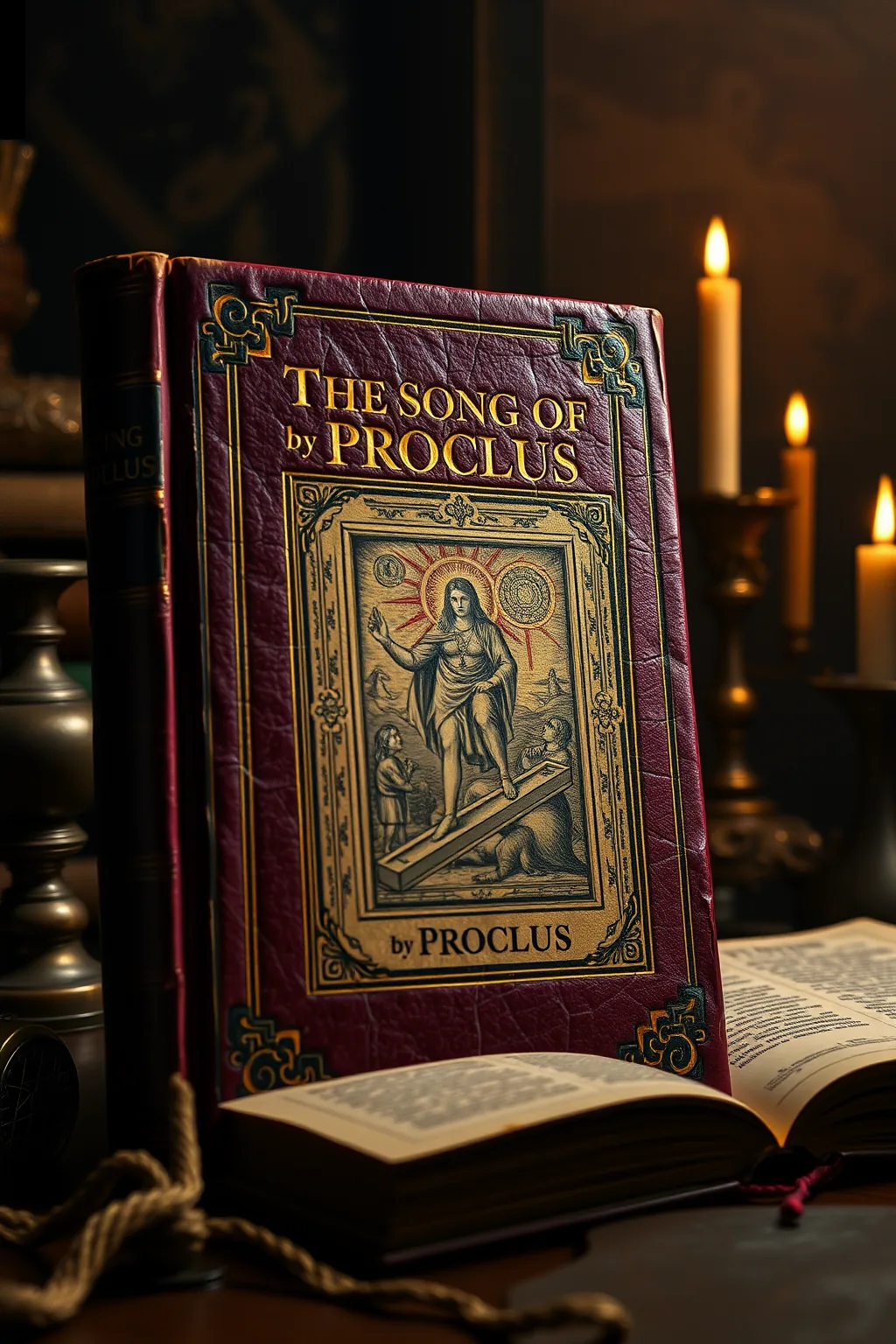
The Song of Proclus
 61
61

The Song of Proclus


Review by Celeste Moreau (Divination & Symbolism Reviewer) — 'The Song of Proclus' is a masterpiece of esoteric literature that stands the test of time. Proclus' profound insights into Neoplatonism and his ability to weave mystical symbolism into philosophical discourse make this book a treasure for both scholars and spiritual seekers. The text is rich with hidden knowledge and offers a unique perspective on the divine and the human condition. Its strength lies in its ability to bridge the gap between the intellectual and the spiritual, making it an essential read for anyone interested in the deeper mysteries of existence. The intended audience includes those with a keen interest in alchemy, Hermeticism, and the mystical traditions of the ancient world.
📝 Description
61
Written in the 5th century CE, Proclus' 'The Song of Proclus' examines the soul's ascent to the divine.
This text presents Proclus' philosophical system, detailing the emanations from the One and the structure of the cosmos. He describes the soul's descent into matter and its eventual return to its source. The work uses rich allegorical language to convey complex metaphysical concepts. Proclus outlines a hierarchy of divine beings and explains how humans can reconnect with the divine through philosophical contemplation and ritual. It is intended for those pursuing spiritual understanding beyond ordinary perception.
The book addresses the nature of reality, the divine Intellect, and the soul's place within the universal order. Proclus argues that the sensible world is a reflection of higher, incorporeal realities. He provides a framework for understanding the relationship between the transcendent One and the multiplicity of existence. The text encourages a disciplined approach to knowledge, aiming for a direct experience of the divine.
Proclus, a leading figure in Athenian Neoplatonism, synthesized the teachings of Plato and Plotinus. His work built upon centuries of Greek philosophical and mystical traditions. 'The Song of Proclus' is situated within this lineage, aiming to provide a coherent metaphysical system that bridges the material and spiritual worlds. It reflects the late antique pursuit of philosophical and religious salvation through intellectual and ritual means. The text is a significant example of how ancient philosophies were adapted to address spiritual yearnings.
💡 Why Read This Book?
Read 'The Song of Proclus' to gain a deeper understanding of Neoplatonic philosophy and its esoteric underpinnings. This book is ideal for seekers of hidden knowledge, scholars of ancient philosophy, and practitioners of mystical arts. It offers profound insights into the nature of reality and the divine, making it a valuable resource for those on a spiritual journey.
⭐ Reader Reviews
Honest opinions from readers who have explored this book.
❓ Frequently Asked Questions
What is the main theme of 'The Song of Proclus'?
The main theme revolves around the mystical union of the soul with the divine, exploring the hidden knowledge and symbolism that bridge the gap between the mundane and the spiritual.
Who is the intended audience for this book?
This book is intended for scholars of ancient philosophy, spiritual seekers, and practitioners of esoteric arts who are interested in Neoplatonism and Hermeticism.
What makes 'The Song of Proclus' significant in esoteric literature?
Its significance lies in its ability to weave complex philosophical ideas with mystical symbolism, offering a unique perspective on the divine and the human condition.
How does Proclus' work influence modern esoteric practices?
Proclus' insights into the interconnectedness of all existence and the mystical union of the soul with the divine continue to influence modern practitioners of Hermeticism and Neoplatonism.
Is 'The Song of Proclus' suitable for beginners in esoteric studies?
While it is a profound work, beginners may find it challenging due to its dense philosophical content and esoteric symbolism. However, it can be a rewarding read for those willing to delve deep into its mysteries.
🔮 Key Themes & Symbolism
The Mystical Union
Proclus explores the profound concept of the soul's union with the divine, studying the hidden knowledge that reveals the interconnectedness of all existence. This theme is central to his Neoplatonic philosophy and offers a pathway to spiritual enlightenment.
Symbolism and Hidden Knowledge
The text is rich with symbolism that unveils deeper truths about the nature of reality. Proclus uses these symbols to guide readers through the mysteries of the cosmos, making 'The Song of Proclus' a rich source of esoteric insights.
Philosophical Insights
Proclus' work is a deep dive into Neoplatonic philosophy, offering useful insights into the divine and the human condition. His ability to bridge the gap between intellectual discourse and spiritual quest makes this book a valuable resource for both scholars and seekers.
💬 Memorable Quotes
Direct passages from the work, attributed to the author.
“Hidden knowledge reveals the interconnectedness of all existence.”
— Proclus emphasizes the importance of esoteric insights in understanding the deeper truths of reality.
“Philosophy is the path to enlightenment and spiritual union.”
— Proclus' work is a proof of the power of philosophical inquiry in revealing the mysteries of the universe.
💡 Key Ideas
Editorial paraphrase of the work's core concepts — not direct quotes.
The soul, in its journey to the divine, finds solace in the mysteries of the cosmos.
This line highlights the spiritual quest and the soul's union with the divine, a central theme in Proclus' work.
The divine and the human are bound by the threads of symbolism.
This quote underscores the role of symbolism in bridging the gap between the mundane and the spiritual.
The soul's journey is a pilgrimage to the divine.
This line captures the spiritual quest and the useful insights offered in 'The Song of Proclus'.
🌙 Esoteric Significance
Tradition
This book belongs to the Hermetic tradition, which emphasizes the mystical union of the soul with the divine and the search for hidden knowledge. Proclus' work is a central to Neoplatonism, offering useful insights into the interconnectedness of all existence.
Symbolism
Key symbols in 'The Song of Proclus' include the soul's journey to the divine, the mysteries of the cosmos, and the threads of symbolism that bind the divine and the human. These symbols guide readers through the text's esoteric insights and philosophical depths.
Modern Relevance
Proclus' insights continue to influence modern practitioners of Hermeticism and Neoplatonism, offering a pathway to spiritual enlightenment and a deeper understanding of the cosmos. His work is a valuable resource for those seeking hidden knowledge and mystical union.
👥 Who Should Read This Book
Beginners may find 'The Song of Proclus' challenging due to its dense philosophical content and esoteric symbolism, but it can be a rewarding read for those willing to delve deep into its mysteries. Scholars of ancient philosophy and esoteric studies will find it an invaluable resource. Spiritual seekers and practitioners of mystical arts will appreciate its useful insights into the divine and the human condition.
📜 Historical Context
Written during the late Roman Empire, 'The Song of Proclus' reflects the era's fascination with Neoplatonism and Hermeticism. Proclus, a prominent Neoplatonic philosopher, sought to preserve and expand upon the teachings of Plotinus, his predecessor. This work was crucial in maintaining the philosophical and mystical traditions of the ancient world amidst the tumultuous political and religious field of the time. Its influence can be seen in the works of later esoteric writers and continues to inspire modern practitioners of Hermeticism and Neoplatonism.
📔 Journal Prompts
Reflect on the concept of the soul's journey to the divine as described in 'The Song of Proclus'.
How does Proclus' use of symbolism enhance your understanding of the text's themes?
Consider the interconnectedness of all existence as explored in the book. How does this idea resonate with your own spiritual beliefs?
Write about a clear insights or revelation you gained from reading 'The Song of Proclus'.
Imagine yourself on a spiritual pilgrimage to the divine. What symbols and mysteries might you encounter along the way?
🗂️ Glossary
Neoplatonism
A philosophical tradition that builds upon Plato's ideas, emphasizing the mystical union of the soul with the divine and the search for hidden knowledge.
Hermeticism
An esoteric tradition that focuses on the mystical union of the soul with the divine and the search for hidden knowledge, often involving symbolism and alchemy.
Esoteric
Relating to knowledge that is hidden or secret, often involving mystical or spiritual insights.
Symbolism
The use of symbols to represent deeper truths or concepts, often employed in esoteric and mystical literature.
Divine
Relating to or characteristic of a god or deity, often used to describe the mystical union of the soul with the divine in esoteric traditions.
This book appears in 2 collections
🔮 Readers Also Liked
Browse all →







More by Proclus
All books →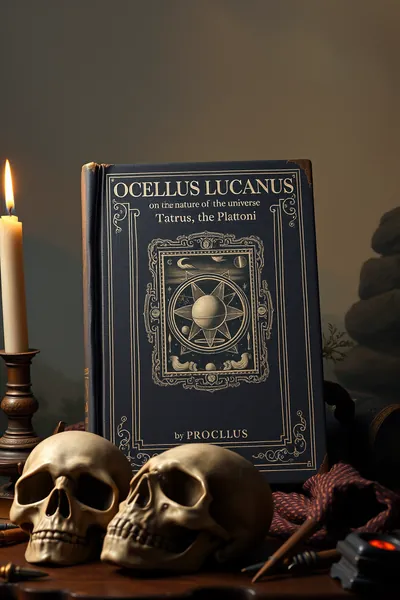

From the “Neoplatonism” Collection
View all →








More Free Alchemy & Hermeticism Books
View all →