Tarot revelations
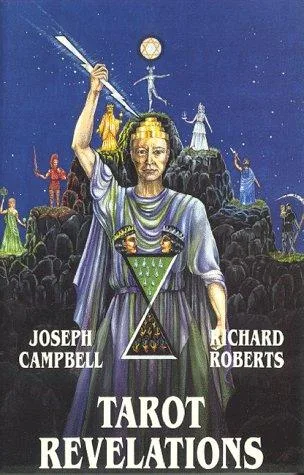
 69
69

Tarot revelations



Silas Hawthorne (Hermetic Studies Editor) — Joseph Campbell's 'Tarot Revelations' is a monumental contribution to esoteric literature. Moving beyond superficial interpretations, Campbell elucidates the Tarot's profound connection to universal mythology and the collective unconscious. His masterful analysis reveals the cards not as mere fortune-telling tools, but as potent archetypal keys to understanding the human psyche and the spiritual journey. This work is indispensable for anyone seeking to grasp the deeper philosophical and mystical underpinnings of the Tarot. Campbell's erudition shines, offering profound insights for serious students of divination, mythology, and the hermetic arts. It is a text that rewards deep study and contemplation, illuminating the path for those who seek wisdom beyond the veil.
📝 Description
69
Joseph Campbell's 1992 book views the Tarot as a mirror for universal human experience.
Joseph Campbell's 'Tarot Revelations,' published in 1992, examines the Tarot not just as a system of card meanings, but as a symbolic language reflecting deep psychological patterns. Campbell, known for his work on mythology, connects the 78 Tarot cards to archetypes that appear across cultures and throughout history. He argues that the Tarot deck acts as a map of the human psyche, illustrating stages of transformation and the quest for meaning.
The book presents each card as a key to understanding fundamental aspects of life, from creation and conflict to self discovery and spiritual destiny. Campbell uses his extensive knowledge of world myths and religions to illustrate how these ancient symbols relate to the personal lives of readers. The work aims to provide a framework for deciphering the symbolic grammar of existence, suggesting an underlying interconnectedness in all things.
This book situates the Tarot within a broader esoteric tradition that sees symbolic systems as keys to understanding consciousness and the universe. Campbell draws parallels to Jungian psychology, viewing the Tarot cards as embodiments of archetypes that shape human experience. The work aligns with hermetic traditions that seek hidden correspondences between the macrocosm and the microcosm, suggesting that the Tarot can reveal universal patterns of creation, destruction, and renewal. It treats the Tarot not as mere fortune telling, but as a philosophical tool for self reflection and cosmic understanding.
💡 Why Read This Book?
Unravel the archetypal language of the soul and connect with universal mythic patterns. 'Tarot Revelations' offers a profound, philosophical lens through which to view the Tarot, revealing its sacred symbolism and esoteric wisdom. Ideal for seekers of hidden knowledge, scholars of comparative mythology, and practitioners ready to deepen their understanding of this ancient divinatory art.
⭐ Reader Reviews
Honest opinions from readers who have explored this book.
❓ Frequently Asked Questions
Is this book for beginners?
While 'Tarot Revelations' offers profound insights, Campbell assumes a certain familiarity with mythological concepts. Beginners may find it beneficial to start with a foundational Tarot text before delving into this more philosophical exploration.
What makes Campbell's approach unique?
Campbell integrates the Tarot with his groundbreaking work on mythology and the hero's journey, revealing its deep connection to universal archetypes and the human psyche's spiritual evolution.
Does this book offer practical readings?
The focus is on philosophical and symbolic interpretation rather than predictive techniques. It empowers readers to understand the archetypal currents influencing their lives, fostering self-awareness and wisdom.
What esoteric traditions does Campbell draw upon?
Campbell weaves together insights from Jungian psychology, comparative mythology, and various ancient spiritual traditions, presenting a holistic esoteric perspective on the Tarot's symbolism.
How does this book illuminate the Tarot's symbolism?
Campbell treats each card as a potent symbol of universal human experiences and spiritual stages, connecting them to the archetypal narratives that shape our collective consciousness and individual journeys.
🔮 Key Themes & Symbolism
Archetypal Mythology and the Tarot
Campbell masterfully positions the Tarot not as a disconnected system, but as a profound manifestation of universal archetypes that resonate across cultures and time. He demonstrates how the Major Arcana, in particular, mirrors the stages of the 'hero's journey,' a pattern he identified as fundamental to human narrative and psychological development. This perspective elevates the Tarot from a mere divinatory tool to a sacred map of the soul's journey, offering useful insights into the common threads of human experience and spiritual growth.
The Tarot as a Mirror of Consciousness
This work illuminates the Tarot as a profound tool for introspection and understanding the depths of human consciousness. Campbell explores how the symbolic language of the cards reflects the inner range of the individual, revealing hidden potentials, challenges, and transformative processes. By engaging with the archetypal imagery, readers are encouraged to confront their own shadows, embrace their inner light, and gain a deeper awareness of the unconscious forces that shape their lives and destinies.
Esoteric Wisdom and Symbolism
Campbell studies the esoteric significance of the Tarot, treating its symbols as conduits of ancient wisdom and spiritual truths. He unpacks the layered meanings embedded within each card, drawing connections to alchemy, astrology, and other mystical traditions. The book serves as a guide to deciphering this rich symbolic language, empowering readers to access a deeper understanding of the universe's intricate workings and their own place within the cosmic collection.
💬 Memorable Quotes
Direct passages from the work, attributed to the author.
“The Tarot is a way of reading the world.”
— This suggests the Tarot's cards are not just symbols, but a language through which the universe communicates its underlying order and meaning.
“Where you stumble, there lies your treasure.”
— A powerful reminder that challenges and difficulties often hold the keys to personal growth and profound discoveries about oneself.
“Follow your bliss.”
— Encourages individuals to pursue their passions and inner calling, aligning their life's path with their deepest desires and authentic self.
“Myth is the secret opening through which the energy of the divine enters the world.”
— Highlights the vital role of mythology, and by extension, the Tarot's symbolic narratives, in channeling spiritual energy and revealing transcendent truths.
💡 Key Ideas
Editorial paraphrase of the work's core concepts — not direct quotes.
We must be willing to get rid of the life we've planned, so as to have the life that is waiting for us.
This quote speaks to the transformative power of the Tarot, urging acceptance of the unknown and embracing change for spiritual evolution.
🌙 Esoteric Significance
Tradition
Campbell's work on the Tarot is deeply rooted in the tradition of comparative mythology and Jungian psychology, viewing the cards as potent archetypal symbols that represent universal stages of human development and the collective unconscious. He draws parallels with ancient mystery traditions, alchemical symbolism, and various spiritual philosophies, positioning the Tarot as a sacred text for understanding the soul's journey and the hidden forces that shape existence.
Symbolism
The esoteric significance lies in Campbell's ability to decode the strong symbolism of the Tarot. He interprets the Major Arcana as a grand narrative of the hero's journey, with each card representing a crucial stage of initiation, transformation, and self-discovery. The Minor Arcana are seen as reflecting the mundane experiences and challenges that shape our earthly lives, all imbued with deeper, archetypal meanings waiting to be unearthed.
Modern Relevance
Today, , 'Tarot Revelations' offers a timeless framework for navigating complexity and seeking meaning. Campbell's insights into archetypes and the hero's journey provide a powerful lens for understanding personal growth, societal shifts, and the enduring quest for self-knowledge. The book's emphasis on symbolic language and inner exploration resonates deeply with contemporary seekers looking for spiritual depth and a more profound connection to themselves and the universe.
👥 Who Should Read This Book
This book is essential for mythologists, psychologists, and anyone fascinated by the archetypal underpinnings of human experience. Tarot practitioners seeking to move beyond superficial interpretations and study the profound philosophical and spiritual dimensions of the cards will find it invaluable. Students of comparative religion and spirituality will appreciate Campbell's cross-cultural approach. Ultimately, 'Tarot Revelations' is for the earnest seeker yearning to understand the symbolic language of the cosmos and their own inner landscape.
📜 Historical Context
Joseph Campbell's 'Tarot Revelations' emerged in an era of burgeoning interest in mythology, psychology, and esoteric studies, particularly in the mid to late 20th century. Following the groundbreaking work of Carl Jung on archetypes and the collective unconscious, there was a renewed appreciation for ancient systems of wisdom and divination as pathways to understanding the human psyche. Campbell, already a celebrated figure for his key work 'The Hero with a Thousand Faces,' brought his outstanding expertise in comparative mythology to the Tarot. This period saw a significant cross-pollination between academic disciplines and spiritual exploration, making 'Tarot Revelations' an important text that bridged these worlds and offered a sophisticated, mythologically-grounded interpretation of the Tarot.
📔 Journal Prompts
Reflect on a recent challenge you faced. Which Tarot archetype, as described by Campbell, speaks to this experience and why?
Consider the 'hero's journey' as outlined by Campbell. Which stage are you currently navigating in your life, and what cards might represent this phase?
Explore the concept of the 'collective unconscious' in relation to the Tarot. How do the universal symbols of the cards connect you to humanity's shared experience?
Campbell suggests the Tarot is a 'mirror of consciousness.' How can you use a specific Tarot card's imagery to gain insight into your current emotional or mental state?
How does the integration of myth and symbol in the Tarot, as presented by Campbell, challenge or affirm your existing beliefs about spirituality and personal destiny?
🗂️ Glossary
Archetype
A universal, inherited pattern of thought or imagery derived from the collective unconscious, often found in myth, folklore, and dreams. Campbell extensively uses archetypes to interpret the Tarot.
Collective Unconscious
A concept proposed by Carl Jung, referring to the deepest level of the unconscious psyche, containing inherited psychic structures and universal patterns common to all humanity.
Hero's Journey
A narrative pattern identified by Joseph Campbell, describing the typical stages of adventure and transformation undertaken by a protagonist in myths and stories across cultures.
Mythology
The study of myths, or a collection of myths, especially one belonging to a particular religious or cultural tradition. Campbell's work is foundational to this field.
Esotericism
Beliefs and practices that are hidden or secret, often concerning spiritual or mystical knowledge accessible only to a select few initiates or those with specialized understanding.
This book appears in 3 collections
🔮 Readers Also Liked
Browse all →









More by Joseph Campbell
All books →





From the “Tarot” Collection
View all →






More Free Divination & Tarot Books
View all →