De coelo et ejus mirabilibus
 67
67

De coelo et ejus mirabilibus



Cassian Rothmann (Senior Critic, Ancient Wisdom) — Emanuel Swedenborg's 'De coelo et ejus mirabilibus' is an unparalleled testament to direct spiritual insight. Published amidst the intellectual ferment of the 18th century, it transcends typical theological discourse, offering a vivid, experiential account of the afterlife. Swedenborg's meticulous descriptions of celestial and infernal realms, their inhabitants, and their governing principles provide profound esoteric knowledge. His emphasis on spiritual correspondence and the inherent order of the universe offers a unique lens for understanding divine providence. This work is essential for serious students of mysticism, comparative religion, and anyone seeking a deeply reasoned, yet profoundly spiritual, exploration of existence beyond the material plane. Its clarity and detailed observations remain remarkable.
📝 Description
67
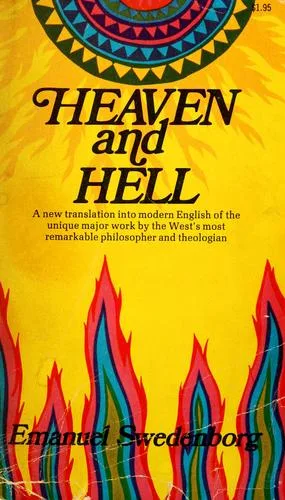
Emanuel Swedenborg published 'De coelo et ejus mirabilibus' in 1758, detailing his visions of heaven and hell.
Published in 1758, Emanuel Swedenborg's 'De coelo et ejus mirabilibus' (Heaven and Its Wonders and Hell) describes the spiritual realms Swedenborg claimed to have visited. He meticulously details the structure of heaven and hell, the societies within them, and the divine order that governs them. Swedenborg presents this not as abstract theory, but as a direct report of spiritual perception, a cartography of the afterlife.
The book argues that the spiritual world is a tangible reality, governed by divine love and wisdom, and accessible through spiritual sight. It explains the symbolic language of the heavens and the concept of spiritual correspondence. For those seeking to understand the soul, divine justice, and eternal existence, Swedenborg offers a detailed account of these concepts.
Emanuel Swedenborg's work occupies a unique place within Christian esotericism. Emerging in the mid-18th century, his writings claimed direct revelation concerning the spiritual world, distinguishing them from earlier mystical traditions. Unlike Neoplatonism or Kabbalah, Swedenborg's system is explicitly Christian, interpreting scripture through his visionary experiences. His detailed descriptions of angelic societies and the mechanics of the afterlife sought to provide a rational, albeit supernatural, understanding of divine order and human destiny beyond earthly life.
💡 Why Read This Book?
Embark on an extraordinary exploration of the afterlife, guided by a seer's direct experience. 'De coelo et ejus mirabilibus' offers profound insights into spiritual realities, divine order, and the nature of the soul. Ideal for seekers of hidden knowledge, scholars of mysticism, and practitioners desiring a deeper understanding of heaven, hell, and spiritual correspondence.
⭐ Reader Reviews
Honest opinions from readers who have explored this book.
❓ Frequently Asked Questions
What is the primary focus of 'De coelo et ejus mirabilibus'?
This seminal work meticulously details Emanuel Swedenborg's spiritual visions of Heaven and Hell, offering an unprecedented look into the structure, societies, and governing principles of the afterlife, grounded in divine love and wisdom.
Who was Emanuel Swedenborg?
Swedenborg (1688-1772) was a Swedish scientist, inventor, theologian, and mystic renowned for his extensive spiritual experiences and writings, particularly his detailed accounts of the spiritual world.
Is this book purely theological, or does it have esoteric elements?
While rooted in a Christian framework, 'De coelo et ejus mirabilibus' is profoundly esoteric, revealing hidden spiritual correspondences and presenting the afterlife as a tangible, ordered reality accessible through spiritual perception.
What is 'spiritual correspondence' as discussed by Swedenborg?
Swedenborg taught that there is a profound symbolic relationship between the natural world and the spiritual world, where every element in nature reflects a spiritual truth or an aspect of the Divine.
When was 'De coelo et ejus mirabilibus' first published?
This significant work was first published in 1758, as part of a series of five major theological works Swedenborg released that year, solidifying its place in early modern esoteric literature.
🔮 Key Themes & Symbolism
The Architecture of the Afterlife
Swedenborg meticulously maps the celestial and infernal realms, detailing their distinct atmospheres, societies, and the intricate divine order that governs them. This isn't a place of static judgment, but a dynamic spiritual reality where individuals freely choose their eternal dwelling based on their love and will. The text emphasizes the profound interconnectedness of all souls within these realms and the omnipresent influence of Divine Providence, offering a structured, yet deeply personal, vision of post-mortem existence.
Spiritual Correspondence and Symbolism
A central to Swedenborg's philosophy is the doctrine of spiritual correspondence, positing that every element in the natural world mirrors a spiritual reality. 'De coelo et ejus mirabilibus' illustrates this principle extensively, interpreting natural phenomena, human actions, and even biblical narratives as symbolic expressions of divine truths. This reveals a hidden layer of meaning woven into the fabric of creation, allowing readers to perceive the spiritual essence underlying the material world and understand the language of the Divine.
The Nature of the Soul and Eternal Life
This work looks at the fundamental nature of the soul, its transition from the physical body, and its eternal existence. Swedenborg argues that life after death is a continuation and refinement of our earthly character, emphasizing the role of love and will in shaping our spiritual destiny. The book offers a hopeful yet realistic perspective on eternal life, portraying it not as a reward for dogma, but as a natural consequence of one's internal state and alignment with divine principles, urging readers toward spiritual growth and self-awareness.
💬 Memorable Quotes
Direct passages from the work, attributed to the author.
“The heavens are filled with angels, and the hells are filled with demons.”
— This stark statement highlights Swedenborg's central thesis: the spiritual realms are populated by distinct spiritual beings, angels representing divine love and demons representing its opposite, shaping the very essence of these planes.
“Man's life is from the Lord.”
— A fundamental tenet of Swedenborg's theology, asserting that all life, consciousness, and spiritual energy originate from the Divine, emphasizing dependence and connection to the Creator.
“The Lord’s providence is in the minutest particulars.”
— This highlights Swedenborg's belief in the all-encompassing and detailed care of the Divine, suggesting that nothing occurs by chance, but rather within a divinely orchestrated plan.
“Love is the life of man.”
— This emphasizes the paramount importance of love, particularly divine love, as the animating force and essence of human existence and spiritual well-being.
💡 Key Ideas
Editorial paraphrase of the work's core concepts — not direct quotes.
All things in the universe are connected by correspondences.
This quote expresses Swedenborg's core doctrine, revealing the hidden symbolic language of creation and the profound interconnectedness between the material and spiritual worlds.
🌙 Esoteric Significance
Tradition
Swedenborg's work stands as a unique pillar within Christian mysticism and esoteric philosophy. It draws heavily on Christian doctrine but reinterprets it through direct spiritual experience and a sophisticated system of symbolism. His revelations are often categorized under 'New Christianity' or 'Swedenborgianism,' a distinct spiritual tradition that emphasizes the inner spiritual meaning of scripture and the reality of the spiritual world accessible through divine illumination.
Symbolism
The text is rich with symbolism derived from biblical narratives, natural phenomena, and universal archetypes. Swedenborg meticulously deciphers the symbolic language of the spiritual world, where celestial forms, divine light, and even the actions of spiritual beings hold profound meanings. He emphasizes that the entire natural creation is a symbolic representation of divine truths, making the world itself a vast scripture waiting to be understood through the lens of spiritual correspondence.
Modern Relevance
In an era often preoccupied with materialism and the tangible, Swedenborg's 'De coelo et ejus mirabilibus' offers a powerful counterpoint, reasserting the reality and importance of the spiritual dimension. Its exploration of consciousness, the afterlife, and the nature of love and wisdom remains profoundly relevant for personal growth, spiritual inquiry, and understanding the human condition. The book provides a framework for contemplating life's ultimate questions and fosters a deeper appreciation for the divine order that underpins existence.
👥 Who Should Read This Book
This profound work is essential for scholars of comparative religion, mysticism, and esoteric traditions seeking rigorous, experiential accounts of the afterlife. Spiritual seekers yearning for a deeper, more nuanced understanding of Christian eschatology and the nature of divine love will find it useful. Practitioners of meditation and contemplative prayer may find Swedenborg's descriptions of spiritual states and divine presence inspiring. Even those new to esoteric literature can approach this text, as Swedenborg's clear prose and detailed observations offer a compelling entry point into the mysteries of the spiritual world.
📜 Historical Context
Published in 1758, 'De coelo et ejus mirabilibus' emerged during the height of the Enlightenment, a period characterized by burgeoning scientific inquiry and a questioning of traditional religious authority. Yet, it also coincided with a resurgence of interest in mysticism and the occult. Swedenborg, a figure bridging both worlds, presented his profound spiritual revelations within a rigorously logical framework, drawing upon his scientific background. His work offered a compelling alternative to both dry rationalism and uncritical faith, providing a detailed, experiential account of the afterlife that resonated with seekers of deeper truths and challenged established theological paradigms. Its publication marked a significant moment in the development of Western esoteric thought, influencing subsequent movements and offering a unique perspective on Christian eschatology.
📔 Journal Prompts
Reflect on a personal experience that felt divinely guided or orchestrated. How does Swedenborg's concept of providence resonate with this experience?
Consider the concept of 'spiritual correspondence.' How might you observe or interpret symbolic connections between the natural world around you and your inner spiritual life?
Swedenborg describes heaven as a state of love and hell as a state of self-love. How does this understanding influence your perception of human relationships and societal structures?
Imagine you are preparing for your transition to the spiritual world. What 'affections' or dominant loves would you hope to carry with you, based on Swedenborg's descriptions?
How does the idea of a structured, ordered spiritual realm, as described by Swedenborg, impact your view of free will and divine determination?
🗂️ Glossary
Spiritual Correspondence
The doctrine that the natural world is a symbolic representation of the spiritual world, where natural objects and phenomena correspond to and reflect divine truths and spiritual realities.
Divine Providence
Swedenborg's concept of God's continuous, active, and loving guidance and care over all aspects of creation, ensuring that events lead towards good and spiritual growth.
Spiritual World
The area of existence beyond the physical, inhabited by spirits and angels, which Swedenborg claimed to have experienced directly and described in detail.
Affinities
In Swedenborg's theology, these refer to the dominant loves or desires that shape an individual's spiritual state and determine their eternal abode in the afterlife.
Internal Man
The spiritual or inner aspect of a human being, distinct from the external or physical body, which Swedenborg believed is the seat of consciousness and receives life from the Lord.
This book appears in 3 collections
🔮 Readers Also Liked
Browse all →








More by Emanuel Swedenborg
All books →



From the “Tarot” Collection
View all →









More Free Divination & Tarot Books
View all →