Tarot of Ceremonial Magick
 73
73

Tarot of Ceremonial Magick
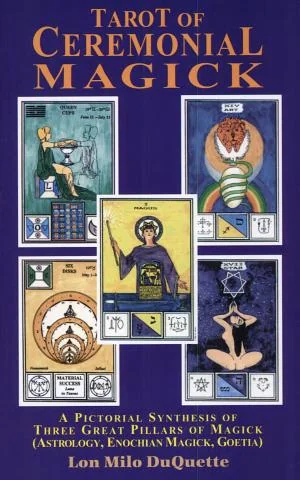
Lon Milo Duquette's Tarot of Ceremonial Magick is an ambitious undertaking, attempting to map a vast constellation of occult systems onto the twenty-two Major Arcana and fifty-six Minor Arcana. The strength of the work lies in its sheer density of information; each card is a nexus of astrological, Enochian, Goetic, and elemental attributions, making it an invaluable reference for those already steeped in these traditions. Duquette's explanation of the symbology, particularly how it relates to Crowley's conceptual framework, is clear and direct. However, the sheer volume of correspondences can also be its limitation. For a newcomer, the integrated systems might feel overwhelming, lacking the gradual introduction that simpler decks offer. A specific passage detailing the Solar and Lunar aspects of the Fool card, juxtaposed with its Enochian designation, exemplifies this intricate layering. This is a specialized tool, not a beginner's primer.
📝 Description
73
Lon Milo Duquette published the Tarot of Ceremonial Magick in 1995, detailing its unique symbolic integrations.
The Tarot of Ceremonial Magick, authored by Lon Milo Duquette and first released in 1995, presents a distinct tarot deck and accompanying text. This work systematically details the symbolic elements incorporated into each card. Unlike more common decks, Duquette's creation integrates components from a range of esoteric systems, including Zodiacal, Enochian, Ceremonial, Goetic, Tattvic, and Elemental correspondences.
This volume is especially useful for students of Aleister Crowley's writings, offering a clearer path to grasping the conceptual connections he established. It also suits practitioners aiming to deepen their work with the symbolic language of magick. The book provides a structured approach for studying the complex meanings within tarot, particularly when examined through a ceremonial perspective. Its core innovation is the multi-systemic attribution on each card, allowing for comparative study of correspondences across various magical disciplines.
Released in the mid-1990s, the Tarot of Ceremonial Magick appeared during a resurgence of interest in Crowleyan magick and related esoteric studies. It offered a concrete system for merging diverse magical traditions within the familiar tarot structure. This provided a specific alternative to decks that did not incorporate such a broad array of occult correspondences, like the Enochian and Goetic systems, which are central to its design.
💡 Why Read This Book?
• Gain a structured method for understanding how diverse occult systems, such as Enochian and Goetic magick, interlock with the tarot, as detailed in the book's multi-layered card attributions. • Explore the symbolic connections Lon Milo Duquette draws between the tarot and the conceptual frameworks of Aleister Crowley, enhancing comprehension of complex magickal theories. • Utilize a unique tarot deck that integrates specific correspondences—Zodiacal, Tattvic, Elemental—offering a richer, comparative study for advanced practitioners of ceremonial magick.
⭐ Reader Reviews
Honest opinions from readers who have explored this book.
❓ Frequently Asked Questions
What makes the Tarot of Ceremonial Magick different from other tarot decks?
This deck, created by Lon Milo Duquette, integrates numerous esoteric systems onto each card, including Zodiacal, Enochian, Ceremonial, Goetic, Tattvic, and Elemental components, offering a densely symbolic representation.
Who is the primary audience for this book and deck?
It is particularly suited for students of Aleister Crowley's works and practitioners of ceremonial magick who wish to explore deeper, multi-systemic correspondences within tarot.
When was the Tarot of Ceremonial Magick first published?
The book and its accompanying deck were first published on June 1, 1995, by U. S. Games.
Does the book explain the meaning of each card?
Yes, the book explains the symbology of each card, detailing its place and relationships within various esoteric systems like Enochian and Goetic magick.
Is this deck suitable for beginners in tarot?
While informative, the deck's complexity and integration of multiple esoteric systems may be more suitable for intermediate to advanced practitioners already familiar with occult frameworks.
What specific occult systems are referenced on the cards?
The cards feature attributions from the Zodiac, Enochian language, Ceremonial Magick, Goetia, Tattvic principles, and Elemental correspondences.
🔮 Key Themes & Symbolism
Multi-Systemic Correspondences
The central theme is the integration of diverse esoteric frameworks onto the tarot. Each card serves as a nexus, displaying its Zodiacal, Enochian, Ceremonial, Goetic, Tattvic, and Elemental components. This creates a dense symbolic field, allowing practitioners to view the tarot not just as a divination tool but as a comprehensive map of occult knowledge, facilitating deeper comparative study across different magical disciplines.
Crowleyan Connections
A significant aspect is making Aleister Crowley's complex conceptual connections more accessible. The book and deck provide a visual and textual key to understanding how Crowley synthesized various magical traditions. For those studying Thelema or his broader occult work, this deck offers a practical means to grasp the intricate relationships between Crowley's magical theories and the archetypal imagery of the tarot.
Ceremonial Magick Framework
The work is framed within the context of ceremonial magick. It emphasizes the structured, ritualistic application of magical principles. The detailed attributions on each card are designed to inform and enhance magical practice, moving beyond simple divinatory interpretations to a more functional understanding of the cards as components within a larger magical system.
Enochian and Goetic Integration
A distinctive feature is the inclusion of Enochian and Goetic elements. This bridges the gap between traditional tarot study and specific grimoire traditions. The cards are mapped to angelic hierarchies and demonic figures, offering a unique lens for interpreting their energies and applications within a magical context, thereby enriching the symbolic vocabulary available to the practitioner.
💬 Memorable Quotes
Direct passages from the work, attributed to the author.
“For students of Crowley's works, this new deck and book makes his conceptual connections more accessible.”
— This highlights the book's utility as a bridge for understanding Aleister Crowley's often intricate and esoteric theories, translating them into a more tangible and visual format through the tarot.
“The Tarot of Ceremonial Magick is a new deck created by DuQuette and published by U. S. Games.”
— This factual statement grounds the work in its publication history, identifying the author, the publisher (U.S. Games), and the nature of the creation as a novel tarot deck.
“Illustrated. Bibliography.”
— These concise descriptors indicate that the book features visual aids to explain the concepts and includes a list of sources, suggesting a scholarly or well-researched approach to the subject matter.
💡 Key Ideas
Editorial paraphrase of the work's core concepts — not direct quotes.
On each card is shown the Zodiacal, Enochian, Ceremonial, Goetic, Tattvic, and Elemental components, along with the card's place in each of those systems, and its relationships to other cards.
This quote expresses the book's core objective: to create a densely layered tarot system by mapping multiple occult disciplines onto each card, fostering a comparative and integrated approach to esoteric study.
In this groundbreaking book, he explains the symbology of the cards.
This paraphrased concept emphasizes the book's role as an explanatory guide to the intricate symbolic language Duquette has embedded within his unique tarot deck.
🌙 Esoteric Significance
Tradition
This work firmly resides within the Western Esoteric Tradition, specifically drawing from Hermeticism, Ceremonial Magick, and Crowleyan Thelema. It extends the traditional Hermetic principle of 'As Above, So Below' by integrating systems like the Enochian language and Goetic hierarchy, which were prominent in the magical revival movements of the late 19th and early 20th centuries, notably popularized by figures like John Dee and Aleister Crowley.
Symbolism
Key symbols include the integration of Enochian script and Goetic sigils onto tarot cards. The Enochian components connect the cards to a celestial hierarchy, while Goetic sigils link them to specific entities from the Ars Goetia. The Tattvic symbols, derived from Indian yogic traditions, represent elemental qualities and consciousness states, adding another layer of interpretive depth to the familiar tarot archetypes.
Modern Relevance
Contemporary practitioners of ceremonial magick, particularly those aligned with O.T.O. (Ordo Templi Orientis) or A∴A∴ traditions, continue to find value in Duquette's work for its systematic approach to correspondences. It serves as a reference for modern occultists seeking to synthesize diverse magical systems and enhance their understanding of tarot as a tool for spiritual development and ritual work.
👥 Who Should Read This Book
• Students of Aleister Crowley's philosophy and magick seeking a practical tool to understand his complex symbolic systems. • Practitioners of ceremonial magick looking to deepen their understanding of tarot by integrating Enochian, Goetic, and Tattvic correspondences. • Occult researchers interested in comparative studies of esoteric systems and how they can be synthesized within a single framework.
📜 Historical Context
Published in June 1995 by U.S. Games, Lon Milo Duquette's Tarot of Ceremonial Magick arrived at a time when Western esoteric traditions were experiencing a resurgence of interest, particularly among those drawn to the works of Aleister Crowley. The mid-1990s saw a growing demand for practical, system-integrated magical tools. Duquette's deck and book offered a novel approach by mapping a wide array of esoteric correspondences—Enochian, Goetic, Tattvic, Elemental, and Zodiacal—onto the familiar structure of the tarot. This contrasted with many existing decks that might focus more narrowly on astrological or elemental attributions. The work provided a tangible method for practitioners to engage with the complex theoretical underpinnings of ceremonial magick, making Crowley's often abstract concepts more concrete. While not directly engaging with contemporary academic scholarship on magick, it served the needs of a dedicated community seeking to deepen their practice through syncretic approaches.
📔 Journal Prompts
The Enochian components on each card: how might they inform your understanding of divine communication?
Compare the Goetic attributions of two cards; what unexpected relationships emerge?
Reflect on the integration of Tattvic principles with Zodiacal correspondences for a specific card.
How do the ceremonial magickal aspects of a card's symbolism influence its interpretation in divination?
Consider the Elemental components as presented; how do they relate to your personal elemental balance?
🗂️ Glossary
Enochian
A system of angelic language and magic attributed to the biblical figure Enoch, developed by John Dee and Edward Kelley in the 16th century, involving a complex set of calls, sigils, and celestial geographies.
Goetic
Pertaining to the Goetia, a principal book of the Lesser Key of Solomon, which lists and describes 72 demons or spirits that can be summoned and controlled by a magician.
Tattvic
Relating to the Tattvas, principles or elements of reality originating from Indian philosophy, often represented by specific symbols and colors, used in meditation and yogic practices to understand cosmic and individual consciousness.
Ceremonial Magick
A formalized system of magic involving elaborate rituals, specific incantations, symbolic tools, and often drawing upon Kabbalistic, Hermetic, and astrological principles.
Zodiacal
Relating to the Zodiac, a belt of the heavens encompassing the paths of the Sun, Moon, and planets, divided into twelve signs, each associated with specific qualities and archetypes in astrology.
Correspondences
In esoteric traditions, the symbolic relationships and affinities between different elements, symbols, deities, planets, colors, and other aspects of the universe, used to create a coherent magical system.
Lon Milo Duquette
An American occult author, magician, and musician known for his accessible yet comprehensive writings on various esoteric subjects, particularly those related to Aleister Crowley and ceremonial magick.
This book appears in 2 collections
🔮 Readers Also Liked
Browse all →








From the “Enochian Magic” Collection
View all →



More Free Occult Philosophy Books
View all →