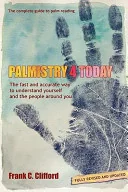
Palmistry 4 Today
 82
82

Palmistry 4 Today
Frank C. Clifford and Jane Struthers’ Palmistry 4 Today offers a refreshingly structured approach to hand analysis, moving beyond mere anecdote. The updated 2009 edition distinguishes itself by integrating practical assignments, directly linking theoretical knowledge to demonstrable skill development. This methodical presentation is its greatest strength, providing a clear pathway for students. A limitation, however, lies in the sheer volume of detail; while comprehensive, it can feel dense for the absolute novice. The discussion on the "Simian line"—a single crease across the palm—serves as a good example of how the authors connect specific hand features to psychological interpretations, though at times the correlation feels more asserted than deeply explored. Ultimately, it functions effectively as a rigorous textbook for the dedicated student of palmistry.
📝 Description
82
Frank C. Clifford and Jane Struthers's "Palmistry 4 Today" was updated in 2009.
"Palmistry 4 Today" offers a structured approach to hand analysis for contemporary readers. The book covers the interpretation of hand lines, mounts, and shapes, connecting these physical features to personality and life patterns. It aims to make the techniques of palmistry clear and accessible. This revised edition serves as both a self-study guide and a course. It provides step-by-step instructions suitable for those new to palmistry. It also assists individuals with prior experience who want to improve their interpretive skills. The text includes exercises designed for a Diploma Course in Hand Analysis, catering to aspiring professional palmists.
The authors detail the meaning of major lines like the Life, Head, and Heart lines, along with minor lines and the various mounts on the palm. Hand shapes, finger proportions, and even fingernail characteristics are discussed. Clifford and Struthers present these elements systematically, breaking down the practice into manageable components. The book encourages a practical understanding of how these diverse features combine to form a complete reading.
Palmistry, or chiromancy, has ancient origins in India, Persia, and Greece. Its practice became more visible in Western esotericism during the Renaissance alongside Hermetic philosophy. This book, first published in 2009, engages with this long tradition. It approaches palmistry from a modern perspective, often aligned with psychological self-understanding or self-help, distinguishing it from earlier, solely divinatory applications.
💡 Why Read This Book?
• Gain a structured understanding of hand analysis, moving beyond superficial interpretations by learning to identify and interpret the major and minor lines, as detailed in "Palmistry 4 Today," enabling a more nuanced reading. • Develop practical skills through integrated assignments, a core feature of the 2009 edition, allowing you to apply theoretical knowledge of mounts and hand shapes to real-world analysis. • Explore the psychological correlations of hand features, understanding how concepts like the Mount of Venus are presented not just as divinatory markers but as indicators of personality and desire.
⭐ Reader Reviews
Honest opinions from readers who have explored this book.
❓ Frequently Asked Questions
What is the primary purpose of the assignments in "Palmistry 4 Today"?
The assignments are designed to facilitate practical learning and skill development. They guide readers through analyzing hands, correlating observations with personality traits, and are structured to support completion of the author's Diploma Course in Hand Analysis.
When was "Palmistry 4 Today" first published?
The book was first published in September 2009. This edition is a revised and updated version, building upon earlier works by Frank C. Clifford.
Does "Palmistry 4 Today" focus on prediction or personality analysis?
While it touches upon potential life patterns, the book primarily emphasizes personality analysis. It aims to provide insight into inherent potentials, tendencies, and character rather than offering deterministic predictions.
What specific elements of the hand does the book analyze?
It systematically examines major and minor lines (Life, Head, Heart, Fate, etc.), the various mounts on the palm (Venus, Jupiter, Saturn, etc.), hand shapes, finger proportions, and even skin texture and color for a holistic interpretation.
Is prior knowledge of palmistry required to read this book?
No, "Palmistry 4 Today" is structured to be accessible to beginners. It provides foundational knowledge and step-by-step instructions, making it suitable for those new to the subject.
Who authored "Palmistry 4 Today"?
The book is authored by Frank C. Clifford, with contributions or co-authorship from Jane Struthers for this edition. Frank C. Clifford was a recognized authority in palmistry.
🔮 Key Themes & Symbolism
Line and Mount Interpretation
The core of palmistry lies in deciphering the intricate map of the hand. This work meticulously details the meaning of major lines such as the Life Line, Head Line, and Heart Line, explaining how their depth, length, and breaks correlate with physical vitality, mental processes, and emotional expression. It equally emphasizes the significance of the mounts – fleshy pads at the base of fingers and palm – like the Mount of Venus, associated with love and sensuality, or the Mount of Jupiter, linked to ambition and leadership. Understanding these combined elements forms the basis for a comprehensive hand reading.
Hand Shapes and Finger Analysis
Beyond the lines, the physical form of the hand and its digits offers crucial insights. Palmistry 4 Today categorizes hand shapes (e.g., Earth, Air, Fire, Water) and links them to fundamental personality types and life approaches. For instance, broad, square-palmed Earth hands suggest practicality and groundedness, while long-fingered Air hands point towards intellect and communication. The length and development of individual fingers, as well as the shape of their tips, further refine these characteristics, providing a holistic picture of an individual's innate tendencies and how they interact with the world.
Applied Palmistry and Personal Development
This edition elevates palmistry from a purely divinatory art to a tool for self-awareness and personal growth. By correlating hand features with psychological traits and life patterns, the book encourages readers to understand their strengths, challenges, and potentials. The integrated assignments for the Diploma Course in Hand Analysis transform theoretical knowledge into practical skill, empowering individuals to not only read hands but also to potentially guide themselves and others toward more conscious living and informed decision-making.
Structured Learning Framework
A significant aspect of Palmistry 4 Today is its pedagogical structure. It moves beyond anecdotal explanations to provide a systematic curriculum. This approach is particularly evident in the inclusion of assignments designed to progressively build a reader's expertise. By offering a clear progression from basic identification of hand features to complex interpretation, the book serves as a comprehensive educational resource, suitable for both self-study and formal instruction, aiming to cultivate competent hand analysts.
💬 Memorable Quotes
Direct passages from the work, attributed to the author.
“The palm is a mirror of the self.”
— This concise statement expresses the book's central premise: that the physical characteristics of the hand are not random but reflect an individual's inner landscape, personality, and life journey.
“Lines are the roads of life; mounts are the landscapes.”
— This metaphor effectively distinguishes the function of hand lines from mounts. Lines represent pathways and experiences, while mounts signify inherent qualities, energies, and potentials influencing those journeys.
“Hand analysis offers a map, not a fixed destiny.”
— This highlights the book's perspective on palmistry as a tool for understanding possibilities and tendencies, rather than a rigid, unchangeable prediction of the future, emphasizing personal agency.
“Each hand shape suggests a primary approach to life.”
— This points to the systematic classification of hand shapes (e.g., Earth, Air, Fire, Water) as foundational indicators of an individual's core temperament and how they fundamentally engage with the world.
“The truest reading comes from integrating all elements.”
— This emphasizes that a thorough palm reading requires considering not just lines, but also mounts, hand shape, finger proportions, and other details in conjunction for a complete picture.
🌙 Esoteric Significance
Tradition
Palmistry belongs to the broad stream of Western Esotericism, with roots tracing back to ancient Greek and Roman philosophical and medical traditions, and also influenced by Hermeticism and Kabbalistic thought through its historical development. This work fits within the modern resurgence of practical occult arts, often filtered through a psychological lens. It departs from purely divinatory approaches by emphasizing self-knowledge and personal potential, aligning with modern esoteric trends that seek to integrate spiritual practices with psychological well-being, moving away from older, more deterministic interpretations.
Symbolism
Key symbols in palmistry include the major lines themselves: the Life Line (vitality, physical health), the Head Line (intellect, communication style), and the Heart Line (emotional nature, relationships). The mounts, such as the Mount of Venus (love, sensuality) and the Mount of Jupiter (ambition, leadership), are also crucial symbolic representations of inherent energies and potentials. The shape and proportions of the hand and fingers act as overarching symbolic indicators of fundamental personality archetypes.
Modern Relevance
Contemporary thinkers and practitioners in fields like psychological astrology, archetypal psychology, and even some branches of life coaching often draw upon the principles of hand analysis. The focus on self-understanding and mapping potential inherent in 'Palmistry 4 Today' speaks to modern self-help and personal development movements. Schools offering holistic or esoteric studies may utilize such structured texts as foundational material for understanding characterology and human potential through non-traditional means.
👥 Who Should Read This Book
• Aspiring palmists seeking a structured curriculum: Individuals aiming to develop systematic skills in hand analysis will benefit from the detailed explanations and integrated assignments, providing a clear learning pathway. • Personal development enthusiasts interested in self-discovery: Readers looking for tools to enhance self-awareness and understand their own potentials and challenges will find the psychological correlations insightful. • Students of esoteric traditions interested in characterology: Those studying Western Esotericism or comparative systems of divination and character analysis will appreciate the detailed breakdown of palmistry's components.
📜 Historical Context
Palmistry, or chiromancy, experienced significant popularization in the West during the late 19th and early 20th centuries, influenced by figures like William John Warner (Cheiro) and the broader occult revival. This period saw a surge in esoteric literature, often blending traditional practices with emerging psychological theories. Palmistry 4 Today, first published in 2009, arrives long after this initial boom, in an era of renewed interest in self-help and personalized spiritual practices. While earlier palmistry texts might have been steeped in fatalistic prediction, Clifford and Struthers position their work within a framework of psychological insight and personal development, reflecting a shift common in contemporary esoteric studies. The book's structured approach, including diploma course assignments, contrasts with the more informal dissemination of palmistry knowledge in earlier decades. Unlike contemporaries focused solely on divination, this work integrates psychological interpretation, aligning with a broader trend of reinterpreting ancient wisdom for modern audiences.
📔 Journal Prompts
The Mount of Venus and its implications for personal expression.
Analyze the relationship between the Head Line and the Heart Line on your own hand.
Reflect on the Earth hand shape and its connection to your daily habits.
Consider the meaning of a faint Fate Line and its impact on perceived life direction.
How does the texture of your palm align with the described personality traits?
🗂️ Glossary
Chiromancy
The practice of interpreting the lines, mounts, and shape of the hand to understand personality, tendencies, and potential life events. It is synonymous with palmistry.
Mounts
The fleshy, raised pads on the palm, located beneath the fingers and at the base of the palm. Each mount is associated with a planet and represents specific personality traits and energies.
Life Line
A major line on the palm, typically curving around the base of the thumb. It is traditionally associated with physical vitality, health, and significant life experiences, not necessarily lifespan.
Head Line
A major line running horizontally across the palm, often starting near the Life Line. It relates to mental faculties, intellect, communication style, and thought processes.
Heart Line
A major line running horizontally across the upper palm, below the fingers. It is associated with emotional nature, romantic relationships, and how one expresses love.
Fate Line
A line running vertically up the palm, often towards the middle finger. It relates to career, destiny, life purpose, and external influences that shape one's path.
Simian Line
A rare hand formation where the Head Line and Heart Line are fused into a single transverse crease across the palm. It is often interpreted as indicating an intense focus or a unique approach to emotions and intellect.
This book appears in 1 collection
🔮 Readers Also Liked
Browse all →






From the “Palmistry” Collection
View all →








More Free Occult Philosophy Books
View all →