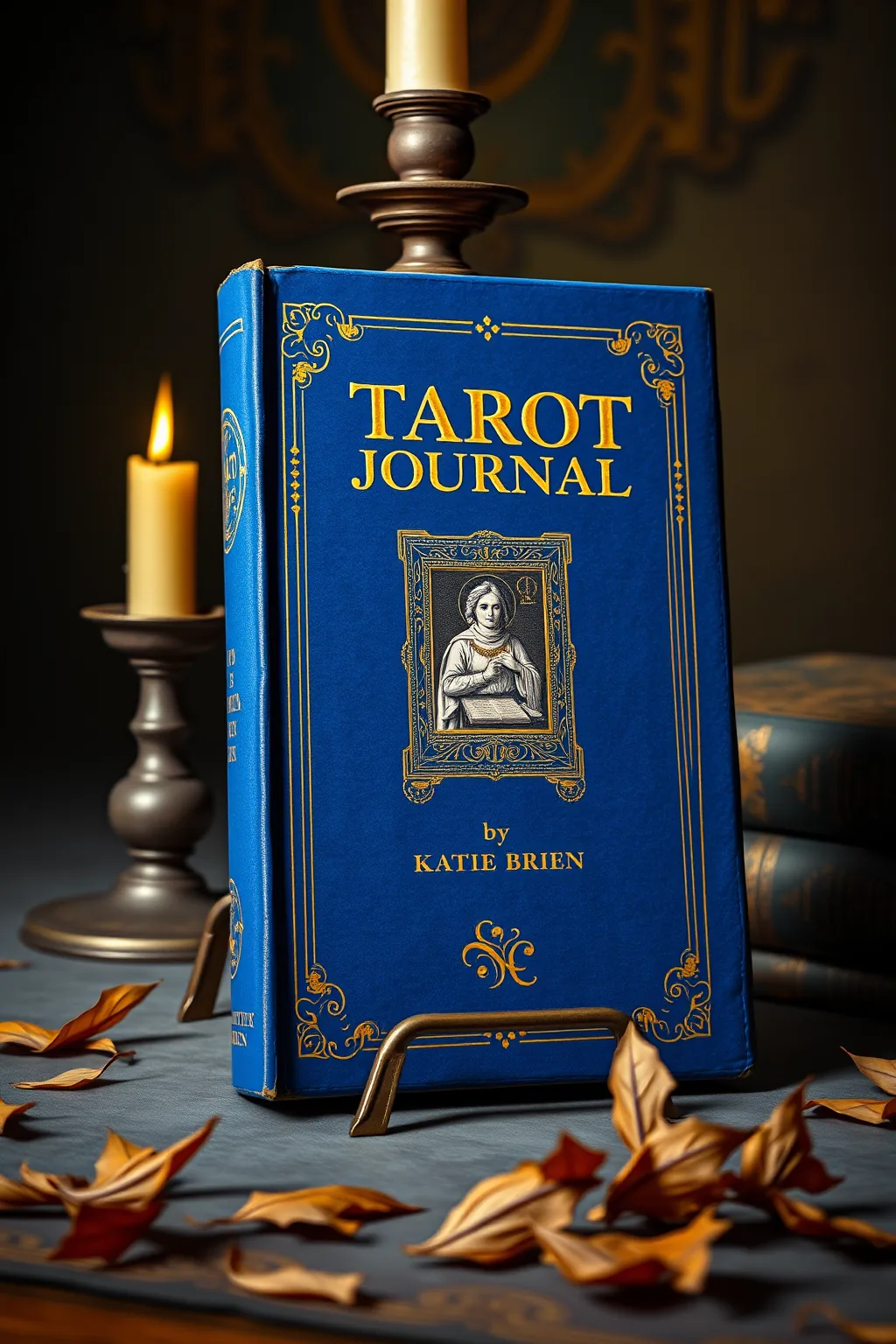
Tarot Journal
 62
62

Tarot Journal



Isolde Whitaker, Sacred Texts Editor: Katie Brien’s 'Tarot Journal' is a meticulously designed instrument for anyone serious about engaging with the Tarot beyond surface-level readings. It provides a sanctuary for practitioners to meticulously document their readings, track recurring symbols, and explore the nuanced dialogues between the cards and their inner landscape. Brien’s approach fosters a deep, personal connection with the archetypal energies, urging readers to move from passive observation to active integration. This journal is an indispensable tool for developing intuition, understanding the intricate web of Tarot symbolism, and ultimately, for charting a more conscious path through life’s unfolding narrative. Highly recommended for dedicated Tarot enthusiasts seeking profound personal growth.
📝 Description
62
Katie Brien's Tarot Journal was created to deepen a user's connection with the Tarot.
This journal serves as a dedicated space for working with the Tarot. It moves beyond simple card meanings to encourage a deeper understanding of the symbolism, numerology, and planetary associations within the decks. The journal prompts users to engage in introspection and develop their intuition through daily practice. It is designed for anyone looking to make the Tarot a more integrated part of their spiritual or personal development.
By using this journal, practitioners can track their readings, note recurring themes, and observe the unfolding patterns in their lives as reflected by the cards. It supports a methodical approach to divination, helping to build a personal lexicon of card interpretations and intuitive insights. The goal is to foster a more meaningful and consistent relationship with the Tarot as a tool for self-awareness and guidance.
The Tarot is a system with roots stretching back to at least the mid-15th century, evolving from a card game into a tool for divination and spiritual exploration. Within esoteric traditions, the Tarot is often viewed as a symbolic map of the human psyche and the cosmos. Its archetypal imagery relates to concepts found in Western esotericism, including Hermeticism, Kabbalah, and astrology. This journal aligns with practices that use such symbolic systems for self-inquiry and understanding universal principles.
💡 Why Read This Book?
Embark on a transformative journey of self-discovery with 'Tarot Journal.' This essential companion invites you to deepen your understanding of Tarot's profound symbolism, cultivate intuitive insights, and meticulously document your spiritual path. Ideal for seekers yearning for a sacred space to connect with archetypal wisdom and practitioners dedicated to honing their divination skills, this journal is your key to unlocking the Tarot's deepest secrets.
⭐ Reader Reviews
Honest opinions from readers who have explored this book.
❓ Frequently Asked Questions
What is the primary purpose of the Tarot Journal?
The primary purpose is to provide a dedicated space for users to record their Tarot readings, reflect on the symbolism, track personal insights, and deepen their understanding of the Tarot's mystical language and its application to their lives.
Who is the intended audience for this journal?
This journal is designed for a wide audience, from complete beginners curious about Tarot to experienced practitioners seeking a structured method for journaling their readings and spiritual explorations.
Does the journal offer guidance on how to read the Tarot?
While the journal provides ample space for reflection and recording, it is primarily a tool for documentation and personal exploration rather than a comprehensive instructional guide. It is best used in conjunction with existing Tarot knowledge or learning resources.
What kind of prompts are included in the journal?
The journal includes thoughtfully crafted prompts designed to encourage deep introspection, explore the nuances of card meanings, connect symbols to personal experiences, and foster intuitive development.
Can this journal be used with any Tarot deck?
Yes, the journal is designed to be universally applicable and can be used with any standard 78-card Tarot deck, allowing for flexibility and personal preference in deck selection.
🔮 Key Themes & Symbolism
Archetypal Symbolism and the Collective Unconscious
This journal serves as a crucible for exploring the profound archetypal imagery of the Tarot, connecting its symbols to the universal patterns and narratives that reside within the collective unconscious. Each card is a doorway, not just to prediction, but to understanding the fundamental forces that shape human experience. By diligently journaling interpretations and personal resonances, users can begin to map these ancient symbols onto their own lives, fostering a deeper awareness of the archetypal energies at play in their personal journeys and the wider world.
Intuitive Development and Inner Wisdom
The act of journaling itself becomes a powerful catalyst for intuitive development. 'Tarot Journal' encourages a dialogue between the conscious mind and the subtle whispers of intuition. By providing dedicated space for personal reflections, emotional responses, and spontaneous insights, the journal helps users hone their intuitive faculties. It's a practice of attuning oneself to the inner knowing, allowing the symbolic language of the Tarot to unlock a deeper wellspring of personal wisdom and guidance, transforming abstract concepts into lived understanding.
The Tarot as a Mirror of the Soul
More than a tool for divination, the Tarot functions as a profound mirror reflecting the inner range of the soul. 'Tarot Journal' facilitates this introspective practice by creating a safe and structured environment for self-examination. Through recording readings, noting recurring themes, and exploring the emotional and psychological impact of the cards, users gain unprecedented clarity into their own subconscious patterns, desires, and challenges. This process of meticulous self-observation fosters self-awareness and empowers individuals to navigate their life path with greater intention and understanding.
💬 Memorable Quotes
Direct passages from the work, attributed to the author.
“Each symbol is a key to a hidden door within.”
— This highlights the esoteric nature of Tarot, suggesting that its imagery unlocks deeper levels of self-understanding and consciousness, revealing inner potentials and forgotten truths.
“Journaling is the alchemical process of turning insight into wisdom.”
— This speaks to the transformative power of recording and reflecting on one's experiences with the Tarot, suggesting that the act of writing solidifies understanding and fosters lasting personal growth.
“The silence between the cards speaks volumes.”
— This encourages attention to the subtle energies and intuitive connections that arise during a reading, emphasizing that meaning is often found not just in the cards themselves, but in the space and intuition surrounding them.
“Trace the threads of destiny through the collection of the Arcana.”
— This evocative metaphor suggests that the Tarot provides a means to understand the interconnectedness of life's events and to perceive the underlying patterns that shape one's journey.
💡 Key Ideas
Editorial paraphrase of the work's core concepts — not direct quotes.
The cards are not fortune-tellers, but guides.
This quote emphasizes the Tarot's role as a source of wisdom and direction, rather than a deterministic predictor of fate, encouraging a proactive and empowered approach to its use.
🌙 Esoteric Significance
Tradition
This journal firmly situates itself within the Western Esoteric Tradition, drawing heavily from Hermeticism, Kabbalah, and Jungian psychology. It treats the Tarot not merely as a divinatory tool, but as a symbolic language that encodes profound spiritual truths and psychological archetypes. The practice of using this journal aligns with the esoteric aim of self-transformation and the pursuit of gnosis, fostering a deeper understanding of the microcosm (the individual) in relation to the macrocosm (the universe).
Symbolism
The esoteric significance of 'Tarot Journal' lies in its embrace of the Tarot's rich symbolic range. Each card, from the Fool's leap of faith to the World's completion, is a nexus of meaning, representing stages of spiritual development, psychological states, and cosmic forces. The journal encourages users to decode these symbols – the numerological values, the planetary associations, the archetypal figures – transforming abstract representations into personal insights and lived wisdom, bridging the gap between symbolic language and tangible experience.
Modern Relevance
In our fast-paced, often disconnected world, 'Tarot Journal' offers a vital anchor to introspection and intuitive wisdom. Its modern relevance lies in providing a structured yet deeply personal practice for navigating complexity, fostering self-awareness, and cultivating resilience. The journal empowers individuals to tap into an ancient system of symbolic understanding to gain clarity, process emotions, and chart a more meaningful course, proving that timeless esoteric wisdom remains profoundly applicable to contemporary challenges and aspirations.
👥 Who Should Read This Book
For the burgeoning seeker, 'Tarot Journal' is an indispensable first step, offering a guided path to connect with Tarot's archetypal language. Seasoned practitioners will find it an invaluable tool for deepening their practice, meticulously tracking insights and discerning subtle patterns. Scholars of esoteric traditions will appreciate its role in documenting and analyzing symbolic correspondences. Ultimately, anyone yearning for a richer understanding of themselves and the universe, who seeks a sacred space for introspection and the cultivation of intuitive wisdom, will find profound value within these pages.
📜 Historical Context
Originating in the mid-15th century in Italy, the Tarot began as a set of playing cards for games but swiftly evolved into a potent tool for divination and esoteric study. Its journey through centuries saw it embraced by occult societies and mystics, notably in the 18th and 19th centuries with figures like Antoine Court de Gébelin and Eliphas Lévi, who attributed deep symbolic and Kabbalistic meanings to the cards. The Rider-Waite-Smith deck, published in 1909, revolutionized Tarot by featuring fully illustrated Major and Minor Arcana, making their symbolism more accessible and widely influential. 'Tarot Journal' emerges from this rich lineage, a contemporary echo of a tradition that has continuously adapted and deepened, offering a modern avenue for engaging with this ancient, multilayered system of wisdom and self-exploration in an era increasingly seeking meaning and connection.
📔 Journal Prompts
What dominant energy does this spread represent in my current life situation?
Which card's symbolism resonates most deeply with my current emotional state, and why?
How can the lesson of the Empress be applied to nurturing my creative projects this week?
If I were to embody the energy of the Knight of Swords, what bold action should I take?
What hidden aspect of myself does the Hierophant's reversed position suggest I need to acknowledge?
🗂️ Glossary
Arcana
The two sets of cards within a Tarot deck: the Major Arcana (22 cards representing significant life lessons and spiritual journeys) and the Minor Arcana (56 cards depicting everyday events and experiences).
Archetype
A universal, primordial image or pattern of behavior that is part of the collective unconscious, often personified in Tarot cards like The Emperor or The High Priestess.
Divination
The practice of seeking knowledge of the future or the unknown by supernatural means, using tools like the Tarot to interpret symbolic messages.
Hermeticism
A spiritual, philosophical, and esoteric tradition based primarily upon writings attributed to Hermes Trismegistus, influencing many occult practices, including Tarot interpretation.
Kabbalah
A body of mystical teachings and esoteric traditions associated with Judaism, which has significantly influenced the symbolic interpretation of the Tarot's Major Arcana.
This book appears in 3 collections
🔮 Readers Also Liked
Browse all →









From the “Tarot” Collection
View all →








More Free Divination & Tarot Books
View all →